Jérôme DumouxScenography • Museography

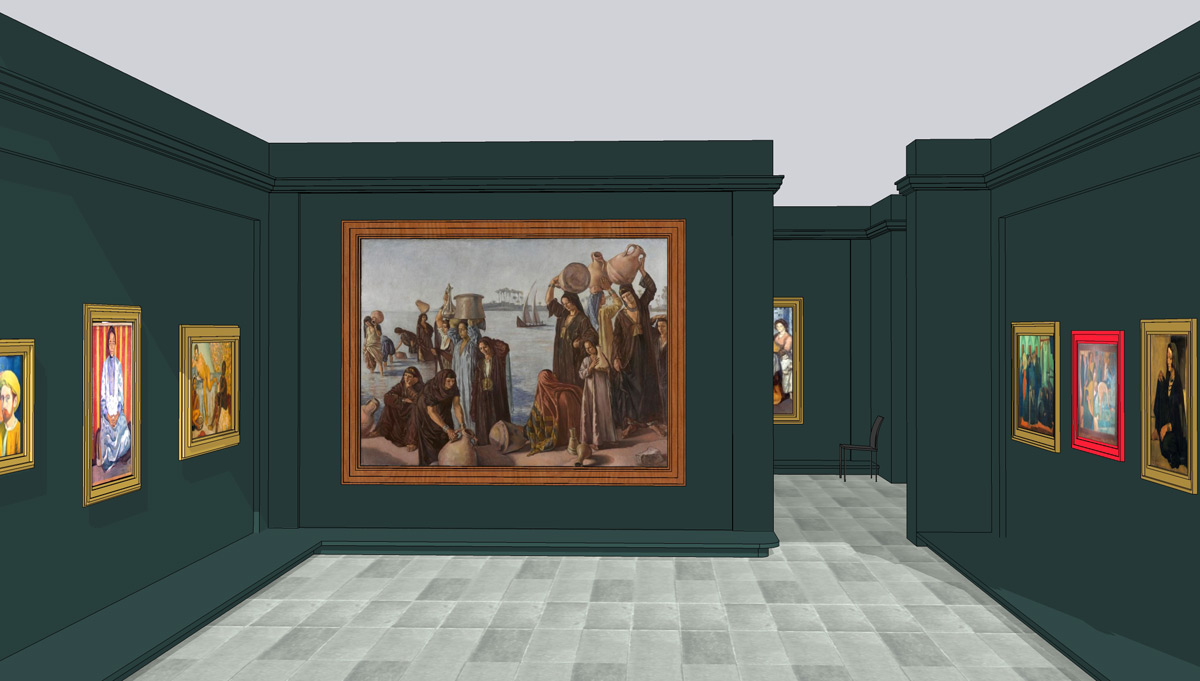
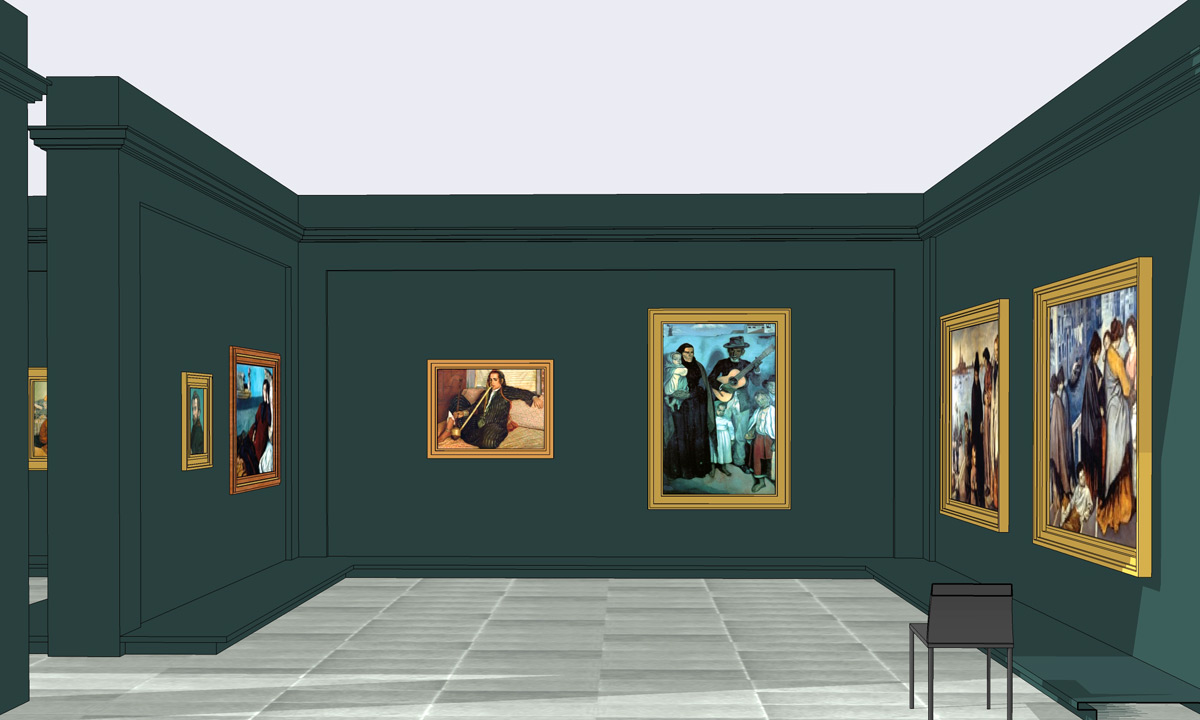
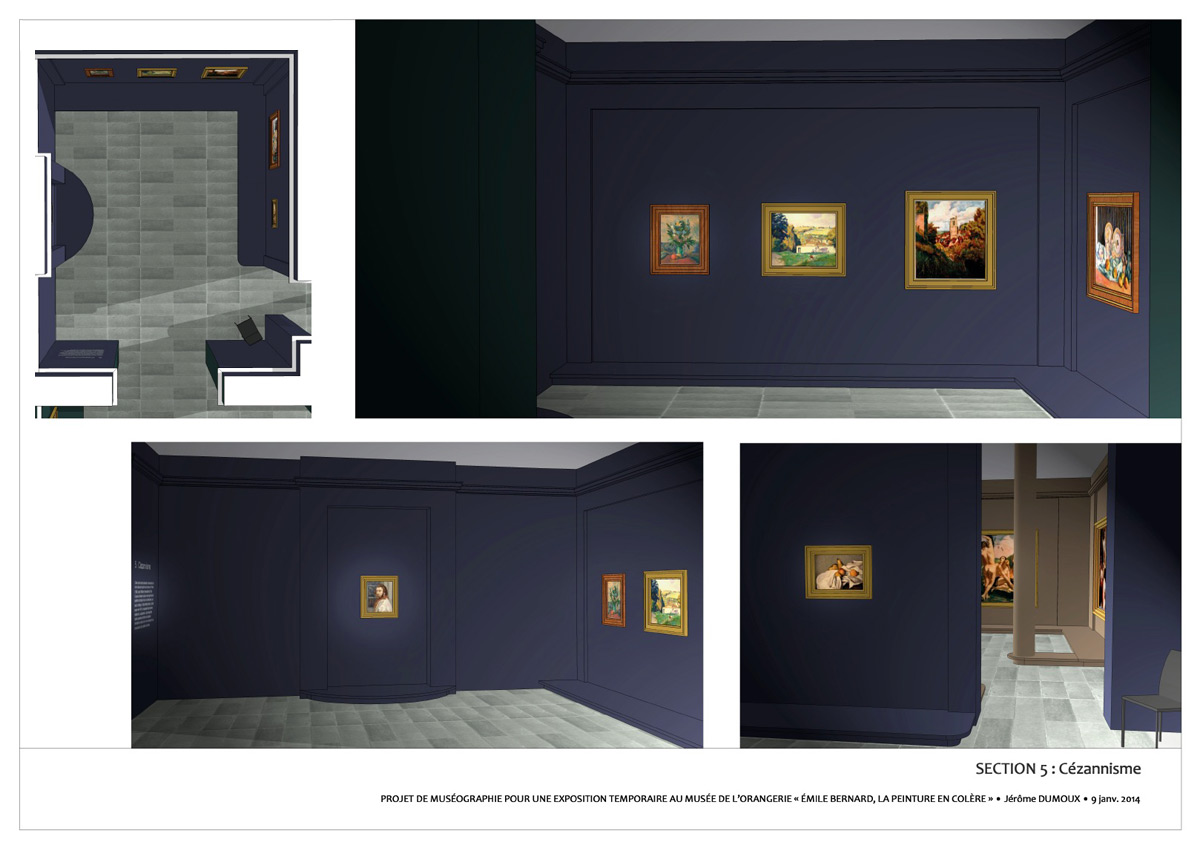
Temporary Exhibitions

Selected list

Palace of VersaillesMobilier nationalAbroadOther venuesFinalist projects

Palace of Versailles

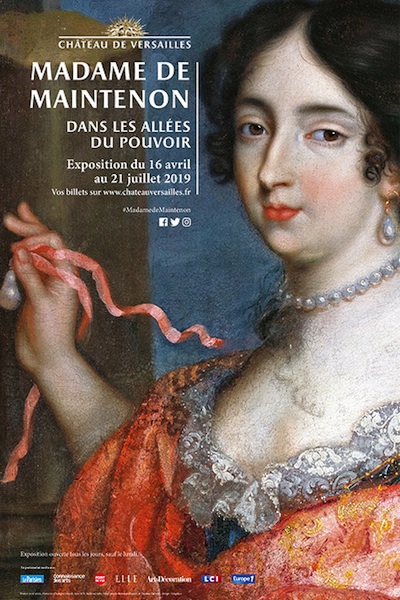
Exhibition: Madame de Maintenon, in the Corridors of Power

Palace of Versailles, Madame de Maintenon’s Apartment, Versailles

Madame de Maintenon, dans les Allées du Pouvoir2019Madame de Maintenon, in the Corridors of Power

Scenography and graphic design
Exhibition from 16 April to 21 July 2019
Curators
Alexandre Maral, chief heritage curator and director of the CRCV, and Mathieu Da Vinha, scientific director of the CRCV
Total area
210 m²
75 works
art objects, sculptures, paintings, works on paper, archive documents, books, multimedia.
Works budget
€110,000
Attendance:

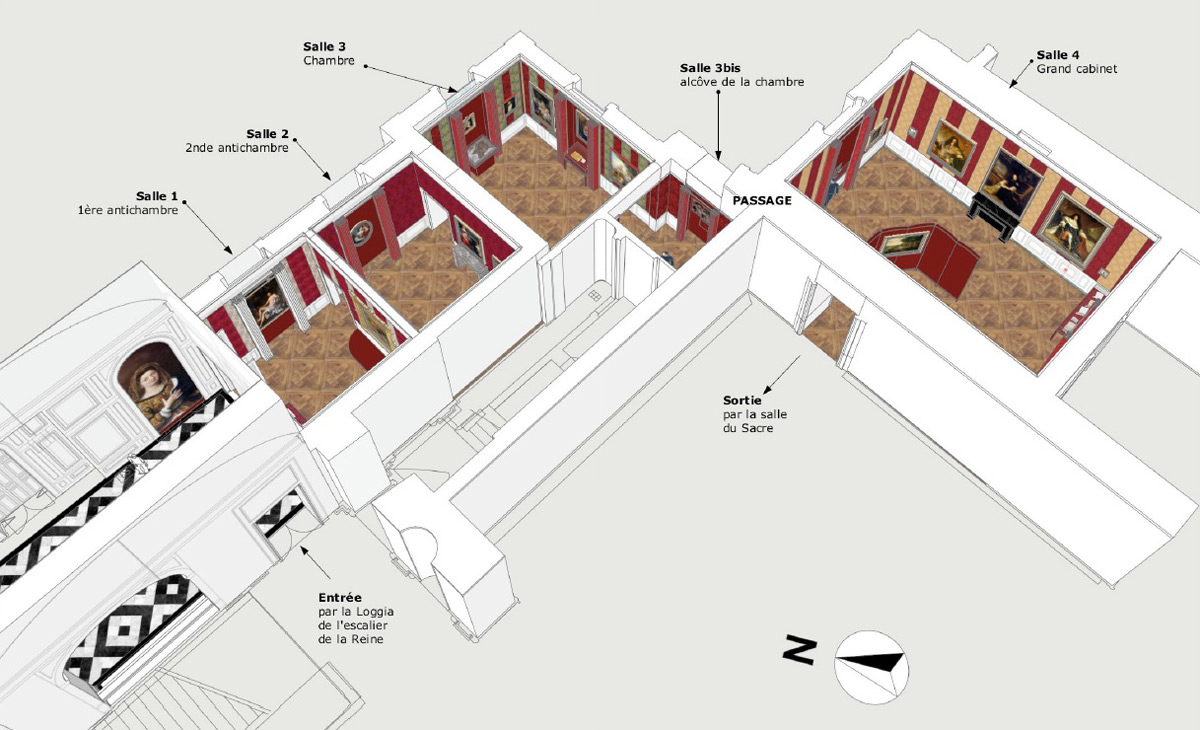
À l’occasion du tricentenaire de la mort de Madame de Maintenon (1635-1719), le château de Versailles met en lumière la destinée exceptionnelle de cette femme qui naquit dans une prison puis devint l’épouse du roi le plus puissant du monde. Présentée dans l’appartement que Madame de Maintenon occupa au premier étage du palais, à proximité de l’appartement du Roi, cette exposition retrace en 75 œuvres et documents la vie de cette figure majeure de la cour.

Design approach:

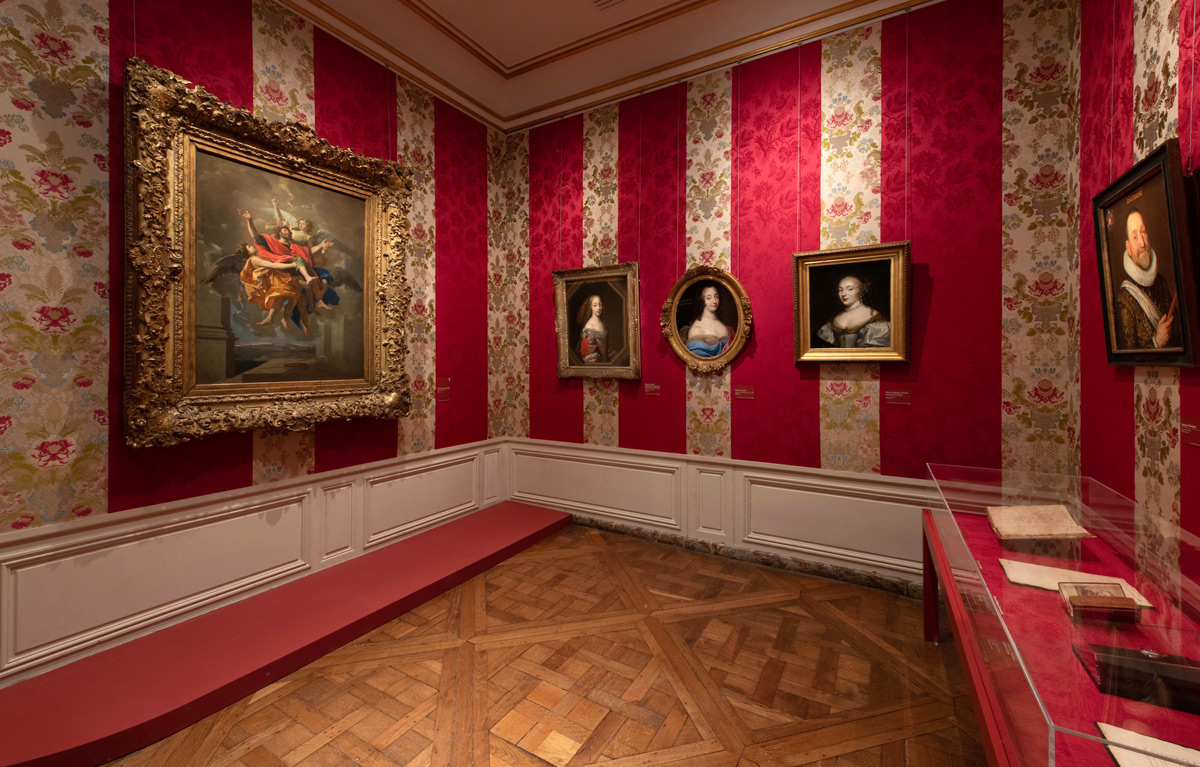
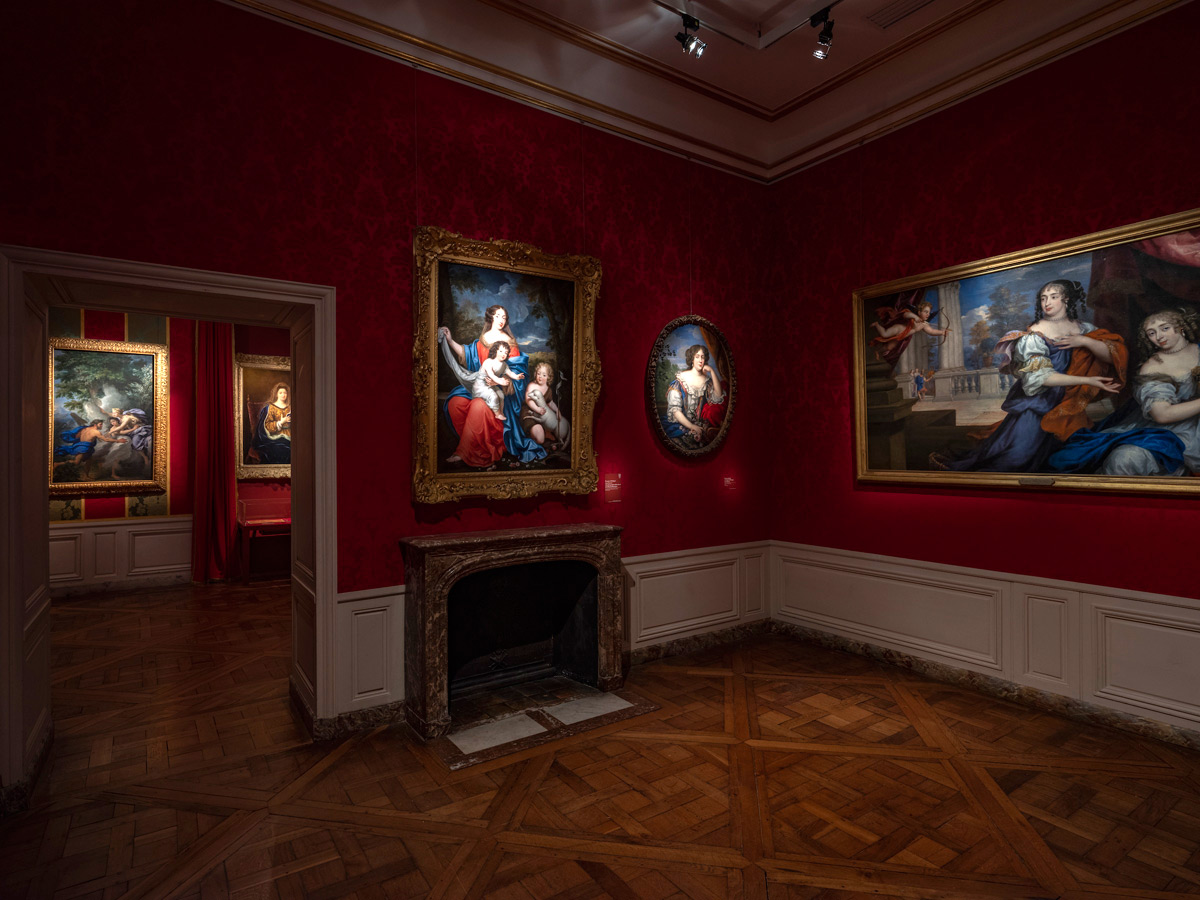
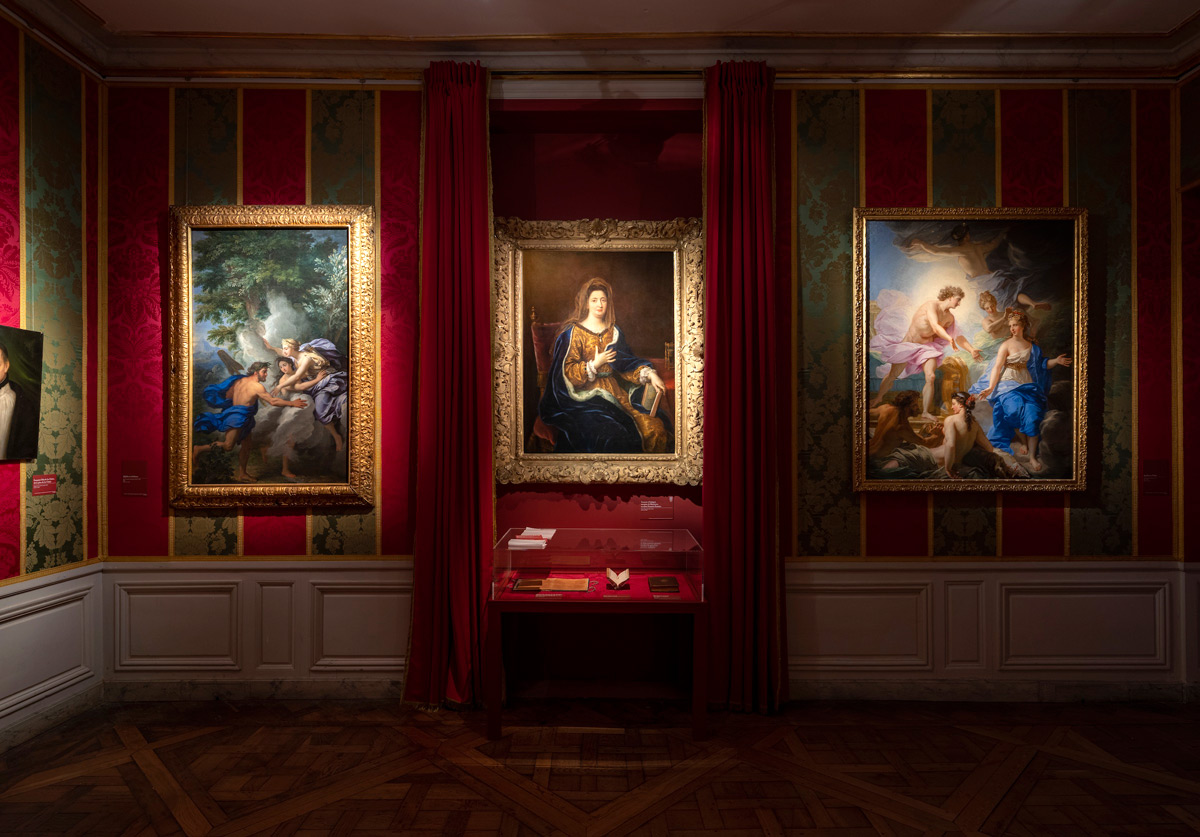
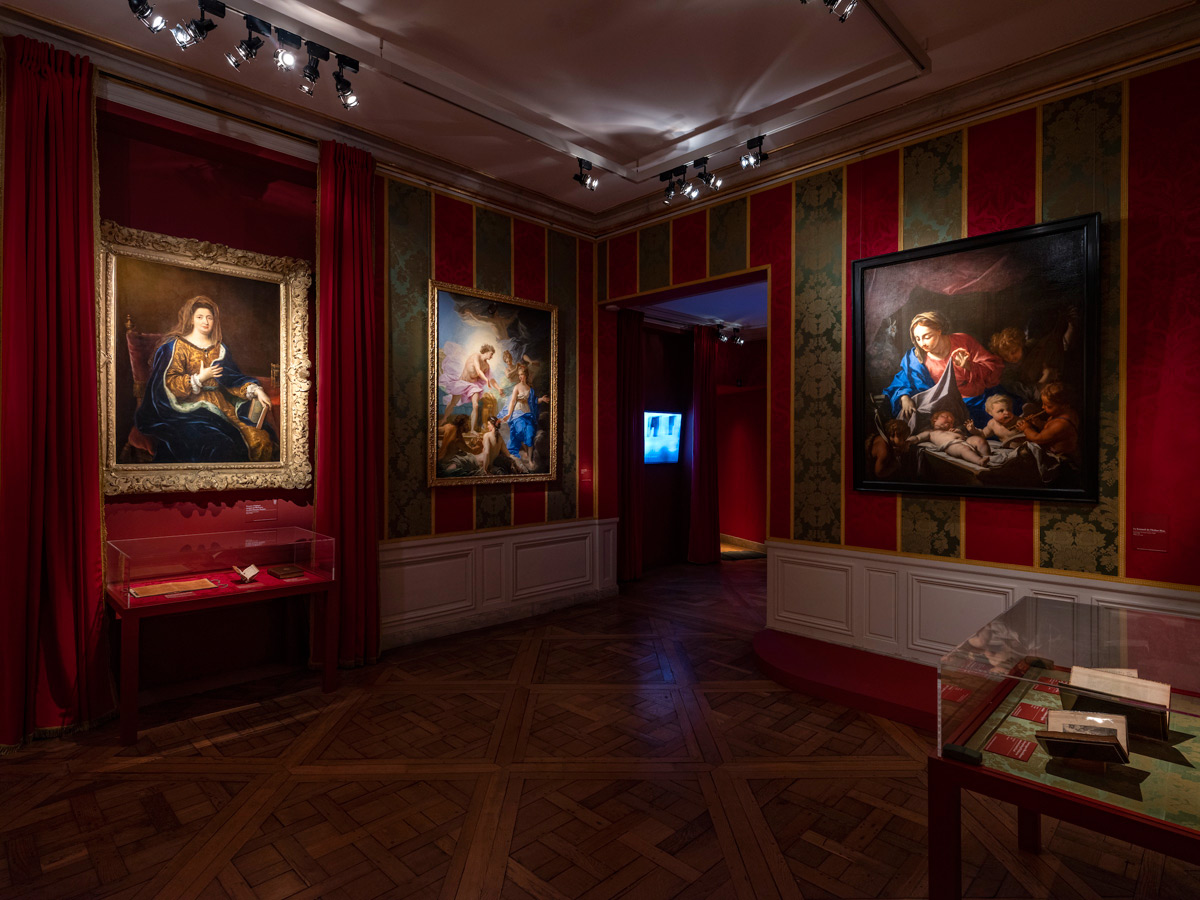
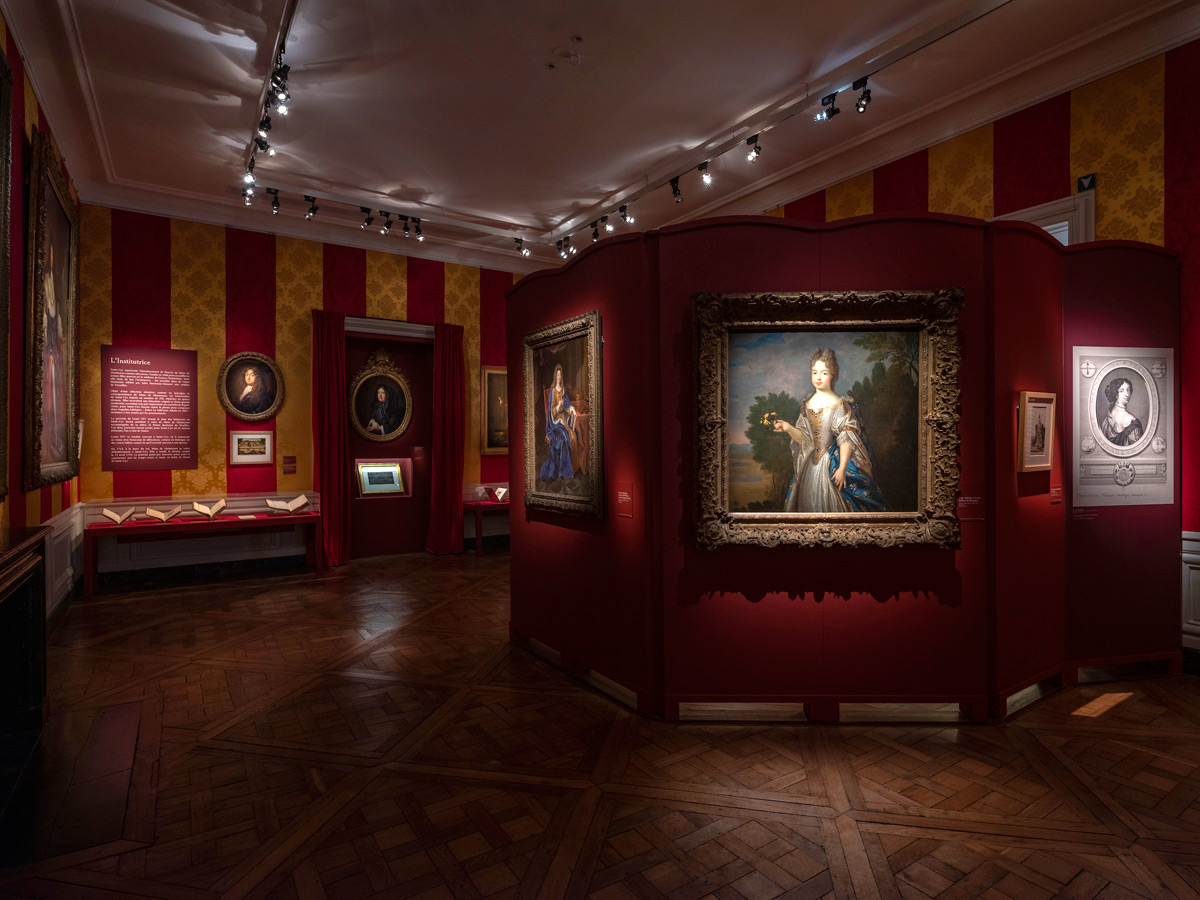
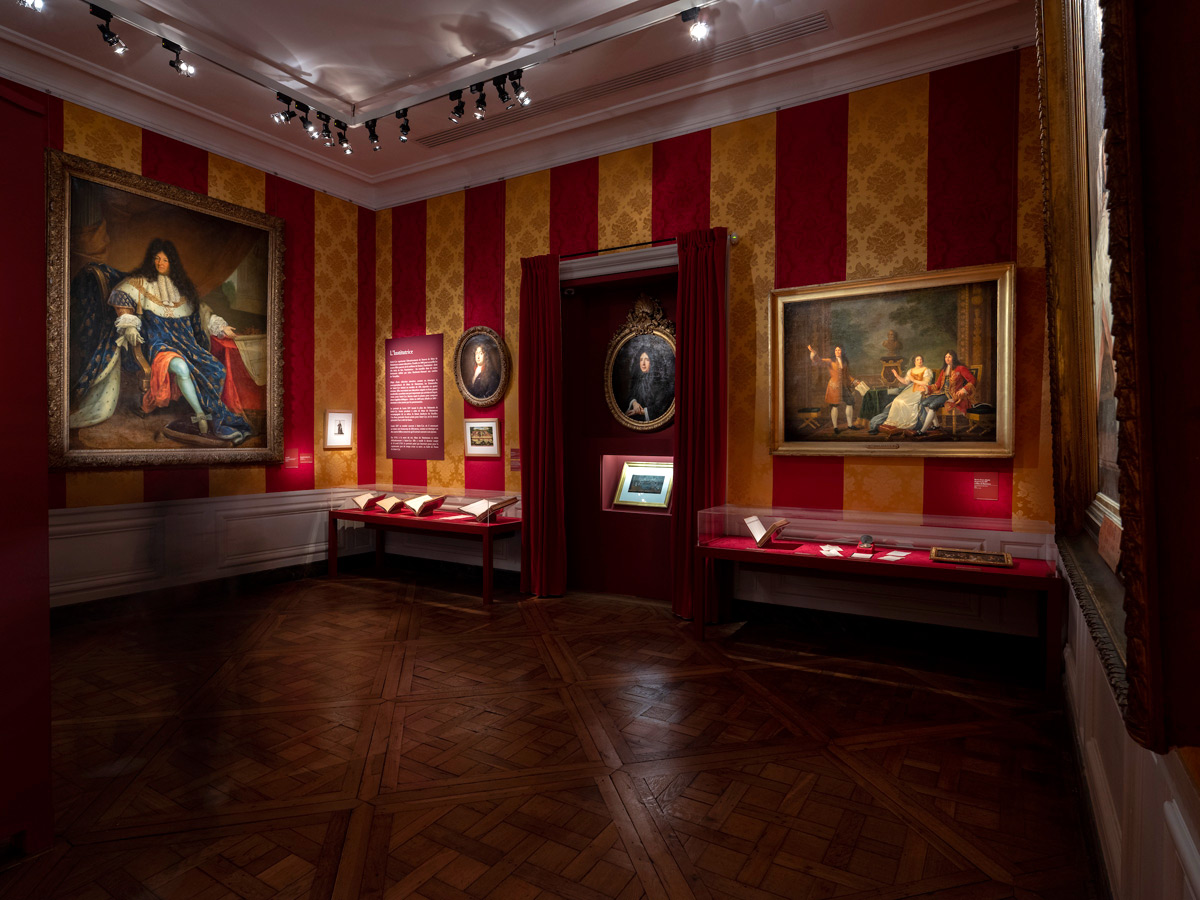
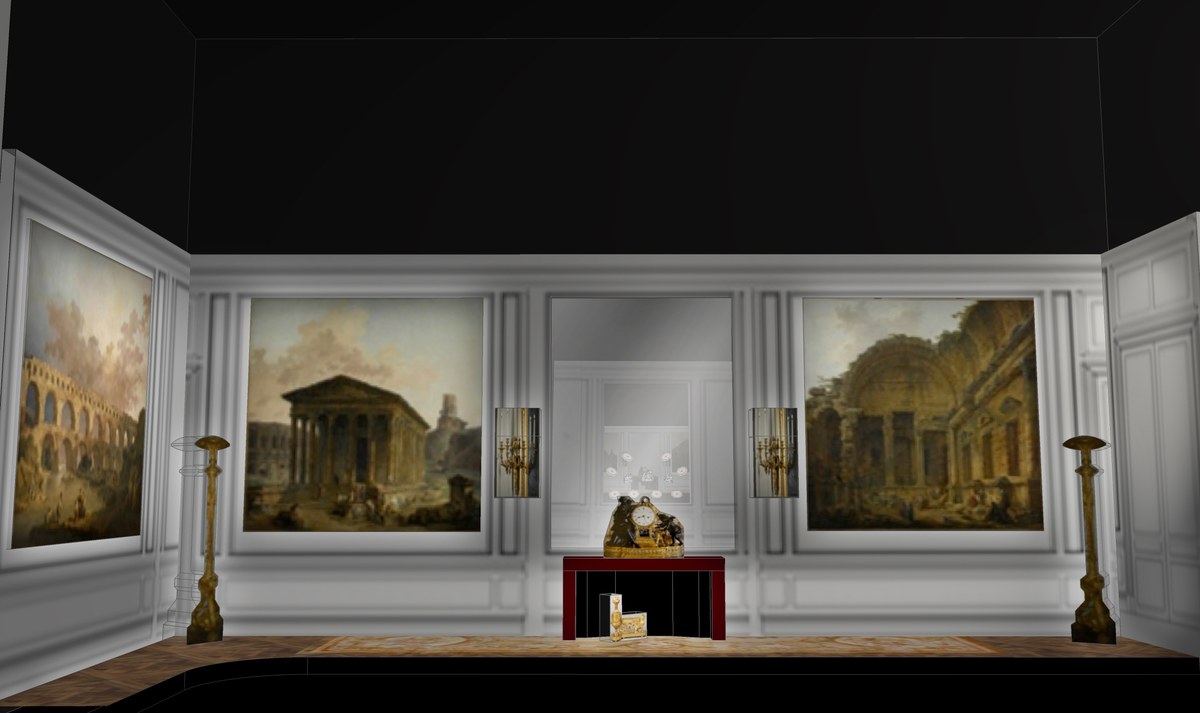
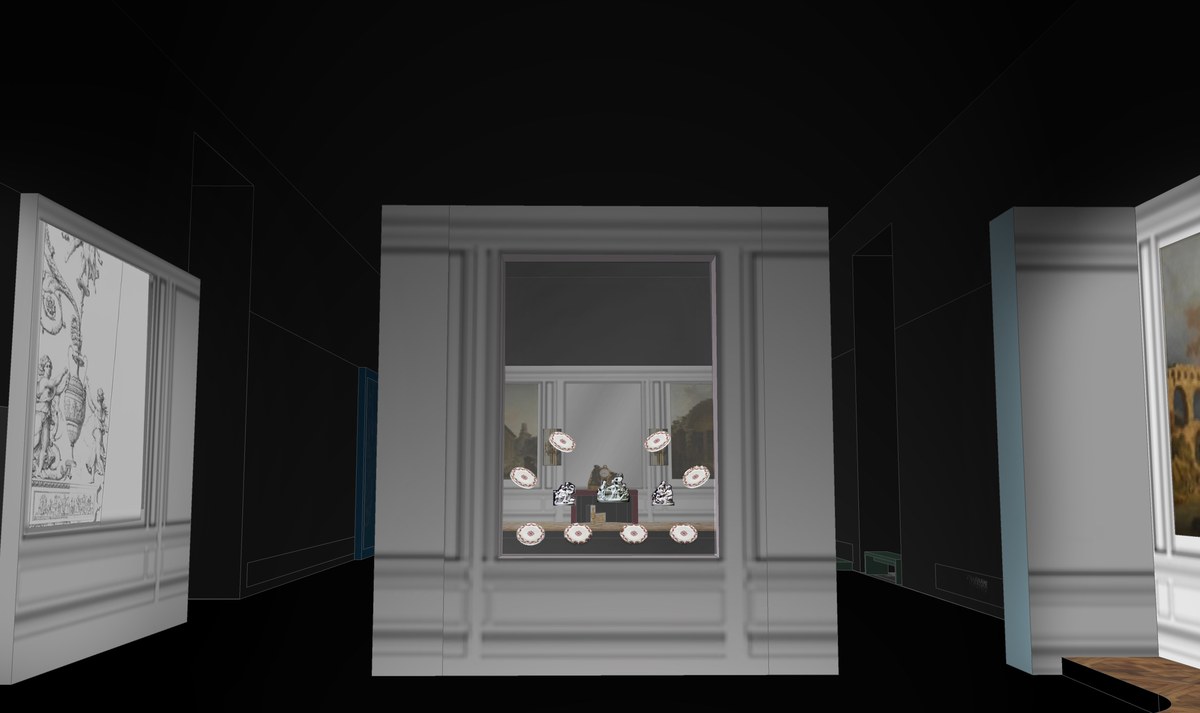
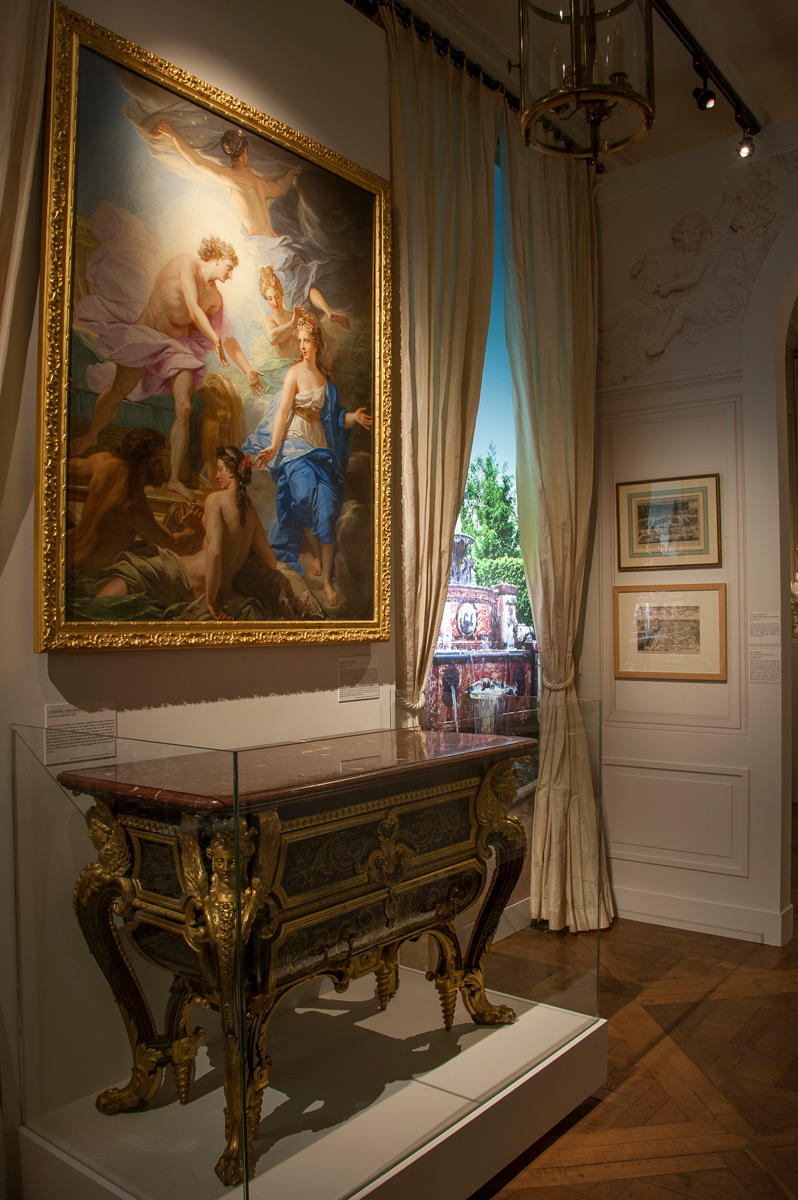
The scenography is intended to be highly evocative, drawing on several historical and scientific studies, in particular the 1708 inventory of the Crown’s Garde-Meuble (forerunner of the Mobilier national), which gives a very precise description of Madame de Maintenon’s apartment while she was still living there. At that date, the walls of her apartment were richly hung with silks, arranged in alternating widths in most of the rooms.

“(…) It is a so-called ‘summer’ furnishing, without velvet and entirely of multicoloured silks.”

Recreating the wall hangings and curtains brings back the colourful atmosphere of this suite of rooms, discreet yet refined, like their occupant. The fabrics were chosen for their patterns and colours, then woven by Tassinari et Chatel – the oldest silk manufactory, founded in Lyon under Louis XIV.

The exhibition furniture (showcases and display walls) is also inspired by the 1708 inventory, such as the large folding screen in the last room, where the showcases are lined with the same silks as the apartment walls.

As this type of decor, emblematic of the 17th century, has now disappeared from Versailles, the exhibition also gives visitors a unique opportunity to admire the interior of a courtier’s apartment in the age of Louis XIV.

When the exhibition was dismantled, the silk wall hangings were kept in place, a lasting contribution to the Palace of Versailles.
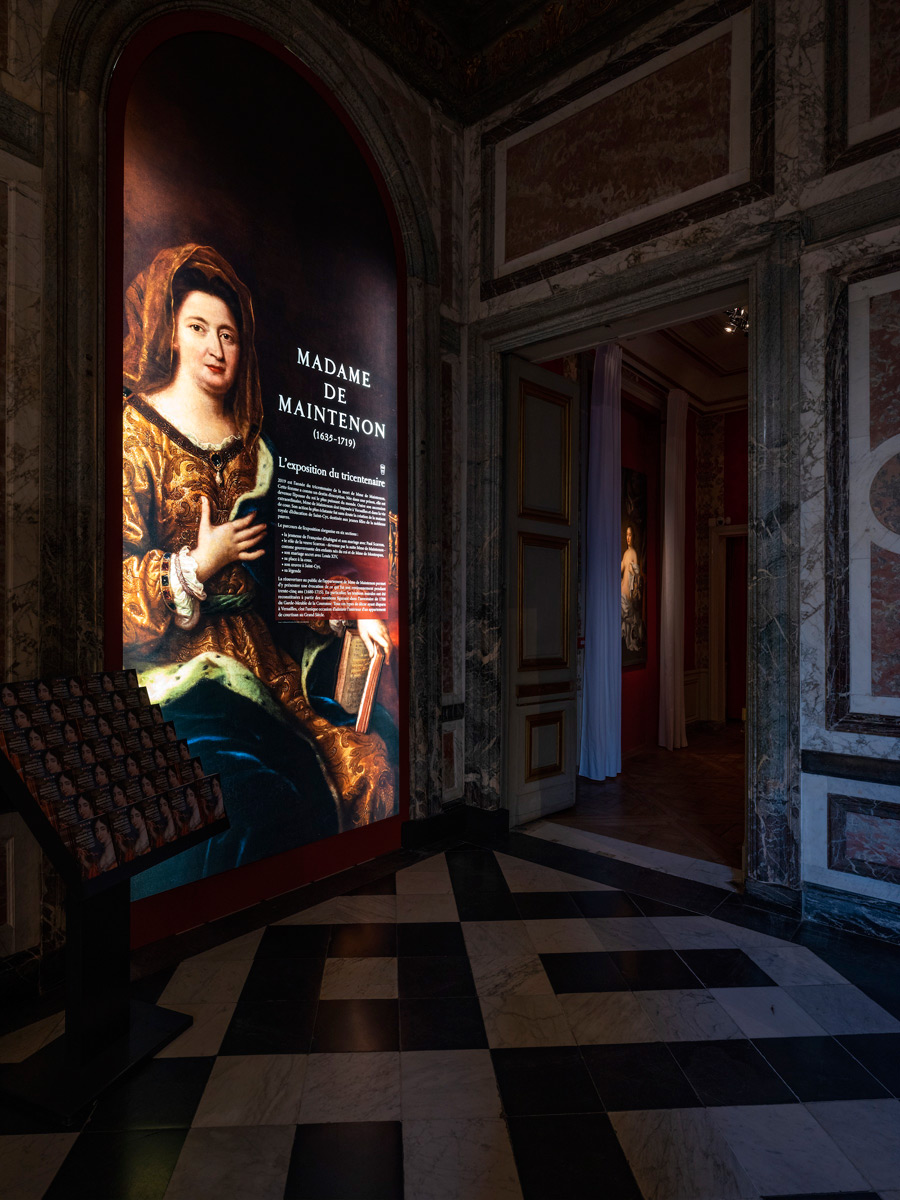
Exhibition: Madame de Maintenon, in the Corridors of Power – image 1
Exhibition: Madame de Maintenon, in the Corridors of Power – image 2
Exhibition: Madame de Maintenon, in the Corridors of Power – image 3
Exhibition: Madame de Maintenon, in the Corridors of Power – image 4
Exhibition: Madame de Maintenon, in the Corridors of Power – image 5
Exhibition: Madame de Maintenon, in the Corridors of Power – image 6
Exhibition: Madame de Maintenon, in the Corridors of Power – image 7
Exhibition: Madame de Maintenon, in the Corridors of Power – image 8

Exhibition: A President at the King’s Home: de Gaulle at Trianon

Palace of Versailles, Grand Trianon, Versailles

Un Président Chez le Roi, de Gaulle à Trianon2016A President at the King’s Home: de Gaulle at Trianon

Scenography and graphic design
Exhibition from 18 June 2016 to 9 November 2016
Curators
Karine McGrath
Total area
600 m²
110 works
art objects, sculptures, furniture, works on paper, archive documents, books, multimedia.
Works budget
€75,000
Attendance
200,000 visitors

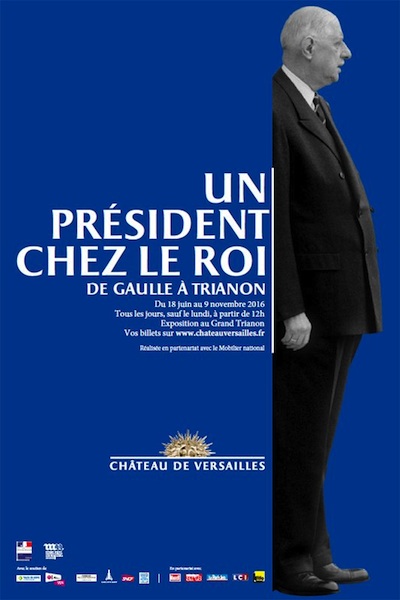
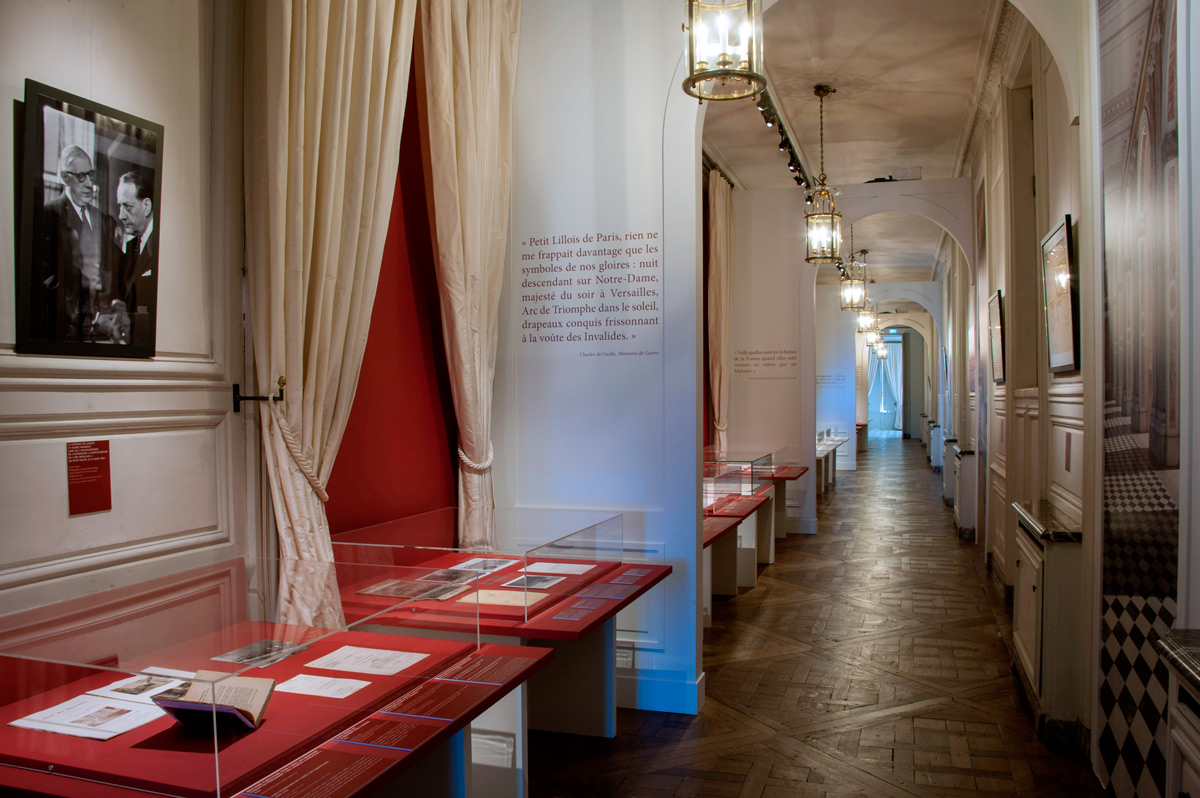
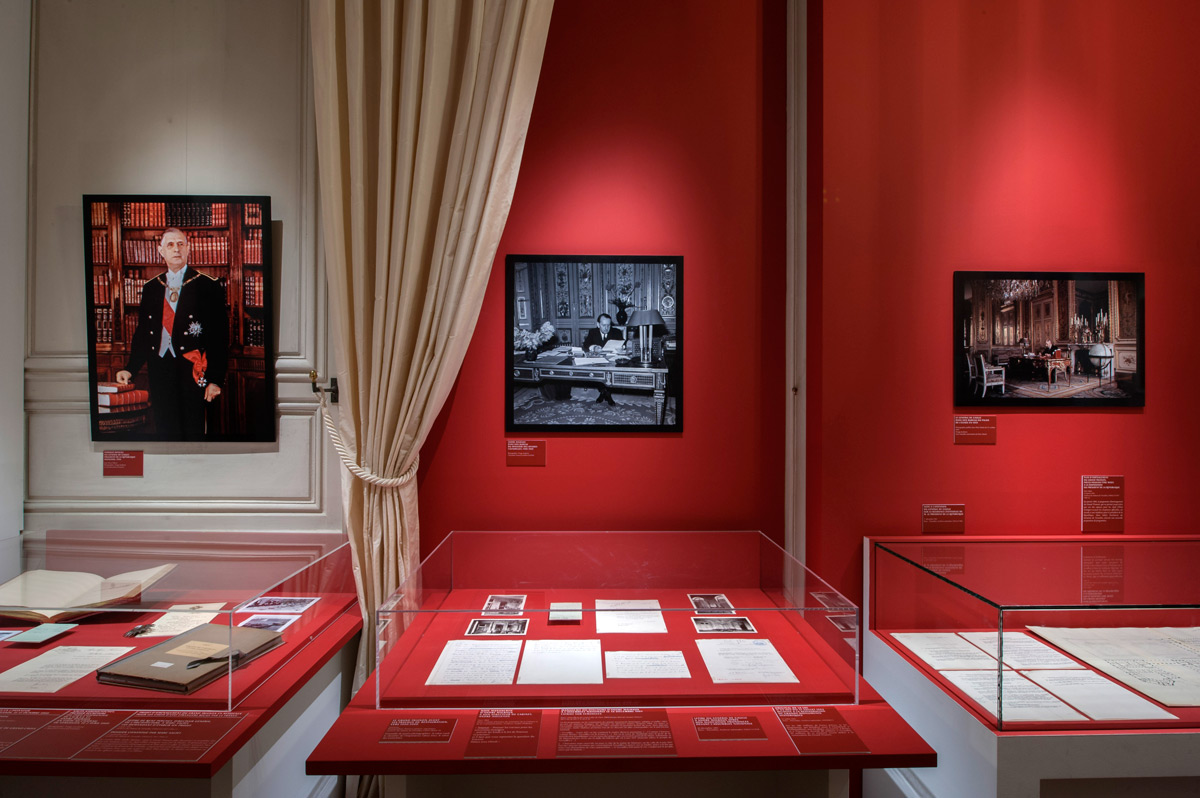
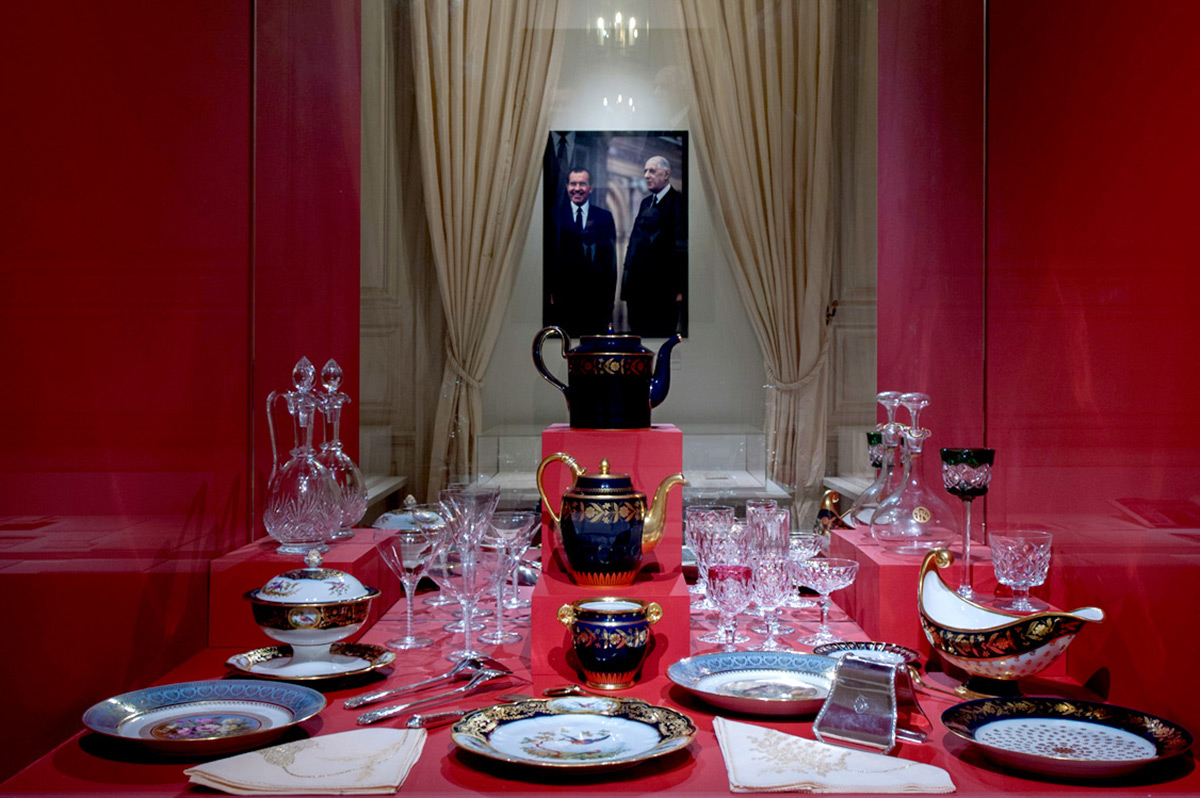
To mark the fiftieth anniversary of the restoration of the Grand Trianon in 1966, and following the success of the exhibition “Le Grand Trianon, de Louis XIV à Charles de Gaulle” in 2015, this new exhibition presents the Grand Trianon as a palace of the Republic under the presidency of General de Gaulle, and recalls the major role played by the Palace of Versailles in French diplomatic relations.

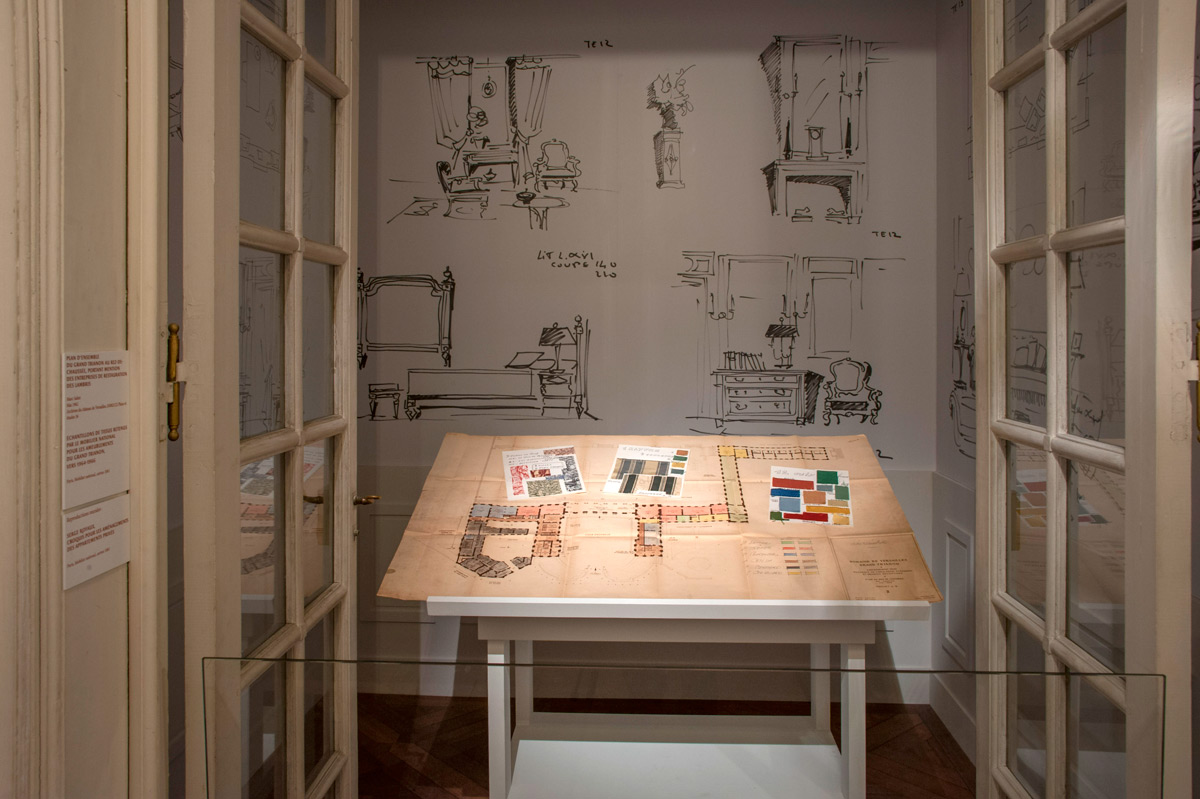
In 1963, at the initiative of André Malraux, General de Gaulle decided to have the Grand Trianon completely restored and refurnished in order to turn it into a presidential residence. Major modernisation work was carried out from January 1963 to June 1966 so that foreign heads of state on official visits could be received and accommodated in a setting worthy of the grandeur of France.

Design approach:

The exhibition unfolds in two parts. First, a pared-back museographic display of previously unseen archive documents, photographs and period films reveals the background to the General’s decision, the execution of this colossal restoration and refurbishment project, and the official receptions held once the work was completed.

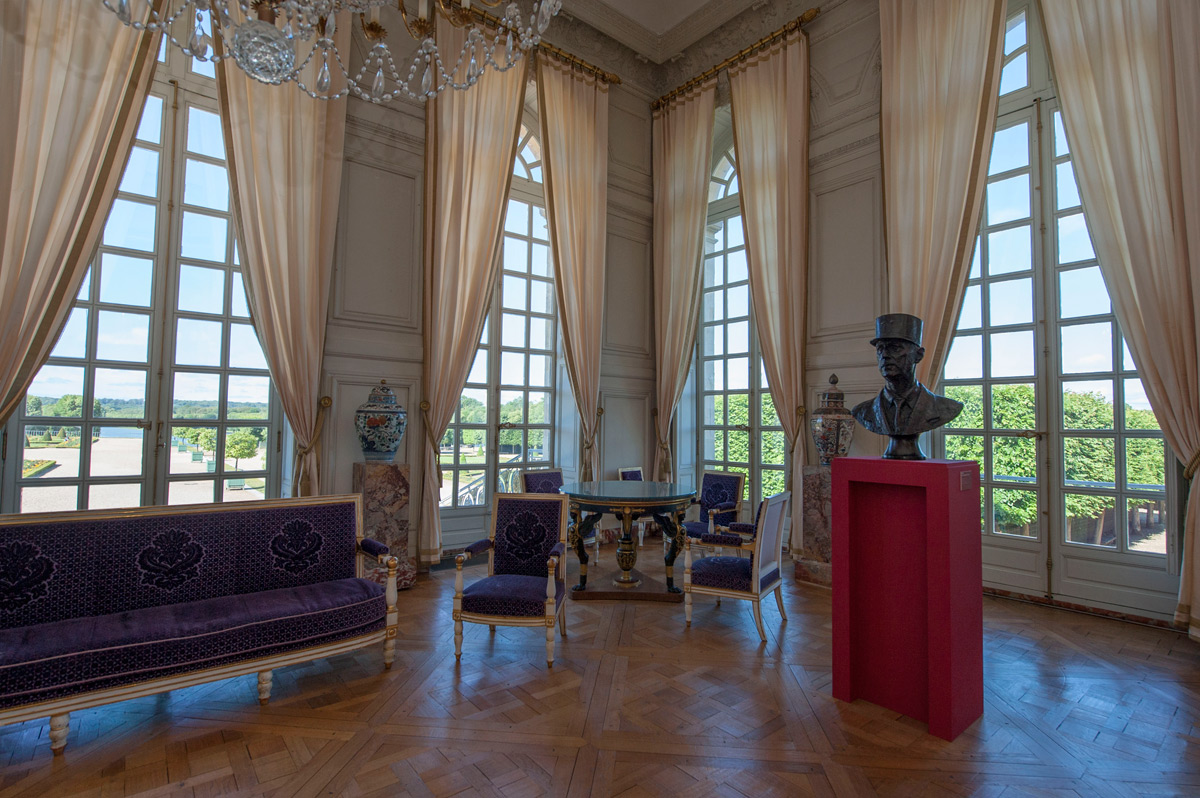
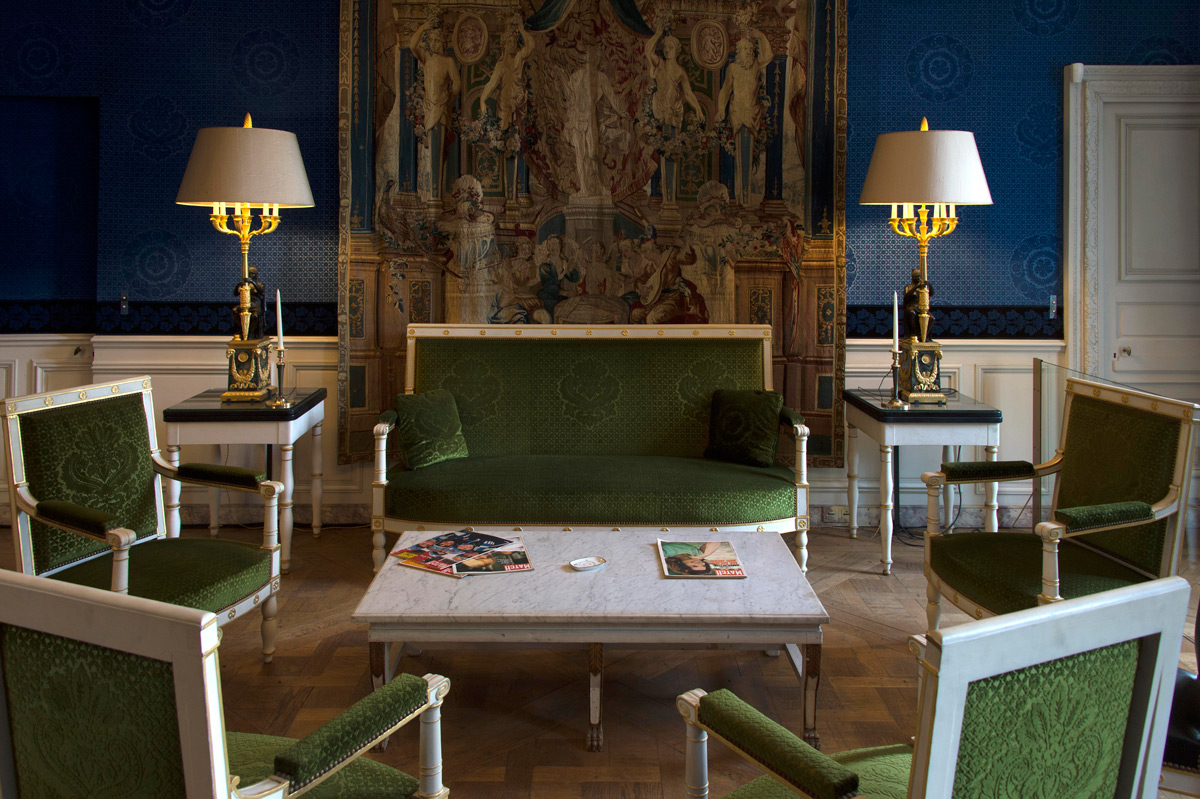
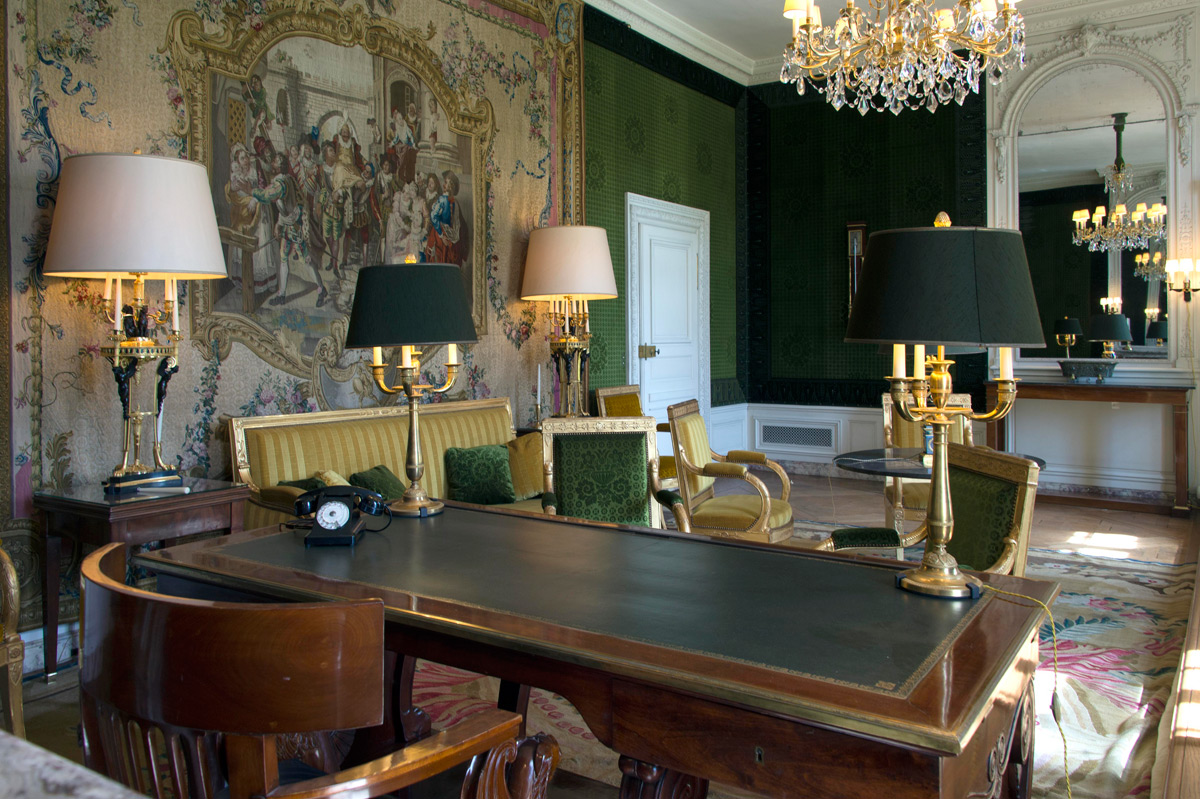
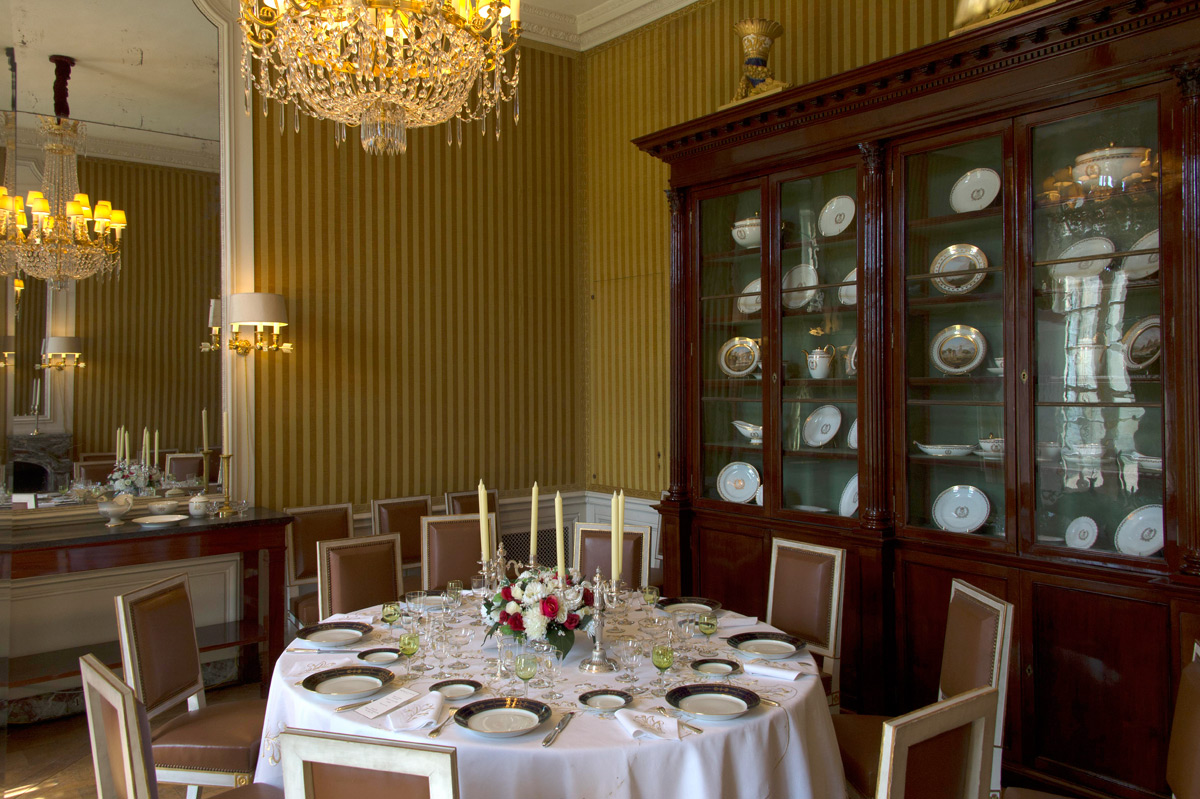
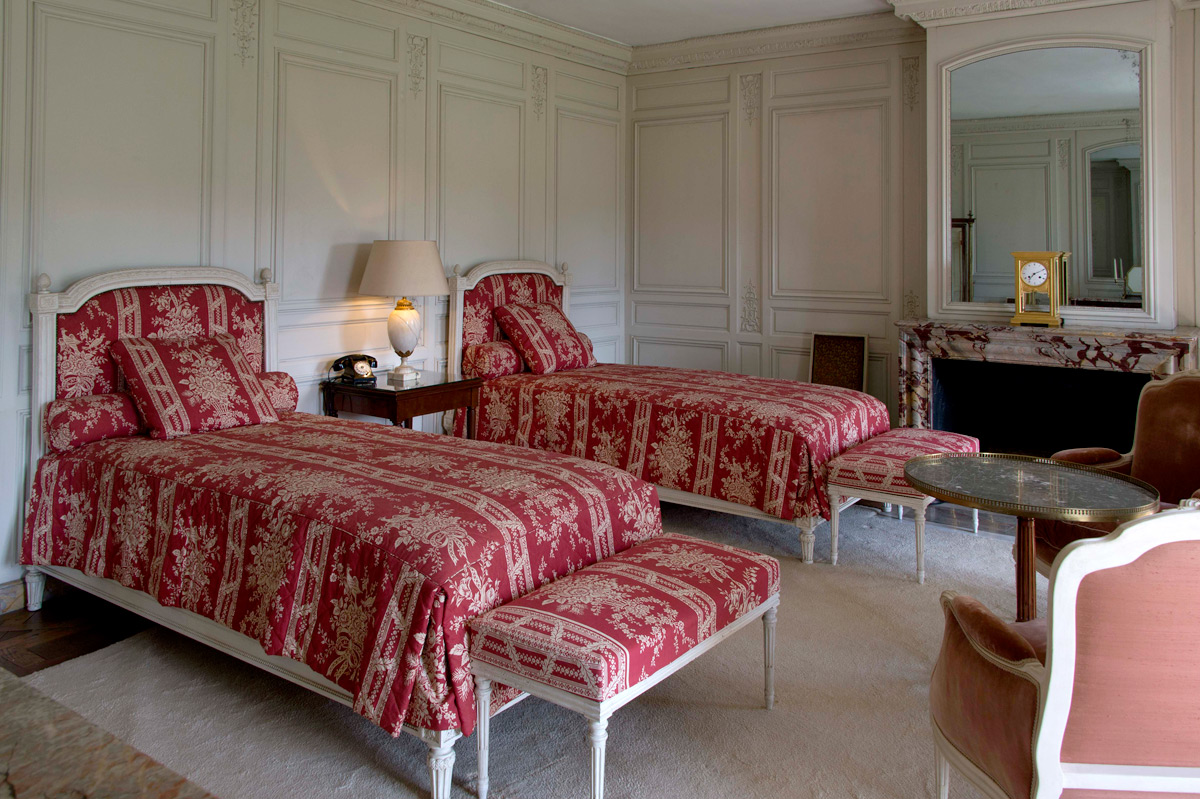
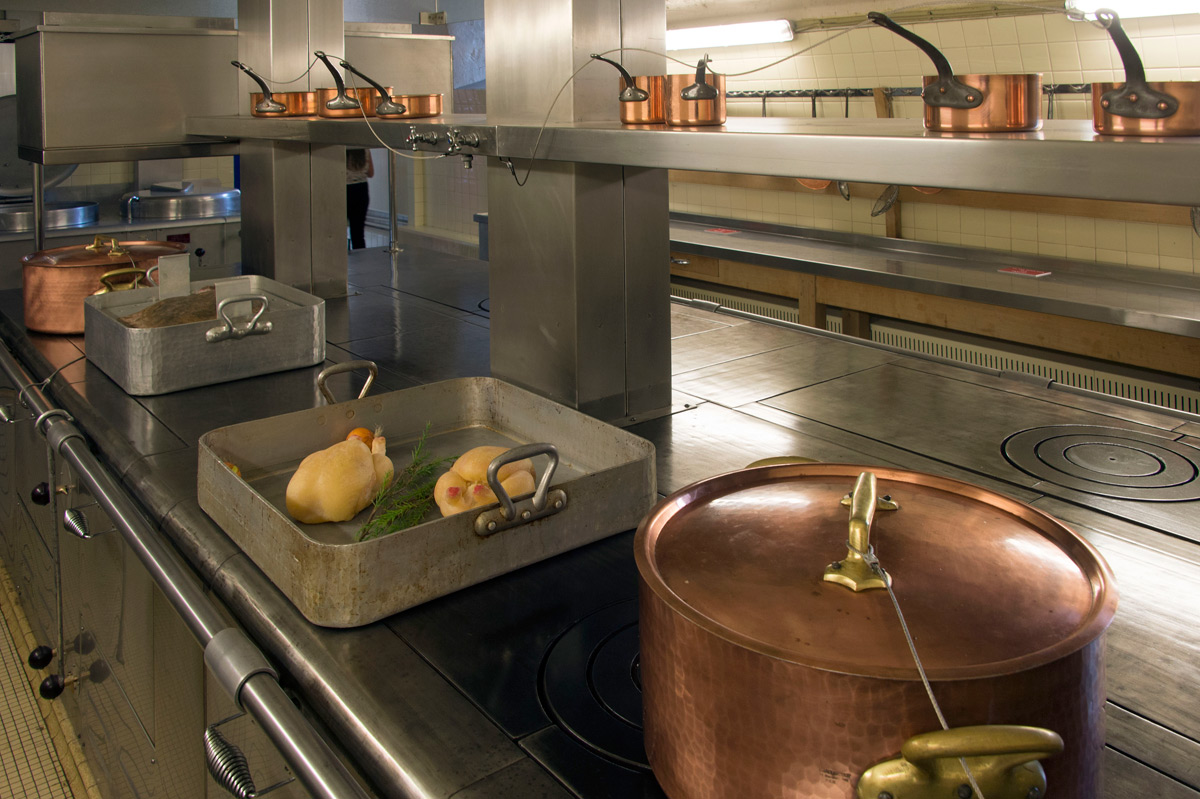
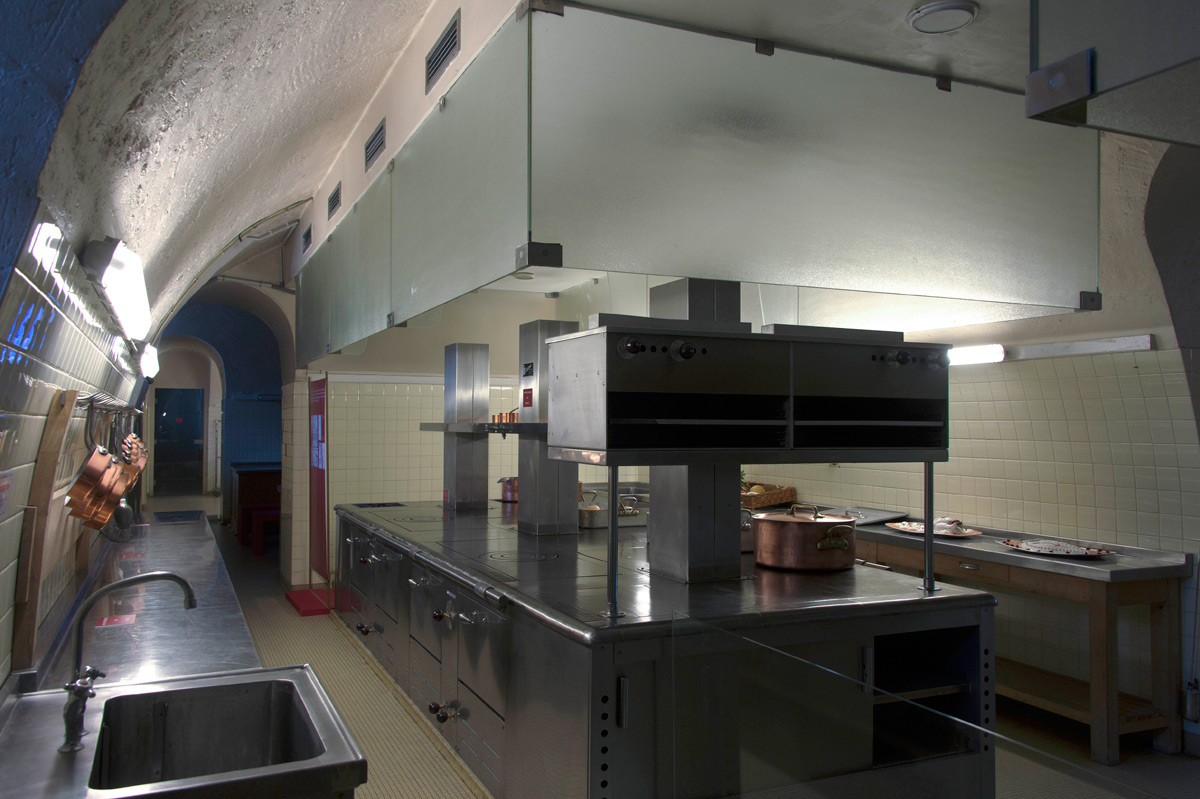
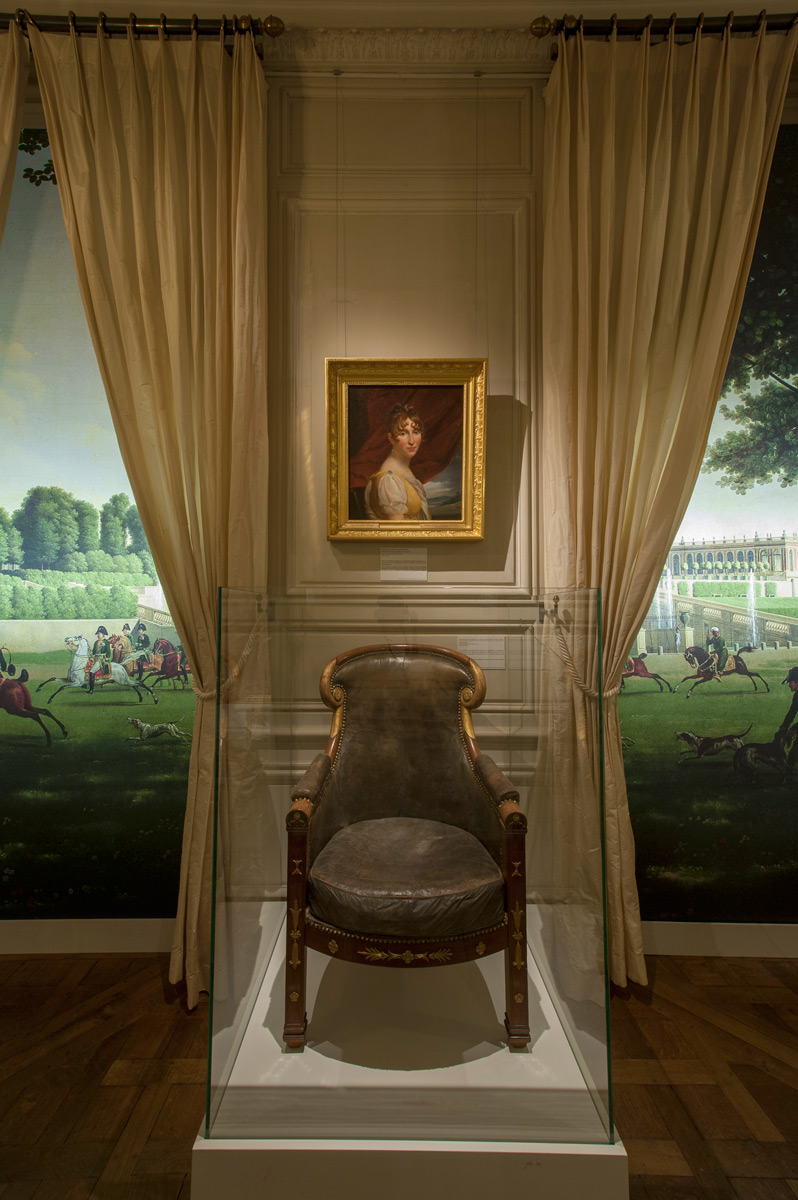
Dans le prolongement de cette présentation, le public découvre pour la première fois les appartements aménagés pour de Gaulle, remeublés dans leur état de 1966 grâce au Mobilier national et au décorateur Serge Royaux. Sept pièces en rez-de-chaussée (salons, bureaux, salle à manger…) et les immenses cuisines, au sous-sol. Dans cette seconde partie la scénographie s’attache essentiellement à créer un parcours sécurisé, offrant des informations aux visiteurs, tout en restant la plus discrète possible. Des accessoires d’époque (cendriers, magazines, téléphones, accessoires de cuisines, fruits et légumes, faux plats cuisinés…) sont également utilisés pour donner vie aux espaces.

Exhibition: A President at the King’s Home: de Gaulle at Trianon – image 1
Exhibition: A President at the King’s Home: de Gaulle at Trianon – image 2
Exhibition: A President at the King’s Home: de Gaulle at Trianon – image 3
Exhibition: A President at the King’s Home: de Gaulle at Trianon – image 4
Exhibition: A President at the King’s Home: de Gaulle at Trianon – image 5
Exhibition: A President at the King’s Home: de Gaulle at Trianon – image 6
Exhibition: A President at the King’s Home: de Gaulle at Trianon – image 7
Exhibition: A President at the King’s Home: de Gaulle at Trianon – image 8
Exhibition: A President at the King’s Home: de Gaulle at Trianon – image 9
Exhibition: A President at the King’s Home: de Gaulle at Trianon – image 10
Exhibition: A President at the King’s Home: de Gaulle at Trianon – image 11
Exhibition: A President at the King’s Home: de Gaulle at Trianon – image 12

Exhibition: The Grand Trianon, from Louis XIV to Charles de Gaulle

Palace of Versailles, Grand Trianon, Versailles

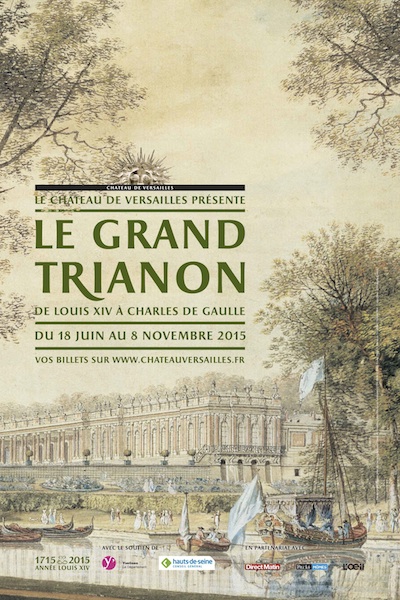
Le Grand Trianon, de Louis XIV à Charles de Gaulle2015The Grand Trianon, from Louis XIV to Charles de Gaulle

Scenography and graphic design
Exhibition from 18 June 2015 to 8 November 2015
Curators
Jérémie Benoit
Total area
200 m²
70 works
art objects, furniture, sculptures, paintings, works on paper, archive documents, books.
Works budget
€53,000
Attendance
150,000 visitors

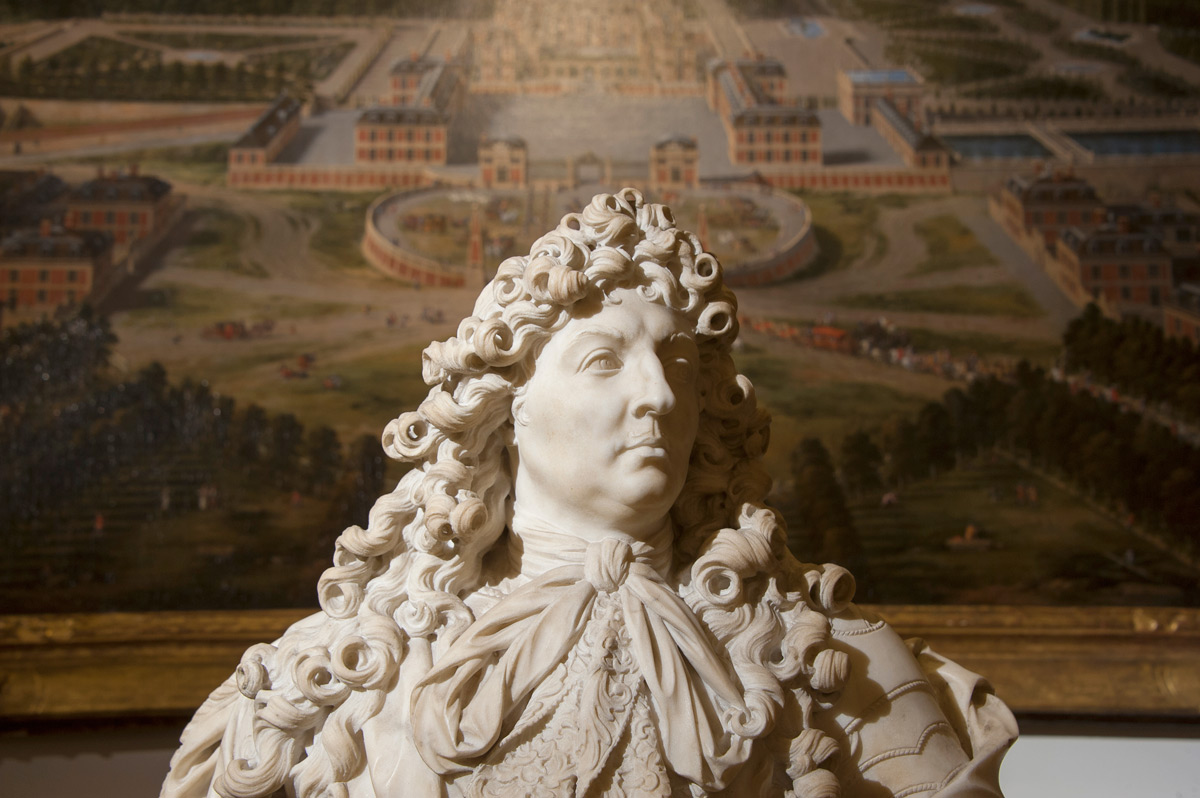
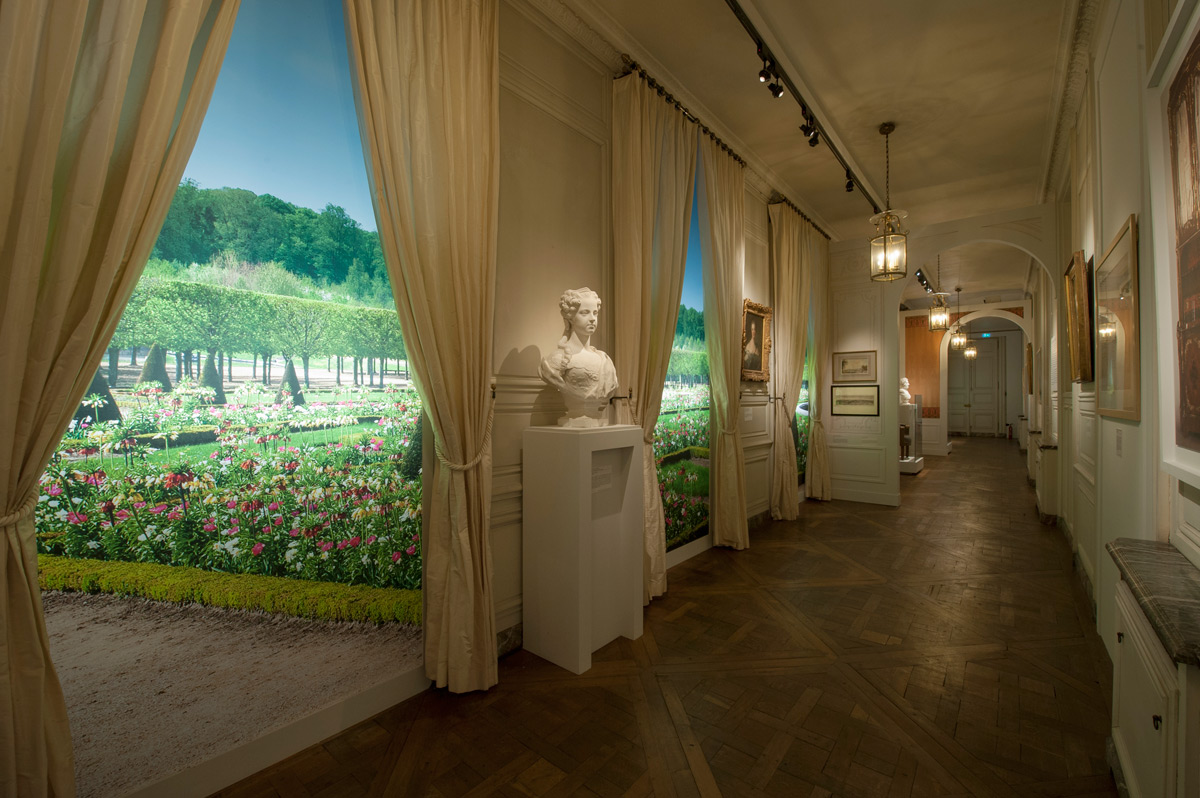
On the occasion of the restoration of the Grand Trianon begun in January 2015, the Palace of Versailles presents an exhibition tracing the history of the palace from its construction to 1960. Plans, engravings and drawings recall the history of the building’s fit-outs and transformations, while busts, portraits and furniture evoke the personalities who lived there.

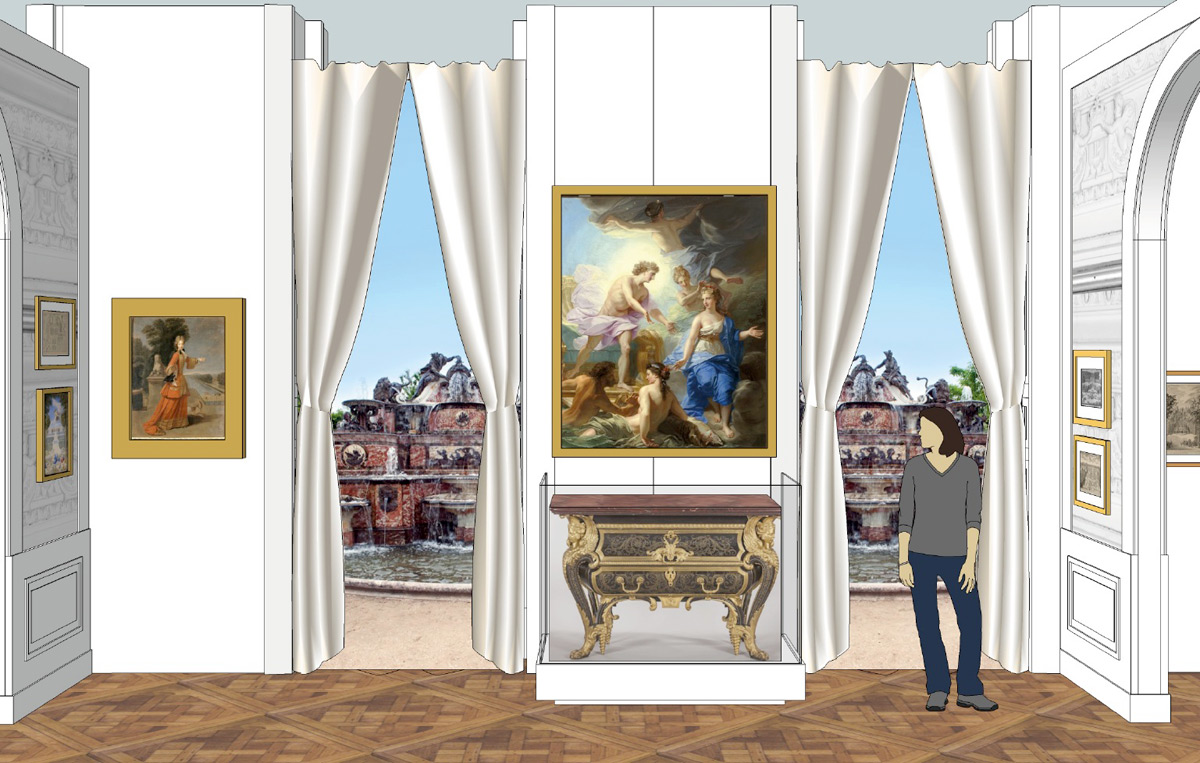
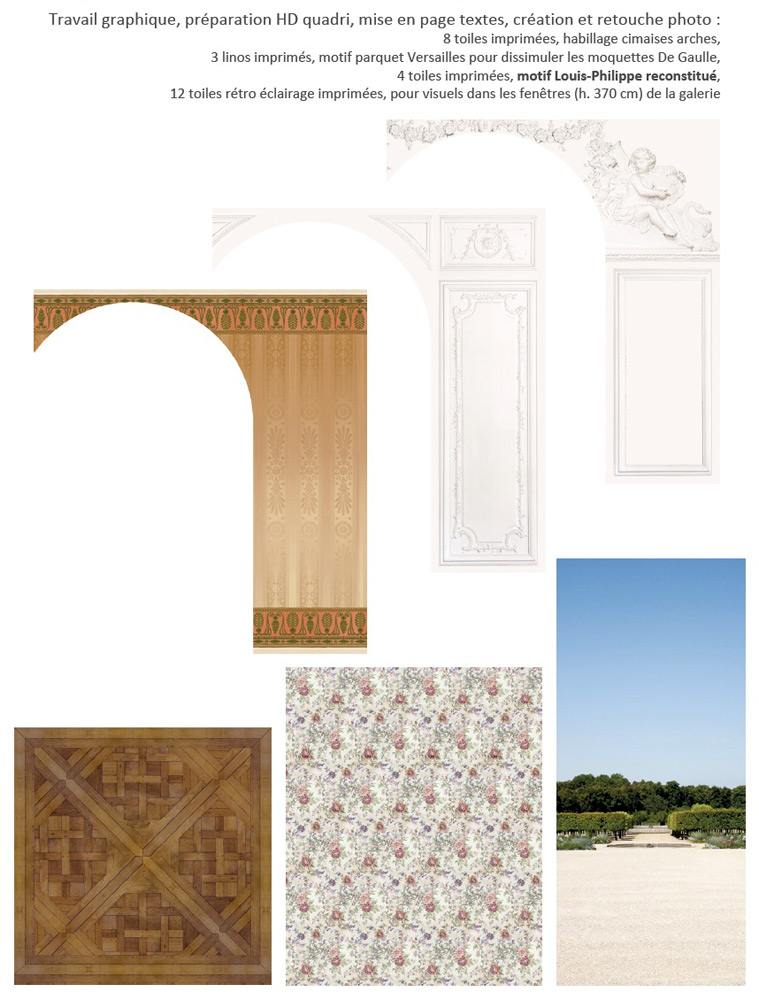
Design approach: the existing decor of the Trianon-sous-Bois gallery is preserved as far as possible. “Arch” display walls are created, both to define each period clearly and to evoke its atmosphere through fragments of decor specific to each one, such as wall hangings with reconstructed patterns (for the Louis-Philippe period, for example), and through large backlit visuals in the many windows closed for work on the exterior of the building. Some alcoves adjoining the gallery are also used to form period rooms from different eras.

Exhibition: The Grand Trianon, from Louis XIV to Charles de Gaulle – image 1
Exhibition: The Grand Trianon, from Louis XIV to Charles de Gaulle – image 2
Exhibition: The Grand Trianon, from Louis XIV to Charles de Gaulle – image 3
Exhibition: The Grand Trianon, from Louis XIV to Charles de Gaulle – image 4
Exhibition: The Grand Trianon, from Louis XIV to Charles de Gaulle – image 5
Exhibition: The Grand Trianon, from Louis XIV to Charles de Gaulle – image 6
Exhibition: The Grand Trianon, from Louis XIV to Charles de Gaulle – image 7
Exhibition: The Grand Trianon, from Louis XIV to Charles de Gaulle – image 8

Exhibition: China at Versailles: Art and Diplomacy in the 18th Century

Palace of Versailles, Madame de Maintenon’s Apartment and King’s Guard Room, Versailles

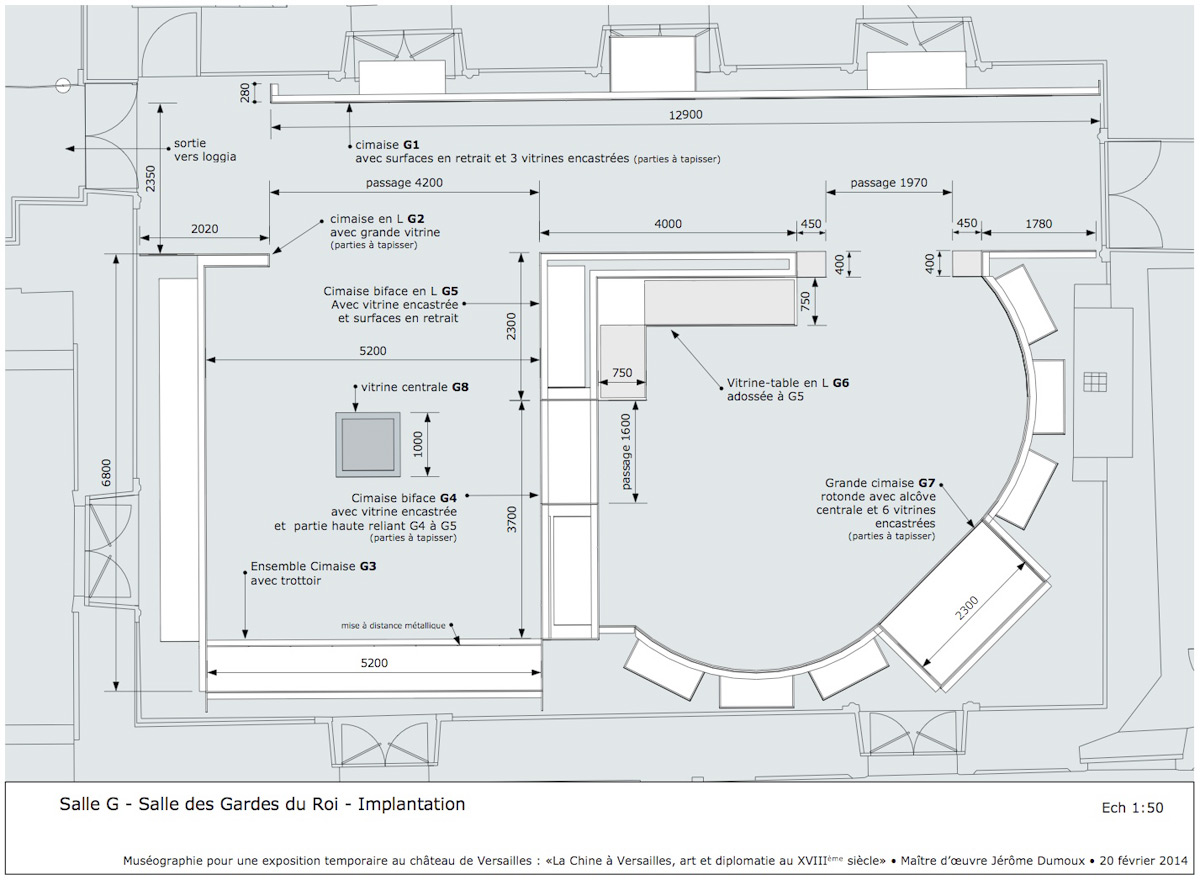
La Chine à Versailles, Art et Diplomatie au XVIIIe Siècle2014China at Versailles: Art and Diplomacy in the 18th Century

Scenography and graphic design
Exhibition from 27 May 2014 to 26 October 2014
Curators
Marie-Laure de Rochebrune
Total area
350 m²
150 works
art objects, porcelain, furniture, sculptures, paintings, hangings, works on paper, archive documents, books, multimedia screens.
Works budget
€125,000

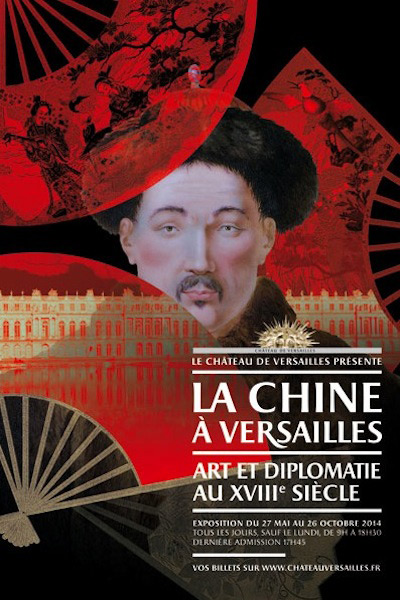
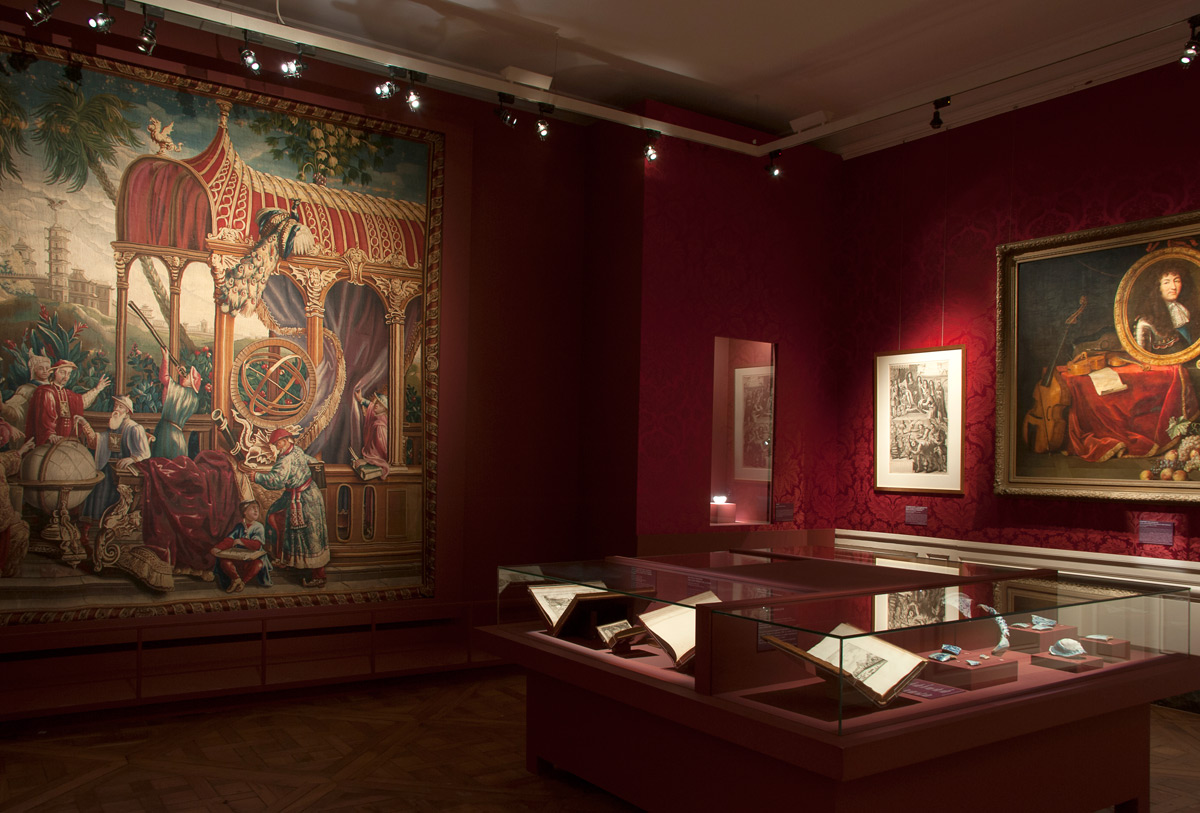
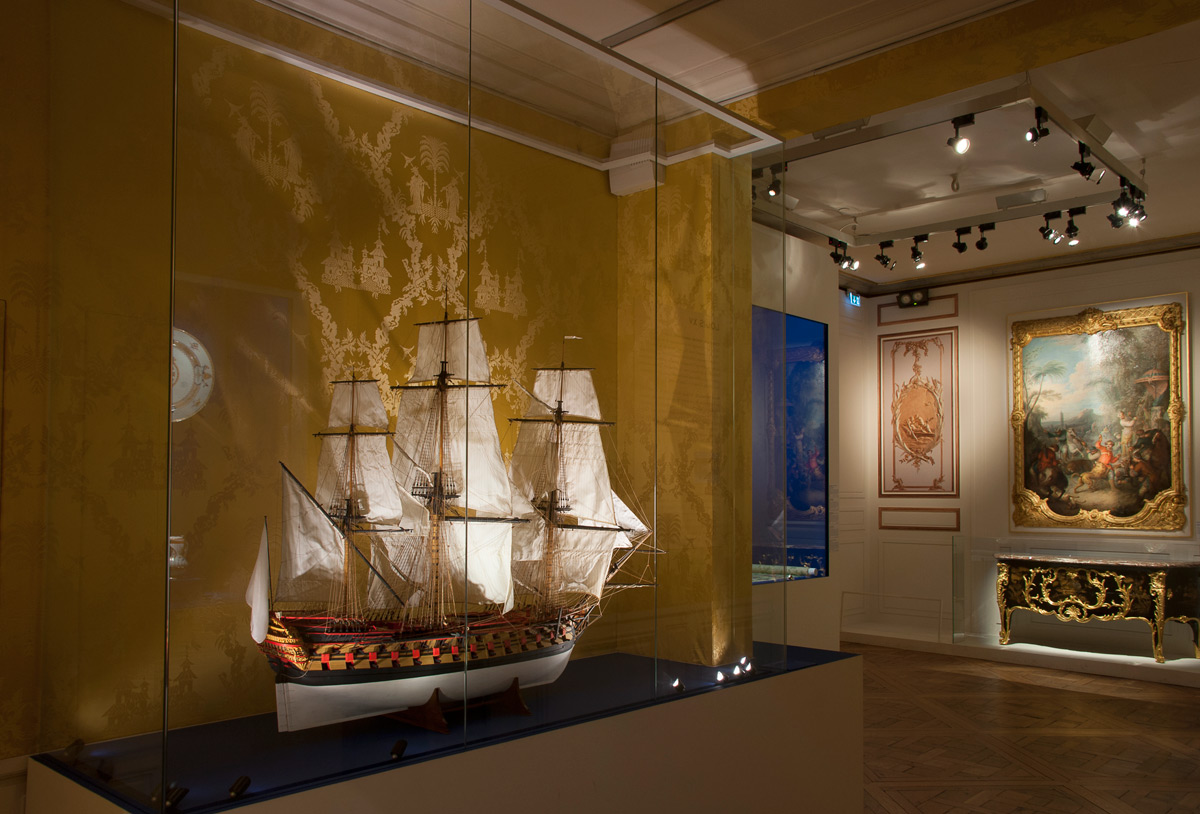
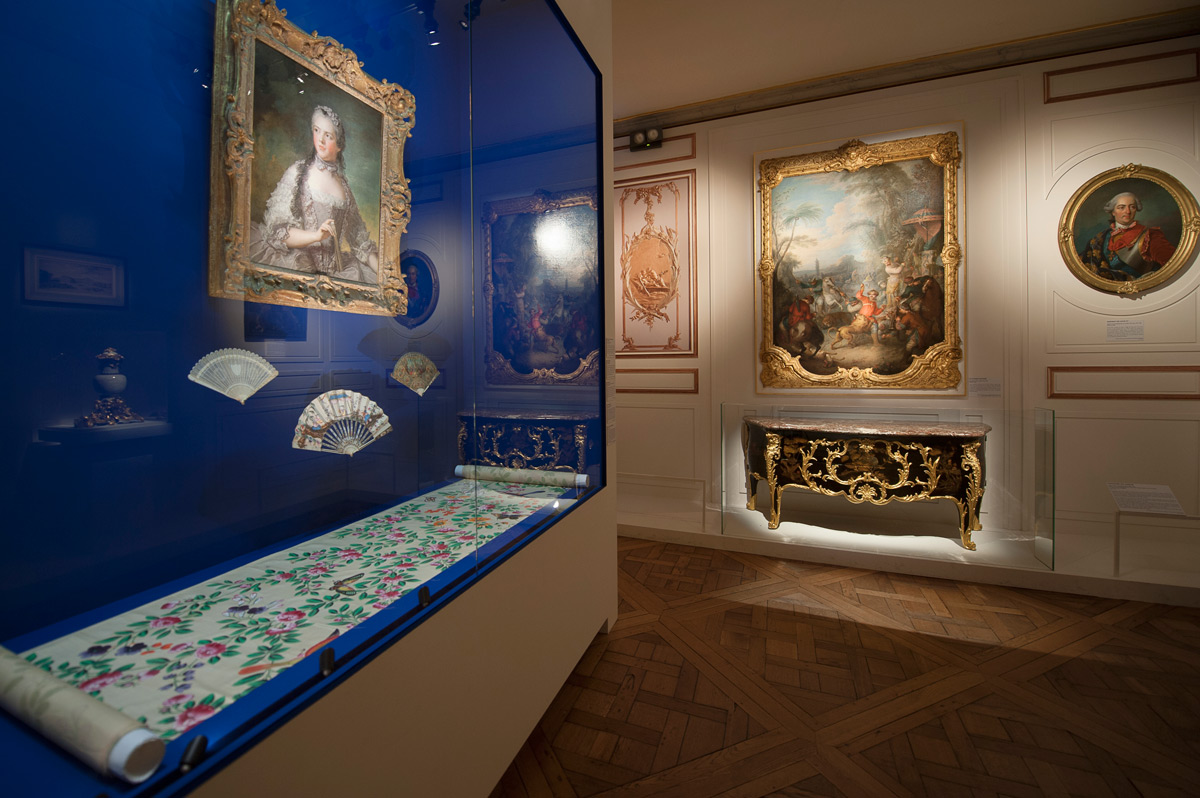
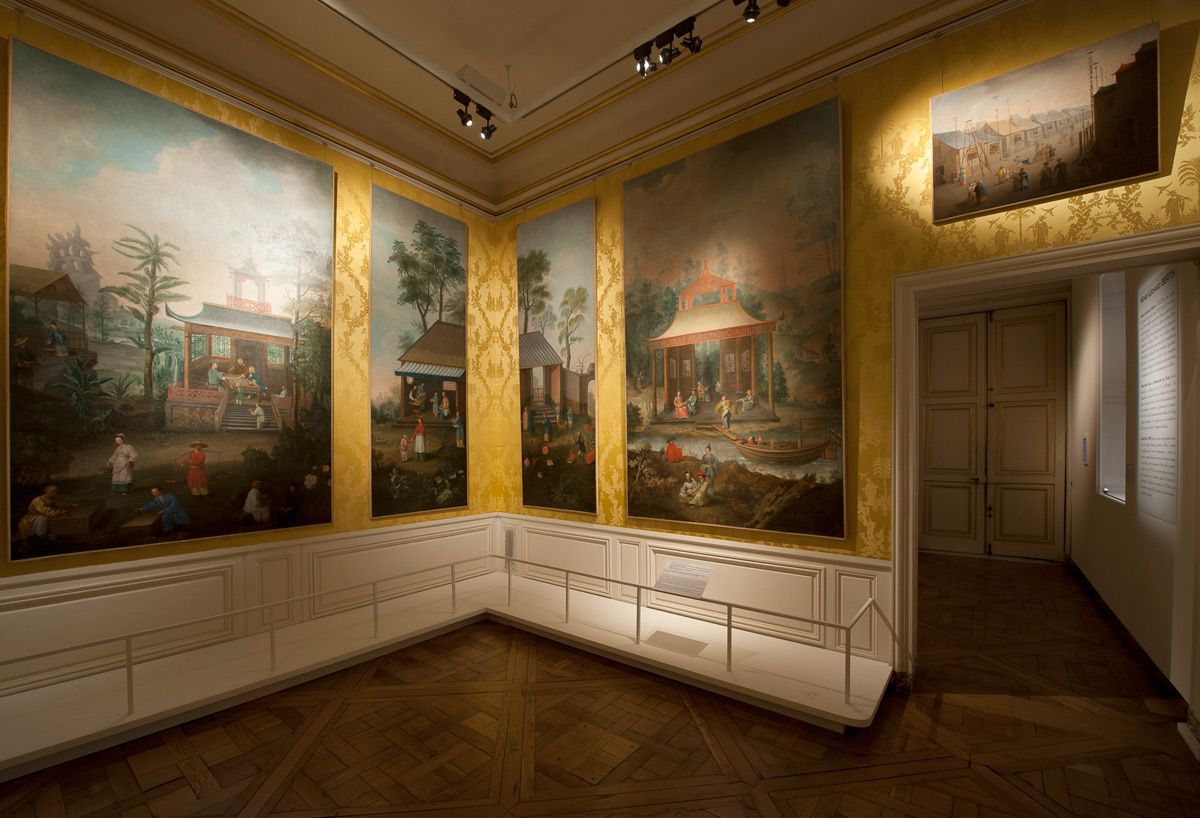
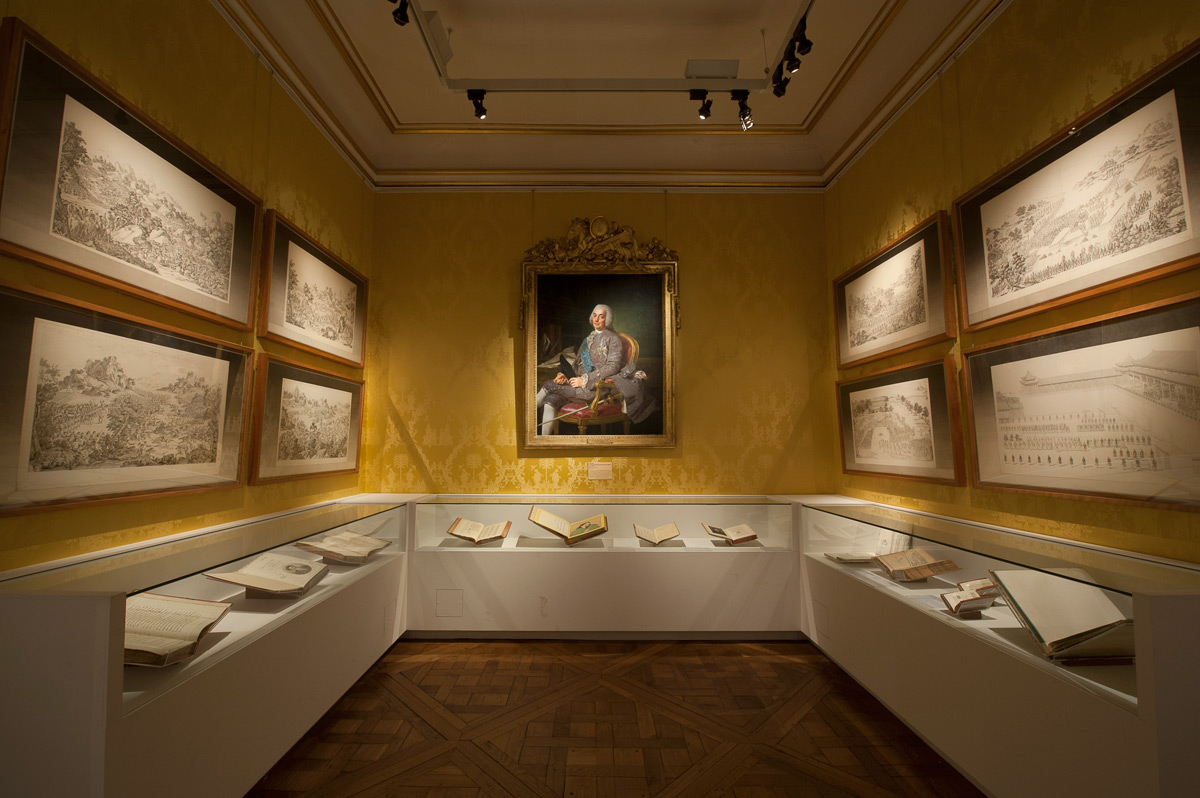
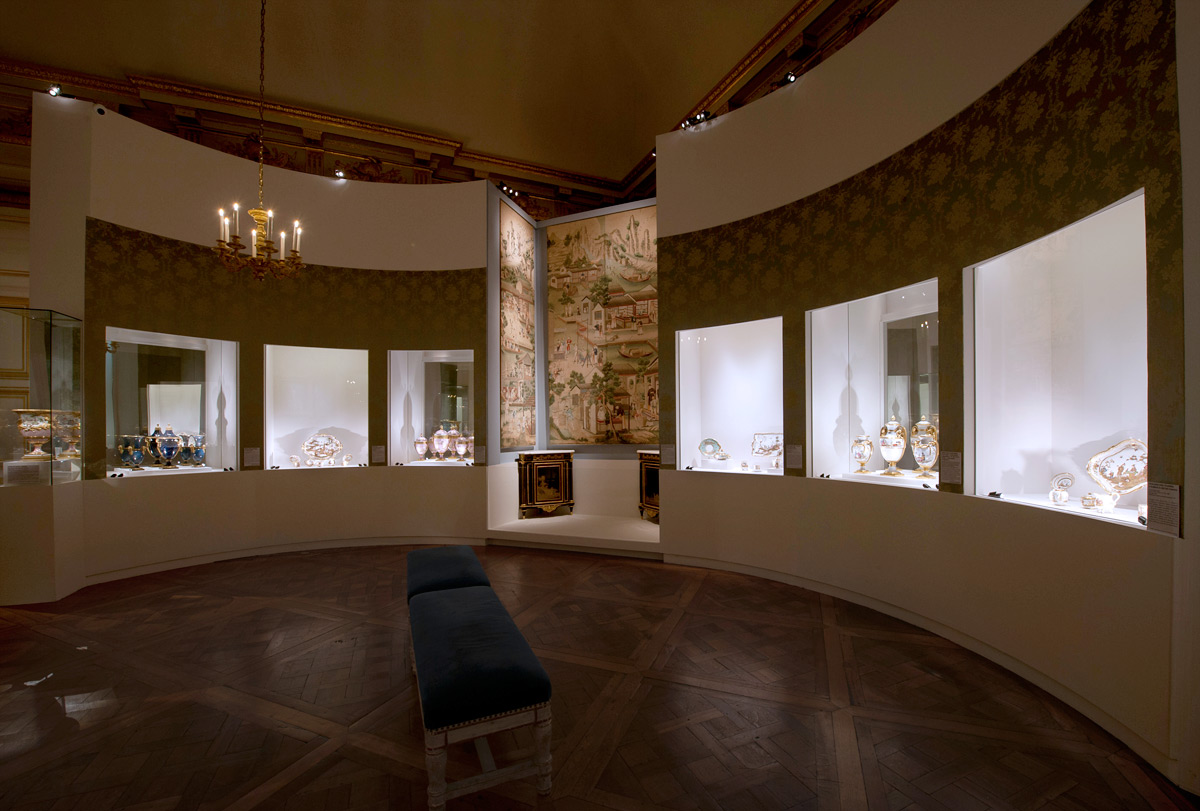
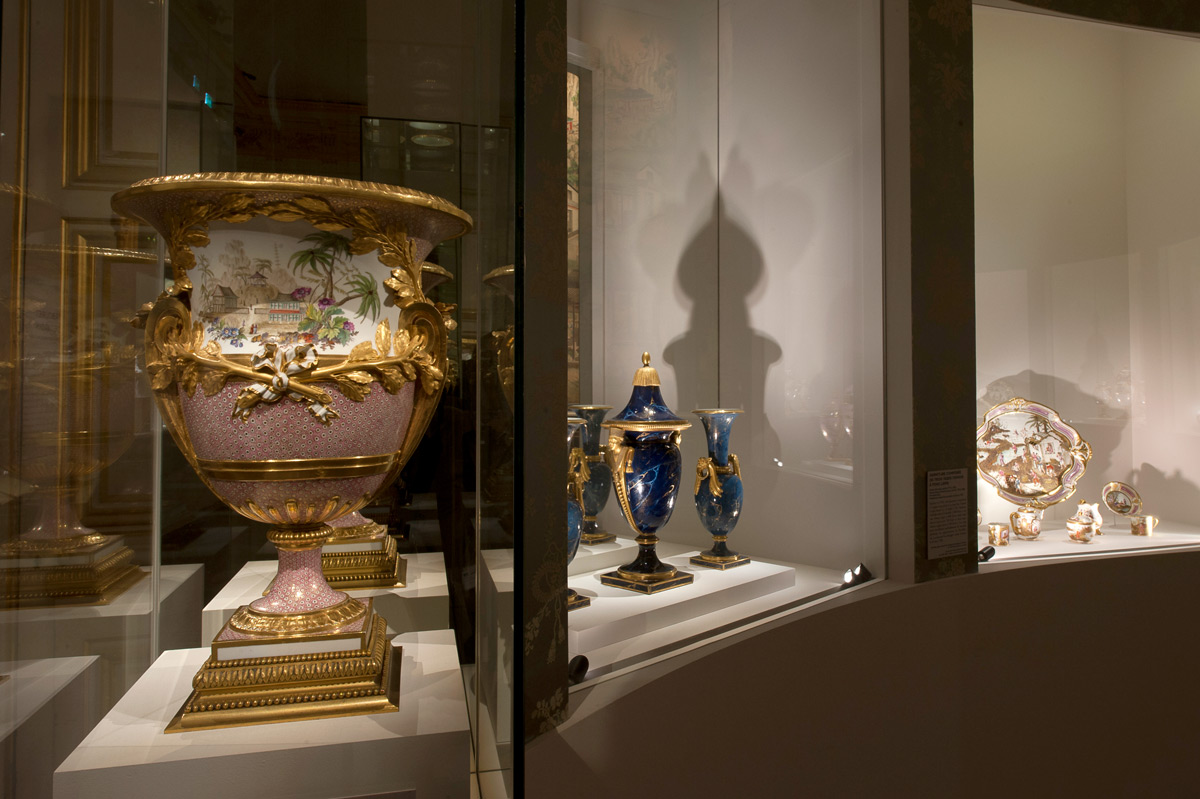
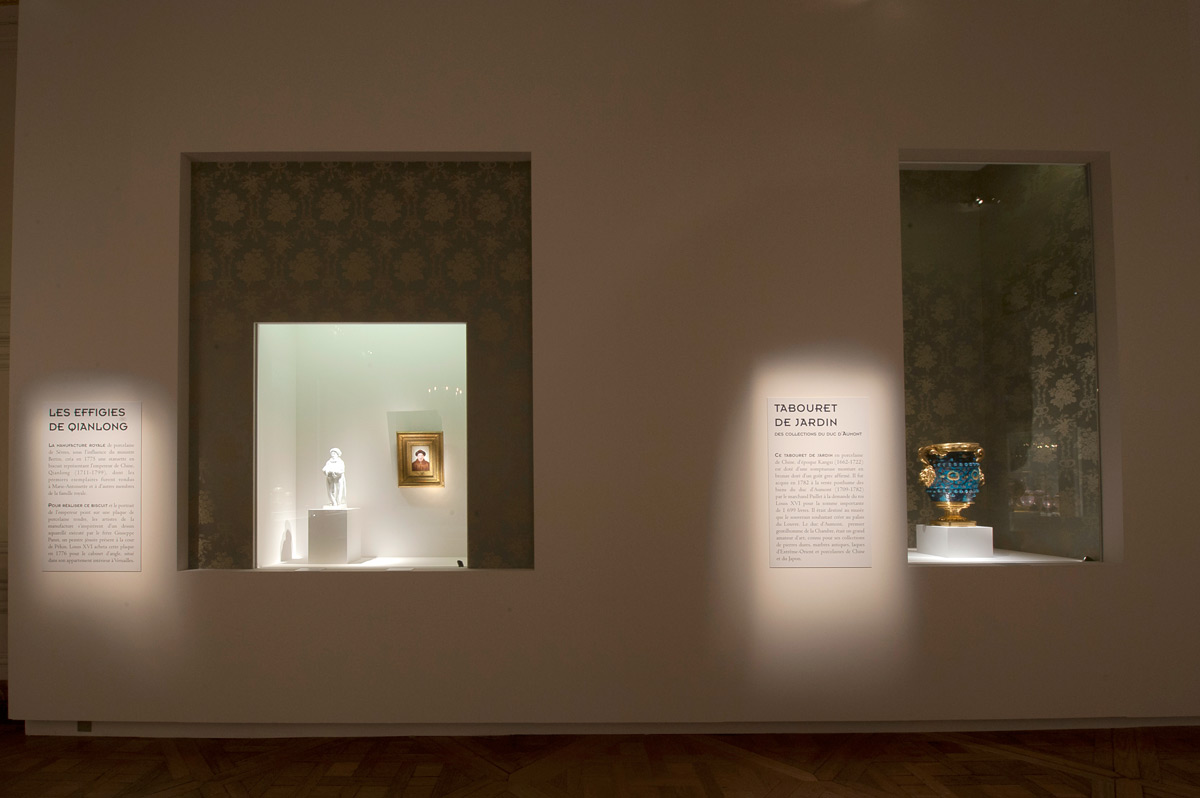
The exhibition traces the history of political and artistic exchanges between China and France in the 18th century, on the occasion of the 50th anniversary of the establishment of diplomatic relations between the two countries in 1964.

The paintings, furniture, lacquerware, porcelain and tapestries on display reflect the refinement of their time and are extremely rare today.

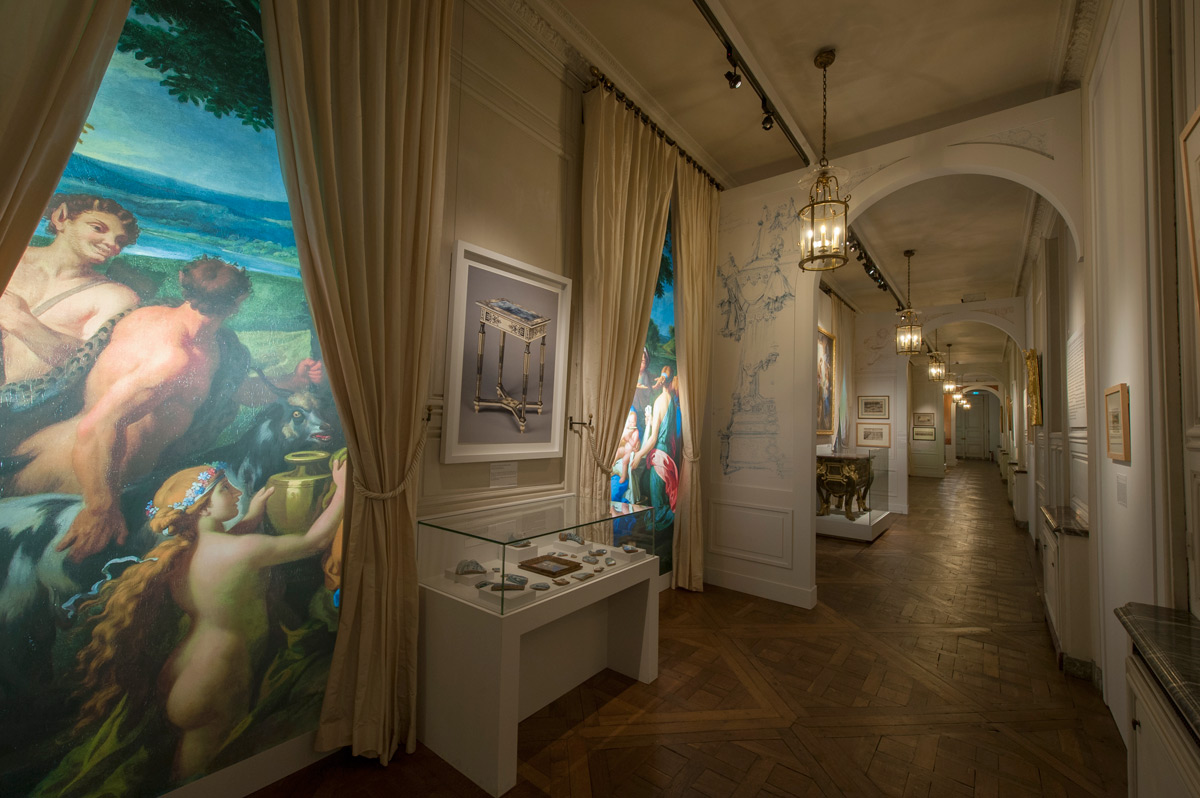
Design approach: the works and art objects are presented in context, evoking the refined, intimate interiors of the private apartments of the Palace of Versailles. One material became obvious from the very beginning of my thinking: silk and wall hangings. It seemed to me that there were many bridges between the great textile and silk decors adorning the apartments of Versailles and the art of silk so emblematic of China, which for centuries kept the techniques of silk production secret, held its monopoly and traded this sumptuous fabric.
Silk is everywhere in the Chinese art of living: clothing, precious caskets, bookbindings, luxury papers made with silk, and so on.

In the same way, silks (brocades, lampas, damasks…) are everywhere in the decor of the apartments of Versailles.
What other material could be better suited to designing a setting for these works, which tell us about the taste for China at Versailles in the 18th century?

The use of three hangings in characteristic colours and styles helps give rhythm to the route and clearly distinguishes the three periods – Louis XIV, Louis XV and Louis XVI – covered by the exhibition.

Exhibition: China at Versailles: Art and Diplomacy in the 18th Century – image 1
Exhibition: China at Versailles: Art and Diplomacy in the 18th Century – image 2
Exhibition: China at Versailles: Art and Diplomacy in the 18th Century – image 3
Exhibition: China at Versailles: Art and Diplomacy in the 18th Century – image 4
Exhibition: China at Versailles: Art and Diplomacy in the 18th Century – image 5
Exhibition: China at Versailles: Art and Diplomacy in the 18th Century – image 6
Exhibition: China at Versailles: Art and Diplomacy in the 18th Century – image 7
Exhibition: China at Versailles: Art and Diplomacy in the 18th Century – image 8
Exhibition: China at Versailles: Art and Diplomacy in the 18th Century – image 9
Exhibition: China at Versailles: Art and Diplomacy in the 18th Century – image 10
Exhibition: China at Versailles: Art and Diplomacy in the 18th Century – image 11
Exhibition: China at Versailles: Art and Diplomacy in the 18th Century – image 12

Exhibition: Trésor du Saint-Sépulcre

Palace of Versailles, Crusades Rooms, Versailles

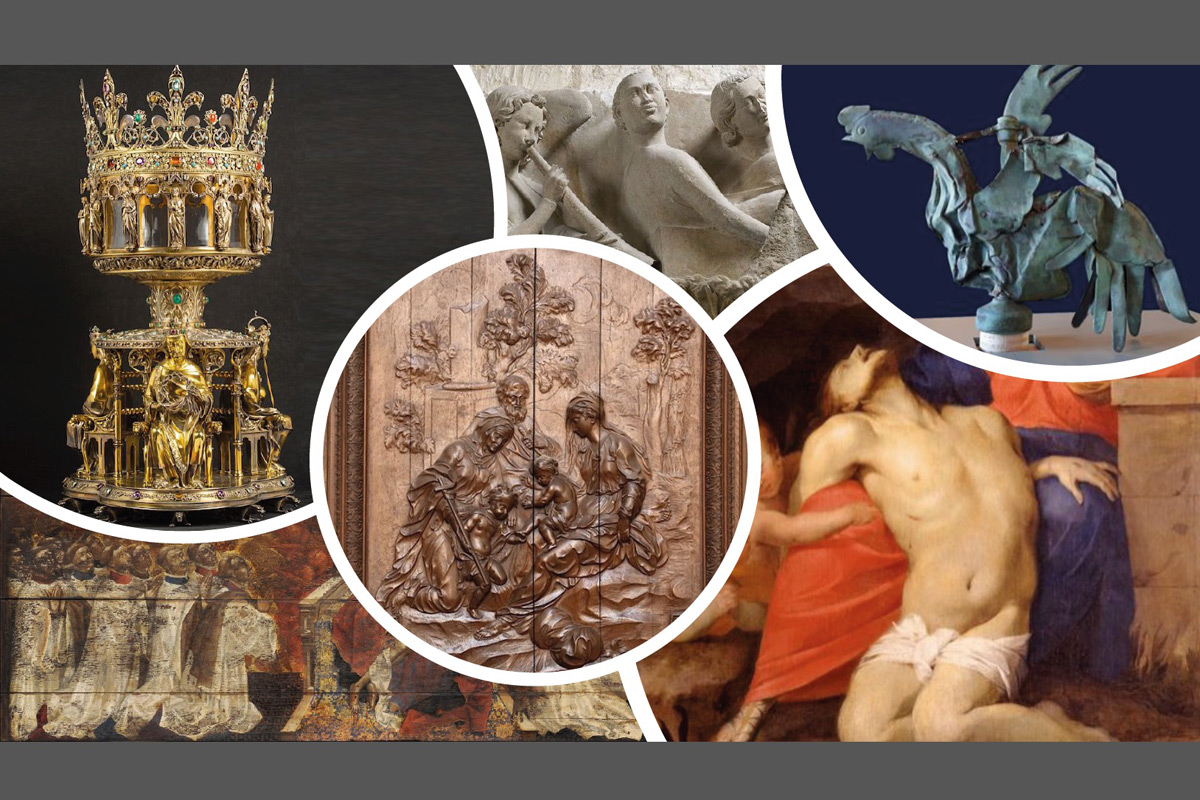
Trésor du Saint-Sépulcre, présents des cours royales européennes à Jérusalem2013Treasure of the Holy Sepulchre, Gifts of the European Royal Courts to Jerusalem

Scenography and graphic design
Exhibition from 15 April 2013 to 14 July 2013
Curators
Béatrix Saule, Jacques Charles-Gaffiot, Bernard Degout
Total area
750 m²
250 works
art objects, furniture, sculptures, paintings, vestments, textiles, works on paper, archive documents, books, multimedia screens and large-scale audiovisual (film).
Works budget
€300,000
Attendance
300,700 visitors

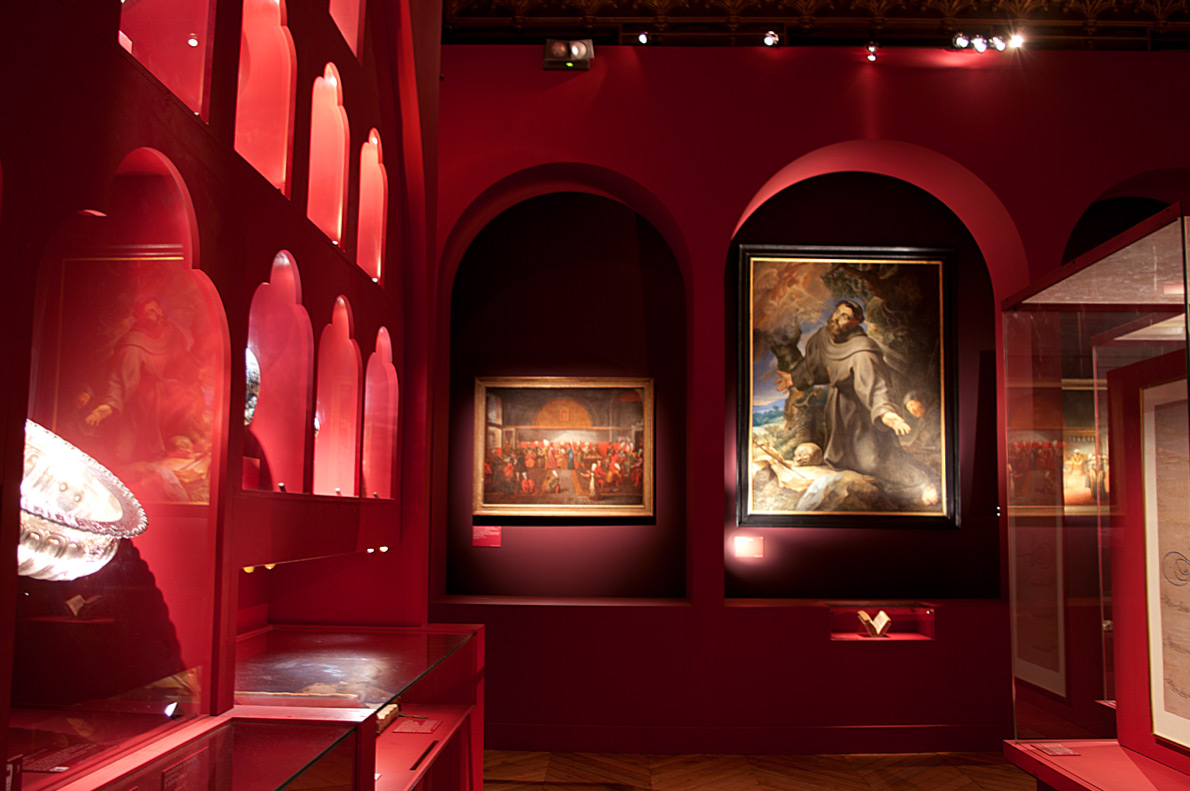
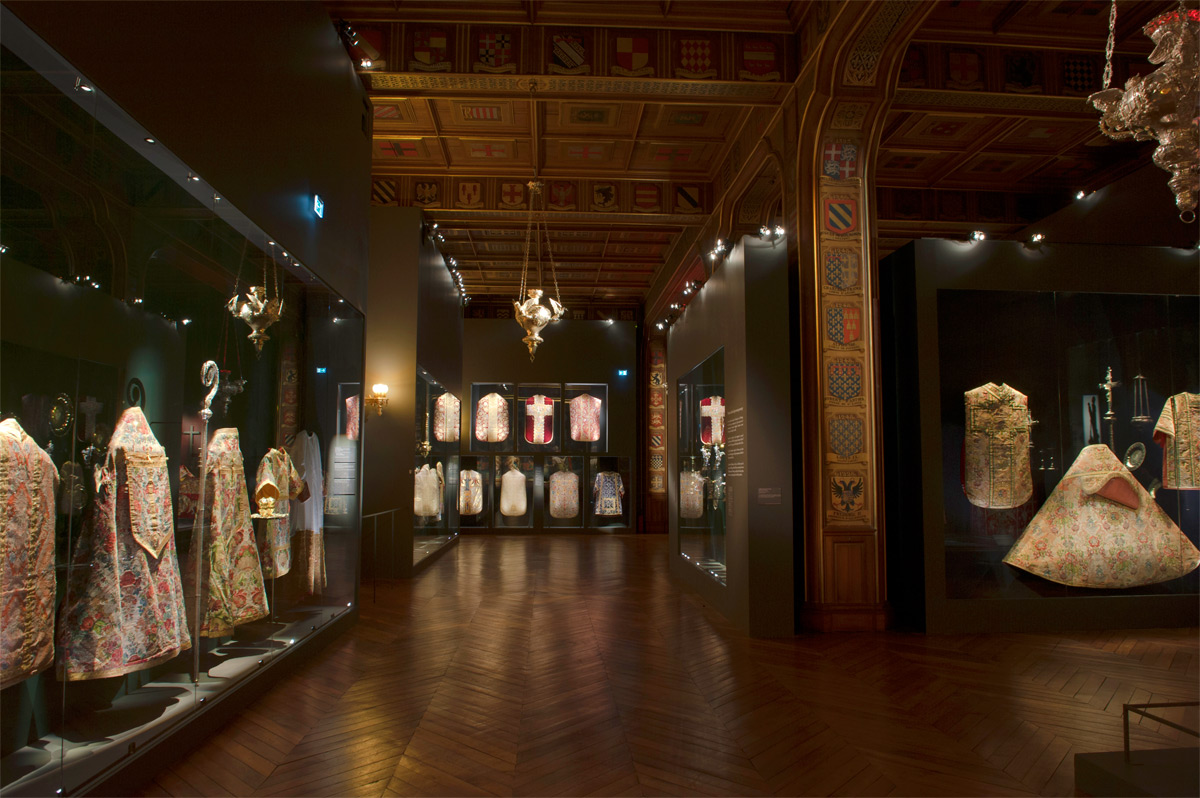
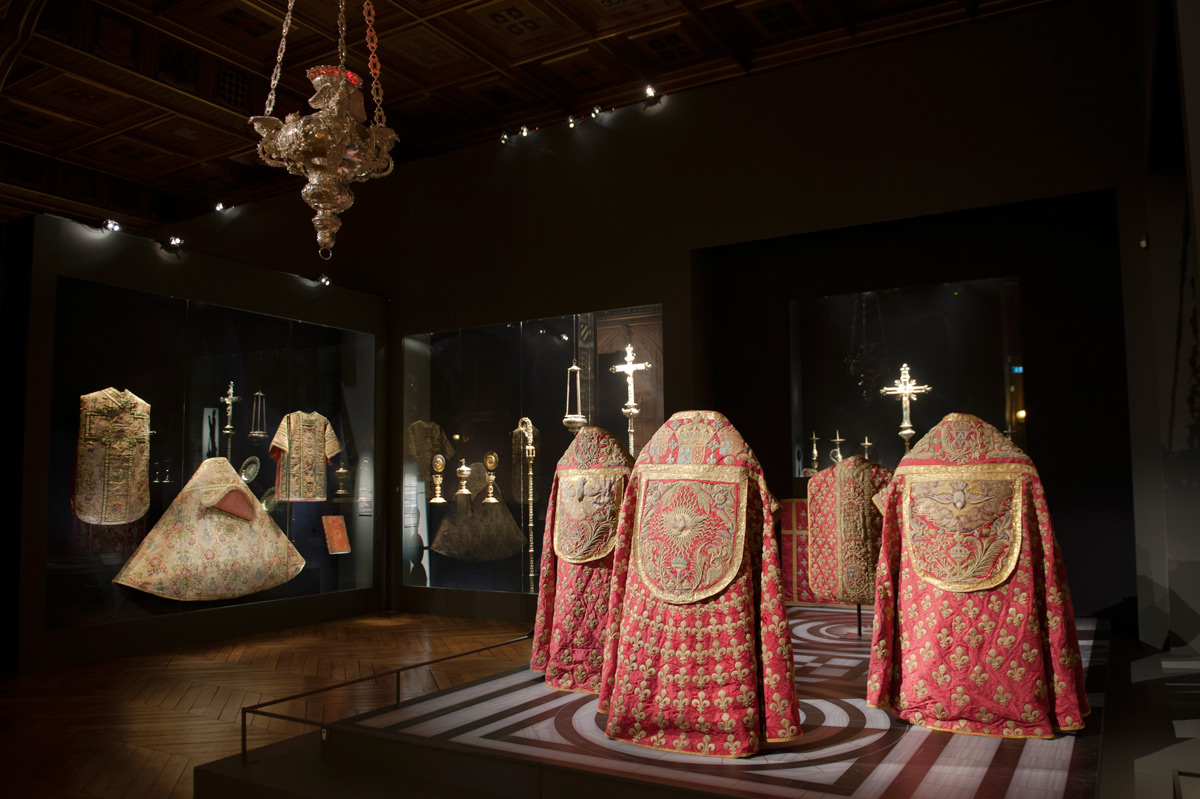
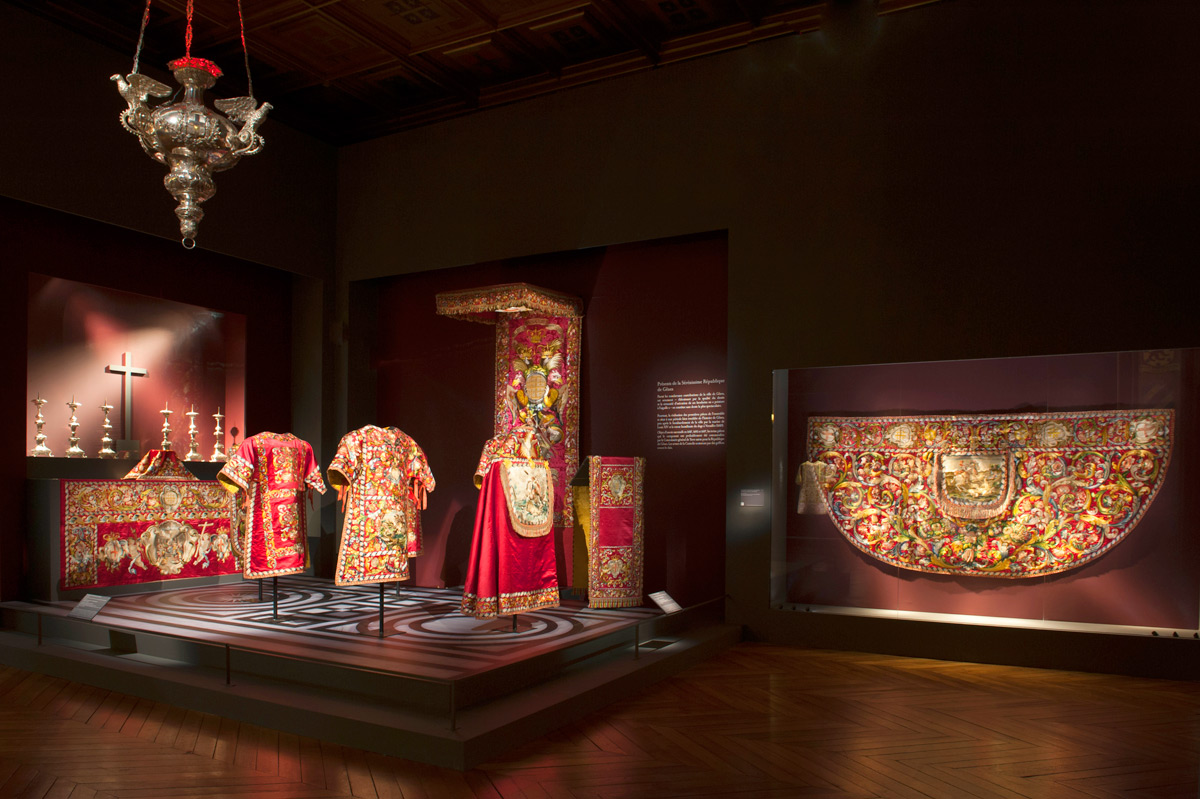
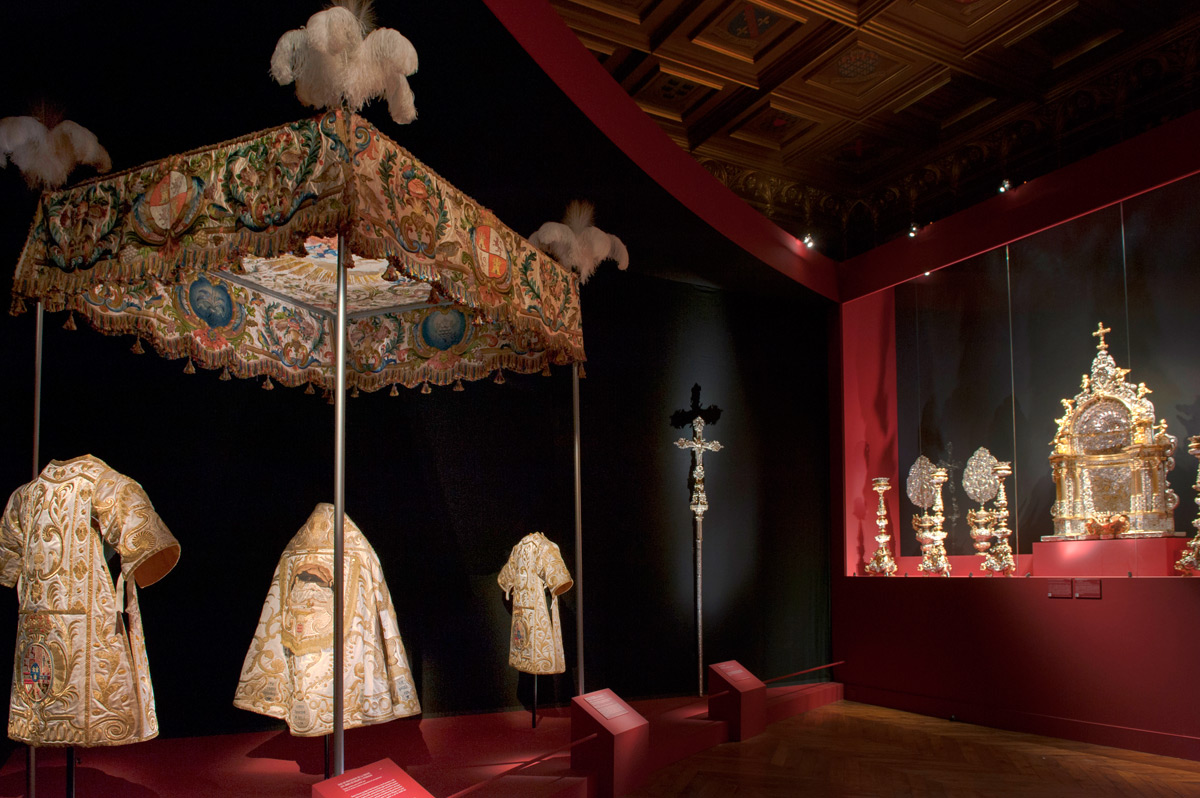
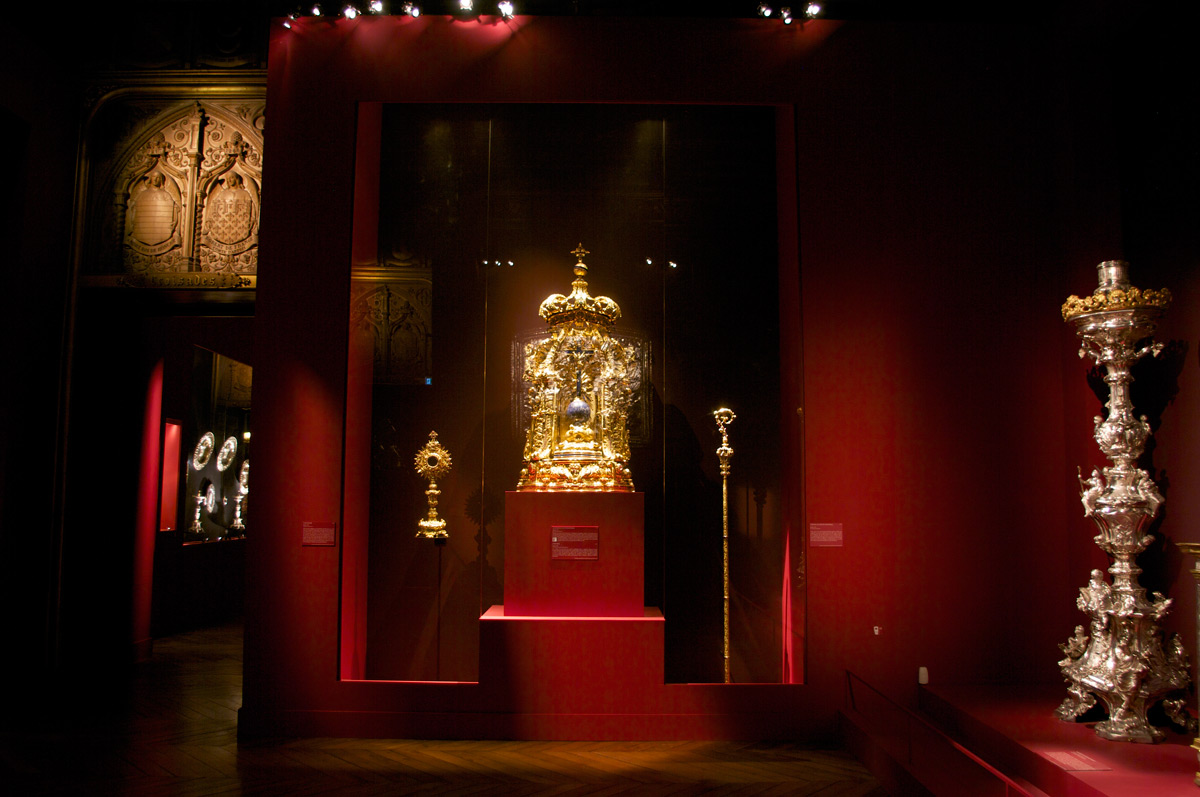
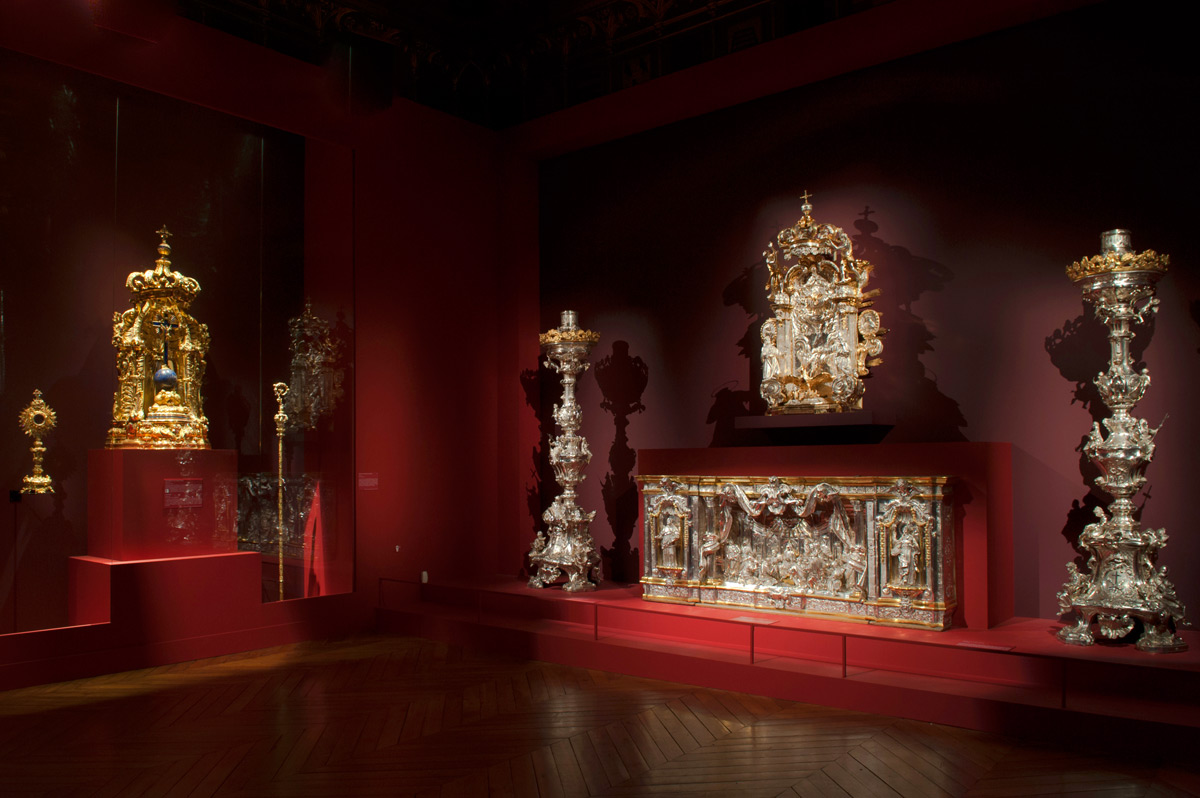
For the first time, the Palace of Versailles and the Conseil général des Hauts-de-Seine present some 250 unknown masterpieces from one of the last treasures of the Western world, simultaneously at the Palace of Versailles and at the Maison de Chateaubriand.

The Treasure of the Holy Sepulchre consists of extraordinary works of art intended to enhance the splendour of the Basilica of the Holy Sepulchre in Jerusalem, as well as those of Bethlehem and Nazareth, sent as tributes to the Holy Places by the leading European sovereigns.

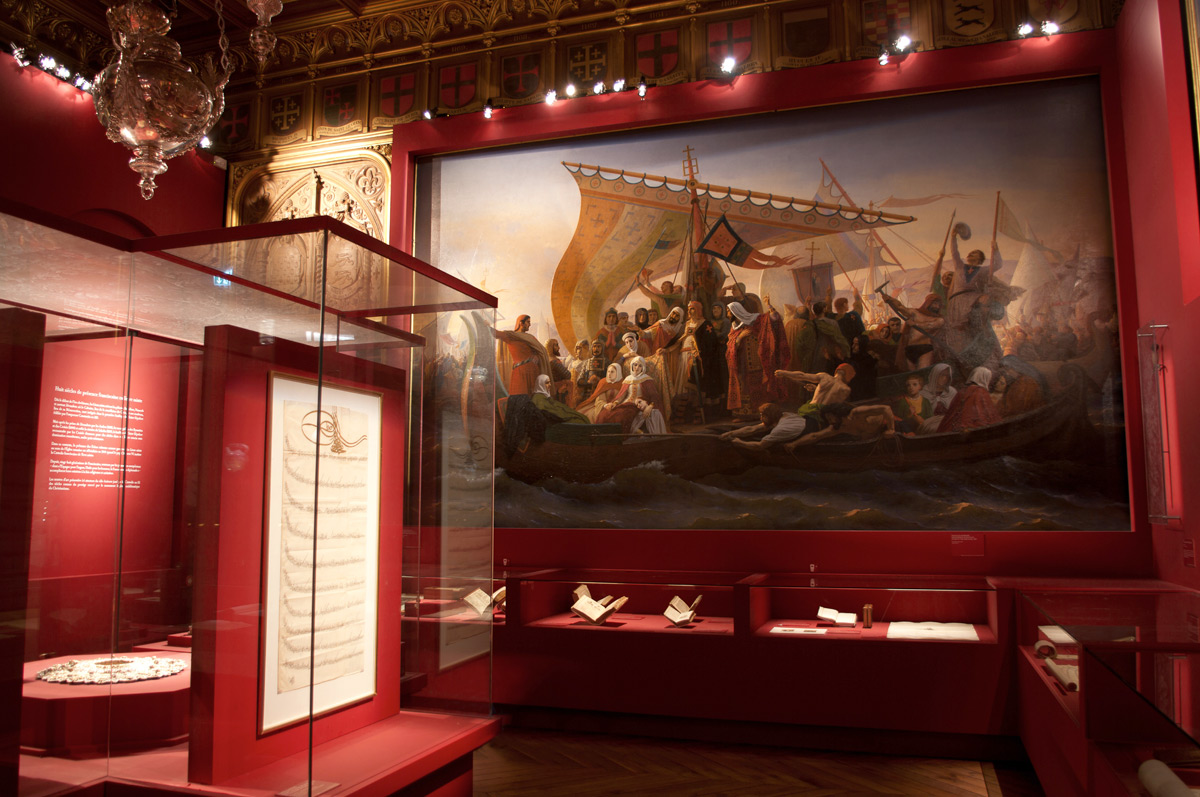
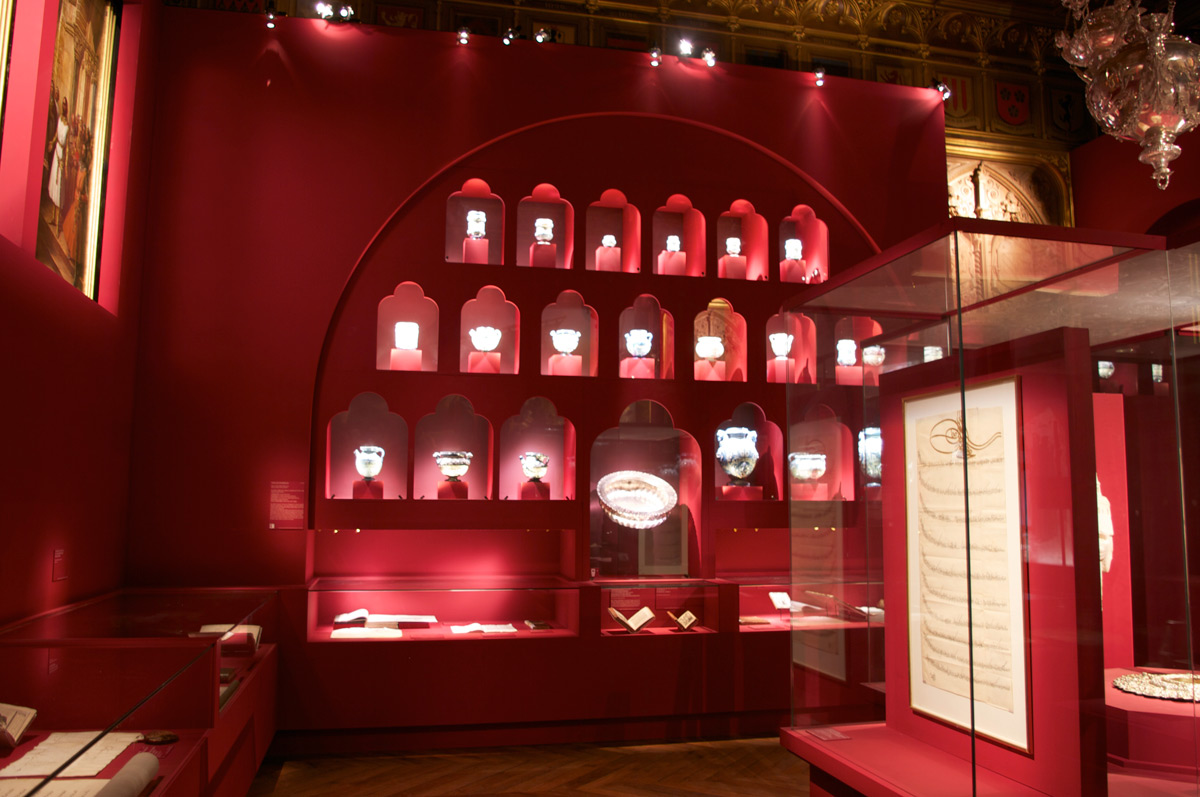
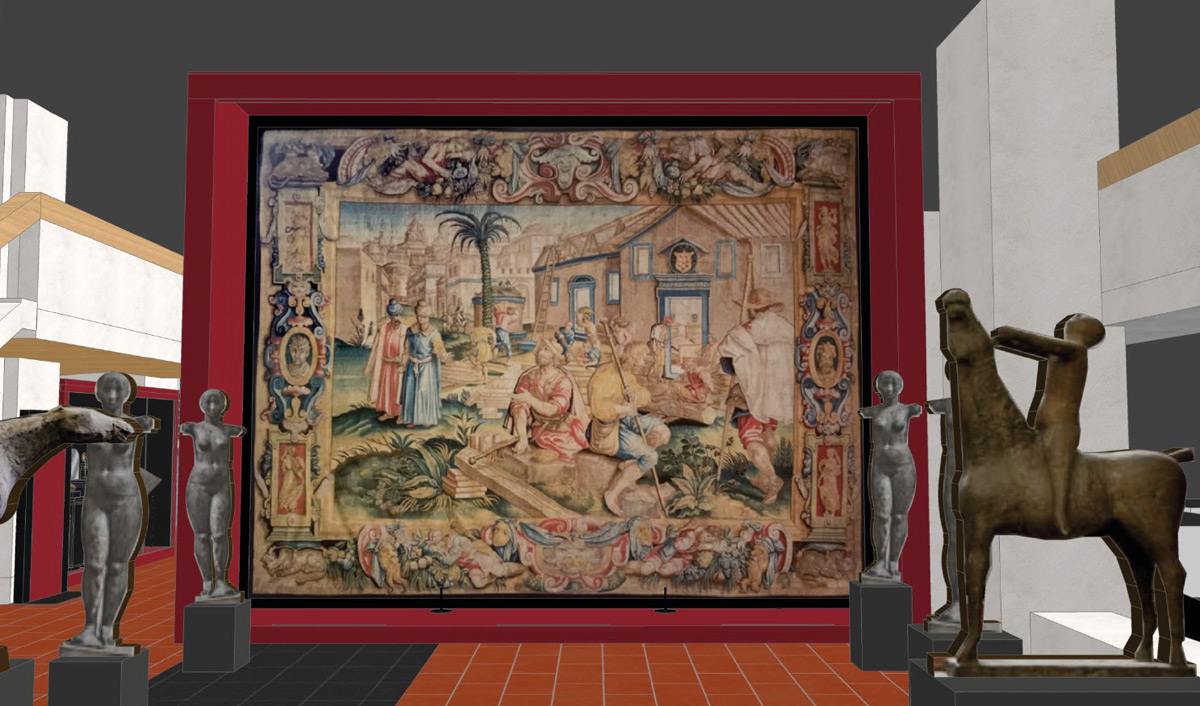
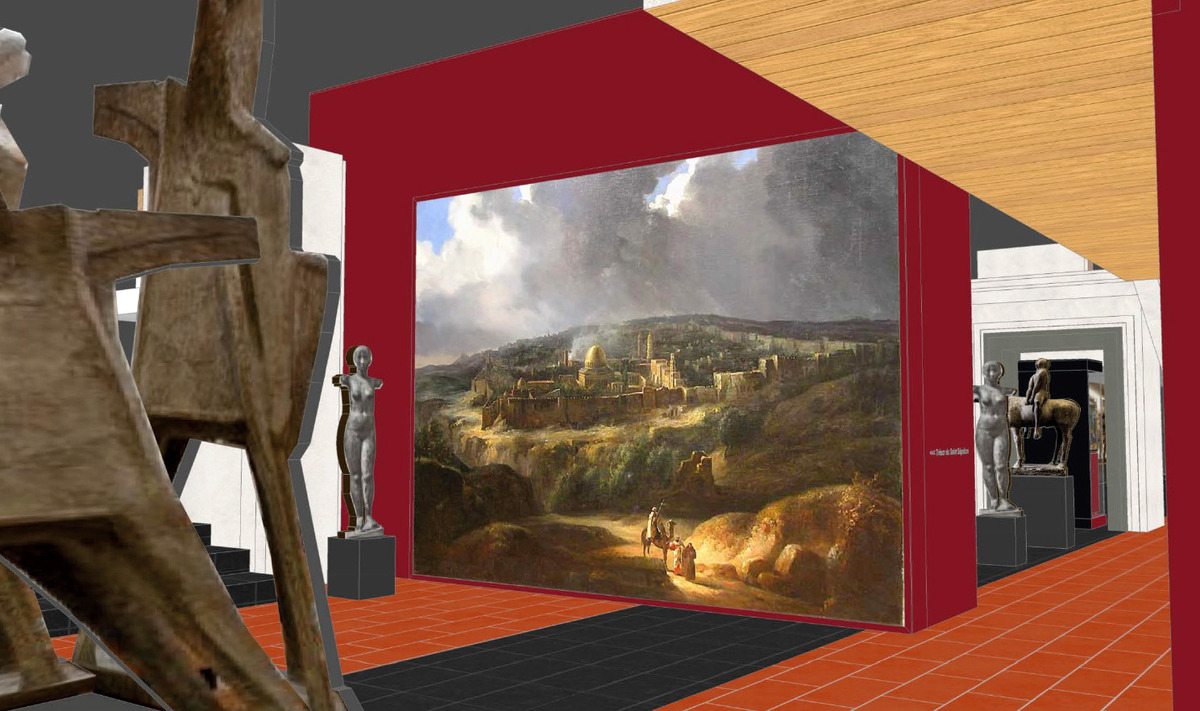
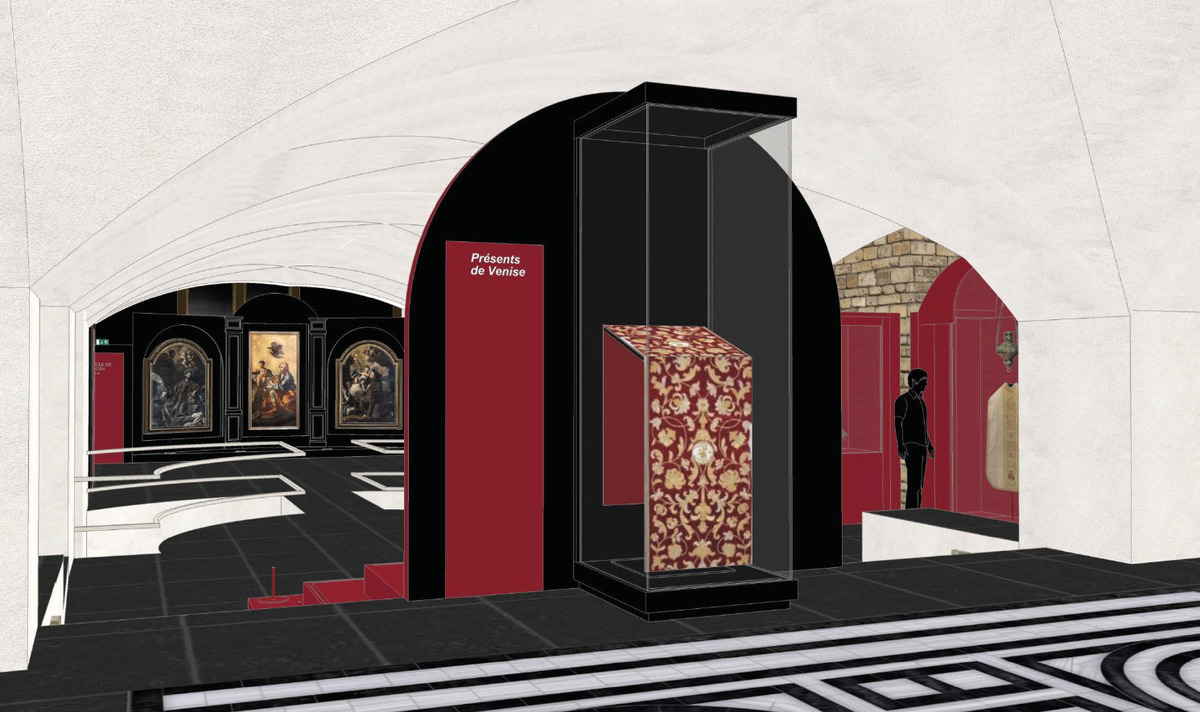
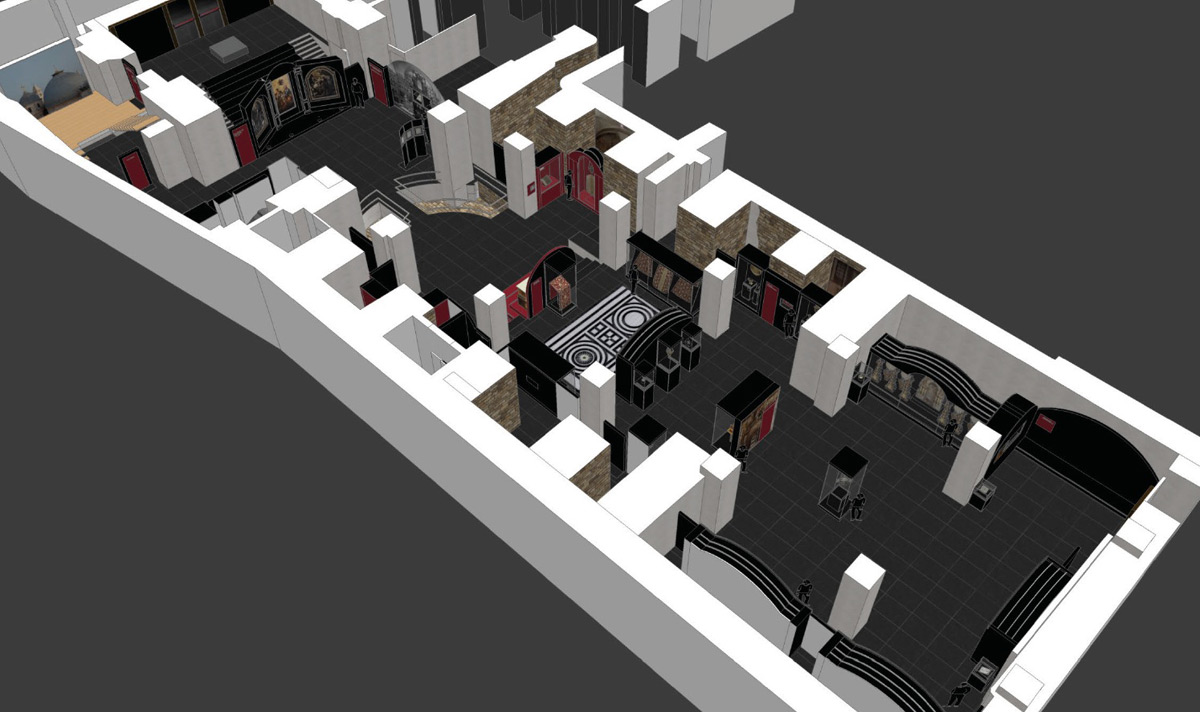
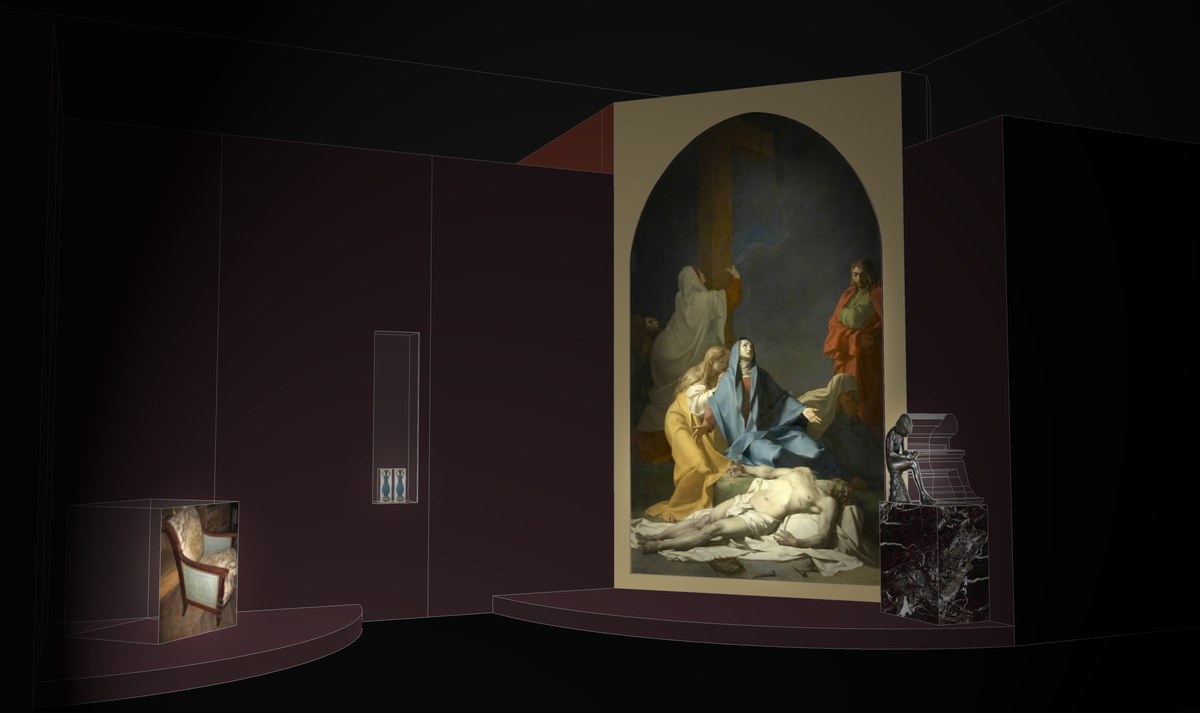
Design approach: a scenography intended to be both restrained and symbolic. The existing decor of the Crusades Rooms is used in fragments: some of the large paintings that form part of the decor of these rooms and could serve the exhibition’s narrative were kept in the scenography and highlighted.

The scenography draws on Byzantine architecture: the round arch is a guiding element, and forms derived from the symbolic octagon echo the ceilings of the Crusades Rooms.

Particular care was taken over the colours of the display walls and other exhibition furniture, to play on the breadth and depth of the spaces created. Some objects appear suspended, as if rising…

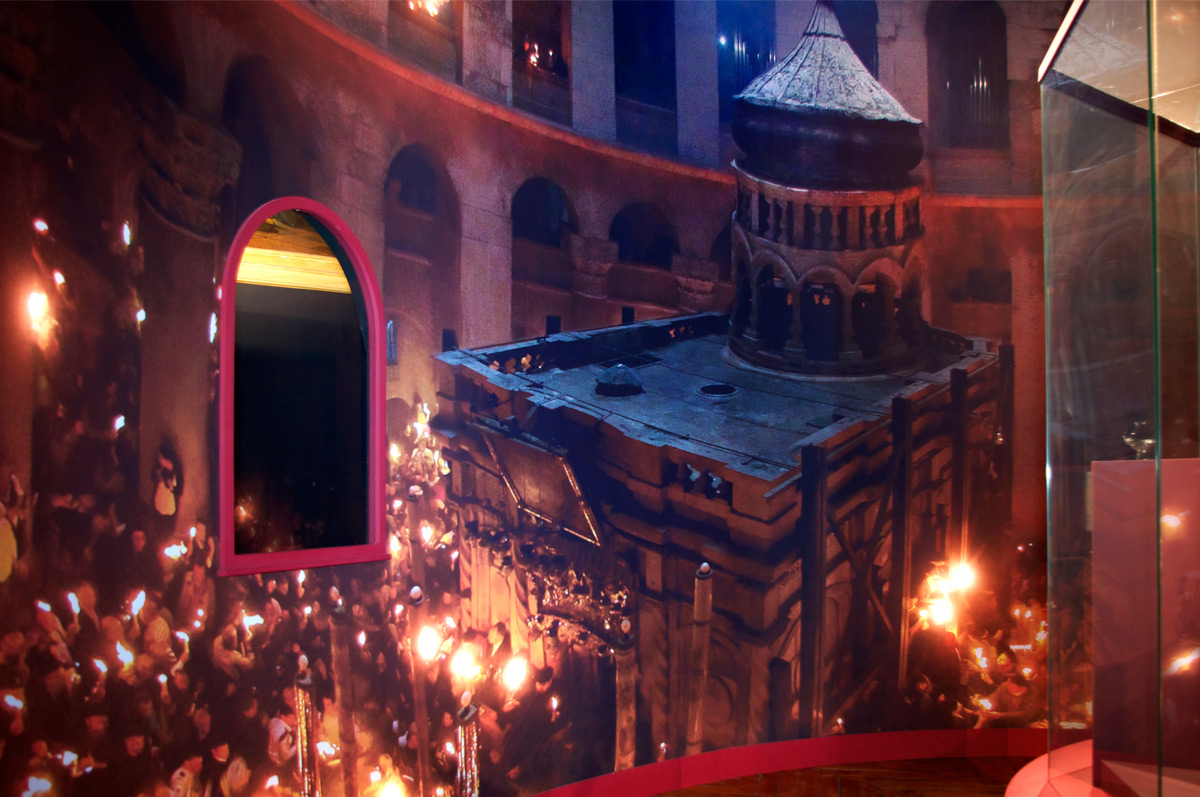
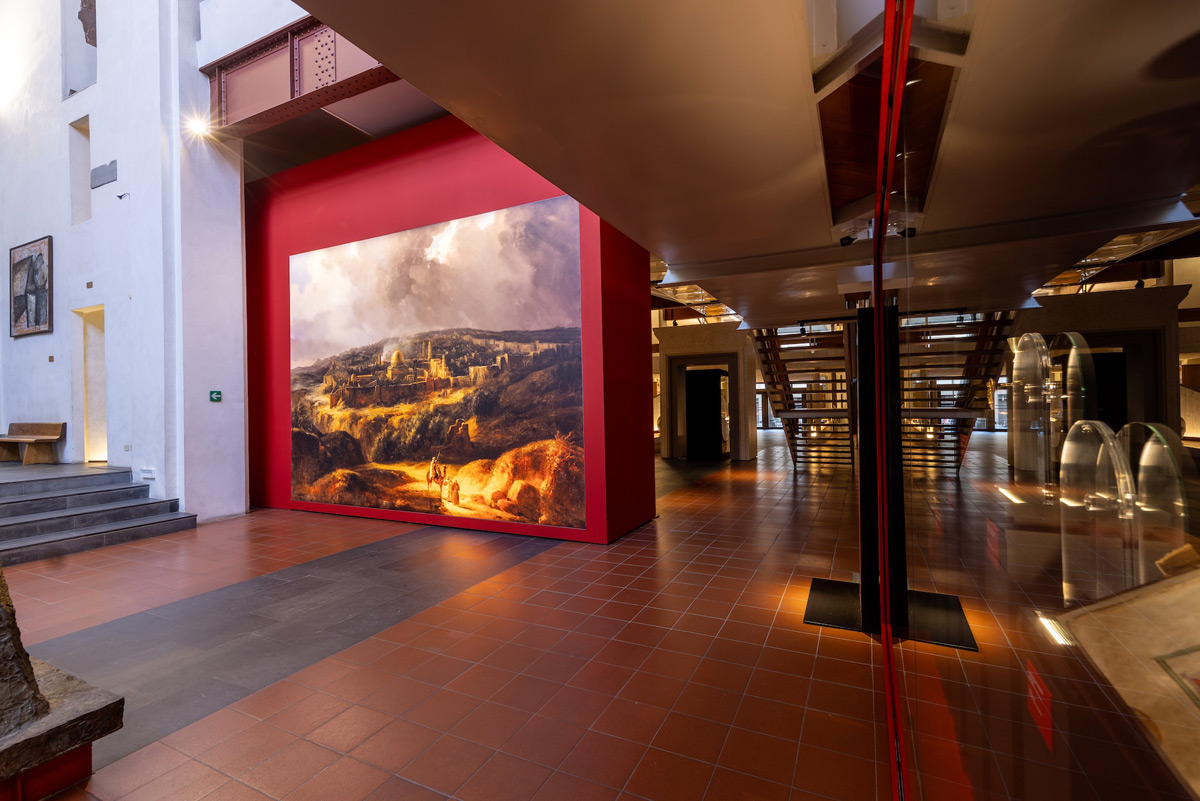
Dès l’entrée de l’exposition, un film sur grand écran transporte le visiteur dans les ruelles de Jérusalem, tandis qu’un peu plus loin, un grand cyclorama doublé d’un dispositif olfactif l’emmène à l’intérieur du Saint-Sépulcre.

Exhibition: Trésor du Saint-Sépulcre – image 1
Exhibition: Trésor du Saint-Sépulcre – image 2
Exhibition: Trésor du Saint-Sépulcre – image 3
Exhibition: Trésor du Saint-Sépulcre – image 4
Exhibition: Trésor du Saint-Sépulcre – image 5
Exhibition: Trésor du Saint-Sépulcre – image 6
Exhibition: Trésor du Saint-Sépulcre – image 7
Exhibition: Trésor du Saint-Sépulcre – image 8
Exhibition: Trésor du Saint-Sépulcre – image 9
Exhibition: Trésor du Saint-Sépulcre – image 10
Exhibition: Trésor du Saint-Sépulcre – image 11
Exhibition: Trésor du Saint-Sépulcre – image 12

Exhibition: Charles Nicolas Dodin: The Splendour of Porcelain Painting

Palace of Versailles, Madame de Maintenon’s Apartment and King’s Guard Room, Versailles

Charles Nicolas Dodin, Splendeur de la Peinture sur Porcelaine2012Charles Nicolas Dodin: The Splendour of Porcelain Painting

Scenography and graphic design
Exhibition from 16 May 2012 to 9 September 2012
Curators
Marie-Laure de Rochebrune
Total area
350 m²
150 works
art objects, porcelain, furniture, sculptures, paintings, works on paper, archive documents, books, multimedia screens and small-scale audiovisual (film).
Works budget
€115,000
Attendance
492,000 visitors

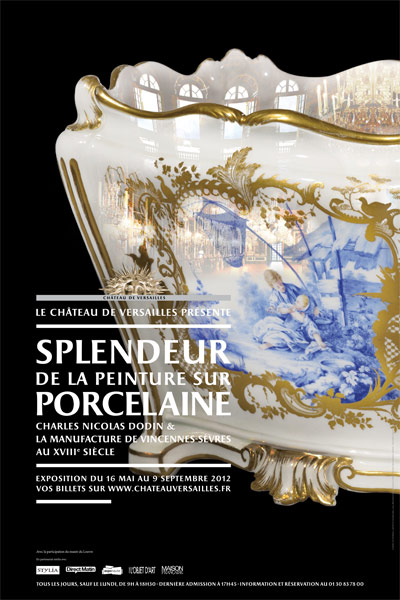
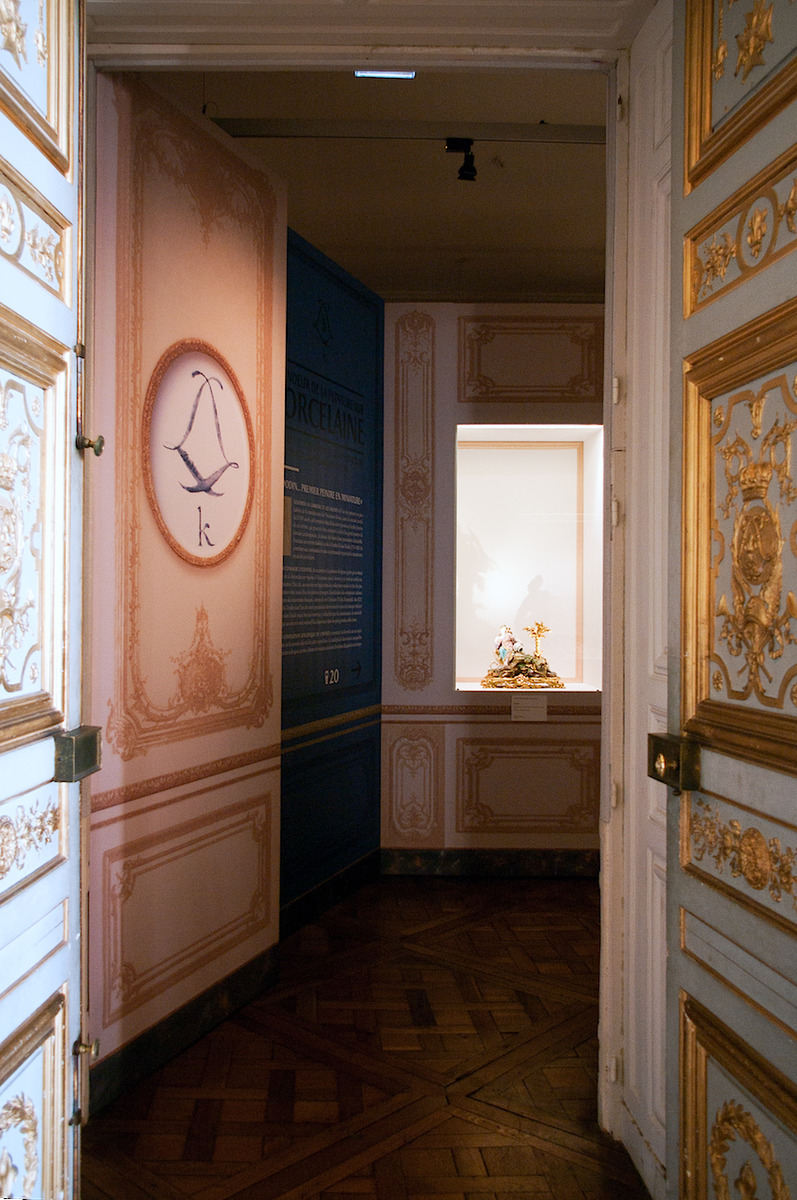
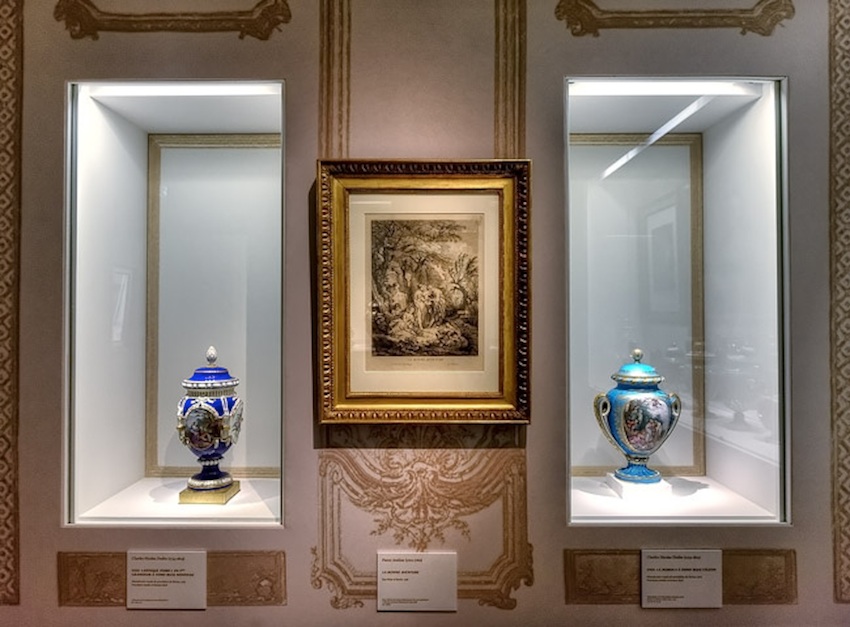
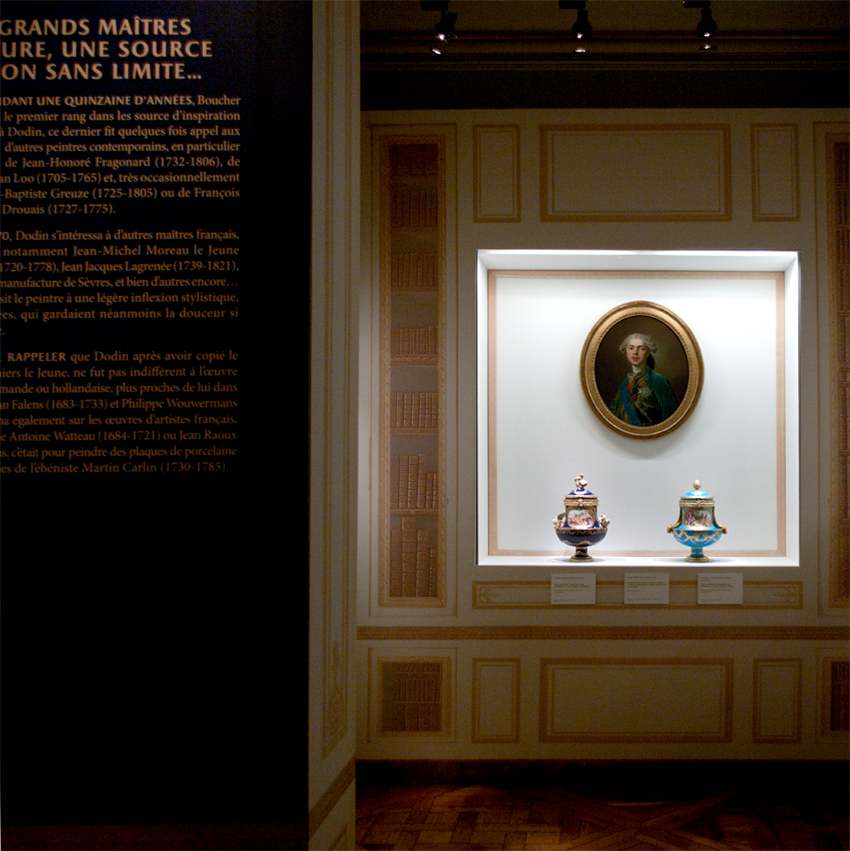
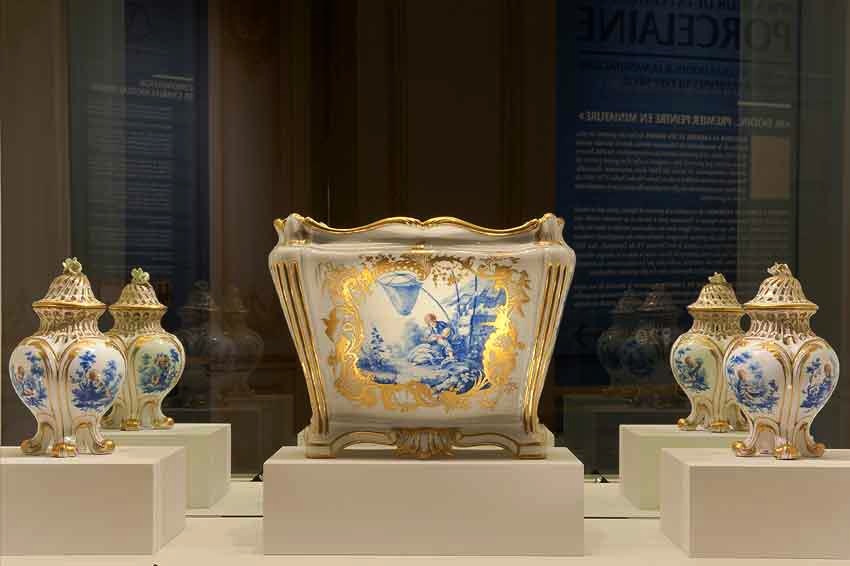
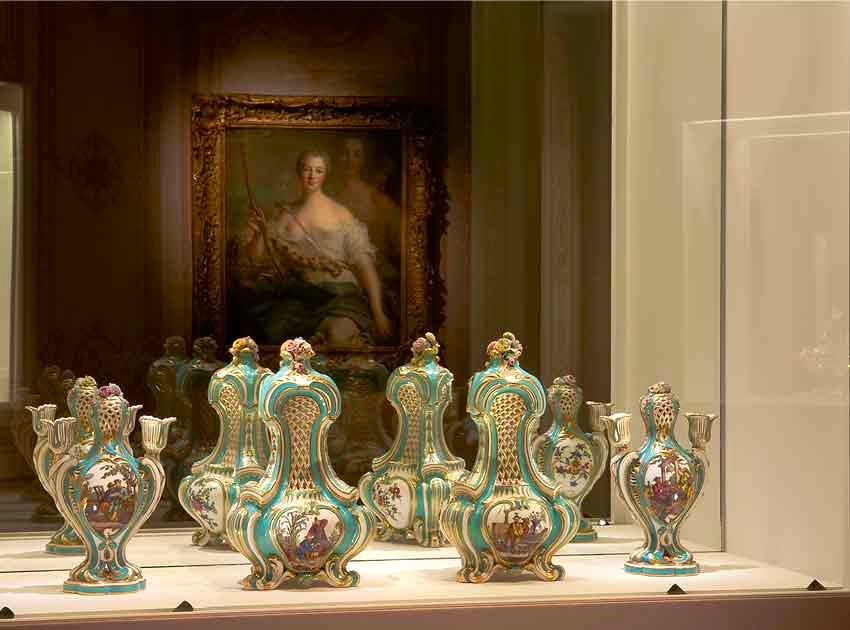
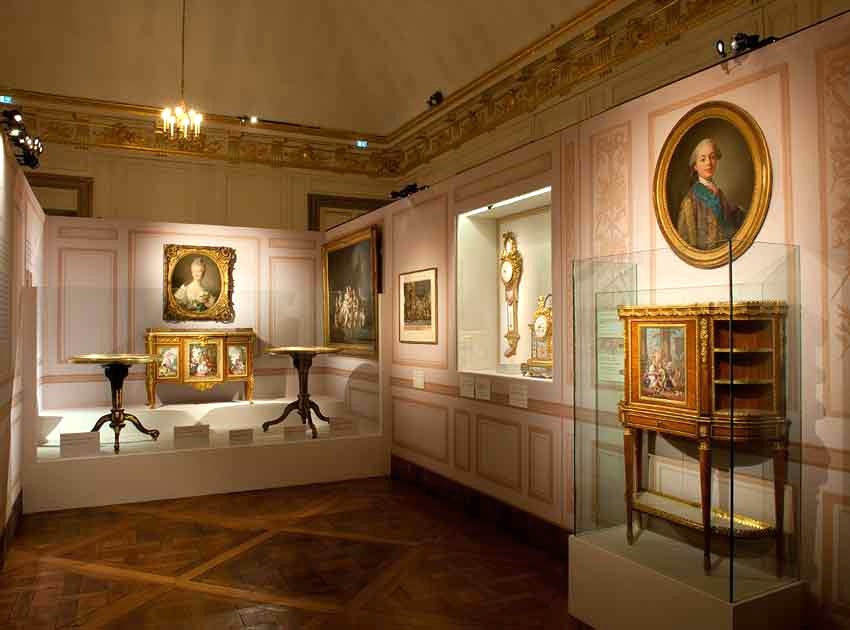
Le château de Versailles présente la première exposition consacrée à Charles Nicolas Dodin (1734-1804), l’un des peintres les plus talentueux de la manufacture de porcelaine de Vincennes-Sèvres. L’exposition retrace son évolution artistique et montre le raffinement de son œuvre. Elle témoigne également de la diversité des sources d’inspiration de l’artiste et de l’habileté avec laquelle il sut s’adapter à l’évolution des goûts et des modes.

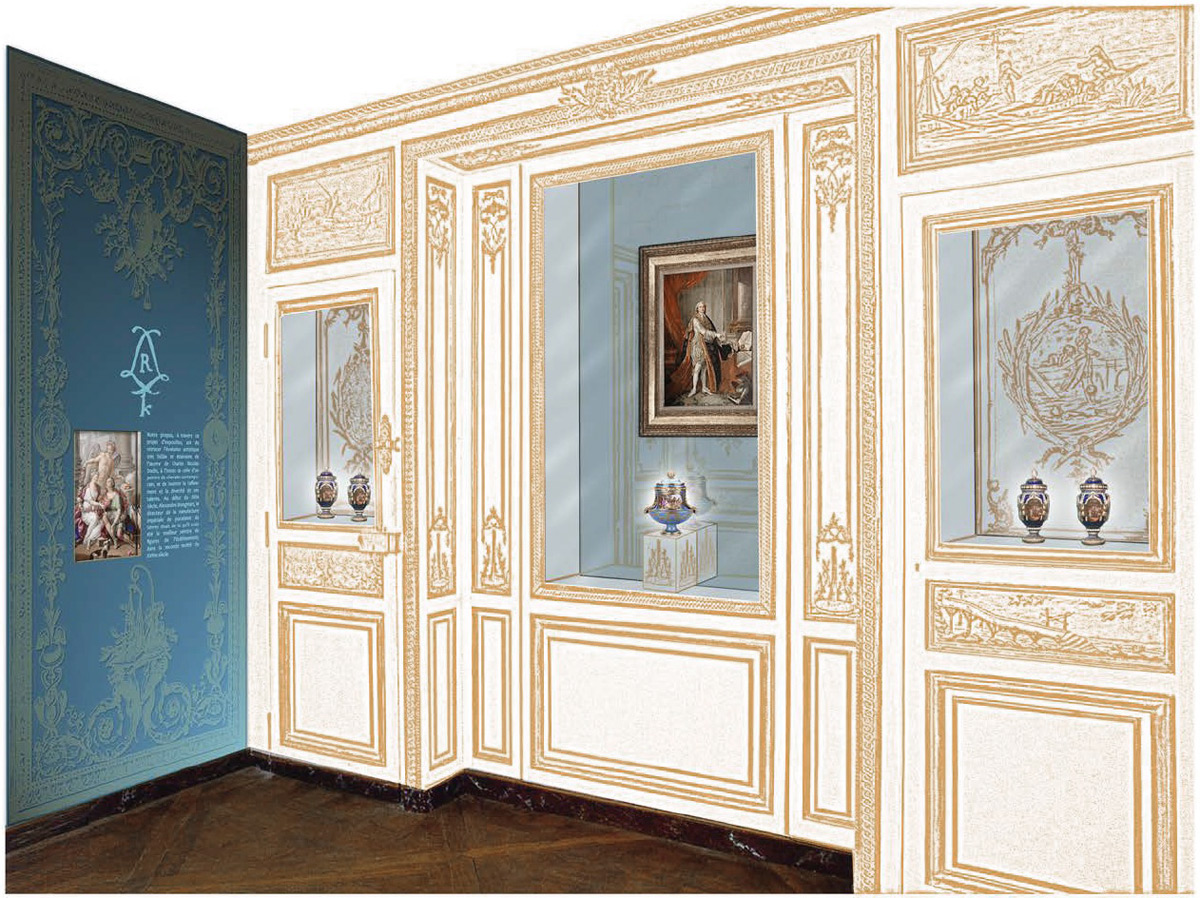
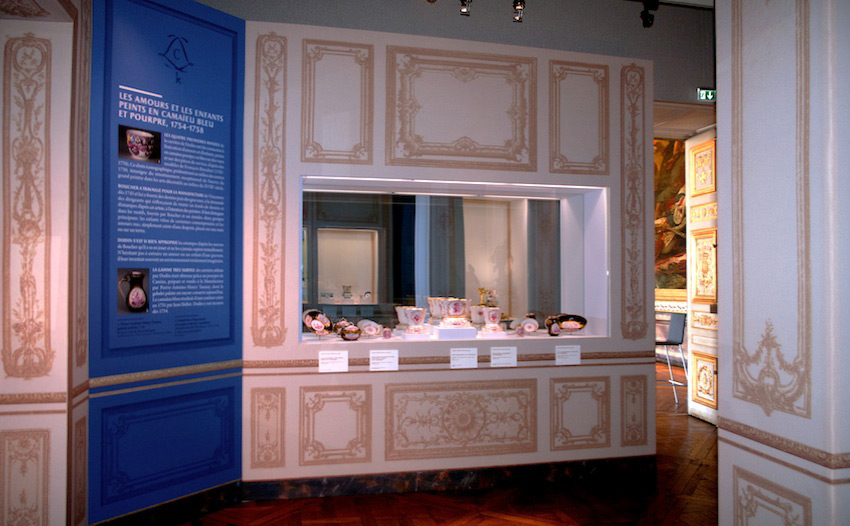
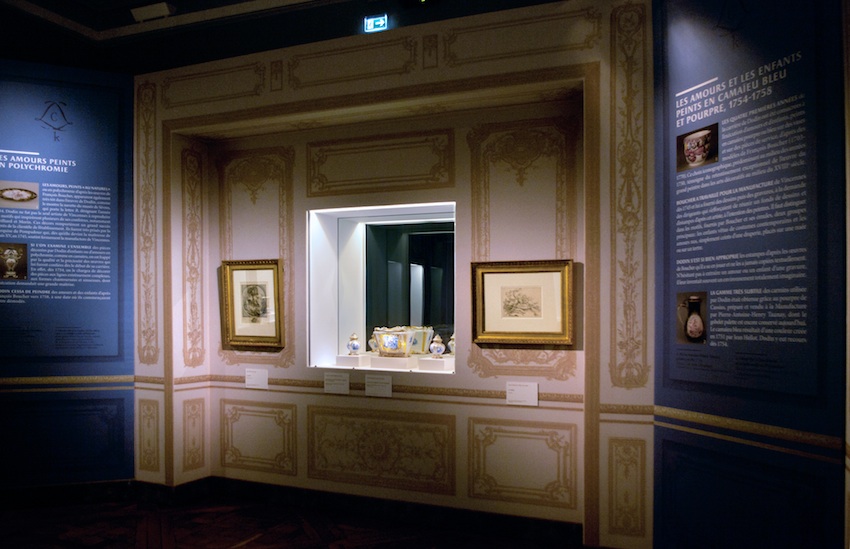
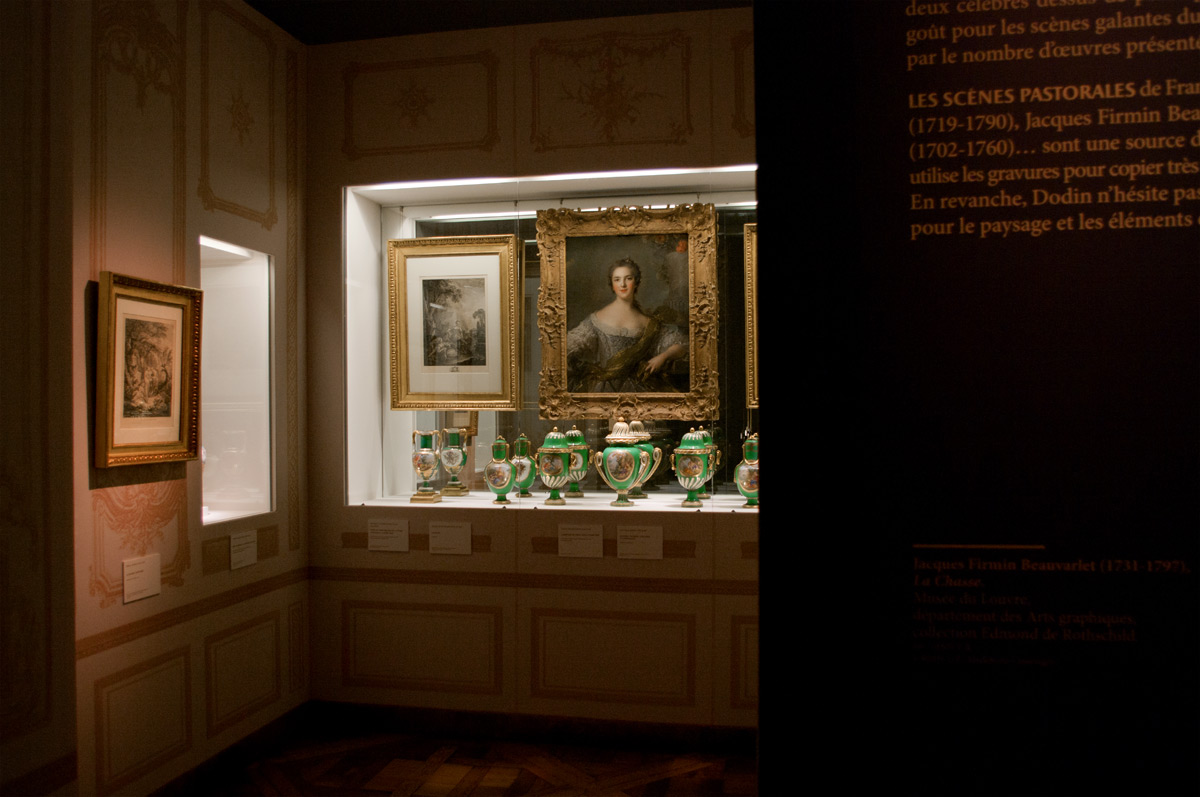
Design approach: the route is punctuated by alcoves evoking intimate 18th-century interiors, while drawing close to drawing and painting – suggesting both the craft that drove Dodin and the decorative context of his time.

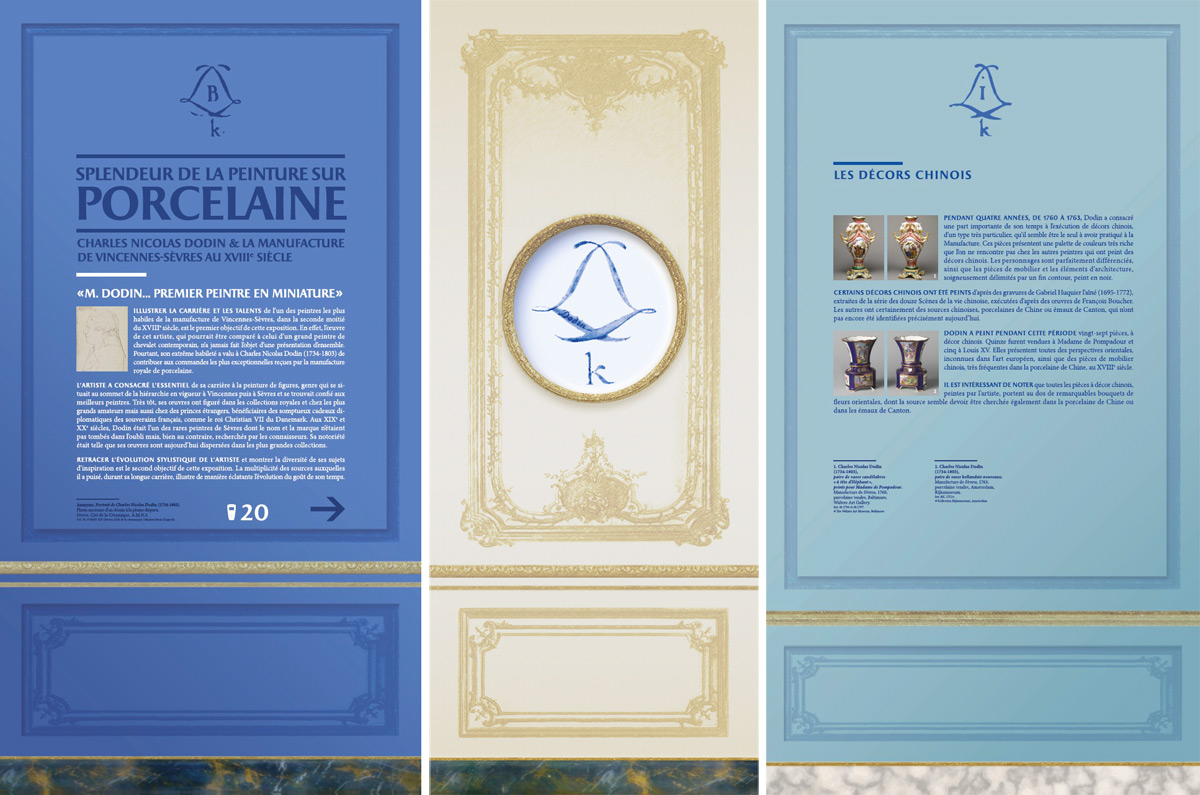
200 clichés de décors des boiseries du château de Versailles ont été pris : contemporains des œuvres présentées, ces décors de boiseries suivent la chronologie de l’exposition, du style rocaille au style néo-classique.

These photographs were then reworked digitally with a range of graphic effects to obtain a light, refined decor, somewhere between a sketch, a rubbing, an imprint and a prepared painter’s canvas… before being printed on canvas to cover the display walls (450 m² of printed canvas).

Exhibition: Charles Nicolas Dodin: The Splendour of Porcelain Painting – image 1
Exhibition: Charles Nicolas Dodin: The Splendour of Porcelain Painting – image 2
Exhibition: Charles Nicolas Dodin: The Splendour of Porcelain Painting – image 3
Exhibition: Charles Nicolas Dodin: The Splendour of Porcelain Painting – image 4
Exhibition: Charles Nicolas Dodin: The Splendour of Porcelain Painting – image 5
Exhibition: Charles Nicolas Dodin: The Splendour of Porcelain Painting – image 6
Exhibition: Charles Nicolas Dodin: The Splendour of Porcelain Painting – image 7
Exhibition: Charles Nicolas Dodin: The Splendour of Porcelain Painting – image 8
Exhibition: Charles Nicolas Dodin: The Splendour of Porcelain Painting – image 9
Exhibition: Charles Nicolas Dodin: The Splendour of Porcelain Painting – image 10
Exhibition: Charles Nicolas Dodin: The Splendour of Porcelain Painting – image 11
Exhibition: Charles Nicolas Dodin: The Splendour of Porcelain Painting – image 12

Mobilier national

Exhibition: The Mobilier National at the Ministry of Culture

Mobilier national outside its walls, Ministry of Culture and Communication, Paris

Le Mobilier National, au Ministère de la Culture2017The Mobilier National at the Ministry of Culture

Scenography and graphic design
Exhibition from 8 June 2017 to 16 September 2017
Curators
Lucile Montagne, heritage curator, and the heads of the restoration workshops
Total area
300 m²
80 works
art objects, furniture, sculptures, hangings, textiles, archive documents.
Works budget
€35,000
Attendance:

The Ministry of Culture invites the Mobilier national into its exhibition spaces to present to the public the richness and diversity of its missions: conservation, restoration and promotion of its collections, which comprise nearly 100,000 pieces of furniture and textiles; furnishing the great official buildings of the Republic; and supporting contemporary creation.

Through works from the collections and various studies and projects from the design workshops, the exhibition introduces an institution steeped in history, heir to an organisation created under Colbert, which embodies the prestige of French tradition and the vitality of creation.

Design approach:

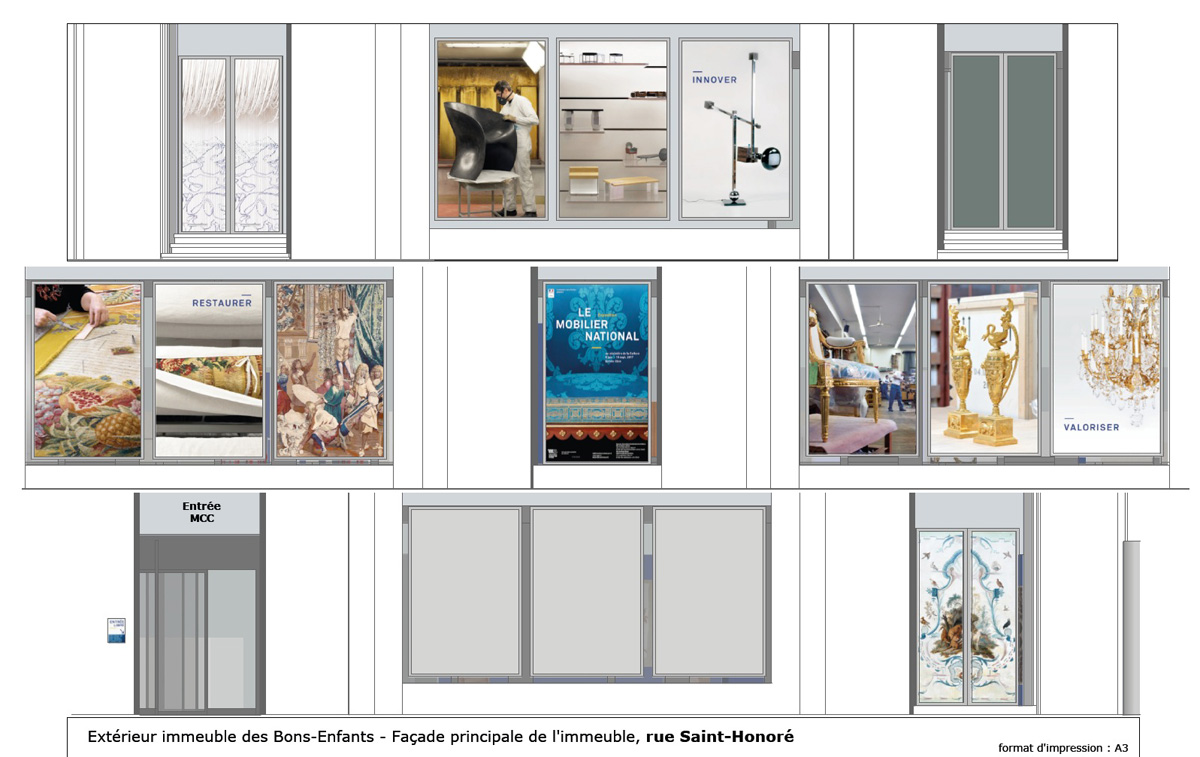
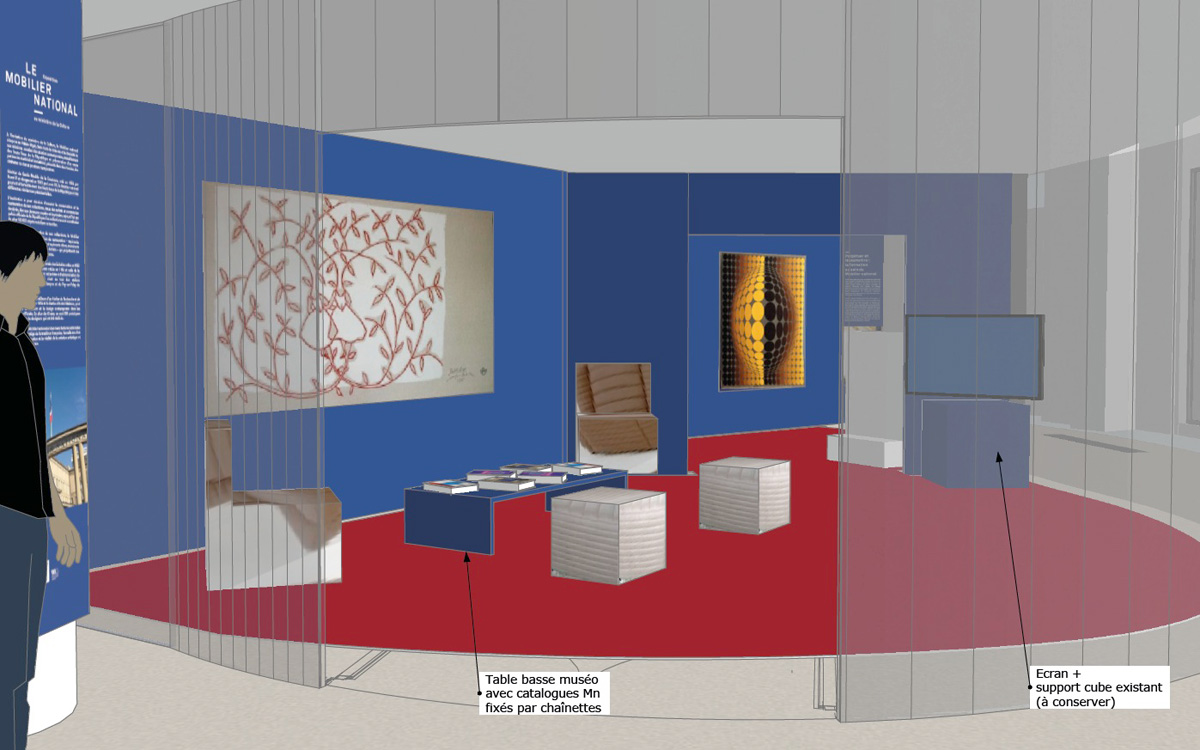
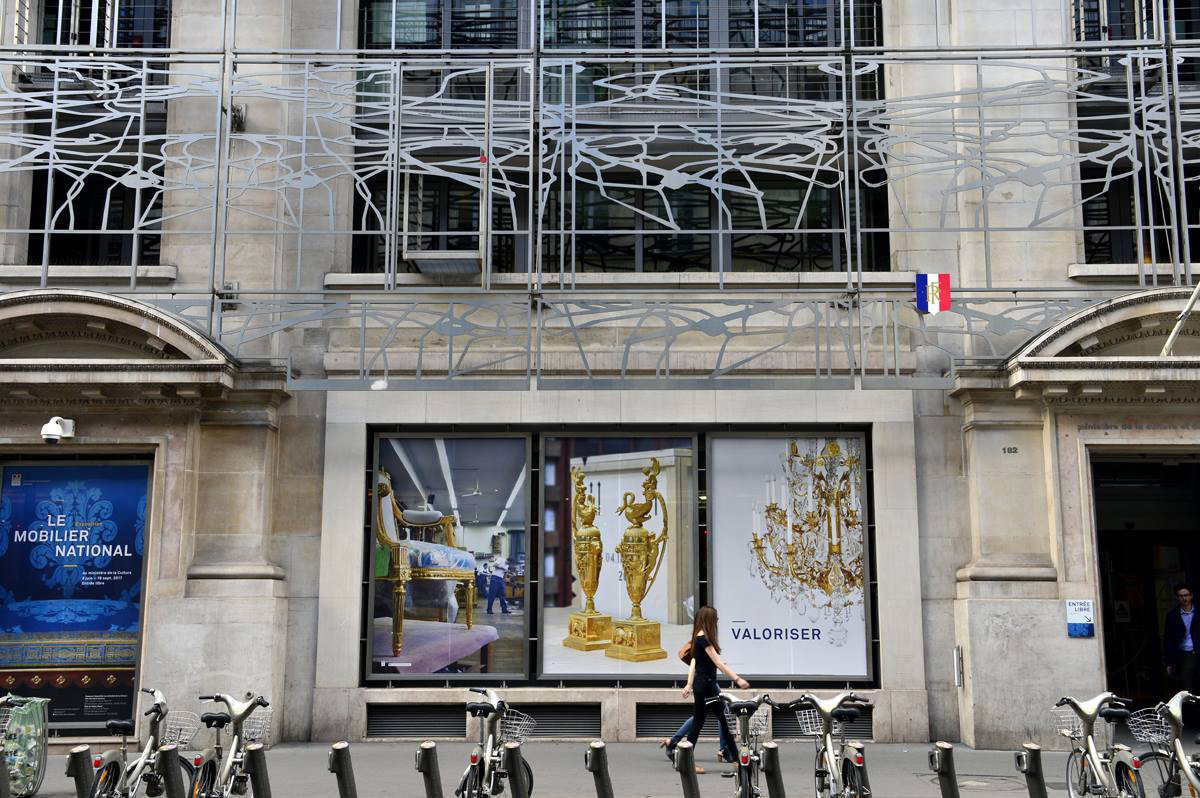
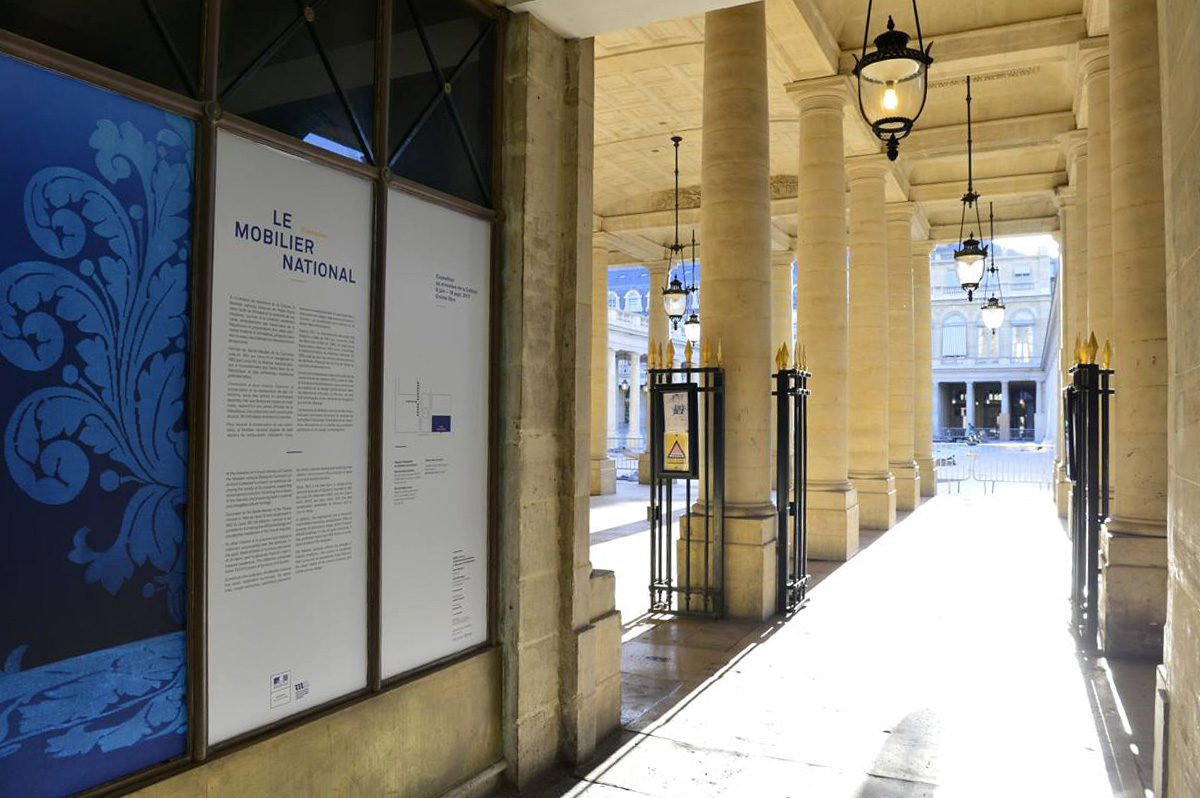
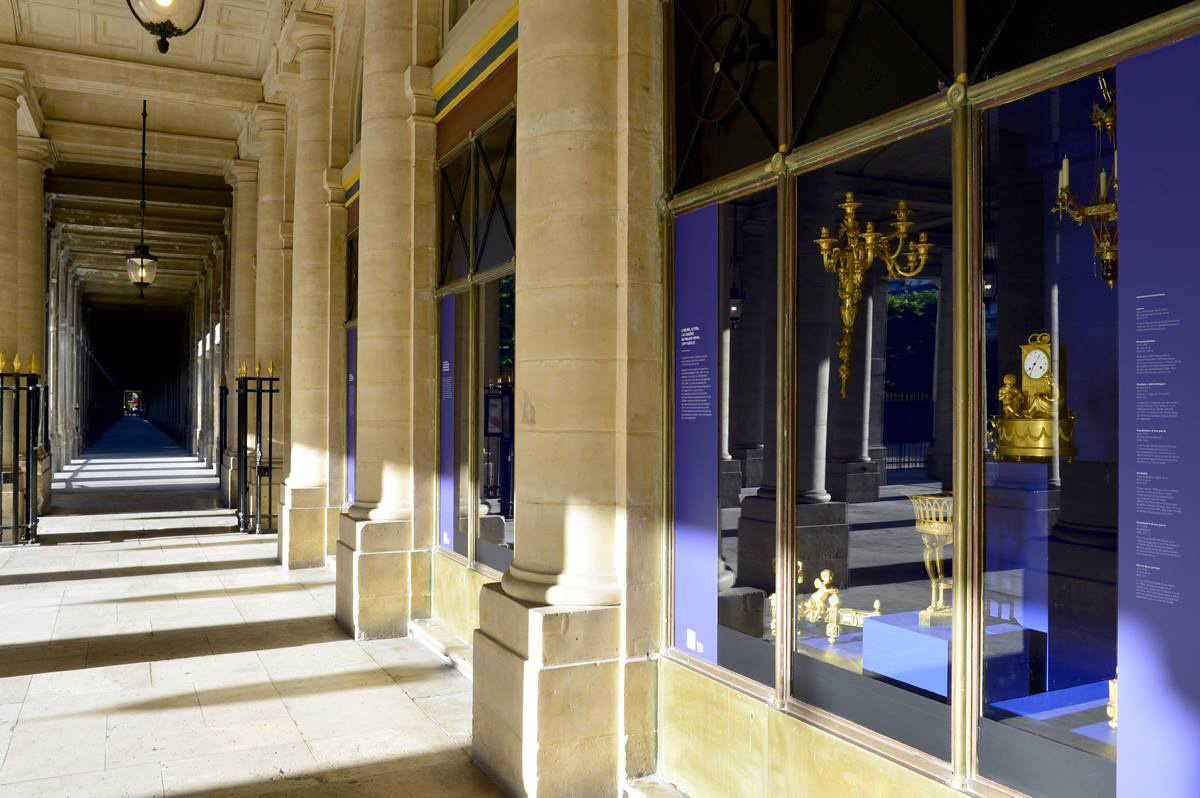
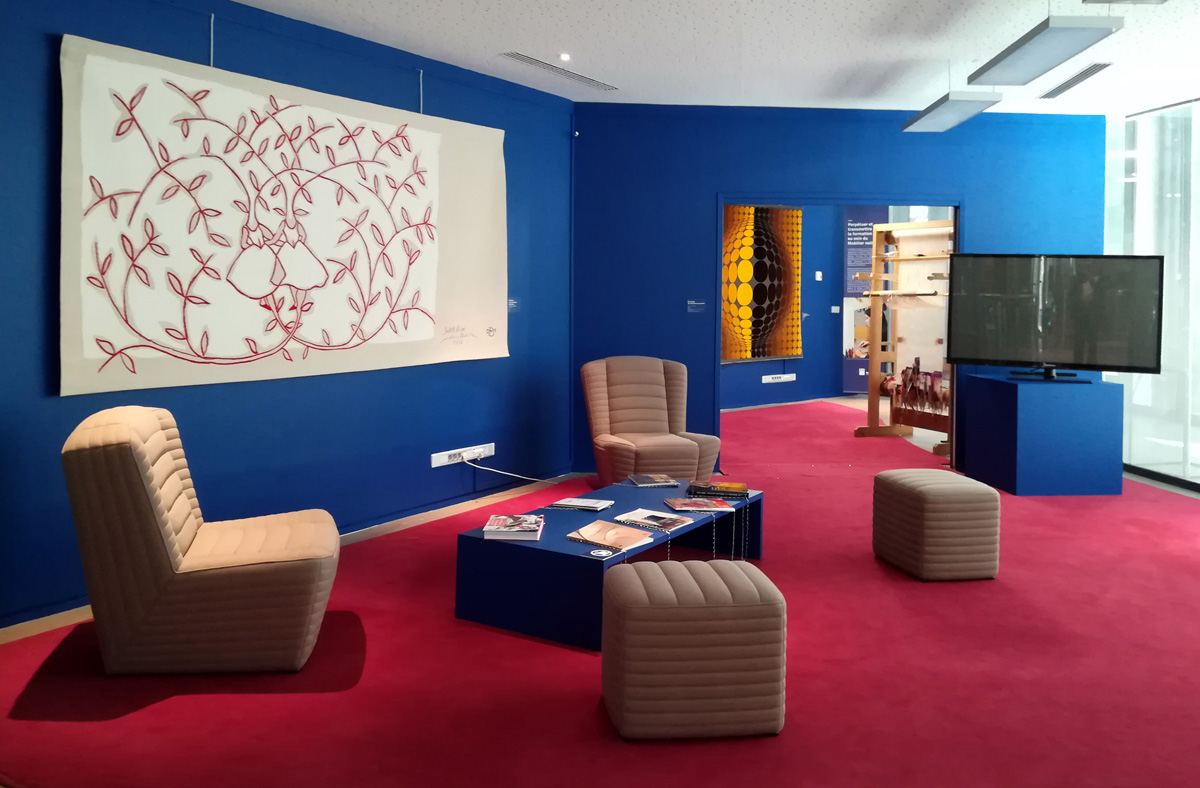
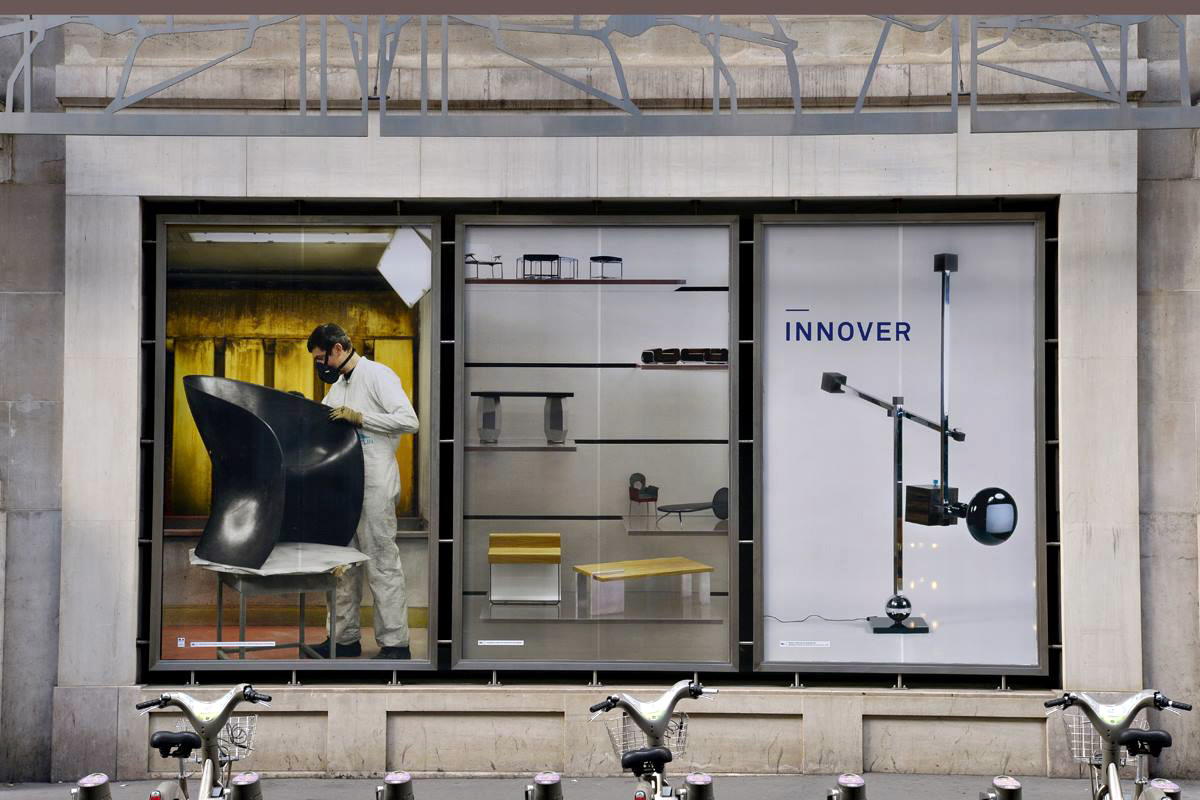
L’exposition se tient sur plusieurs sites « éclatés », elle occupe les 12 vitrines du péristyle et de la galerie de Valois au Palais-Royal, ainsi que le hall, deux salles et toute la façade extérieure basse vitrée du bâtiment des Bons-Enfants, siège de l’administration centrale du ministère de la Culture, au 182, rue Saint-Honoré. Plusieurs sites, plusieurs niveaux de lecture, plusieurs échelles de lectures (de la salle d’exposition à la rue ou la ville) constituent la difficulté du projet.

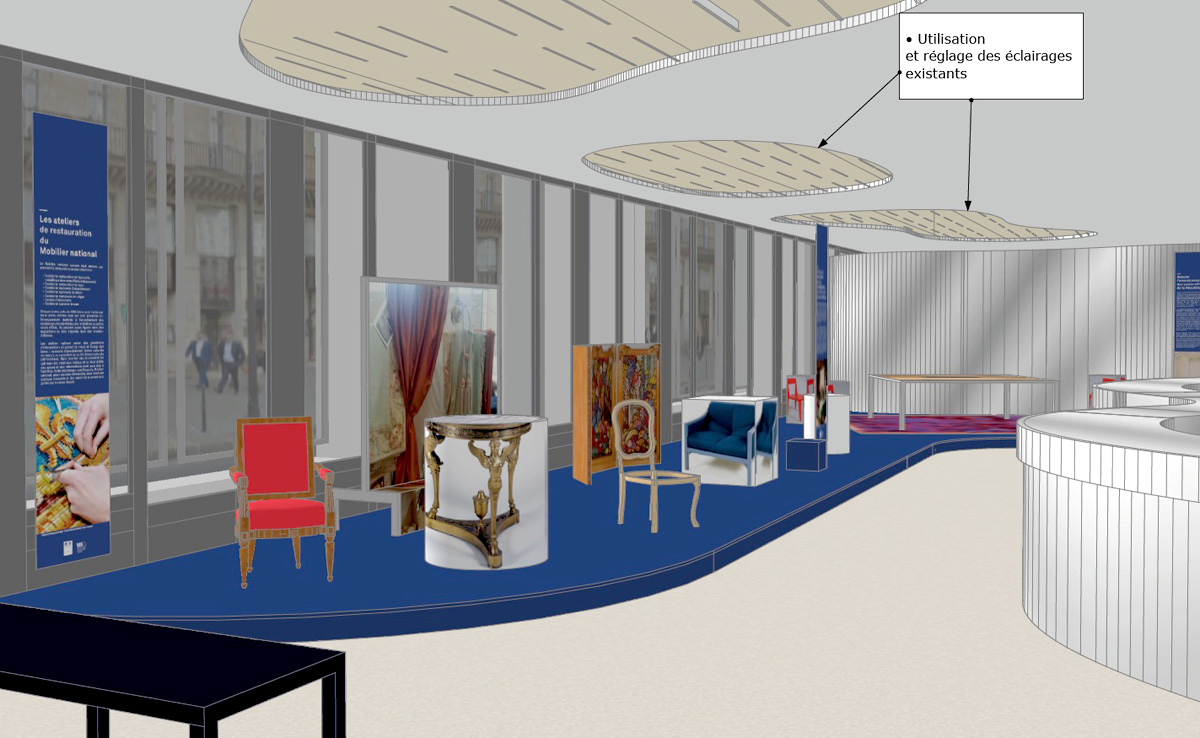
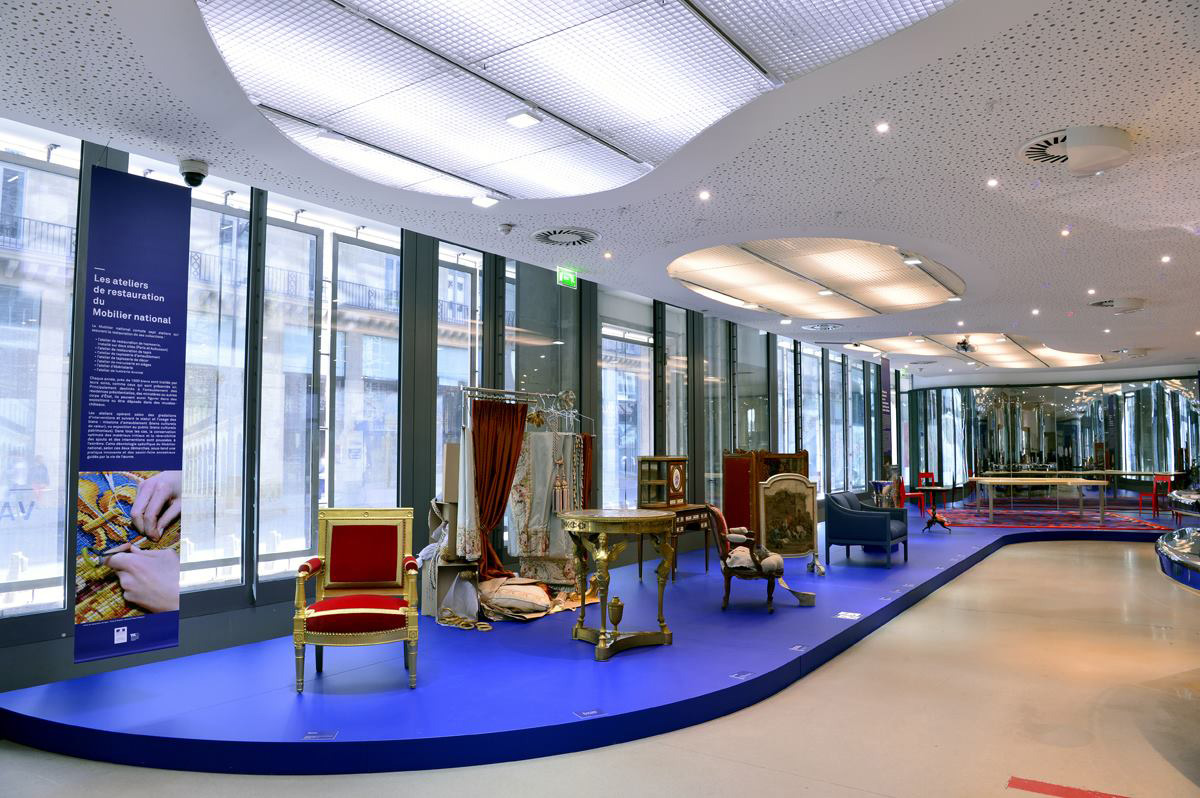
Dans le hall d’accueil Bons-Enfants, il s’agit de créer un vaste podium qui s’intègre à cet espace et donne une grandeur aux œuvres présentées.

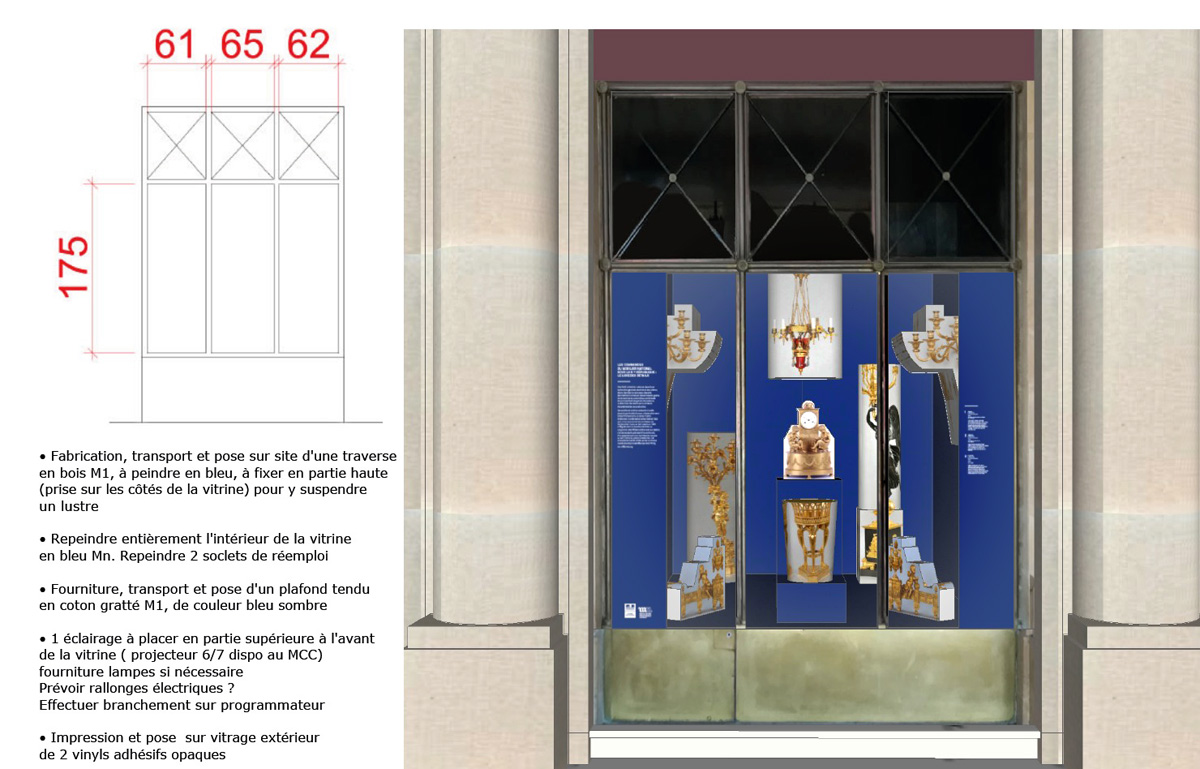
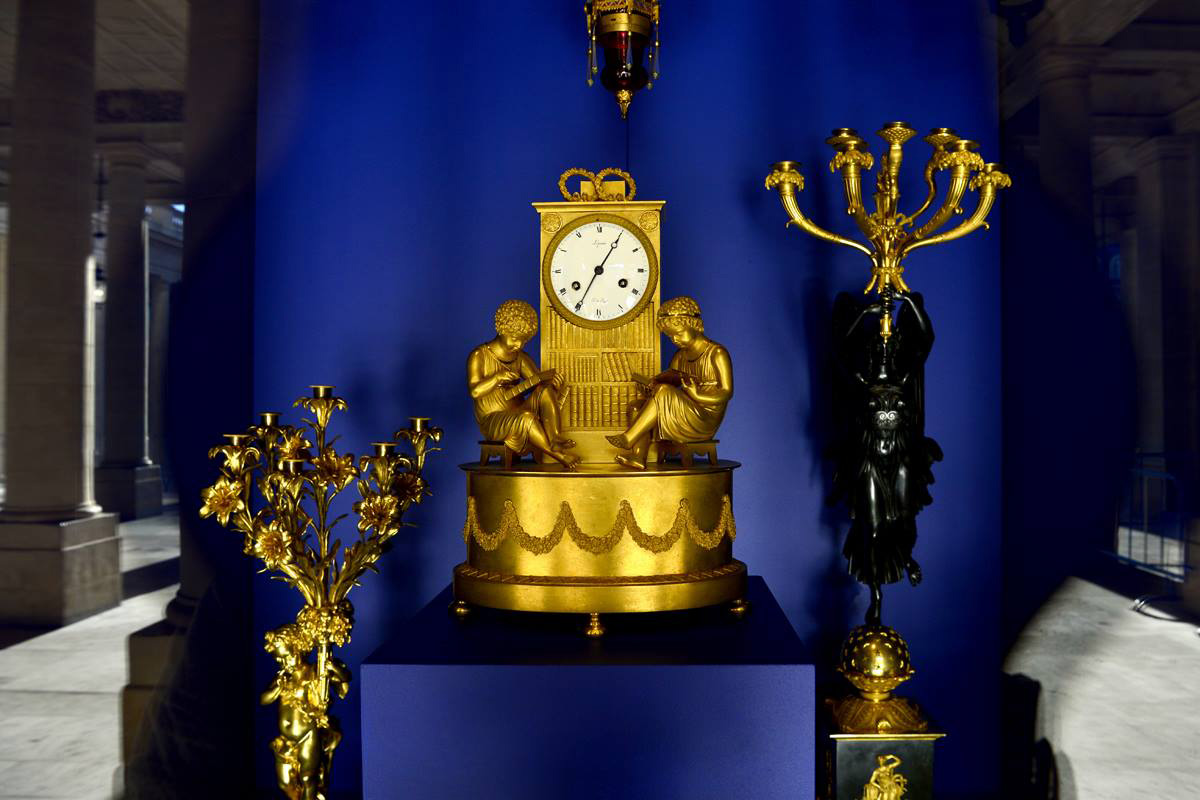
Each of the 12 Valois showcases is treated as a small “theatre”, a scenographic cube staging the furniture and objects on display.

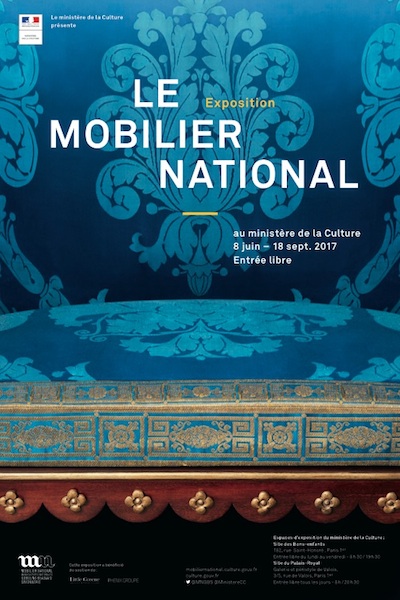
The printed signage plays an important role in guiding visitors and creating harmony between the different exhibition sites, which are close to one another.

Le bleu emblématique du Mobilier national sert de fil conducteur aux installations du Palais-Royal, comme à celles des immeubles Bons-Enfants.

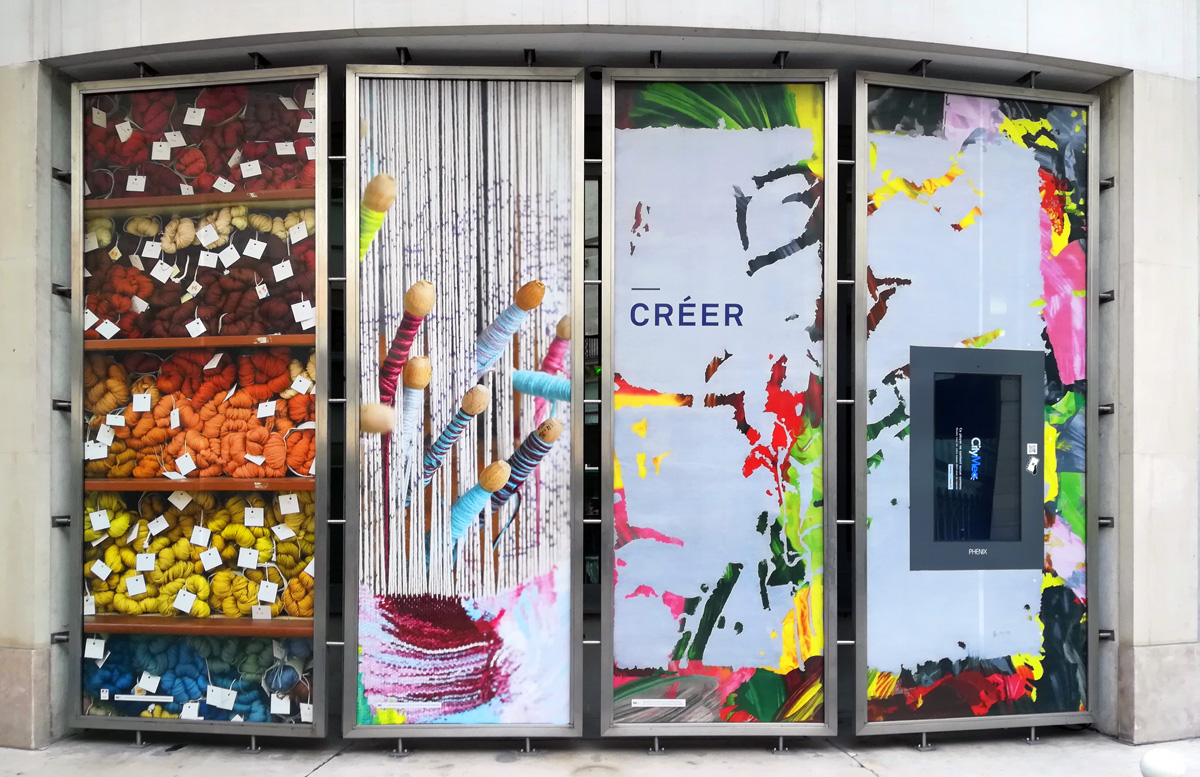
Un important travail de graphisme est enfin réalisé pour rendre l’exposition lisible à l’échelle de la ville, sur les façades extérieures de l’immeuble Bons-Enfants.

Exhibition: The Mobilier National at the Ministry of Culture – image 1
Exhibition: The Mobilier National at the Ministry of Culture – image 2
Exhibition: The Mobilier National at the Ministry of Culture – image 3
Exhibition: The Mobilier National at the Ministry of Culture – image 4
Exhibition: The Mobilier National at the Ministry of Culture – image 5
Exhibition: The Mobilier National at the Ministry of Culture – image 6
Exhibition: The Mobilier National at the Ministry of Culture – image 7
Exhibition: The Mobilier National at the Ministry of Culture – image 8
Exhibition: The Mobilier National at the Ministry of Culture – image 9
Exhibition: The Mobilier National at the Ministry of Culture – image 10
Exhibition: The Mobilier National at the Ministry of Culture – image 11
Exhibition: The Mobilier National at the Ministry of Culture – image 12

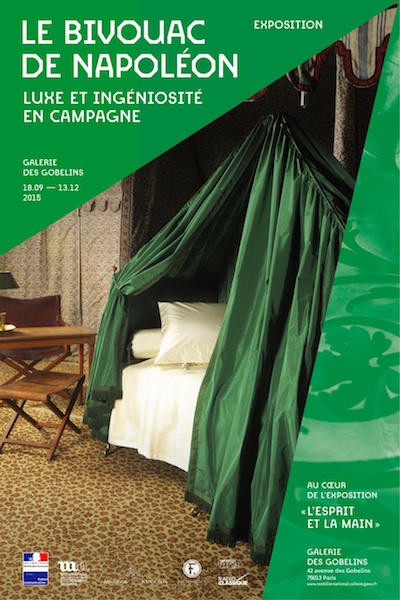
Exhibition: Napoleon’s Bivouac: Luxury and Ingenuity on Campaign

Mobilier national, Galerie des Gobelins, Paris

Le Bivouac de Napoléon, Luxe et Ingéniosité en Campagne2015Napoleon’s Bivouac: Luxury and Ingenuity on Campaign

Scenography and graphic design
Exhibition from 18 September 2015 to 13 December 2015
Curators
Jehanne Lazaj
Total area
400 m²
75 works
art objects, furniture, sculptures, paintings, hangings, textiles, works on paper, archive documents, books, multimedia screens.
Works budget
€100,000
Attendance
20,000 visitors

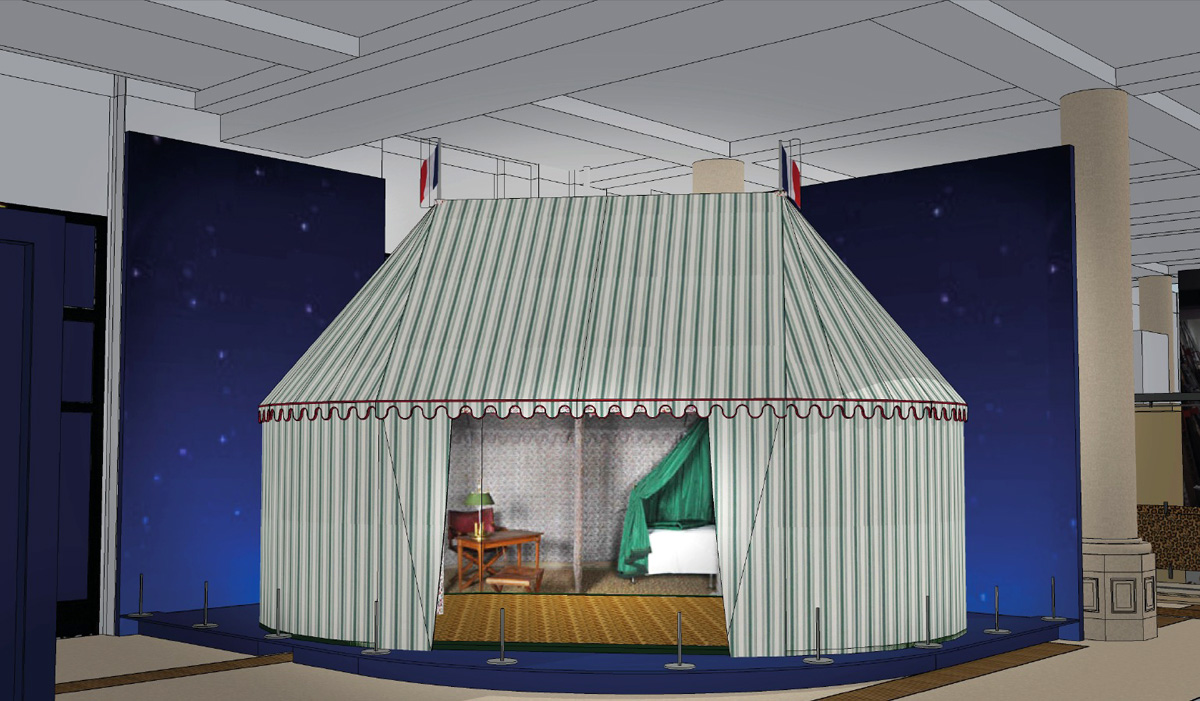
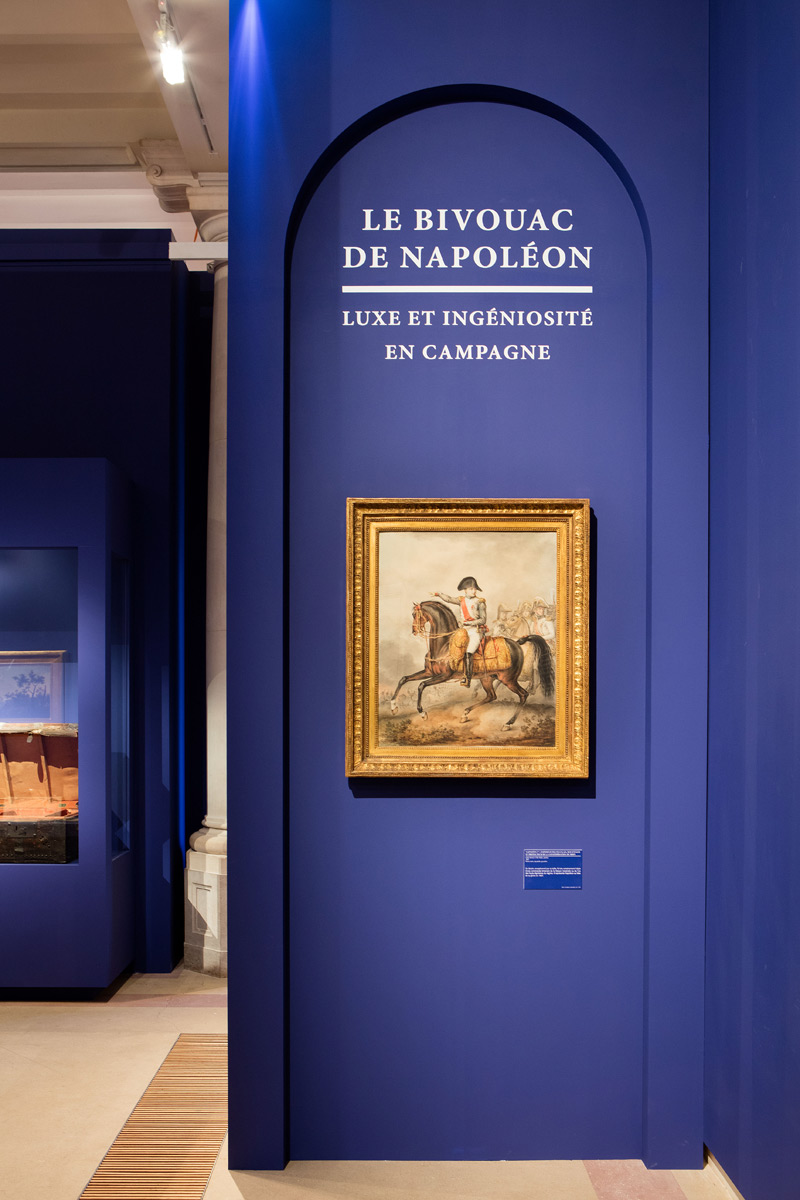
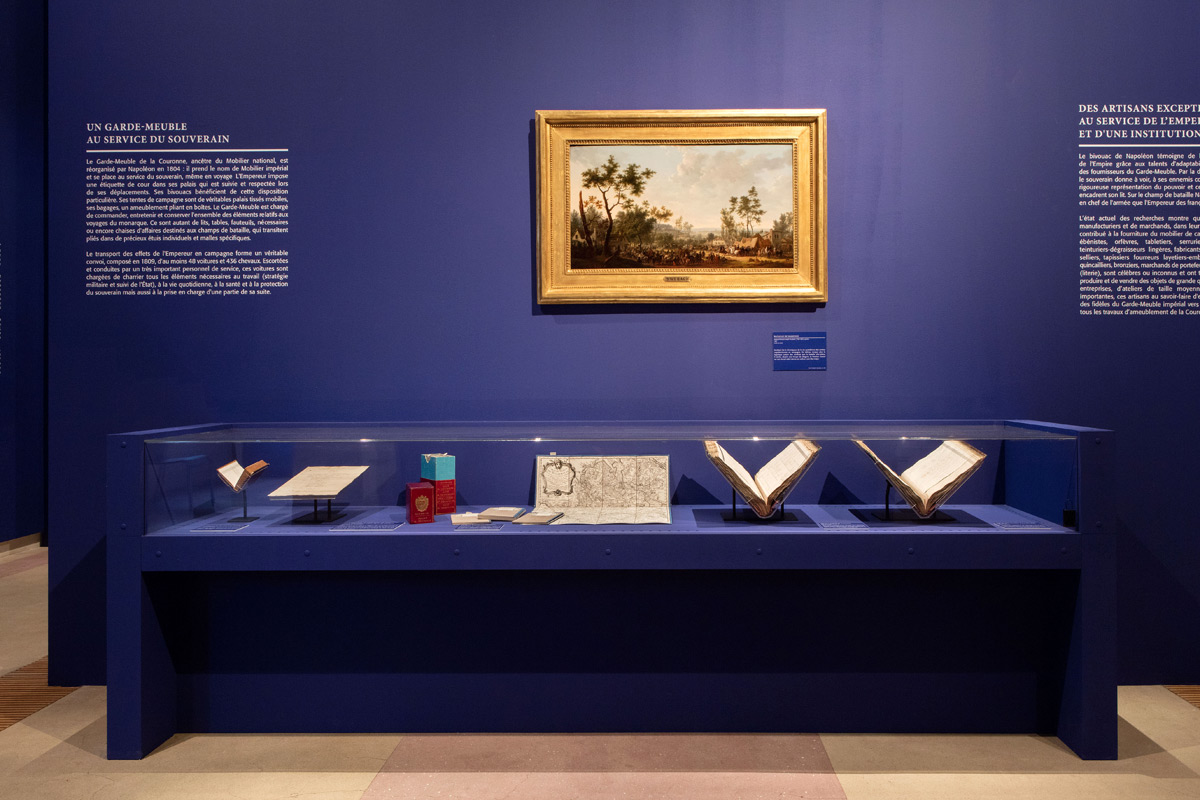
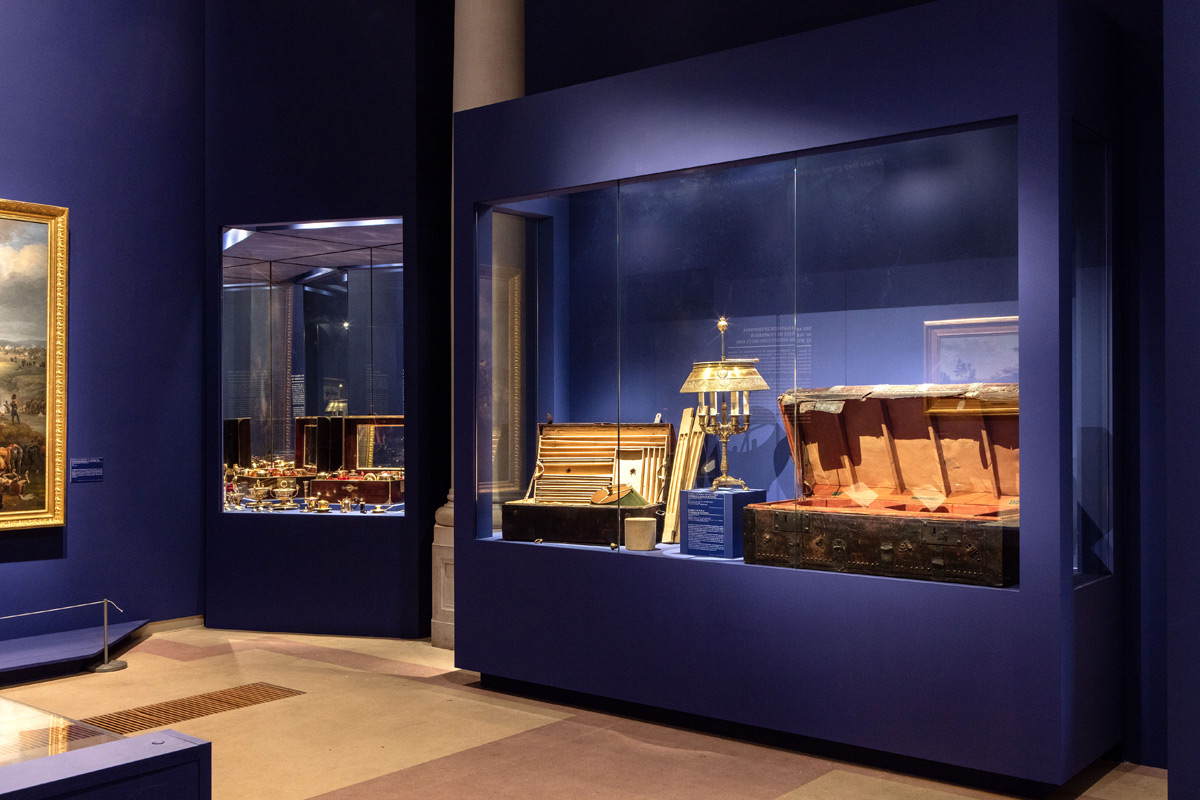
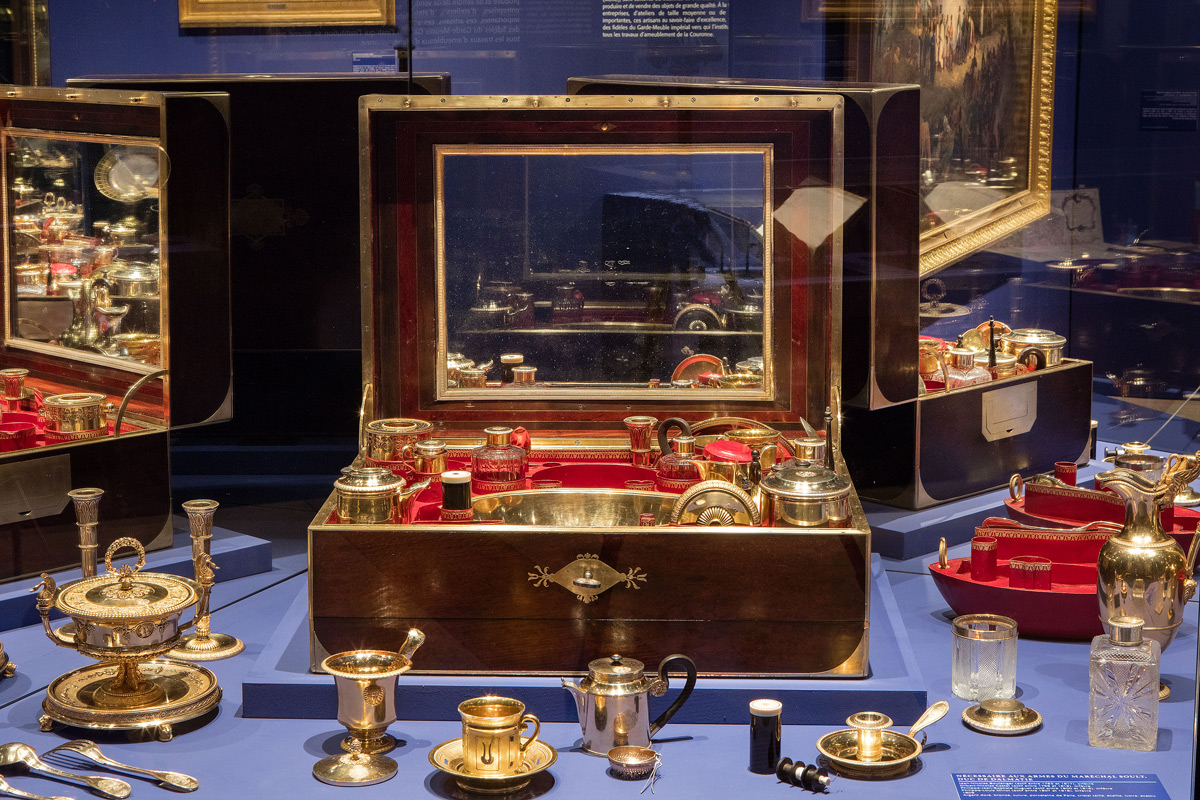
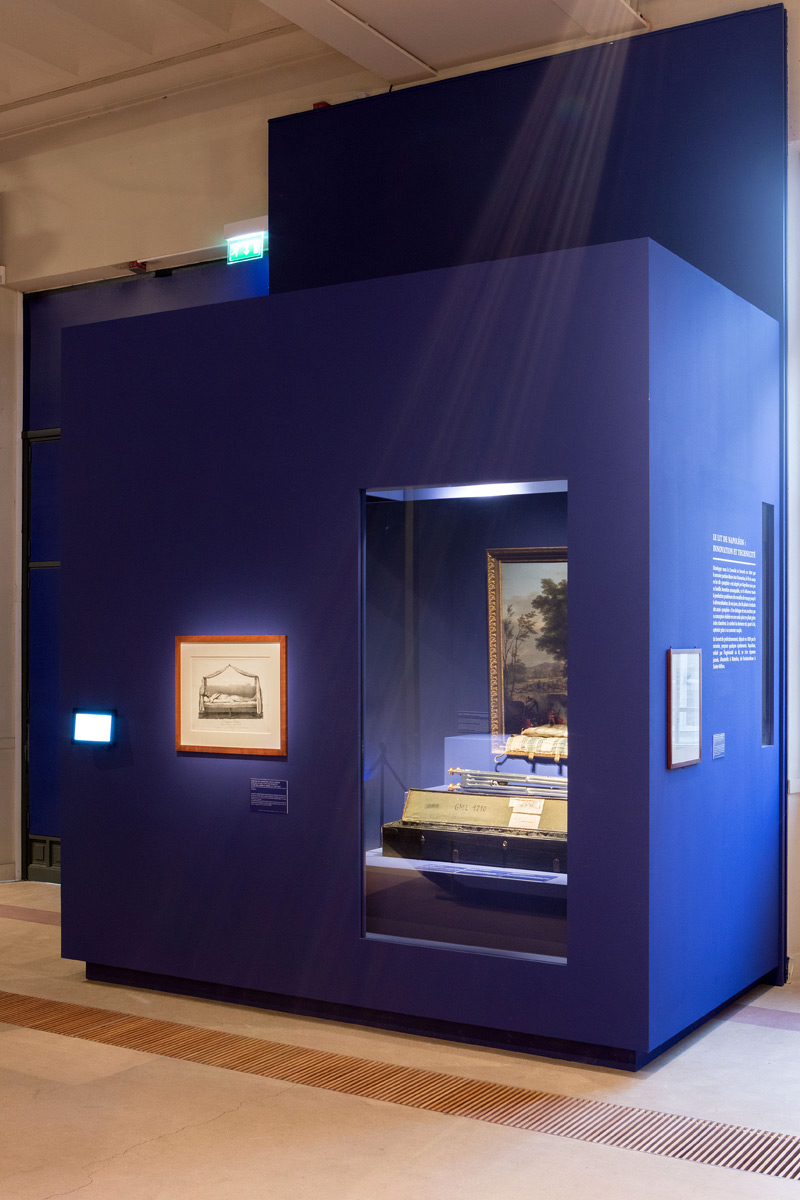
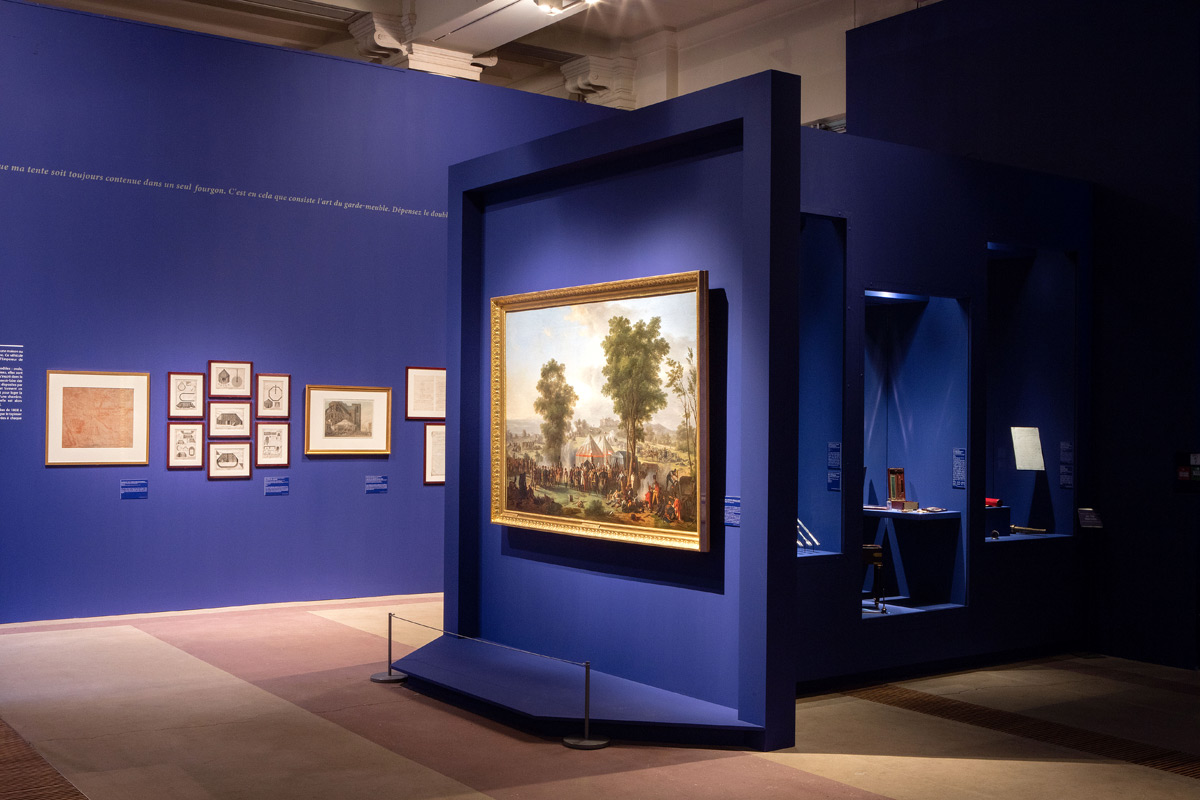
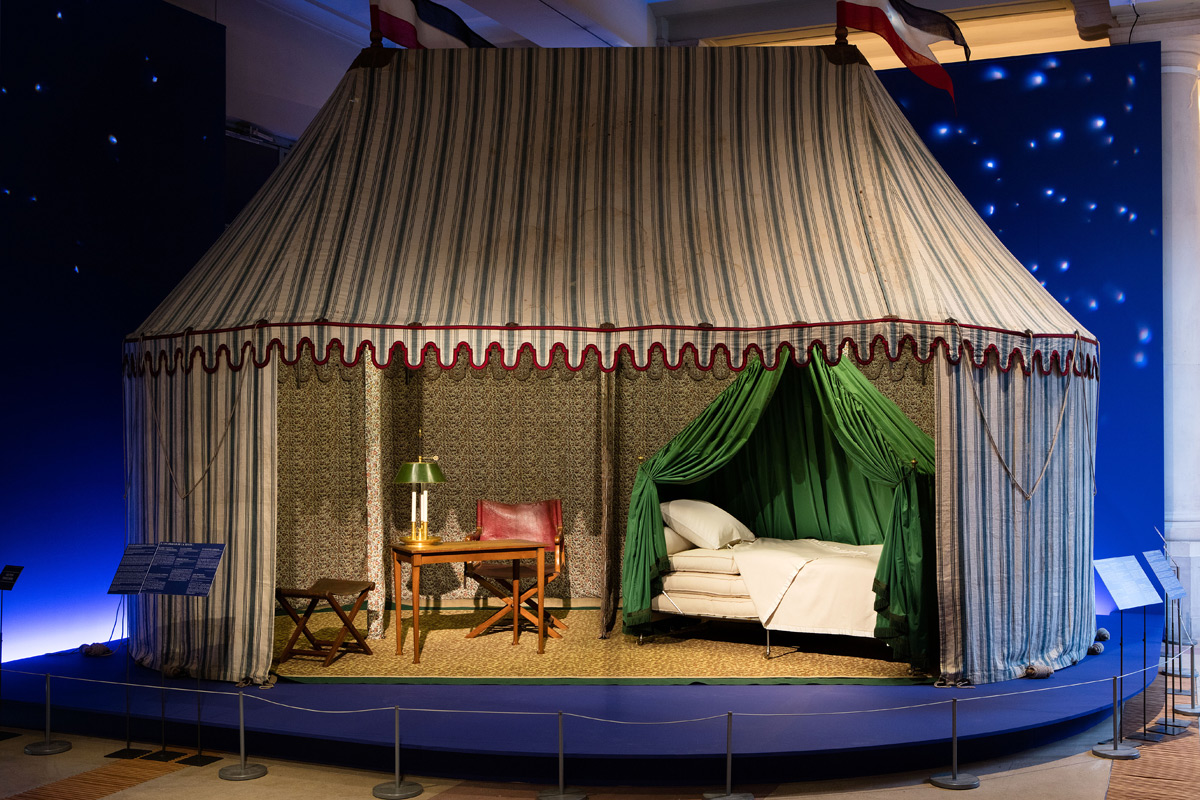
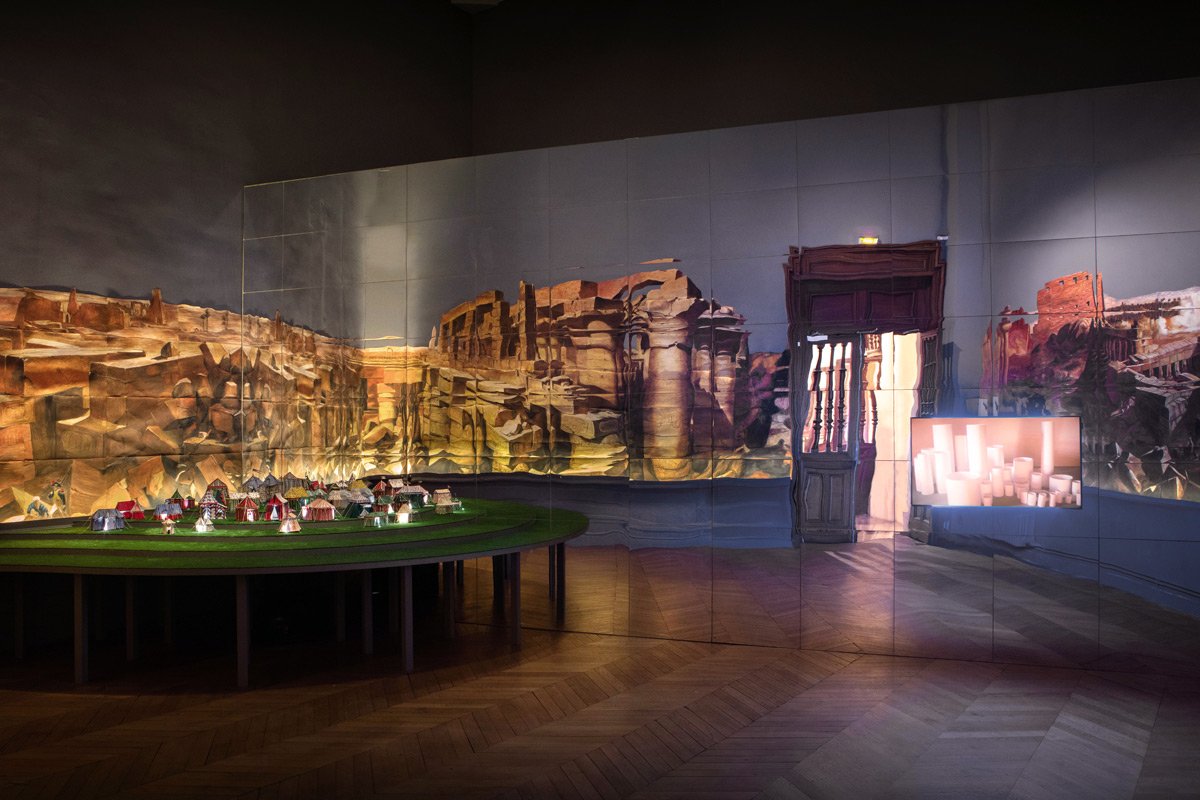
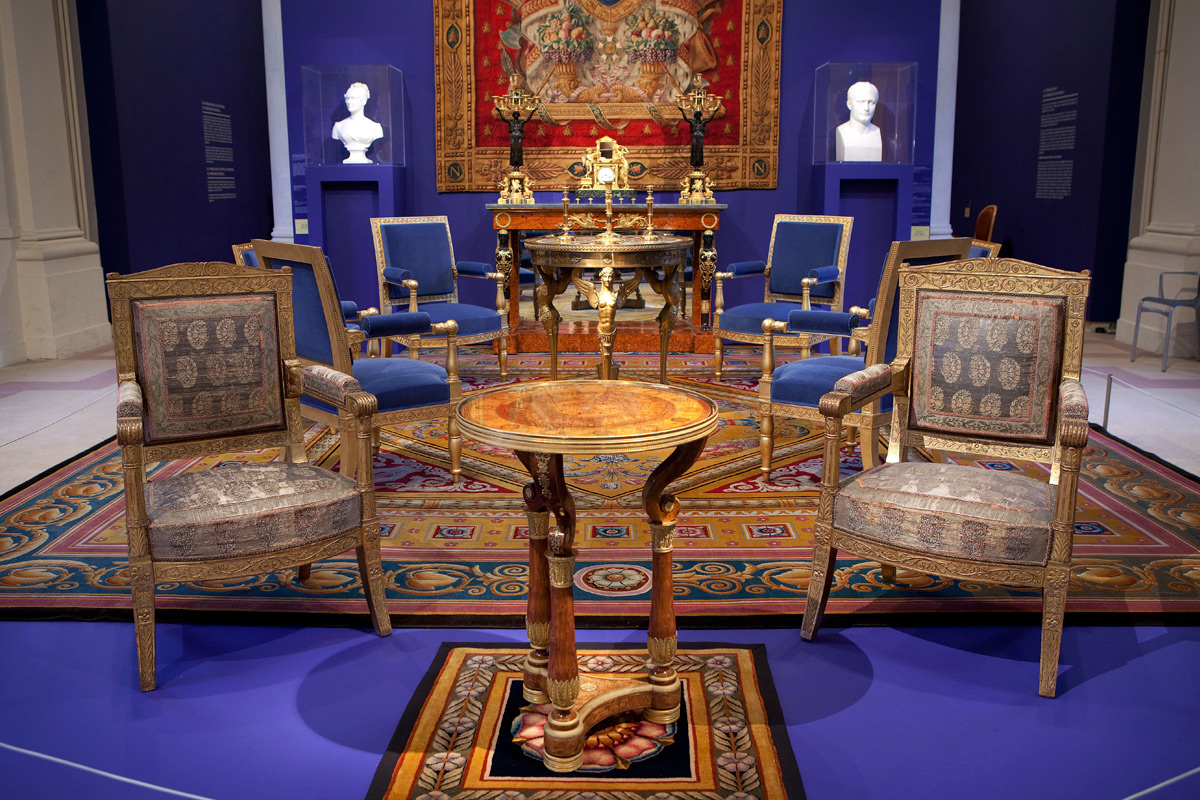
Within the exhibition “L’Esprit et la Main, héritage et savoir-faire du Mobilier national” stands Napoleon’s bivouac, whose objects were restored by the workshops of the Mobilier national. The exhibition “Le Bivouac de Napoléon, luxe et ingéniosité en campagne” is a scholarly event.

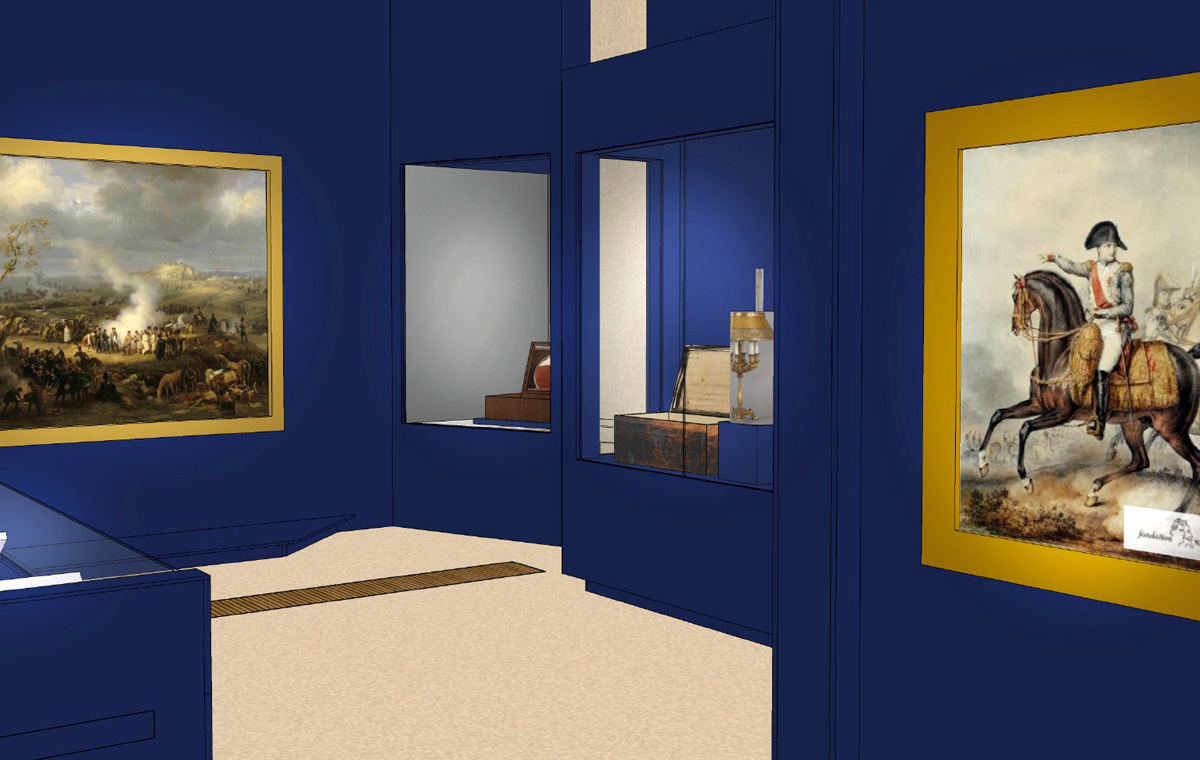
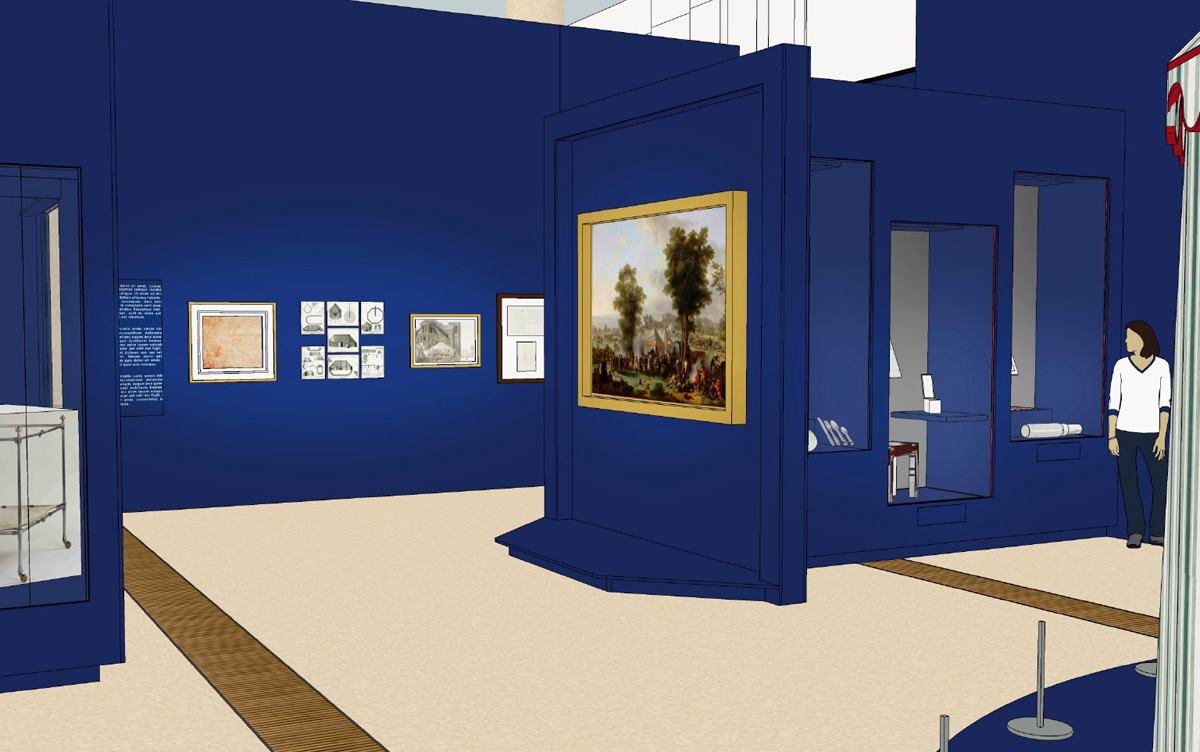
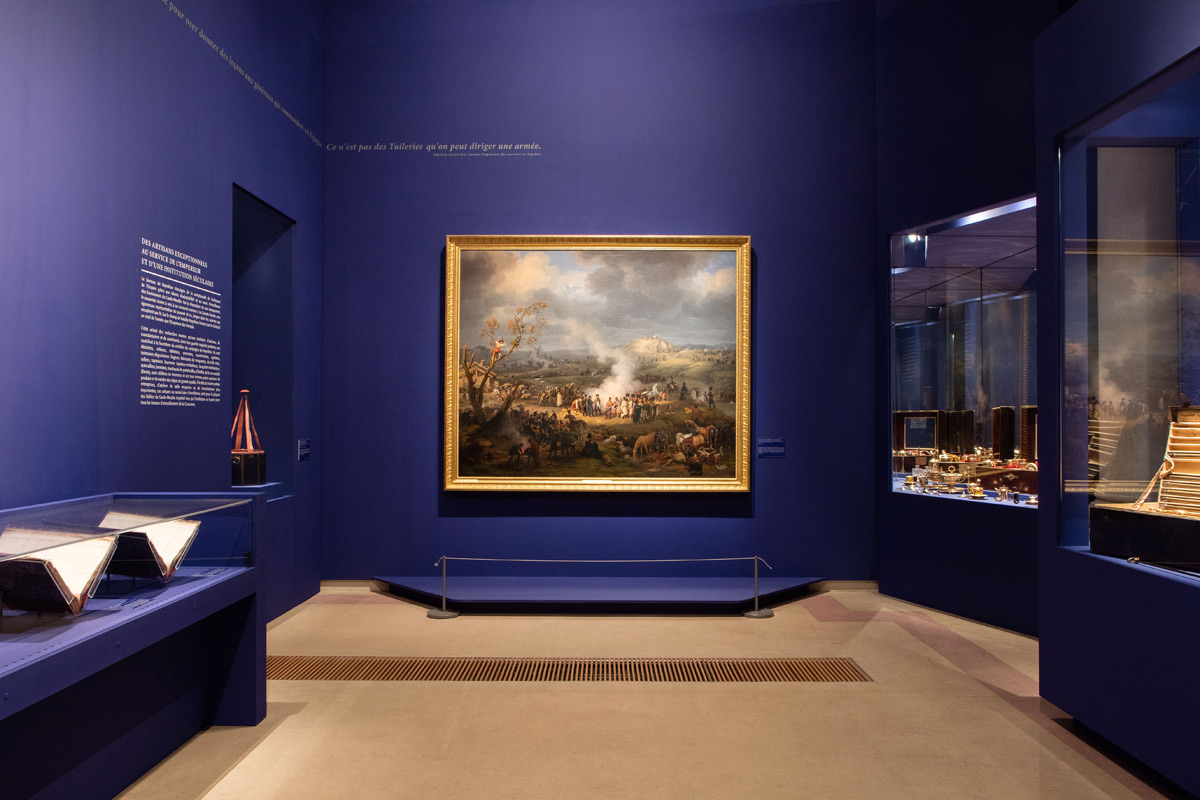
The scenography offers an elegant and singular atmosphere, combining multiple viewpoints on the works with a clear route.

The arrangement of the works reveals the Emperor in his private life, inspiring a sense of the sacred and inviting silence.

Through a careful play of colours, mirrors and light, Napoleon’s bivouac comes to life, and visitors are invited to “camp” beneath a starry sky, whether of victory or of defeat.

Exhibition: Napoleon’s Bivouac: Luxury and Ingenuity on Campaign – image 1
Exhibition: Napoleon’s Bivouac: Luxury and Ingenuity on Campaign – image 2
Exhibition: Napoleon’s Bivouac: Luxury and Ingenuity on Campaign – image 3
Exhibition: Napoleon’s Bivouac: Luxury and Ingenuity on Campaign – image 4
Exhibition: Napoleon’s Bivouac: Luxury and Ingenuity on Campaign – image 5
Exhibition: Napoleon’s Bivouac: Luxury and Ingenuity on Campaign – image 6
Exhibition: Napoleon’s Bivouac: Luxury and Ingenuity on Campaign – image 7
Exhibition: Napoleon’s Bivouac: Luxury and Ingenuity on Campaign – image 8
Exhibition: Napoleon’s Bivouac: Luxury and Ingenuity on Campaign – image 9
Exhibition: Napoleon’s Bivouac: Luxury and Ingenuity on Campaign – image 10
Exhibition: Napoleon’s Bivouac: Luxury and Ingenuity on Campaign – image 11
Exhibition: Napoleon’s Bivouac: Luxury and Ingenuity on Campaign – image 12

Exhibition: Mind and Hand: Heritage and Craftsmanship of the Mobilier National Workshops

Mobilier national, Galerie des Gobelins, Paris

L’Esprit et la Main, Héritage et Savoir-Faire des Ateliers du Mobilier National2015Mind and Hand: Heritage and Craftsmanship of the Mobilier National Workshops

Scenography and graphic design
Exhibition from 27 March 2015 to 13 December 2015
General curator
Christiane Naffah-Bayle
Total area
300 m²
300 works
art objects, porcelain, furniture, sculptures, paintings, hangings, textiles, works on paper, archive documents, books, multimedia screens.
Works budget
€175,000
Attendance
40,000 visitors

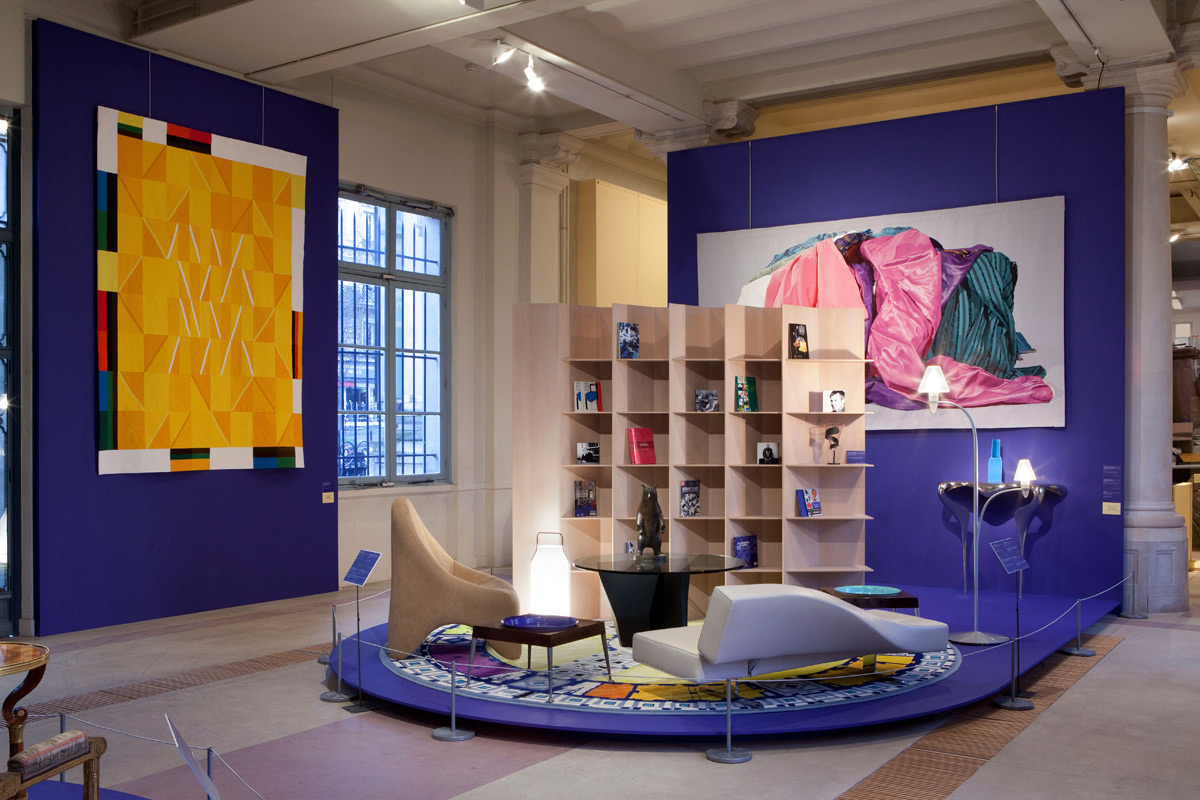
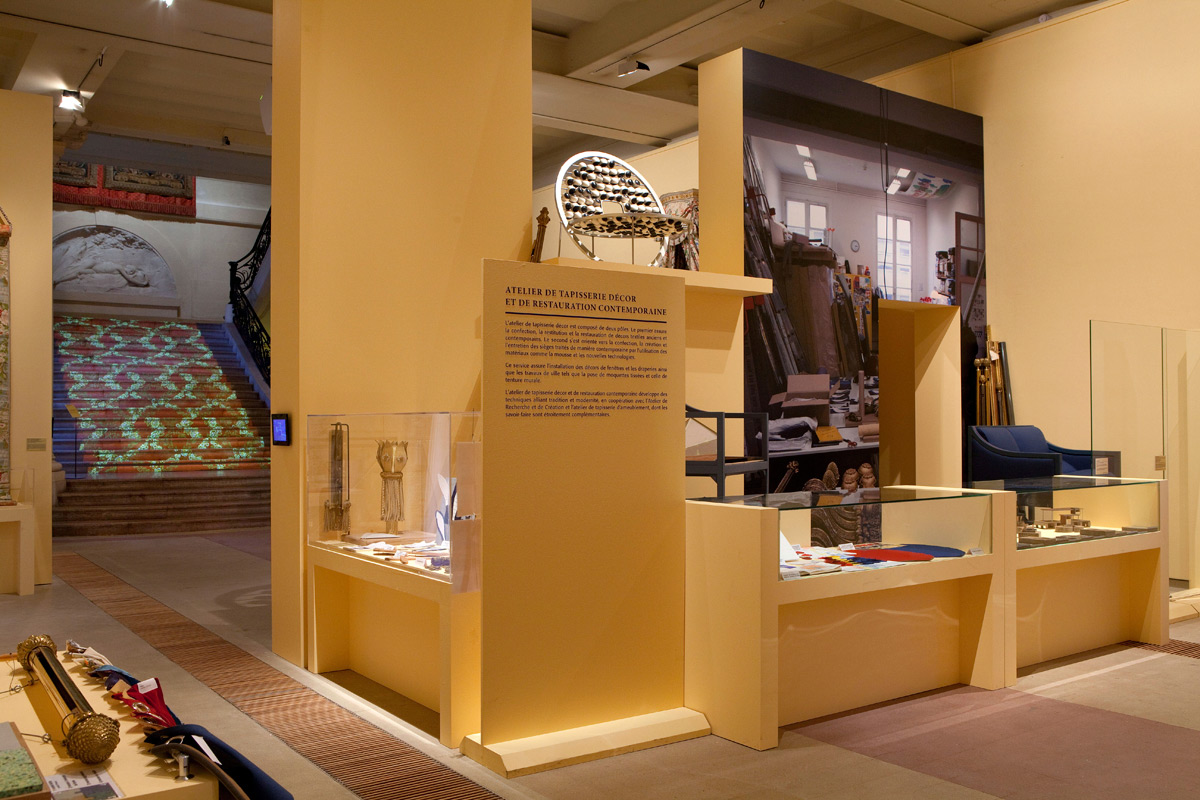
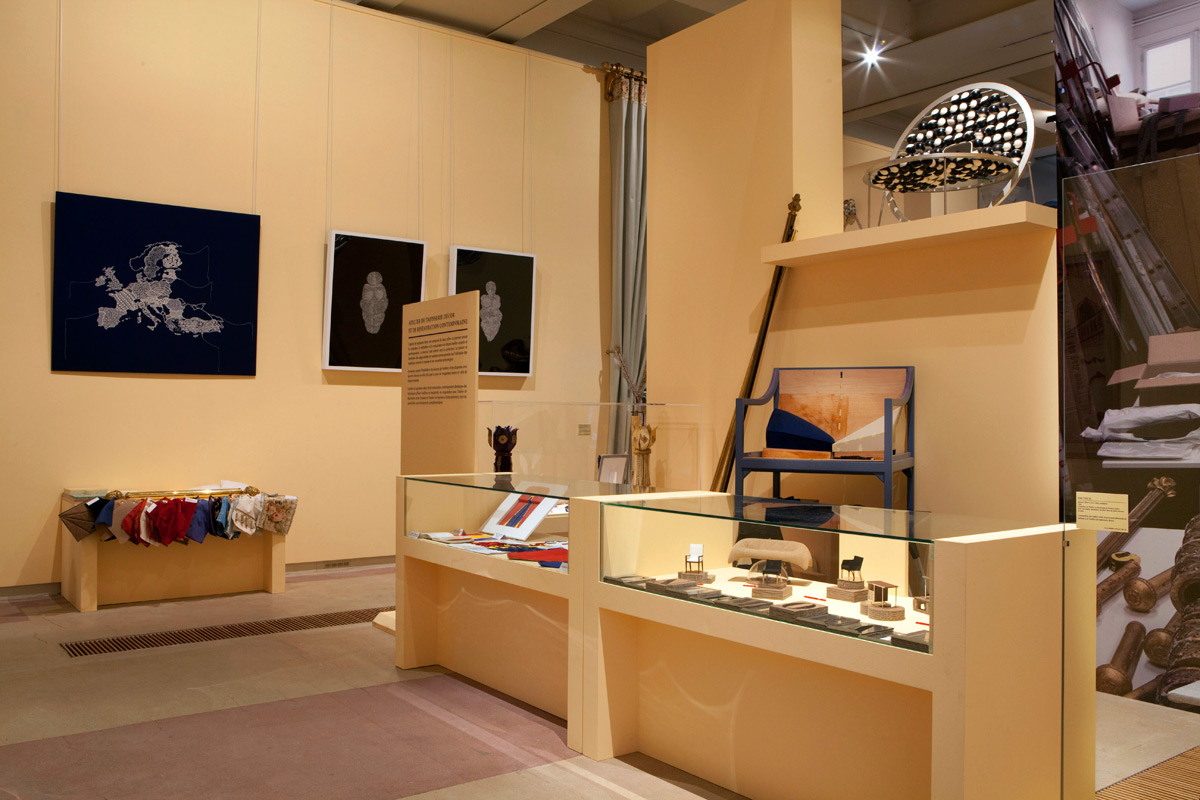
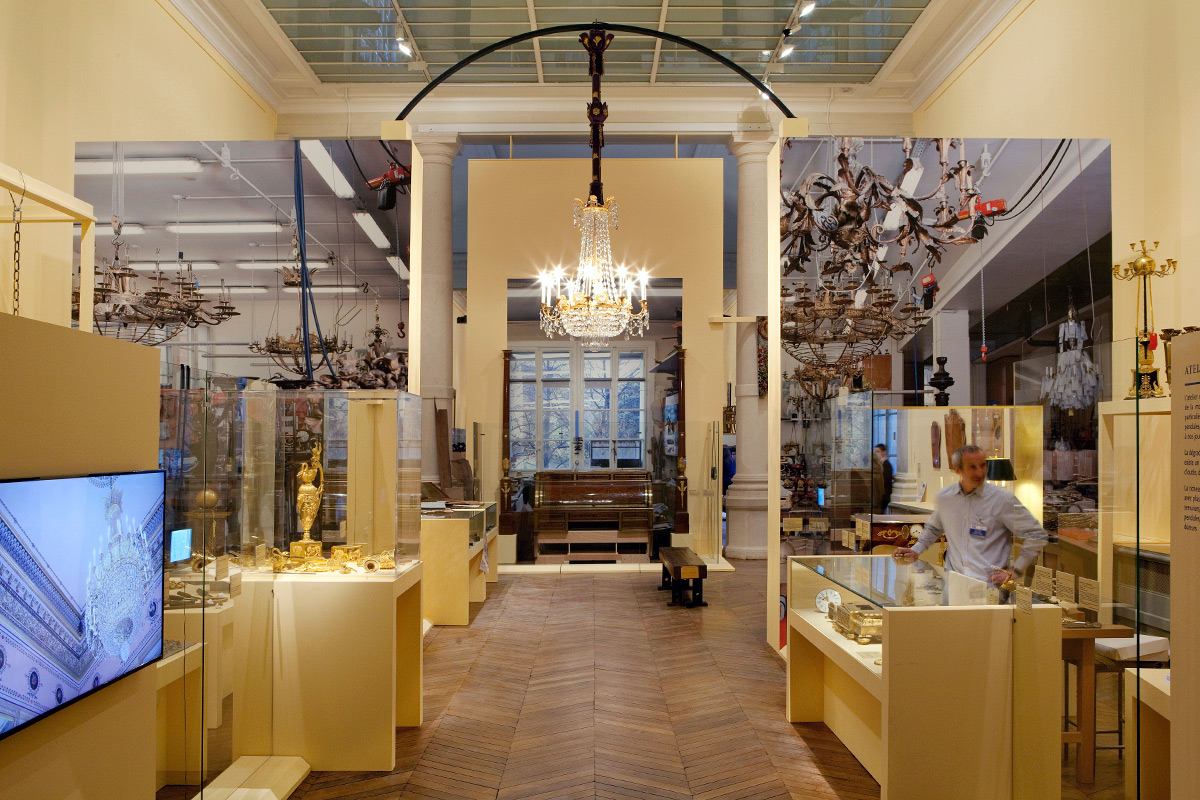
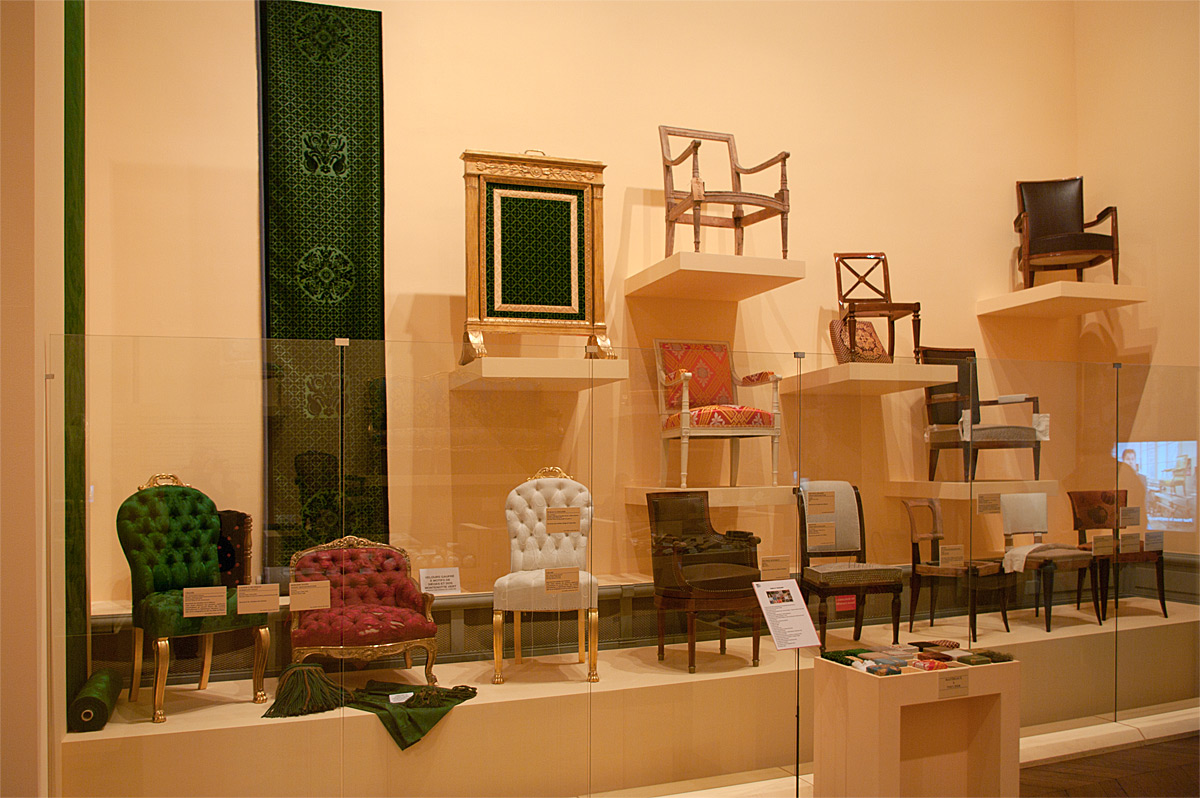
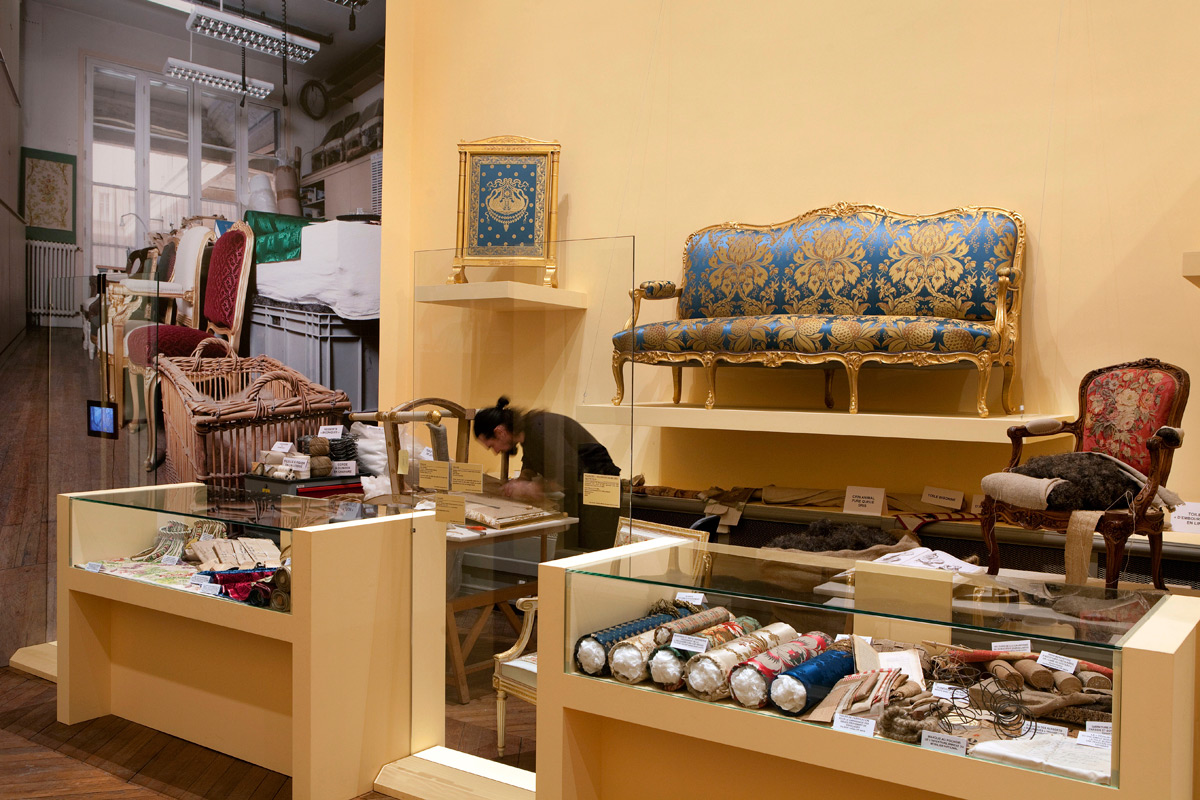
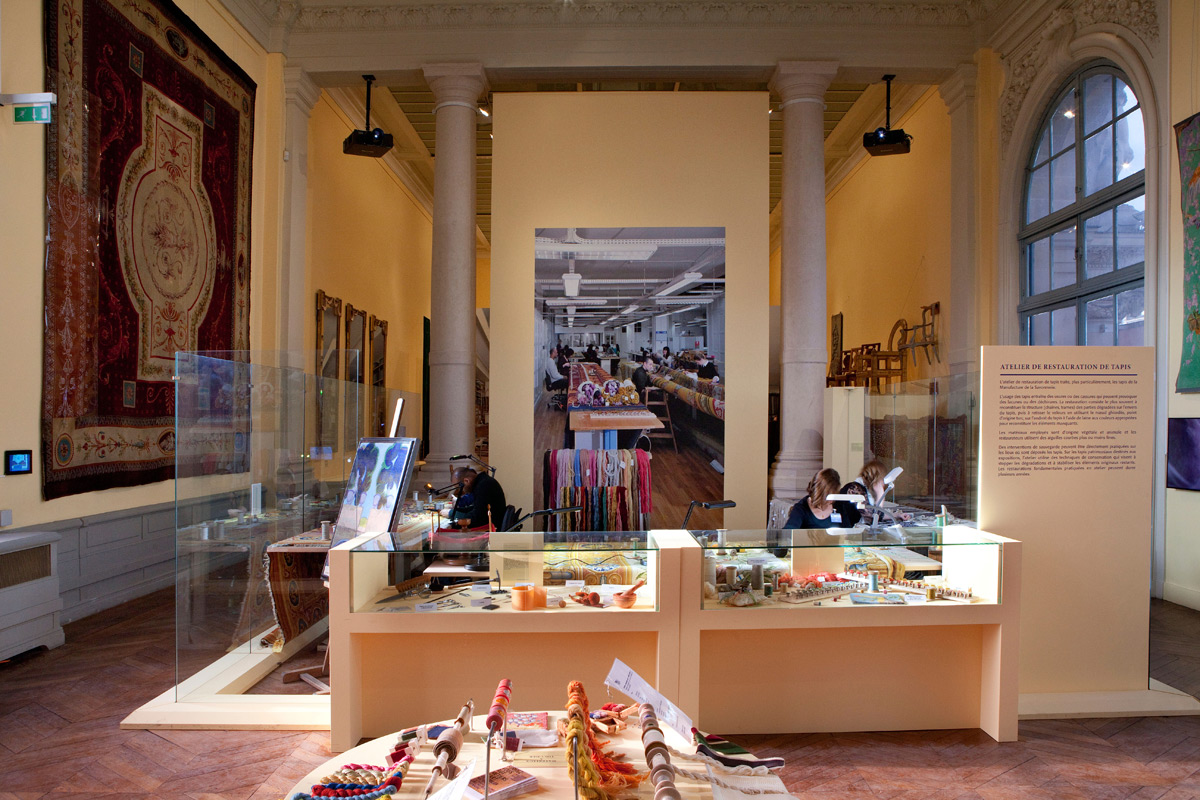
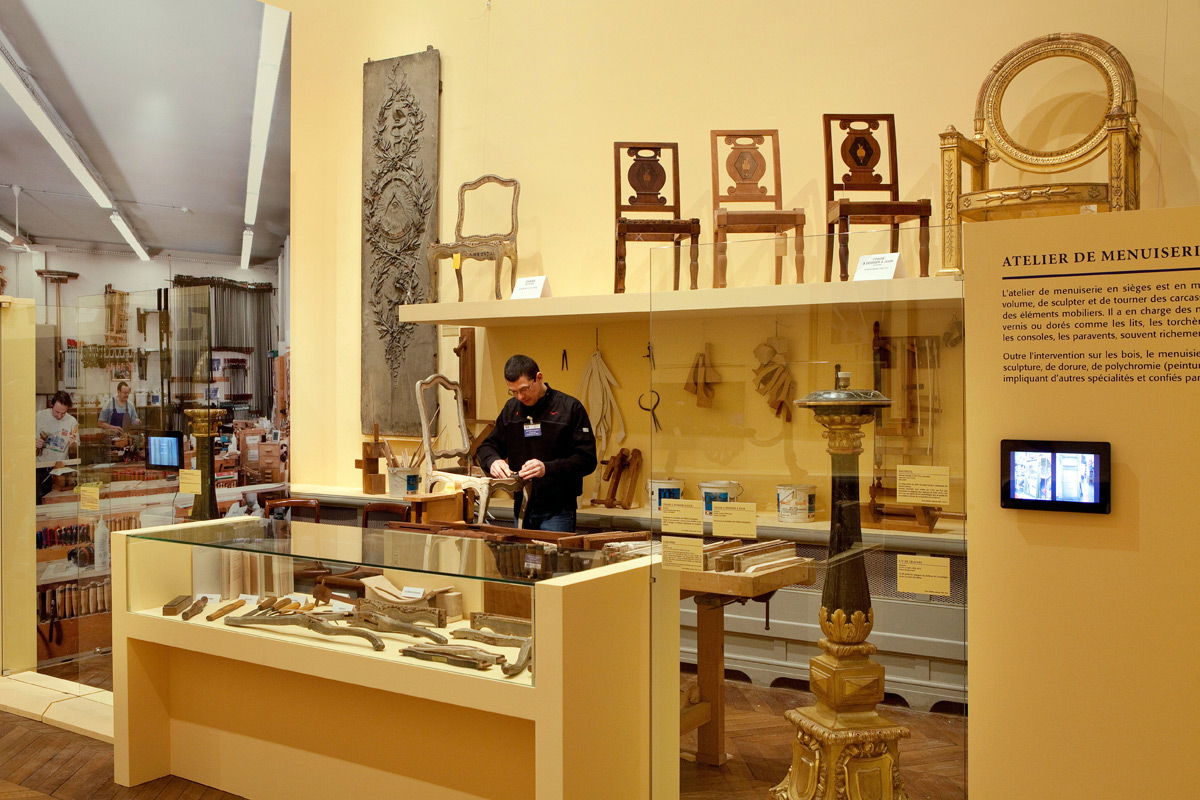
The exhibition occupies both levels of the Galerie des Gobelins, like a walk through the storerooms and workshops of the Mobilier national. It offers a glimpse behind the scenes of a centuries-old institution, the royal, imperial and republican Garde-Meuble. Now called the Mobilier national, it provides the furnishings and part of the decor of the palaces of the Republic, such as the Élysée Palace, the Hôtel de Matignon and the Senate.

The unified scenography offers a reconstruction of the Mobilier national’s restoration workshops, highly specific spaces that are always closed to the public.

It consists of simple volumes, free-standing furniture and many glazed barriers, whose layout is adjusted to each space represented. It offers a clear, fluid route, en enfilade, through the Mobilier national’s mini restoration workshops.

The scenography sets out to recreate the intimate atmosphere of the art restorers’ workspaces, allowing visitors a close-up view, through demonstrations, of the gestures of the craftsmen present in the exhibition at set times, as well as of historic and contemporary heritage works. Films and photographs sit alongside works, tools and materials.

Exhibition: Mind and Hand: Heritage and Craftsmanship of the Mobilier National Workshops – image 1
Exhibition: Mind and Hand: Heritage and Craftsmanship of the Mobilier National Workshops – image 2
Exhibition: Mind and Hand: Heritage and Craftsmanship of the Mobilier National Workshops – image 3
Exhibition: Mind and Hand: Heritage and Craftsmanship of the Mobilier National Workshops – image 4
Exhibition: Mind and Hand: Heritage and Craftsmanship of the Mobilier National Workshops – image 5
Exhibition: Mind and Hand: Heritage and Craftsmanship of the Mobilier National Workshops – image 6
Exhibition: Mind and Hand: Heritage and Craftsmanship of the Mobilier National Workshops – image 7
Exhibition: Mind and Hand: Heritage and Craftsmanship of the Mobilier National Workshops – image 8
Exhibition: Mind and Hand: Heritage and Craftsmanship of the Mobilier National Workshops – image 9
Exhibition: Mind and Hand: Heritage and Craftsmanship of the Mobilier National Workshops – image 10
Exhibition: Mind and Hand: Heritage and Craftsmanship of the Mobilier National Workshops – image 11
Exhibition: Mind and Hand: Heritage and Craftsmanship of the Mobilier National Workshops – image 12

Abroad

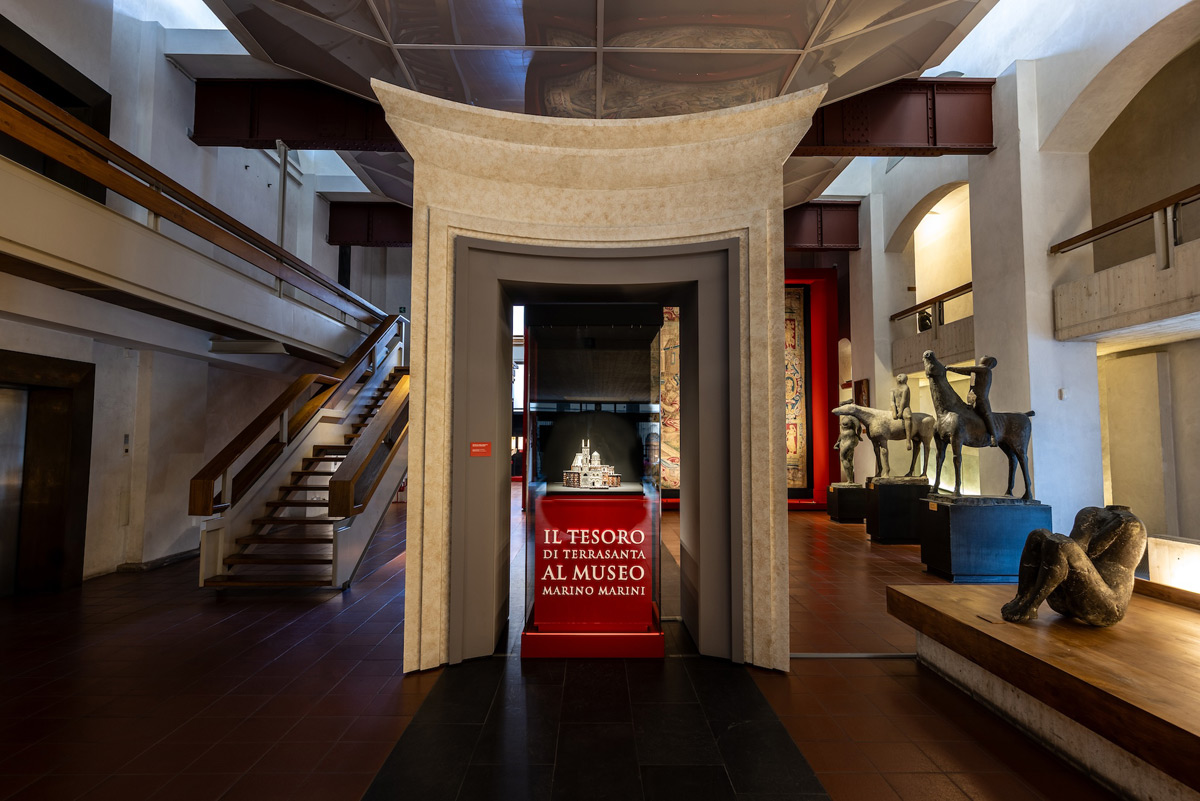
Exhibition: The Treasure of the Holy Land at the Museo Marino Marini, the Beauty of the Sacred: the Medici Altar and the Gifts of Kings

Florence, Museo Marino Marini

Il Tesoro di Terrasanta al Museo Marino Marini, la bellezza del sacro : l’Altare dei Medici e i doni dei Re2024The Treasure of the Holy Land at the Museo Marino Marini, the Beauty of the Sacred: the Medici Altar and the Gifts of Kings

Scenography and graphic design
Exhibition from 13 September 2024 to 7 January 2025
Curators
Leyla Bezzi
Total area
700 m²
110 works
objects, sculptures, paintings, works on paper, archive documents, books.
Works budget
€500,000
Attendance
ongoing

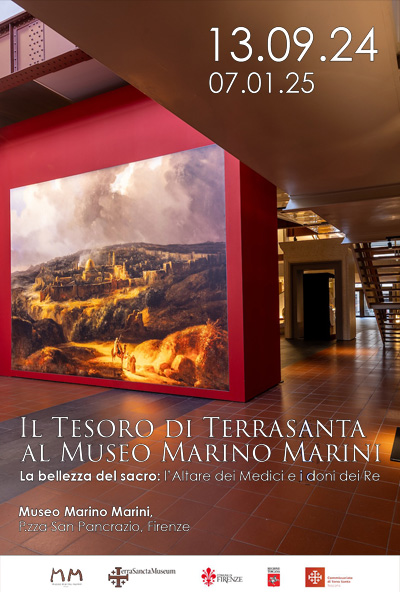
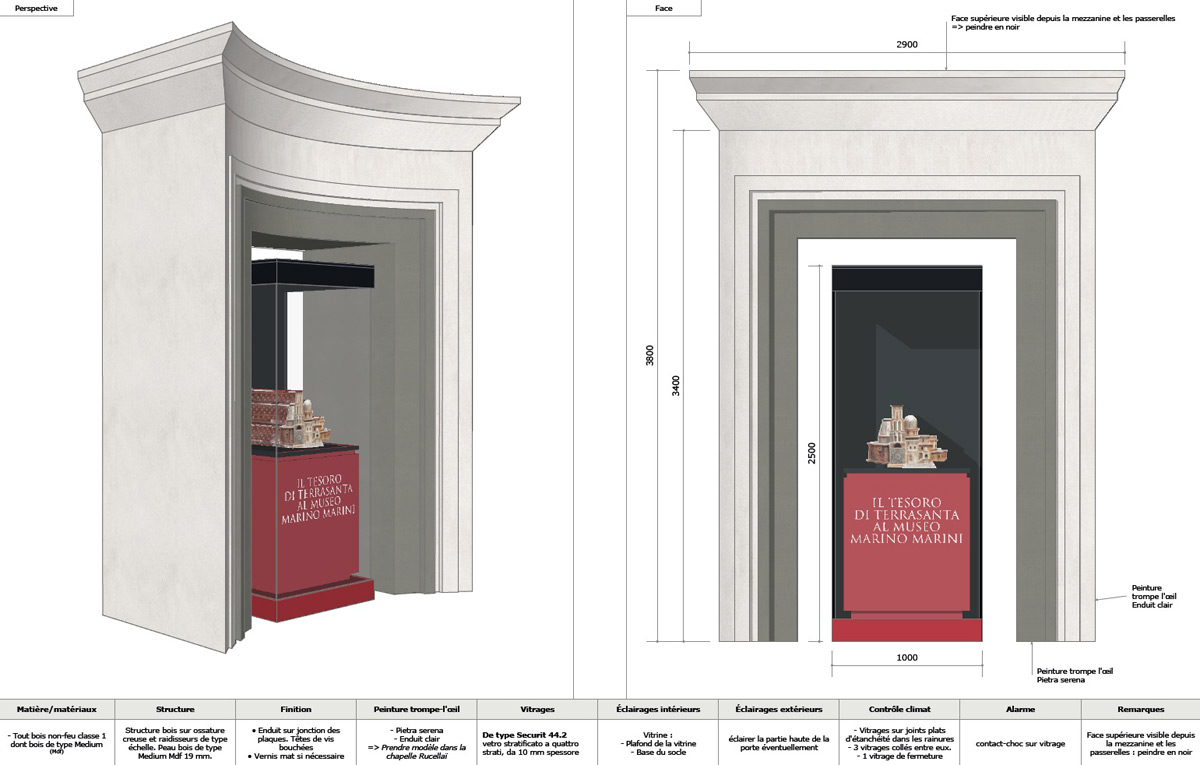
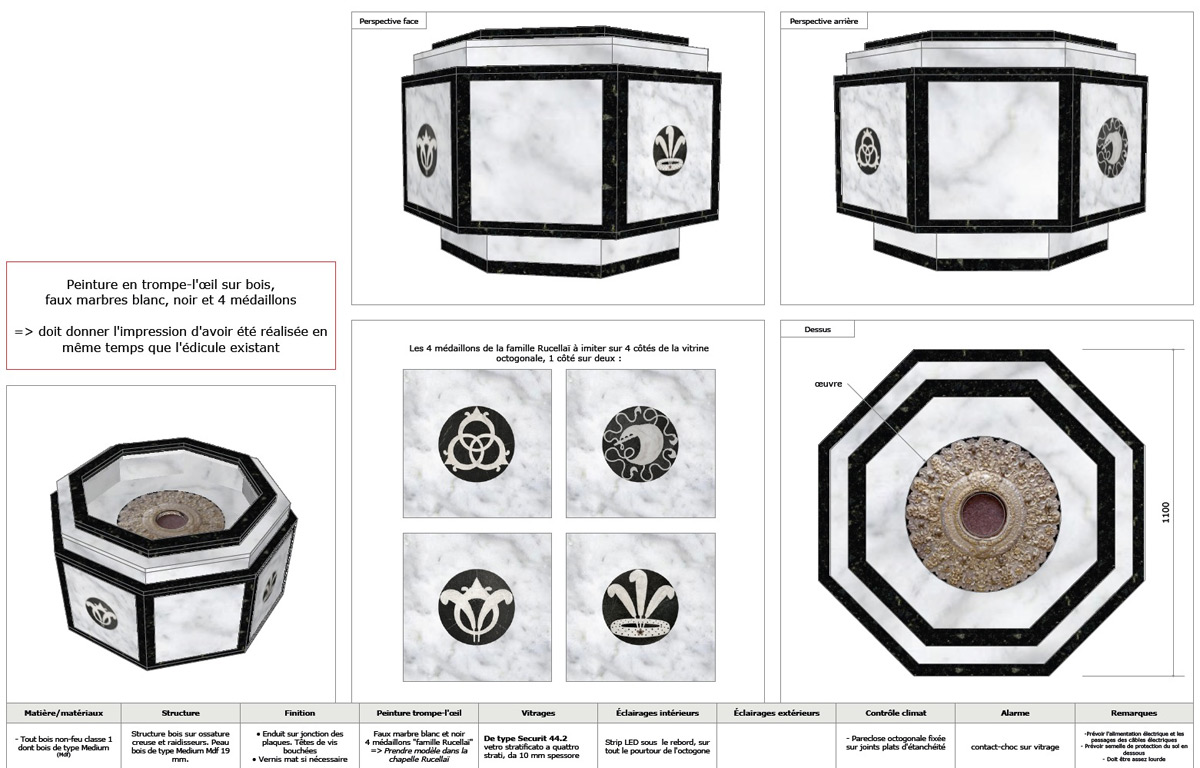
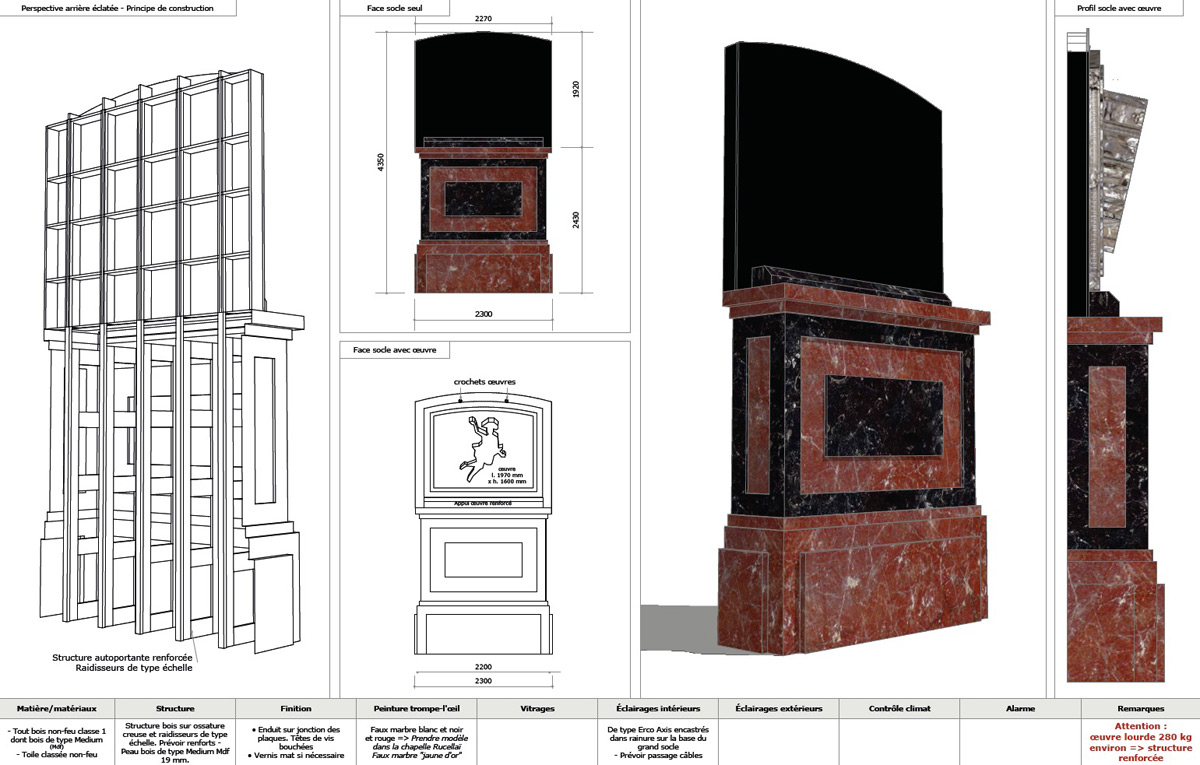
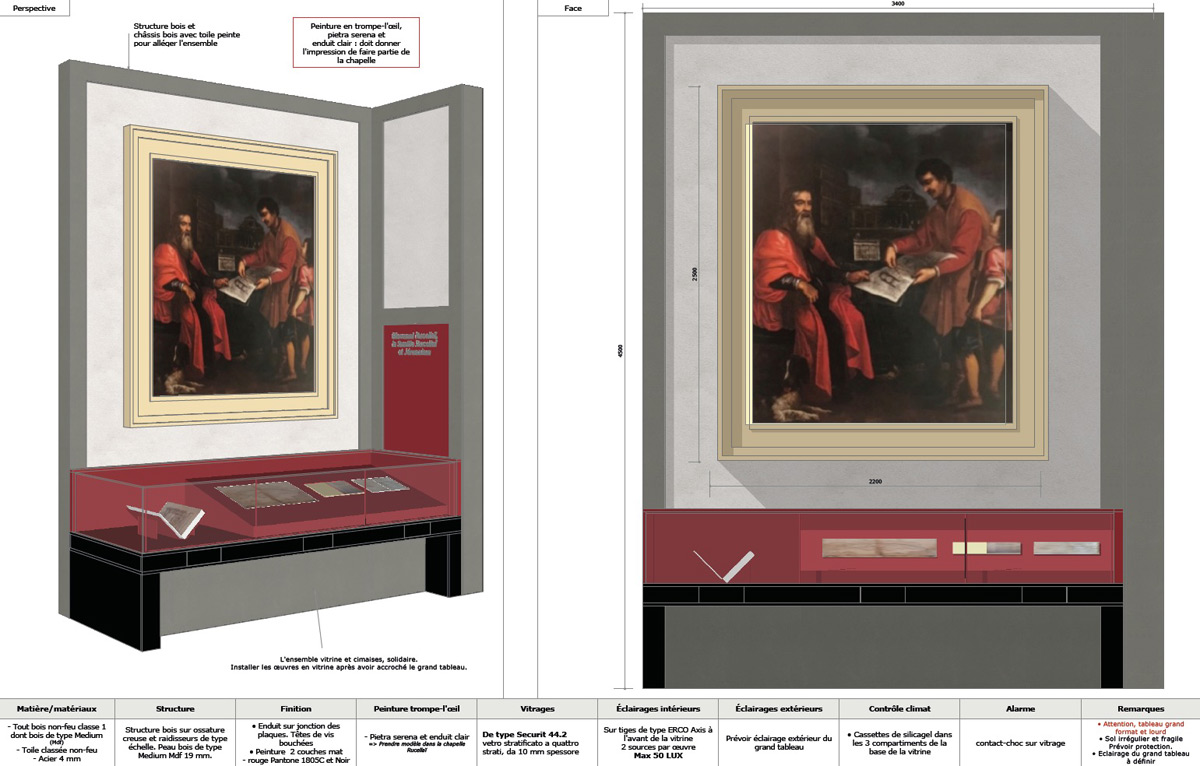
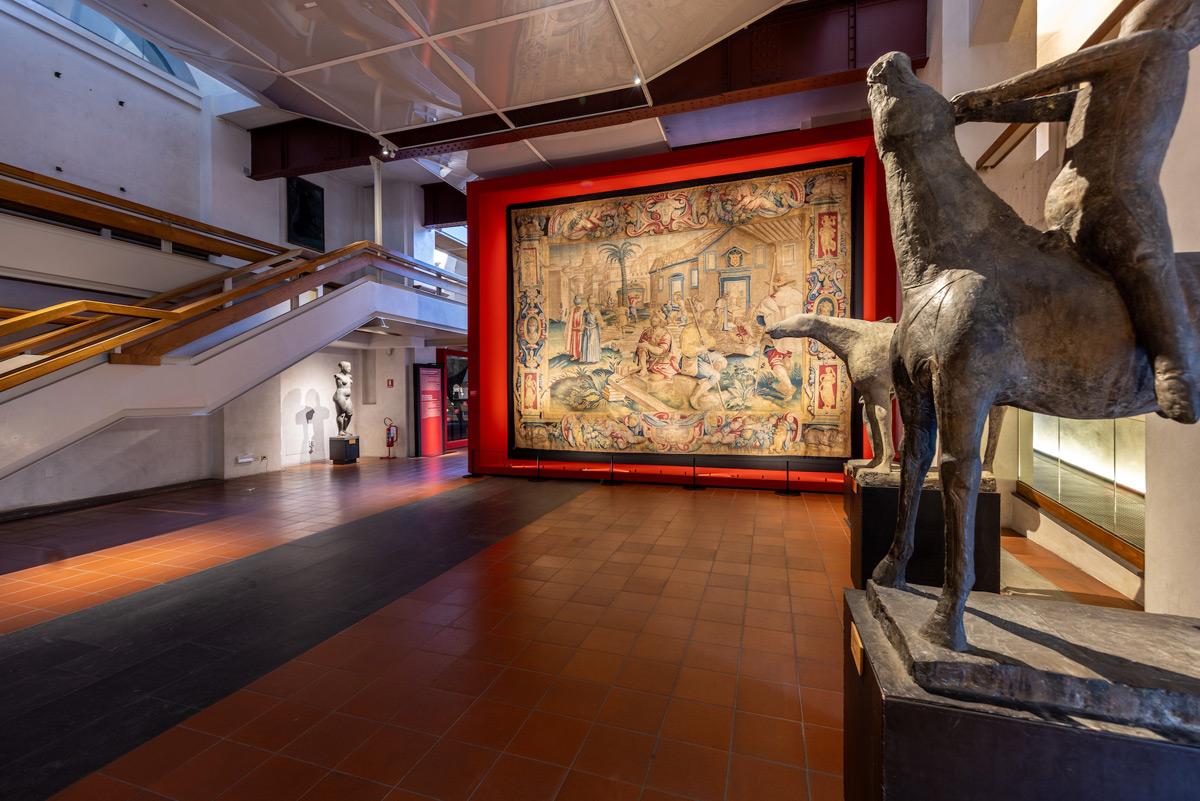
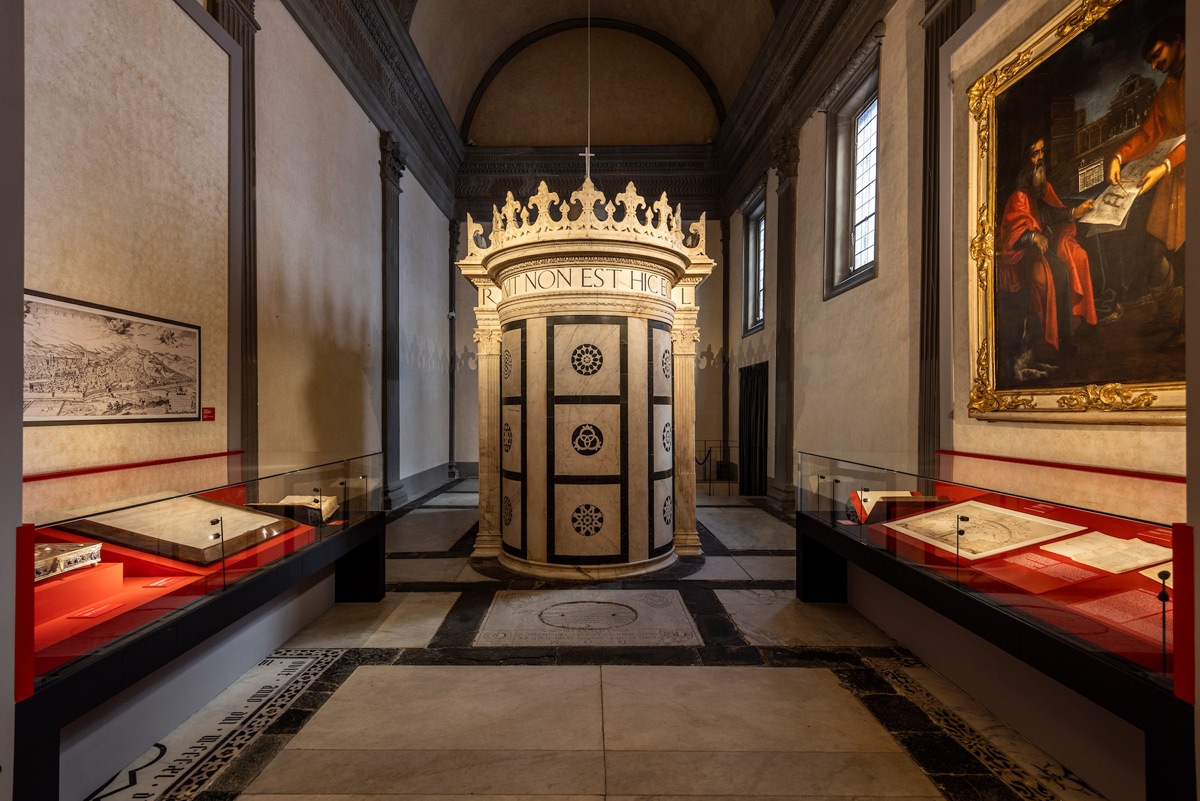
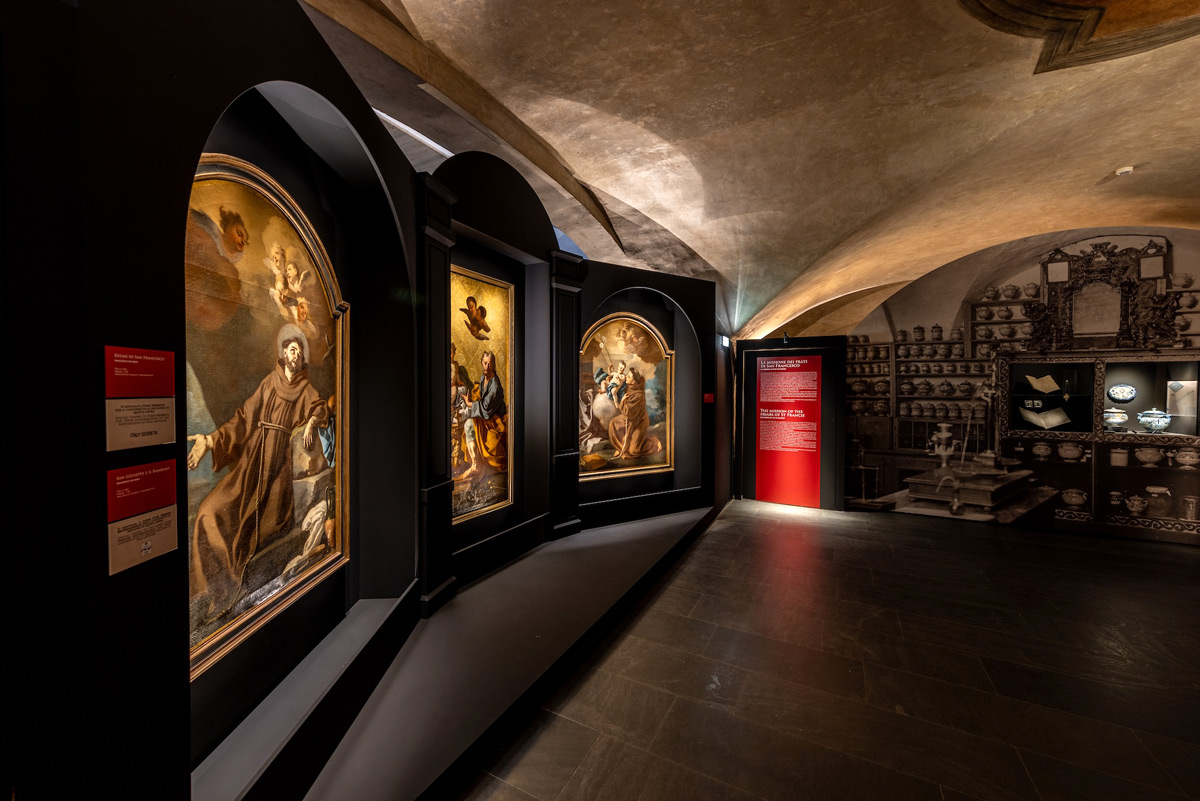
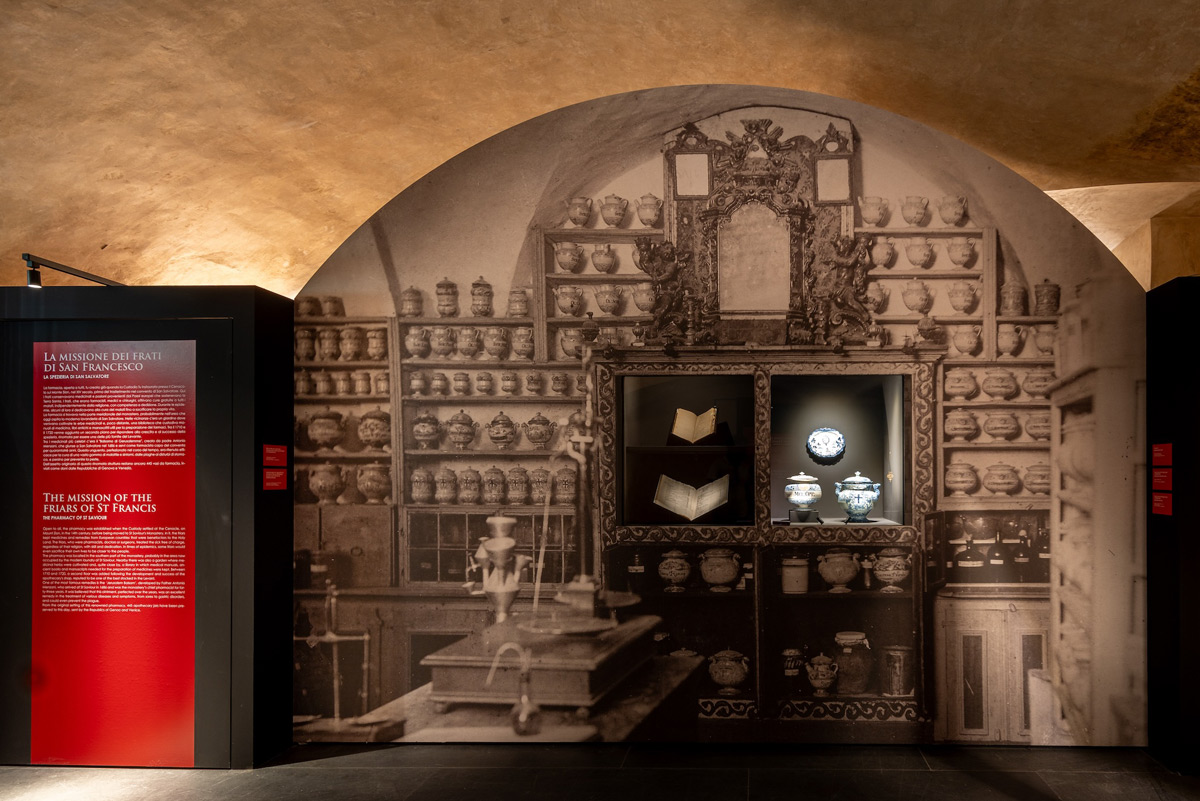
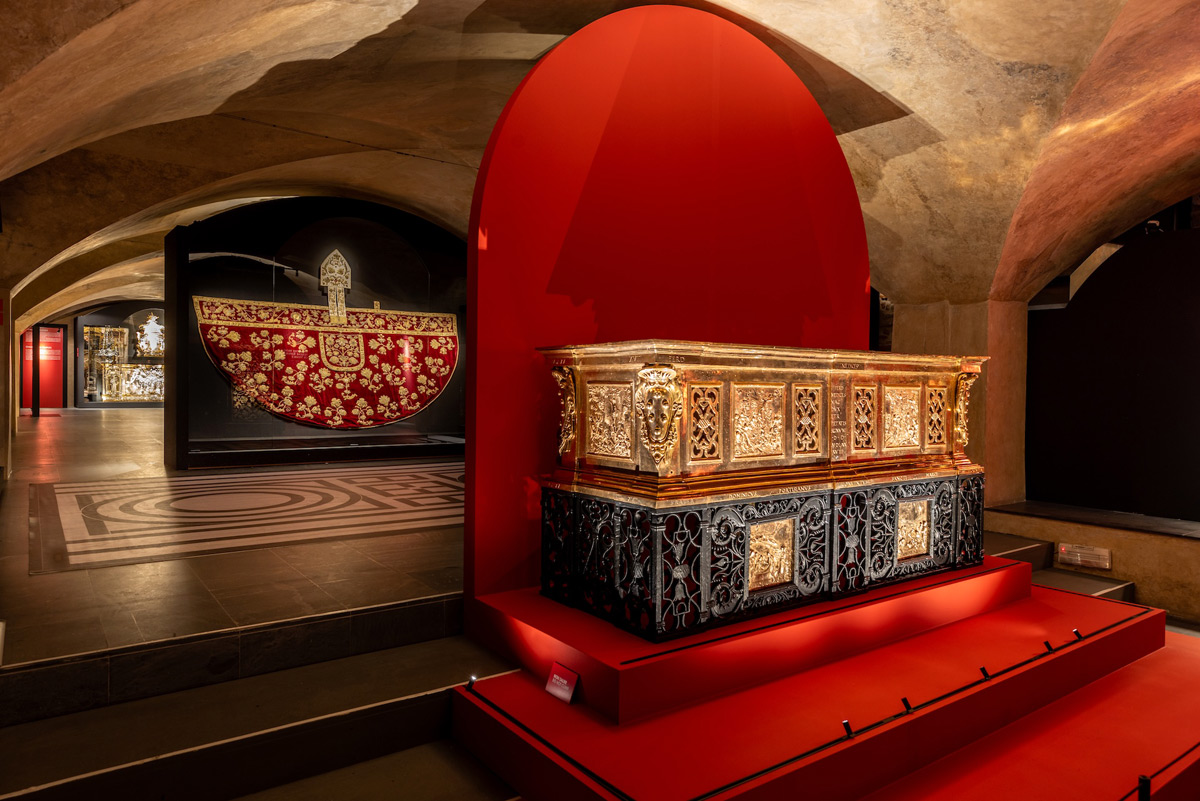
L’exposition est consacrée aux dons prestigieux des grandes cours européennes, faits au cours des siècles au Saint-Sépulcre de Jérusalem, et met l’accent sur les dons du Grand-Duché de Toscane. Le Musée Marino Marini accueille cette exposition extraordinaire car il abrite la Chapelle Rucellai, à l’intérieur de laquelle se trouve une copie de l’édicule du Saint-Sépulcre, tel qu’il figurait à Jérusalem à la fin du XVe siècle. Cette copie est l’œuvre du grand humaniste polymathe du Quattrocento Léon Battista Alberti. À partir de ce chef-d’œuvre de la Renaissance florentine, l’exposition se développe à travers le Musée Marino Marini avec plus de 100 œuvres parmi lesquelles se distingue l’Autel du Calvaire de la basilique de Jérusalem, offert par Ferdinand Ier de Médicis en 1588. Pour la première fois depuis presque cinq siècles, l’autel a quitté Jérusalem, pour être exposé dans sa ville d’origine, Florence. Parmi les chefs-d’œuvre de l’exposition, se distinguent aussi les dons de Charles de Bourbon, roi de Naples, et d’autres œuvres inédites, jamais exposées auparavant, comme les deux tableaux représentant saint François d’Assise et saint Antoine de Padoue, par Francesco De Mura (1696-1782). L’exposition est enrichie par les prêts d’institutions muséales italiennes des plus prestigieuses, dont la Galerie des Offices de Florence, la Bibliothèque Nationale Centrale de Florence, le Museo e Real Bosco di Capodimonte, pour n’en nommer que quelques-unes. Parti pris scénographique : La scénographie se déploie sur trois espaces très différents du musée : la chapelle Rucellai avec l’édicule d’Alberti, le grand hall du musée avec les œuvres modernes et monumentales de Marino Marini, et la crypte voûtée. Le parti pris est d’attribuer à chacun de ces 3 espaces, les 3 lieux géographiques du discours de l’exposition pour une déambulation claire : Florence, Jérusalem et enfin le Saint-Sépulcre. La scénographie est conçue de façon à « épouser » les espaces tout en faisant dialoguer les œuvres historiques de l’exposition avec les œuvres modernes du musée, ponctuant le parcours de grands visuels rétro-éclairés.

Exhibition: The Treasure of the Holy Land at the Museo Marino Marini, the Beauty of the Sacred: the Medici Altar and the Gifts of Kings – image 1
Exhibition: The Treasure of the Holy Land at the Museo Marino Marini, the Beauty of the Sacred: the Medici Altar and the Gifts of Kings – image 2
Exhibition: The Treasure of the Holy Land at the Museo Marino Marini, the Beauty of the Sacred: the Medici Altar and the Gifts of Kings – image 3
Exhibition: The Treasure of the Holy Land at the Museo Marino Marini, the Beauty of the Sacred: the Medici Altar and the Gifts of Kings – image 4
Exhibition: The Treasure of the Holy Land at the Museo Marino Marini, the Beauty of the Sacred: the Medici Altar and the Gifts of Kings – image 5
Exhibition: The Treasure of the Holy Land at the Museo Marino Marini, the Beauty of the Sacred: the Medici Altar and the Gifts of Kings – image 6
Exhibition: The Treasure of the Holy Land at the Museo Marino Marini, the Beauty of the Sacred: the Medici Altar and the Gifts of Kings – image 7
Exhibition: The Treasure of the Holy Land at the Museo Marino Marini, the Beauty of the Sacred: the Medici Altar and the Gifts of Kings – image 8
Exhibition: The Treasure of the Holy Land at the Museo Marino Marini, the Beauty of the Sacred: the Medici Altar and the Gifts of Kings – image 9
Exhibition: The Treasure of the Holy Land at the Museo Marino Marini, the Beauty of the Sacred: the Medici Altar and the Gifts of Kings – image 10
Exhibition: The Treasure of the Holy Land at the Museo Marino Marini, the Beauty of the Sacred: the Medici Altar and the Gifts of Kings – image 11
Exhibition: The Treasure of the Holy Land at the Museo Marino Marini, the Beauty of the Sacred: the Medici Altar and the Gifts of Kings – image 12
Exhibition: The Treasure of the Holy Land at the Museo Marino Marini, the Beauty of the Sacred: the Medici Altar and the Gifts of Kings – image 13
Exhibition: The Treasure of the Holy Land at the Museo Marino Marini, the Beauty of the Sacred: the Medici Altar and the Gifts of Kings – image 14
Exhibition: The Treasure of the Holy Land at the Museo Marino Marini, the Beauty of the Sacred: the Medici Altar and the Gifts of Kings – image 15

Other venues

Exhibition: The Story of Saint-Louis: Great and Small Histories of a Neighbourhood

Musée Lambinet, City of Versailles

Si Saint-Louis m’était Conté, Grandes et Petites Histoires d’un Quartier2026The Story of Saint-Louis: Great and Small Histories of a Neighbourhood

Scenography and graphic design
Exhibition from 1 April to 12 July 2026
Curators
Julien Le Magueresse, director of the Versailles municipal archives
Total area
150 m²
120 works
paintings, works on paper, archive documents and original objects
Works budget
€9,000

For many years, the municipal archives have periodically revisited the history of the neighbourhoods of Versailles through exhibitions and publications.

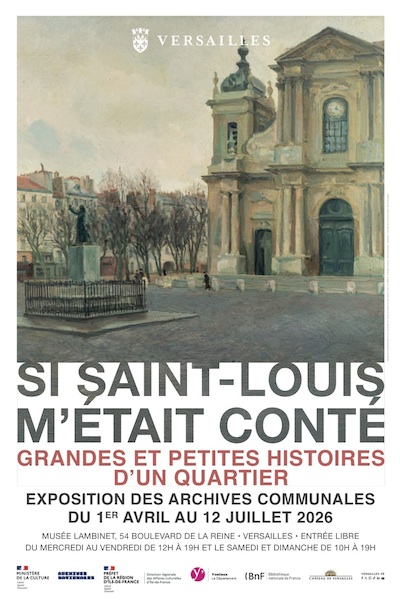
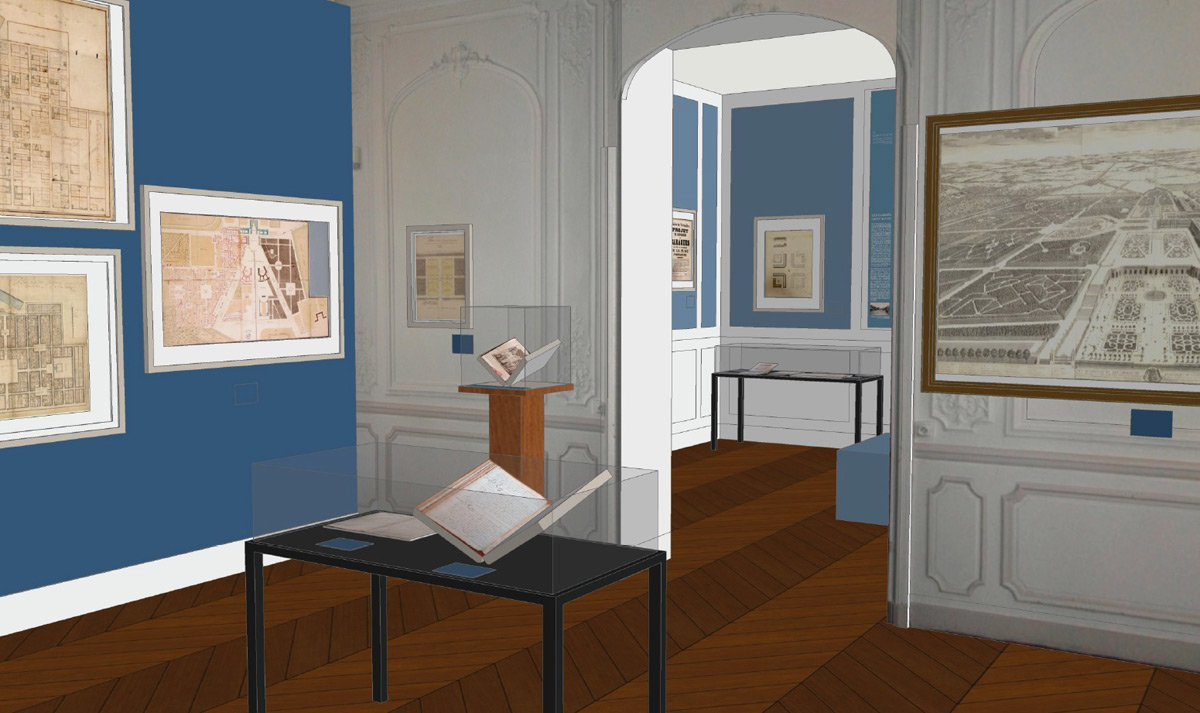
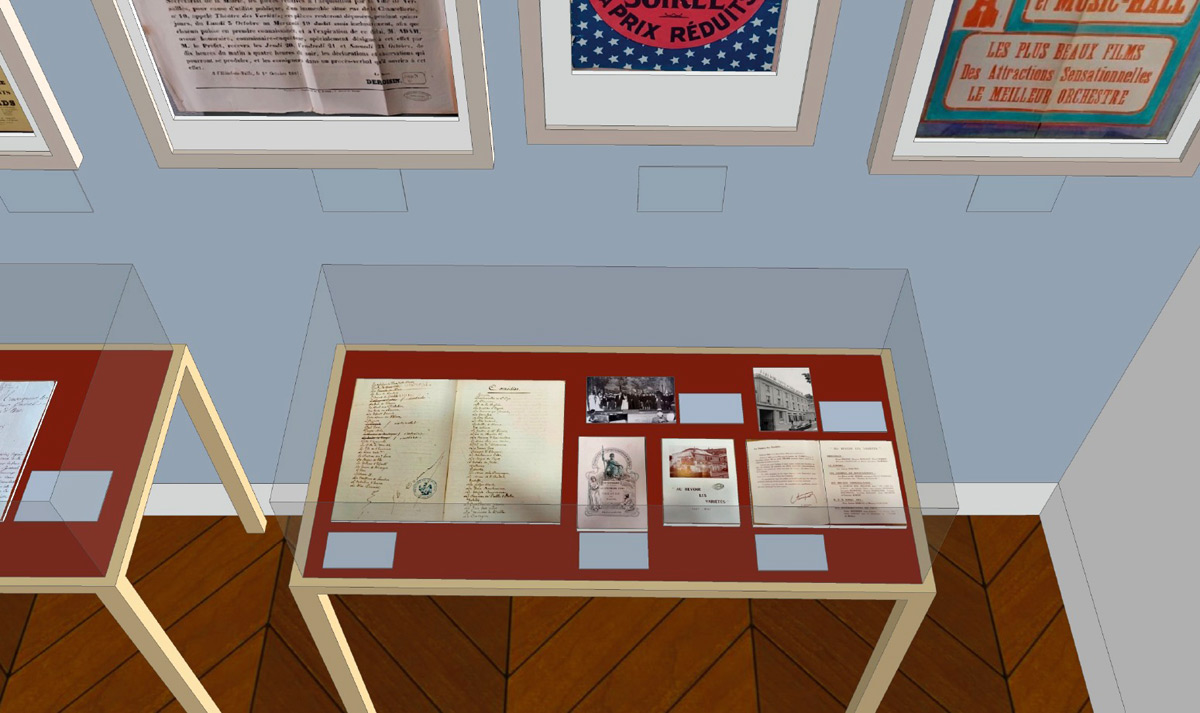
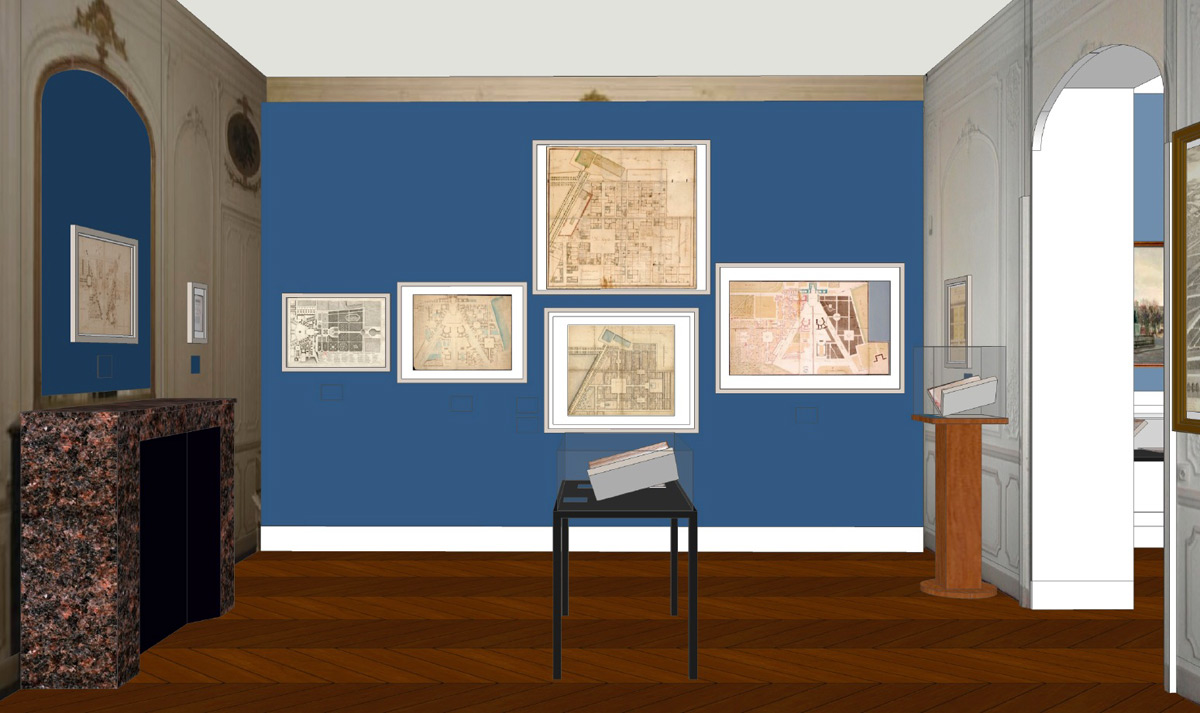
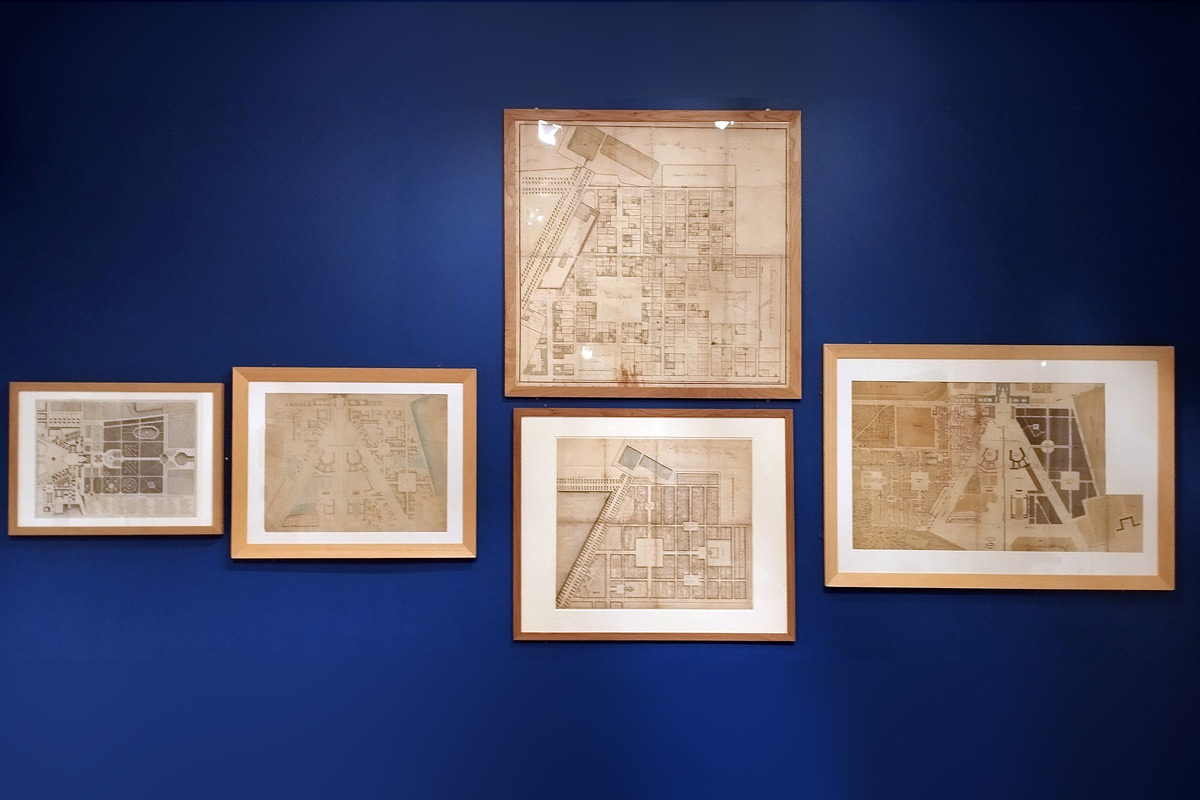
This exhibition invites you to travel back in time to meet medieval Versailles, then to delve into the archives of the neighbourhood’s creation. And while Saint-Louis seems to have changed little since it was built in the 17th and 18th centuries, the exhibition shows that, on the contrary, the neighbourhood has been constantly changing, with building works, the arrival of municipal services and a military presence. The exhibition is a scholarly event, bringing together in Versailles pieces rarely shown together, notably large historic plans of the neighbourhood and the city.

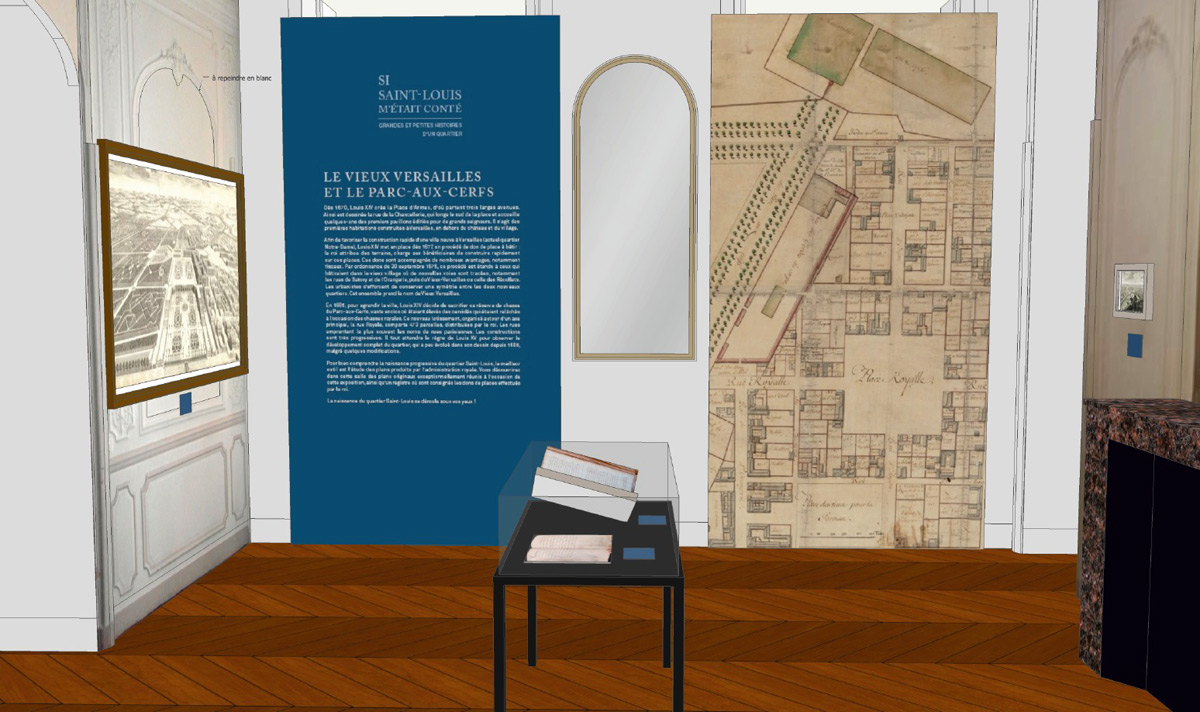
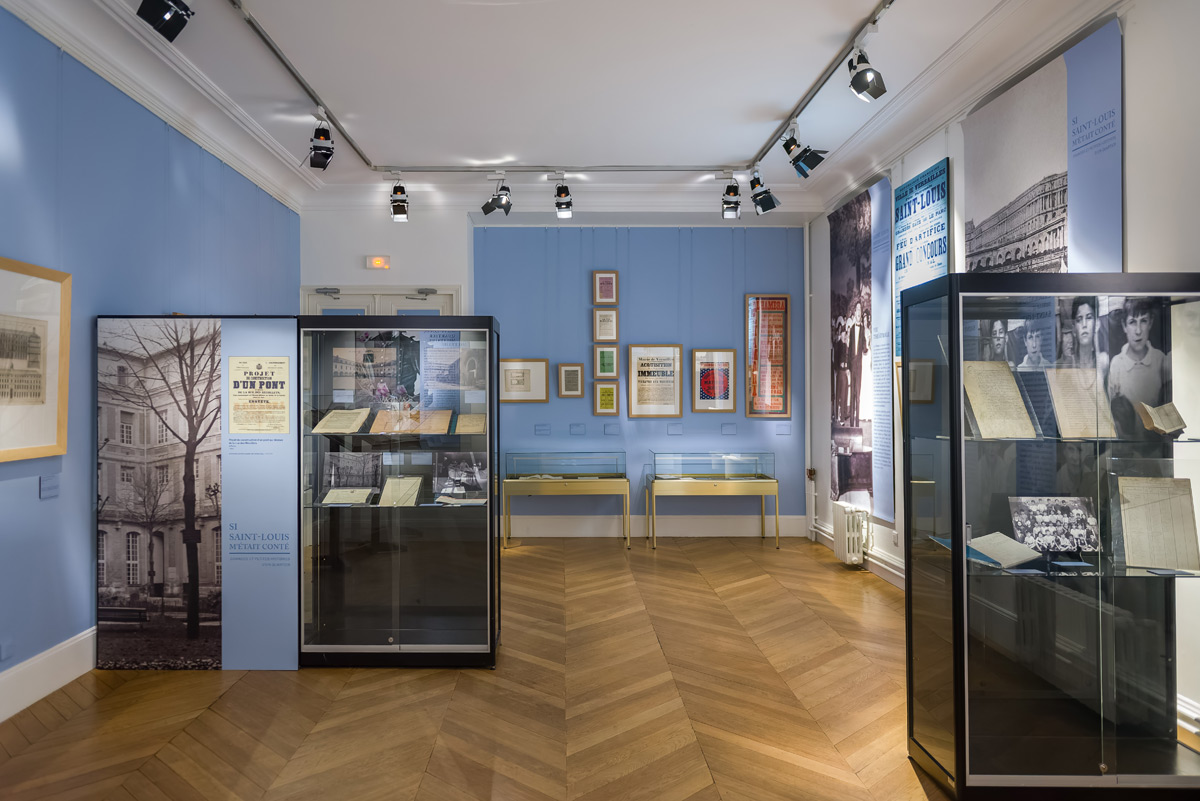
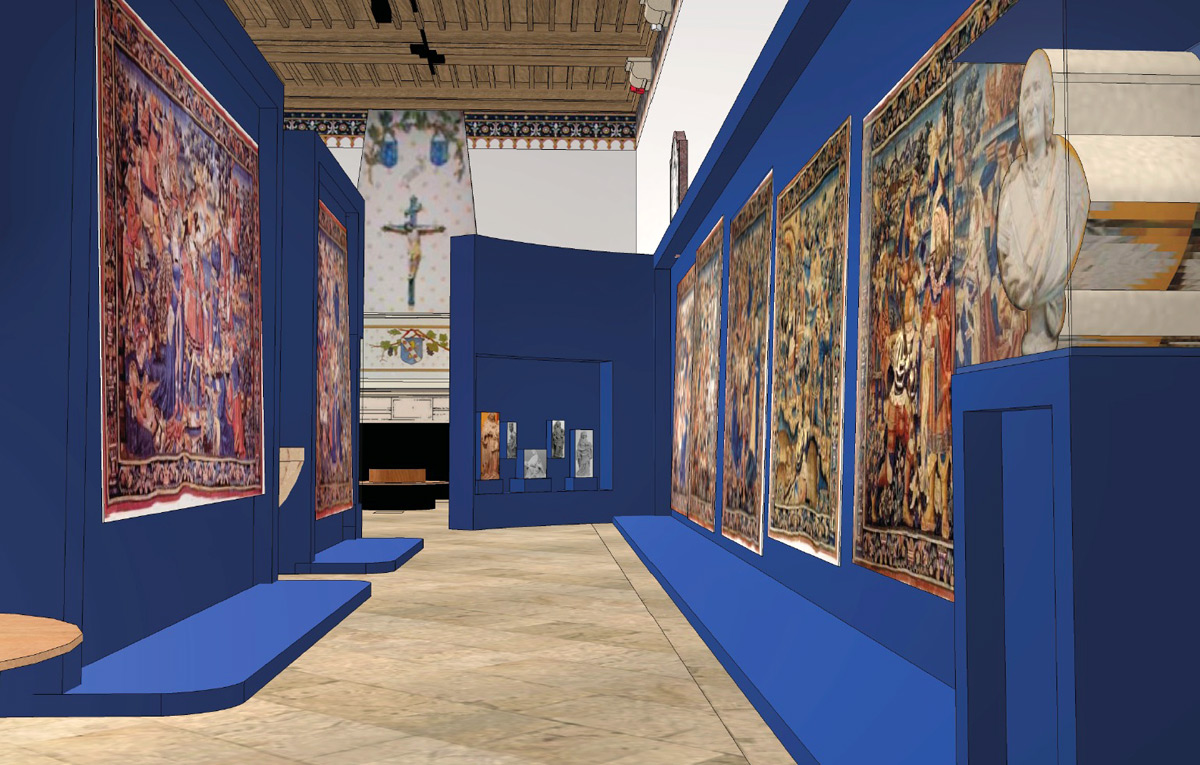
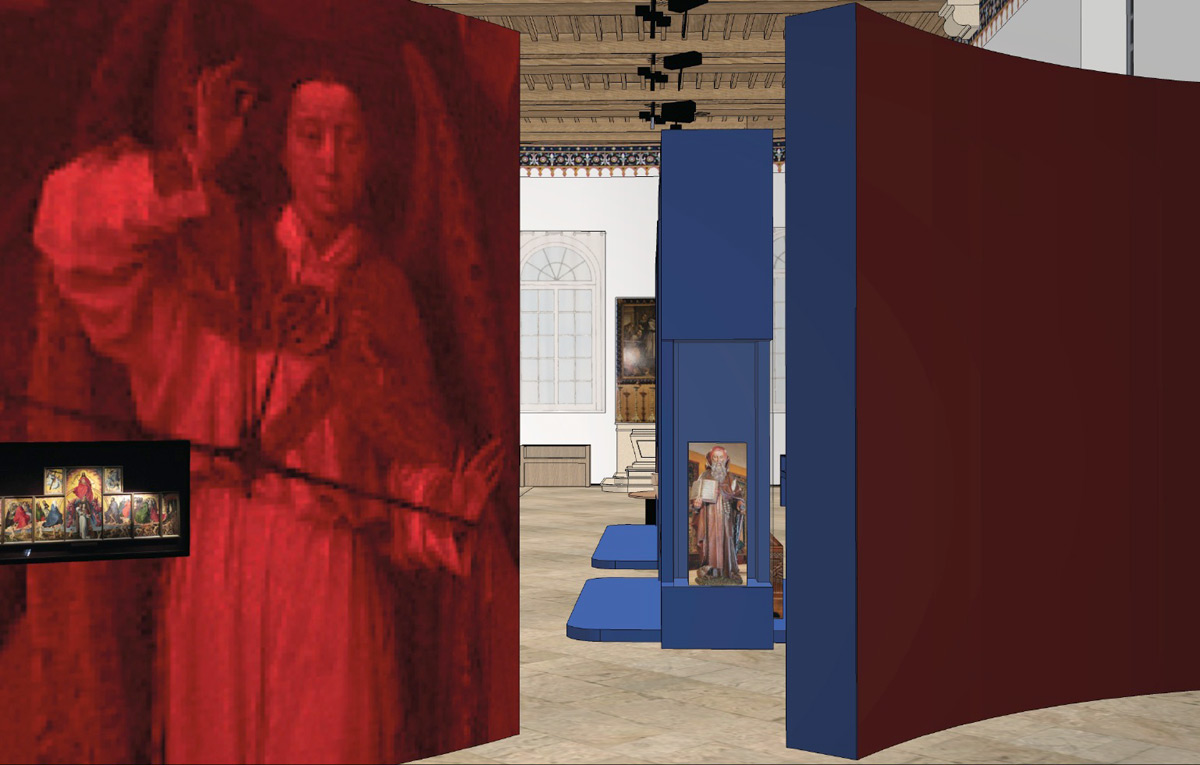
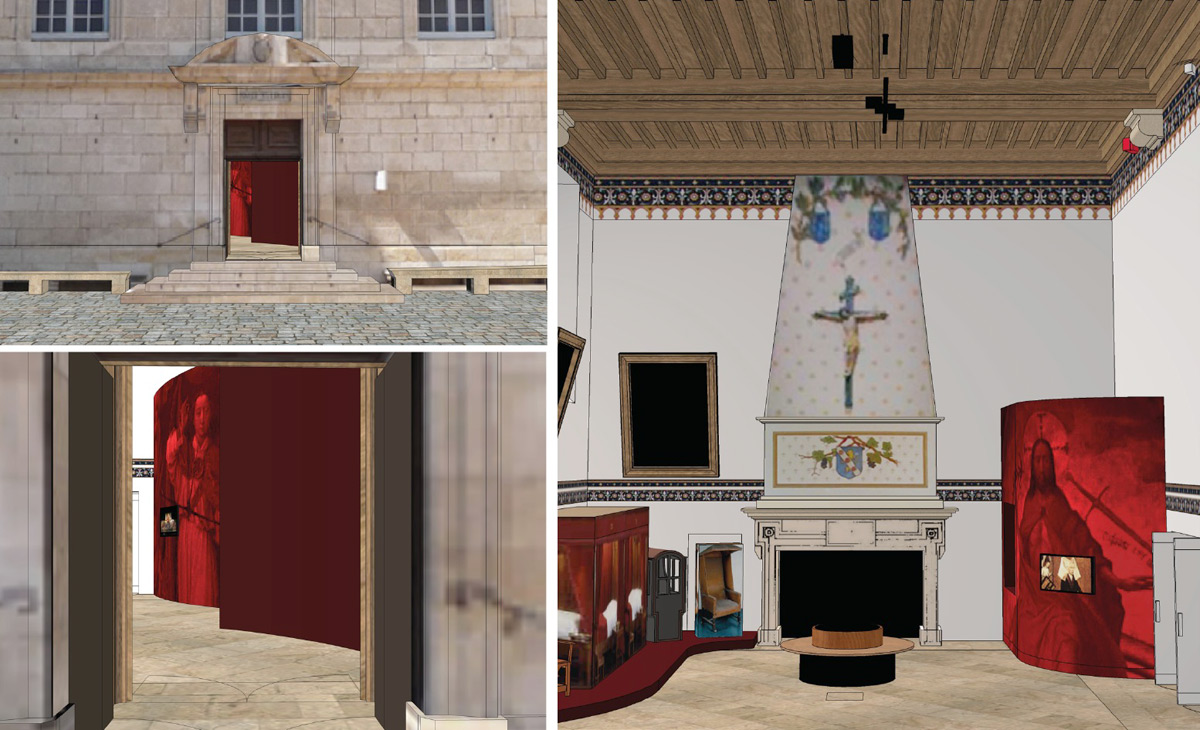
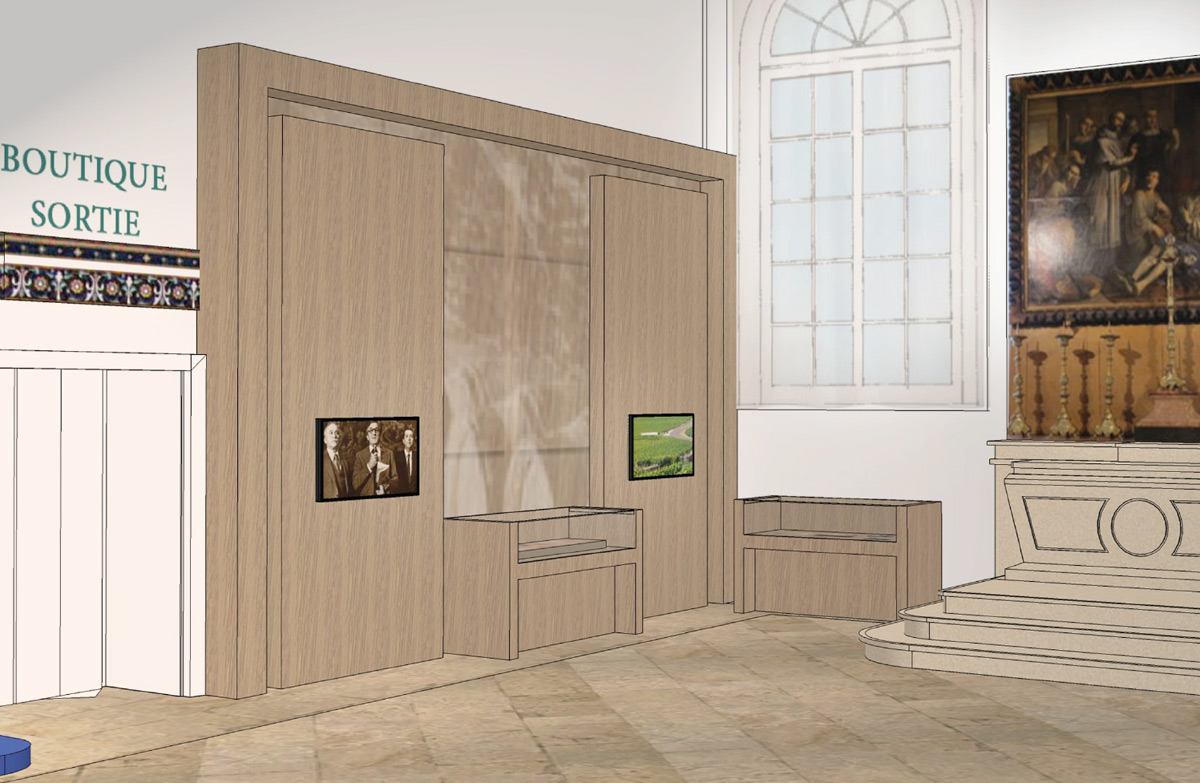
Design approach: the exhibition follows a chronological route across four rooms whose walls have been repainted in a blue that grows lighter from one room to the next. The atmosphere moves from dark at the start of the exhibition to very light at the end. Visitors progress towards the light as they move forward in time and the Saint-Louis neighbourhood they know today takes shape.

The signage consists of large printed elements placed in front of each of the room windows, carrying large enlargements of archive documents and the exhibition’s educational texts, organised into clearly marked sections.

Exhibition: The Story of Saint-Louis: Great and Small Histories of a Neighbourhood – image 1
Exhibition: The Story of Saint-Louis: Great and Small Histories of a Neighbourhood – image 2
Exhibition: The Story of Saint-Louis: Great and Small Histories of a Neighbourhood – image 3
Exhibition: The Story of Saint-Louis: Great and Small Histories of a Neighbourhood – image 4
Exhibition: The Story of Saint-Louis: Great and Small Histories of a Neighbourhood – image 5
Exhibition: The Story of Saint-Louis: Great and Small Histories of a Neighbourhood – image 6

Exhibition: Excellencies! Versailles at the Origins of French Diplomacy

Versailles, Bibliothèque Choiseul, Louis XV’s Foreign Affairs Gallery

Excellences ! Versailles aux Sources de la Diplomatie Française2025Excellencies! Versailles at the Origins of French Diplomacy

Scenography and graphic design
Exhibition from 20 September to 20 December 2025
Curators
Sophie Astier, Virginie Bergeret-Maés, Guillaume Frantzwa et Vincent Haegele
Total area
300 m²
110 works
objects, sculptures, paintings, works on paper, archive documents, books.
Works budget
€20,000
Attendance
ongoing

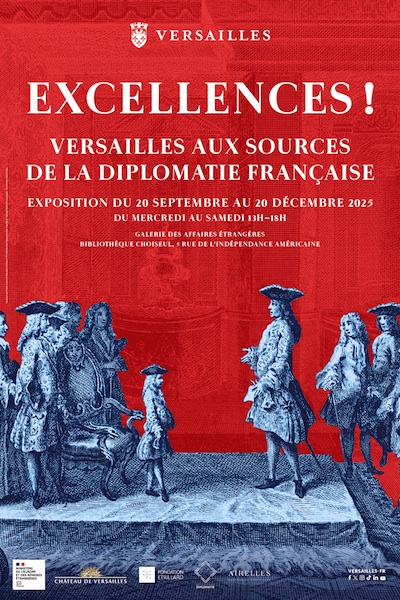
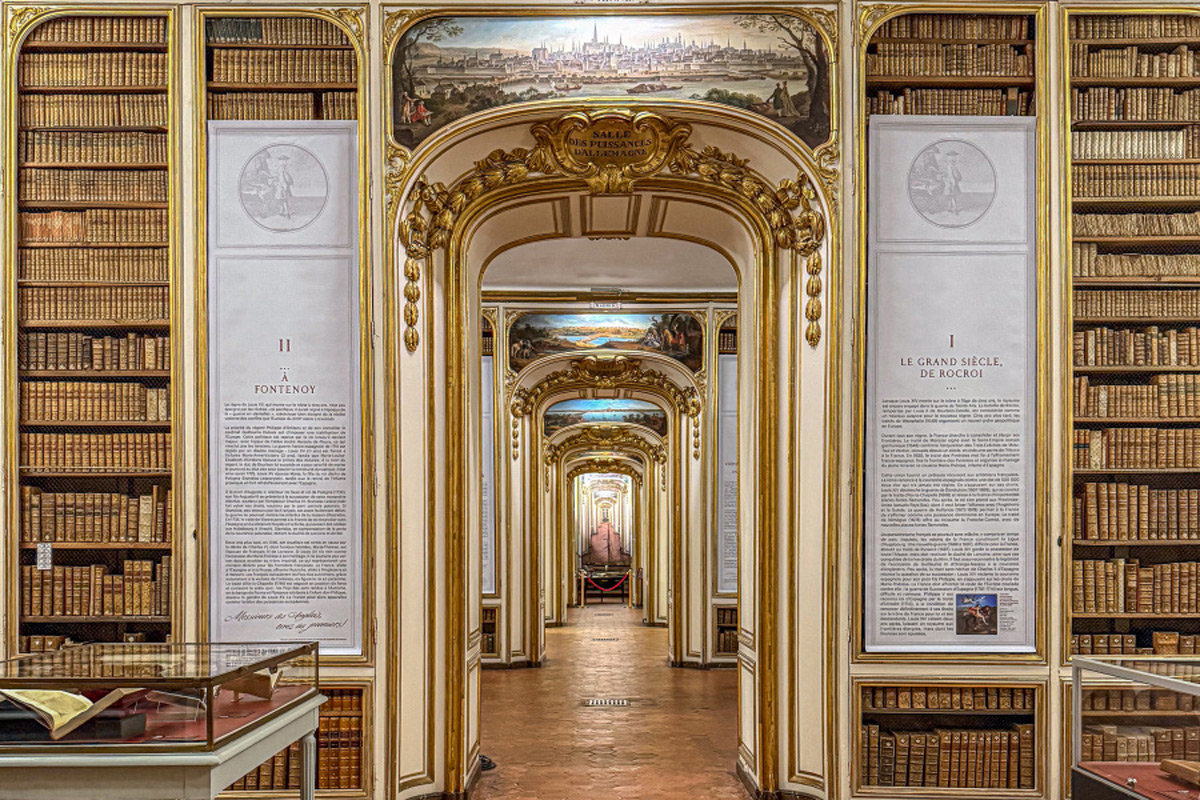
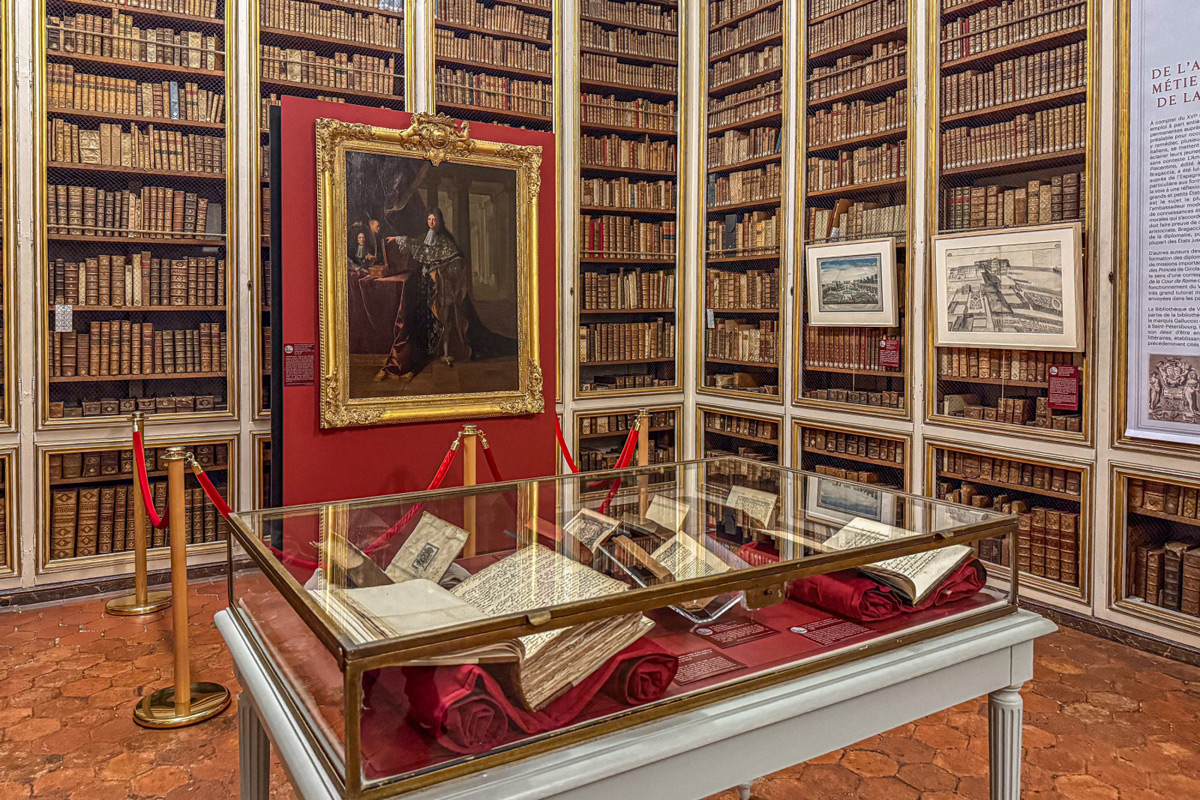
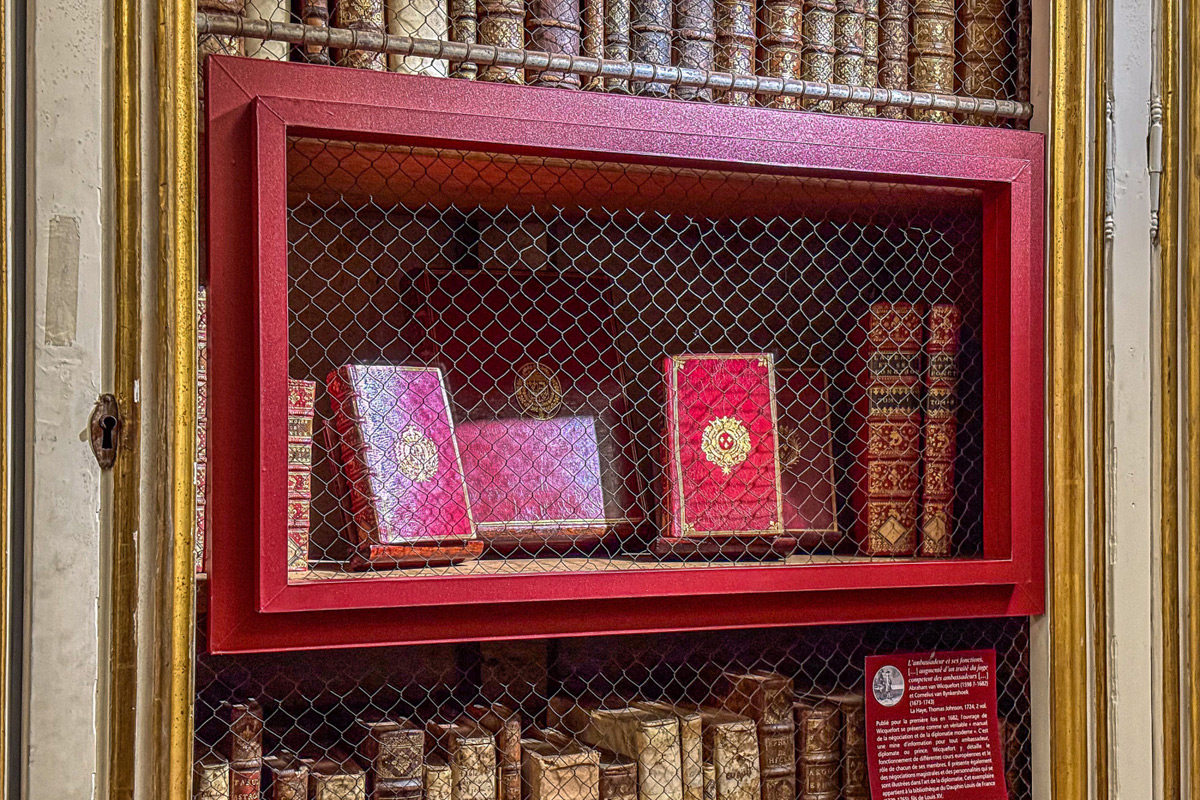
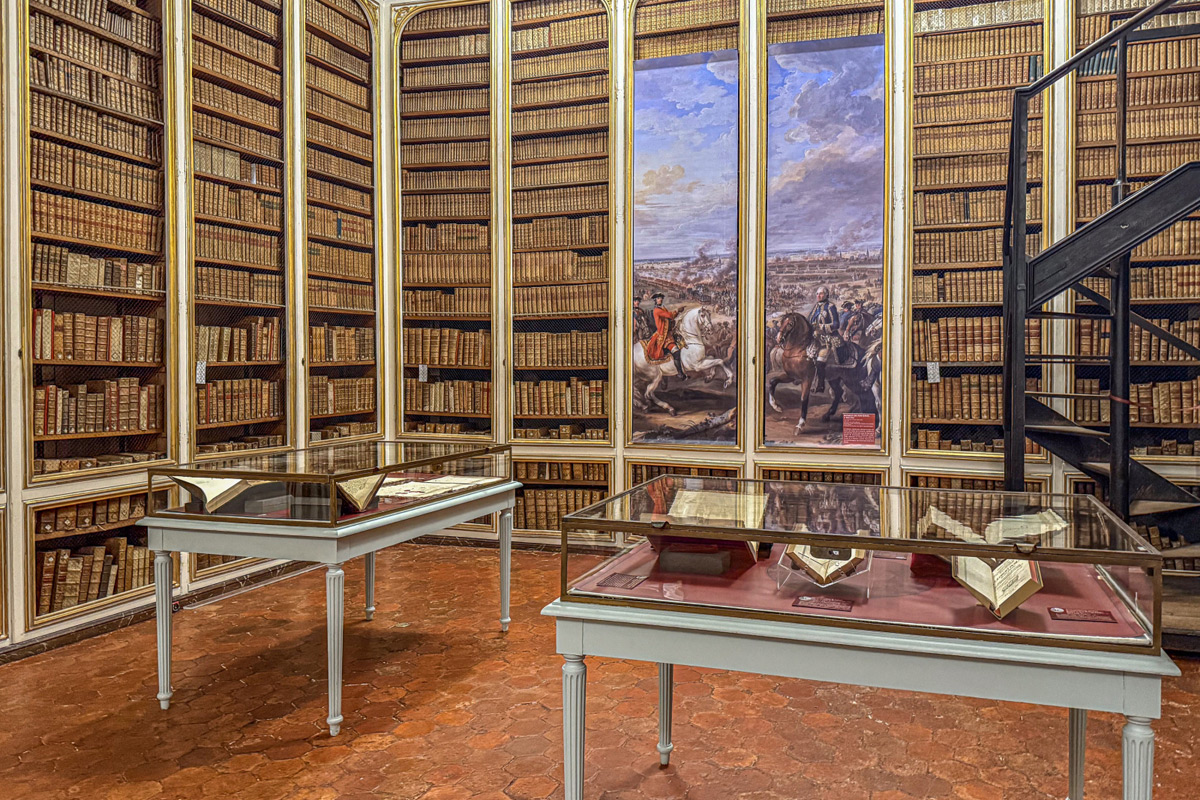
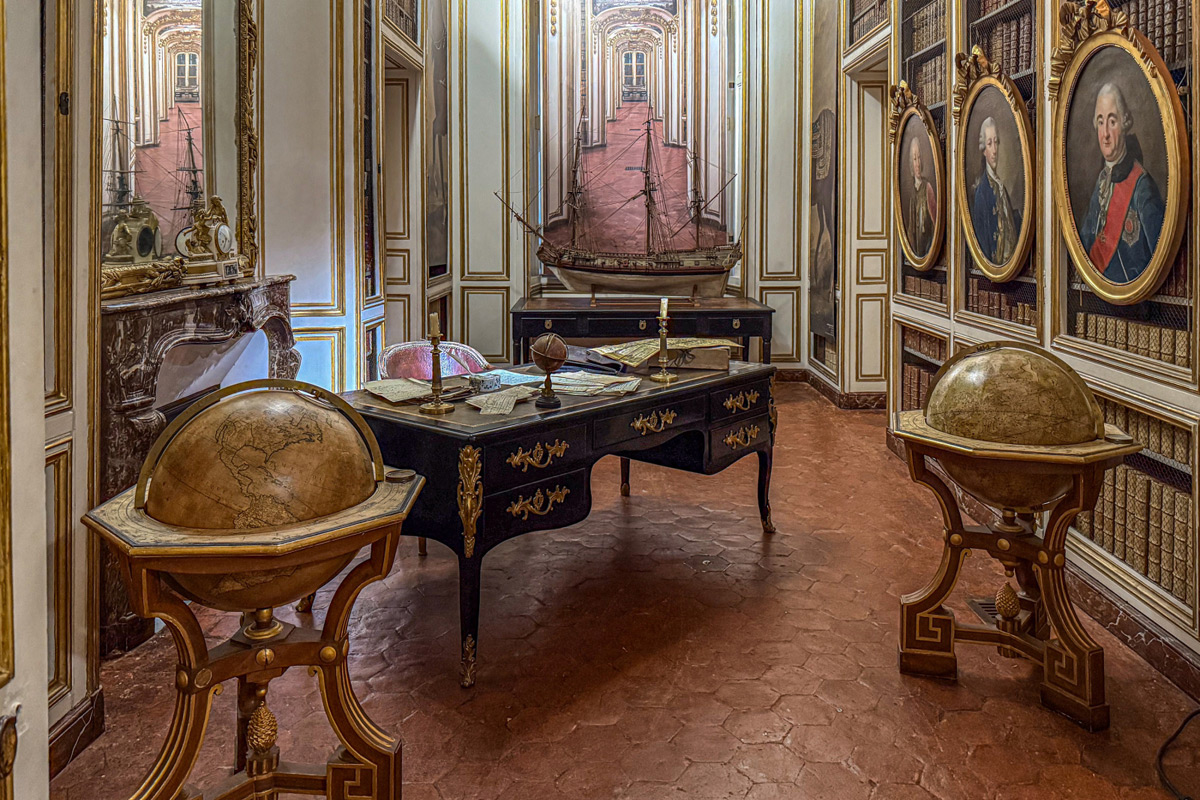
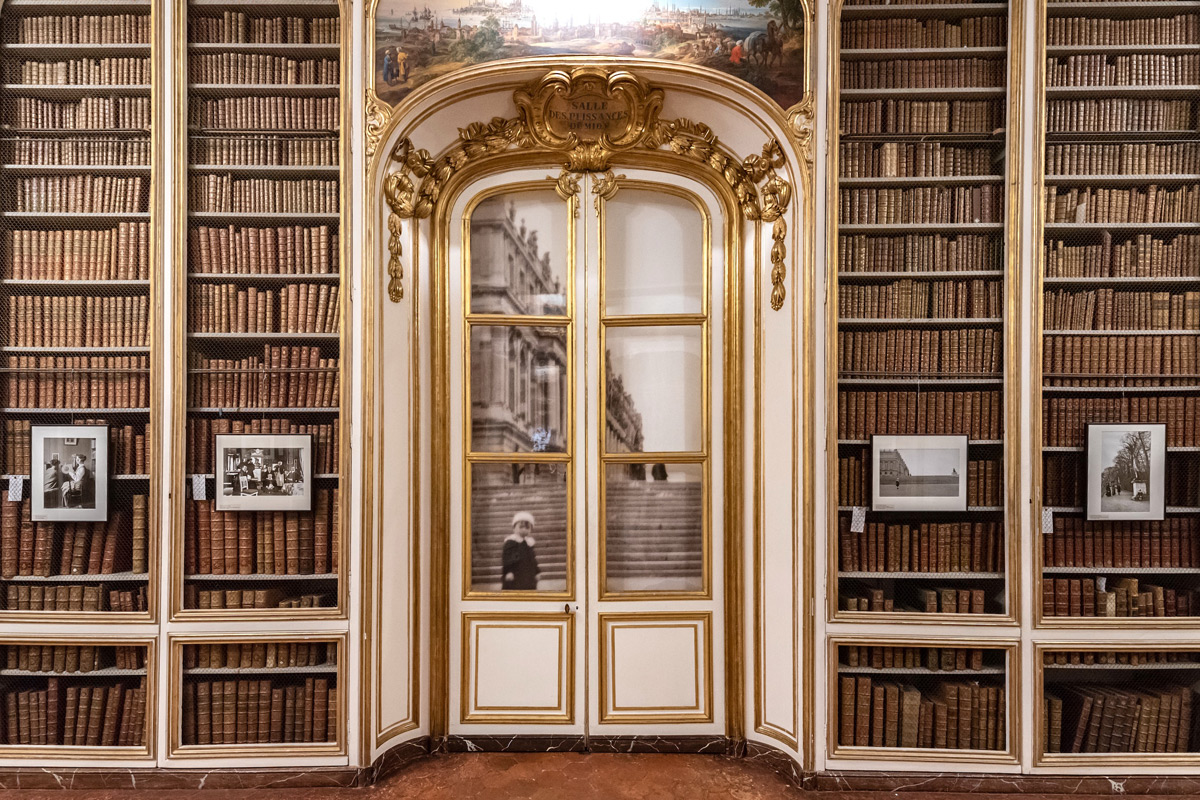
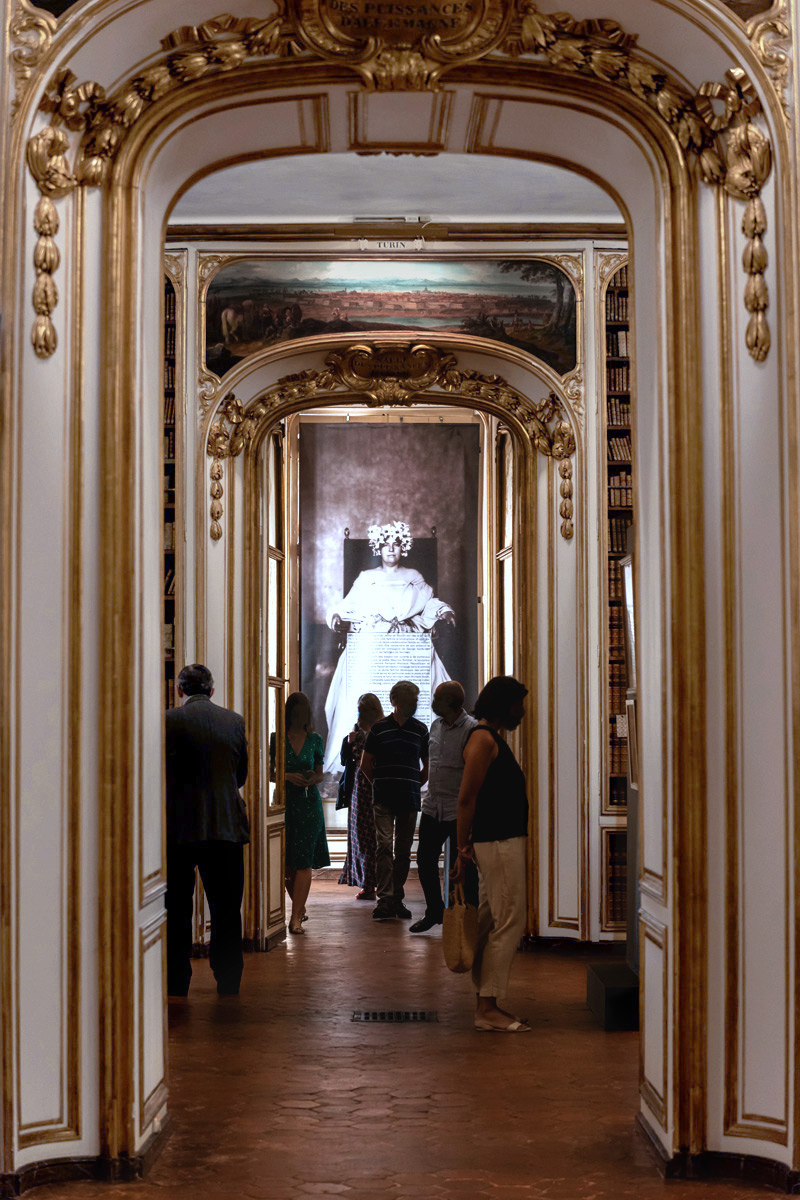
In partnership with the Diplomatic Archives of the Ministry for Europe and Foreign Affairs, the Versailles Library presents an exhibition that returns to its roots, in the historic premises occupied by the Foreign Affairs ministry before the Revolution, and traces three centuries of French diplomacy. The exhibition has a threefold ambition: first, to present the major milestones of French diplomacy from the 16th to the end of the 18th century; then, to shed light on the role of the ambassador and the tools of diplomacy; and finally to show, through rare pieces such as the Treaty of Münster, the marriage contract of Marie-Antoinette and the Treaty of Utrecht, how diplomacy formed part of the education of princes and contributed to their intellectual and political training. The decors of the Hôtel des Affaires étrangères serve as a common thread, each room revealing one facet of international relations and of the territories discussed.

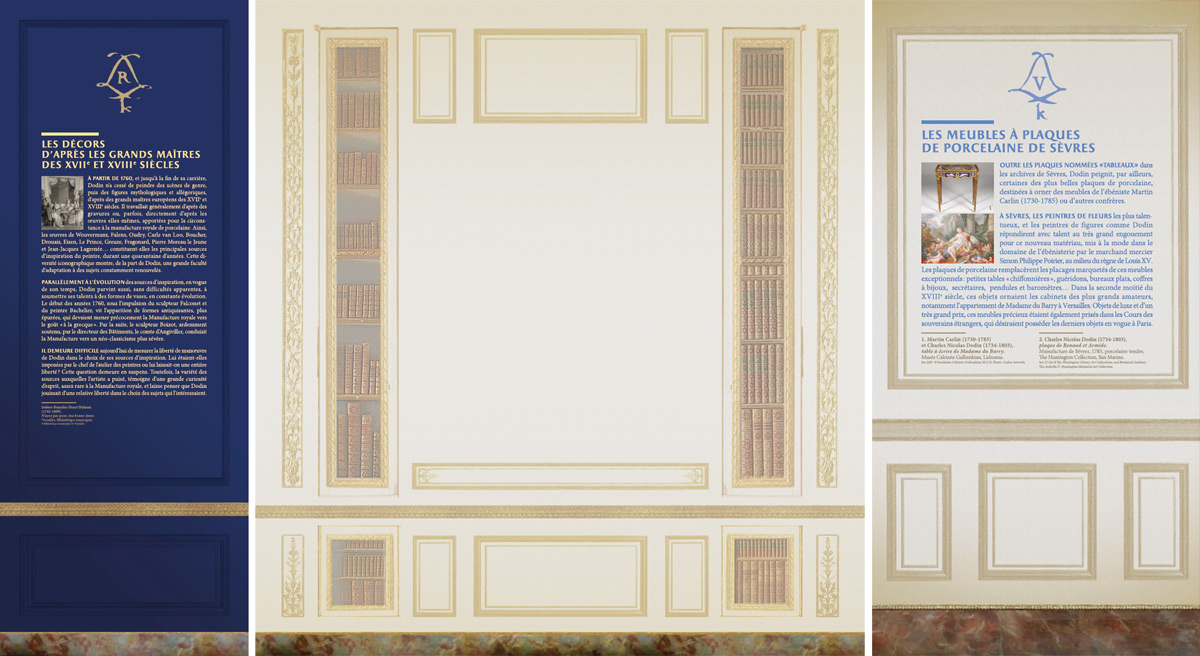
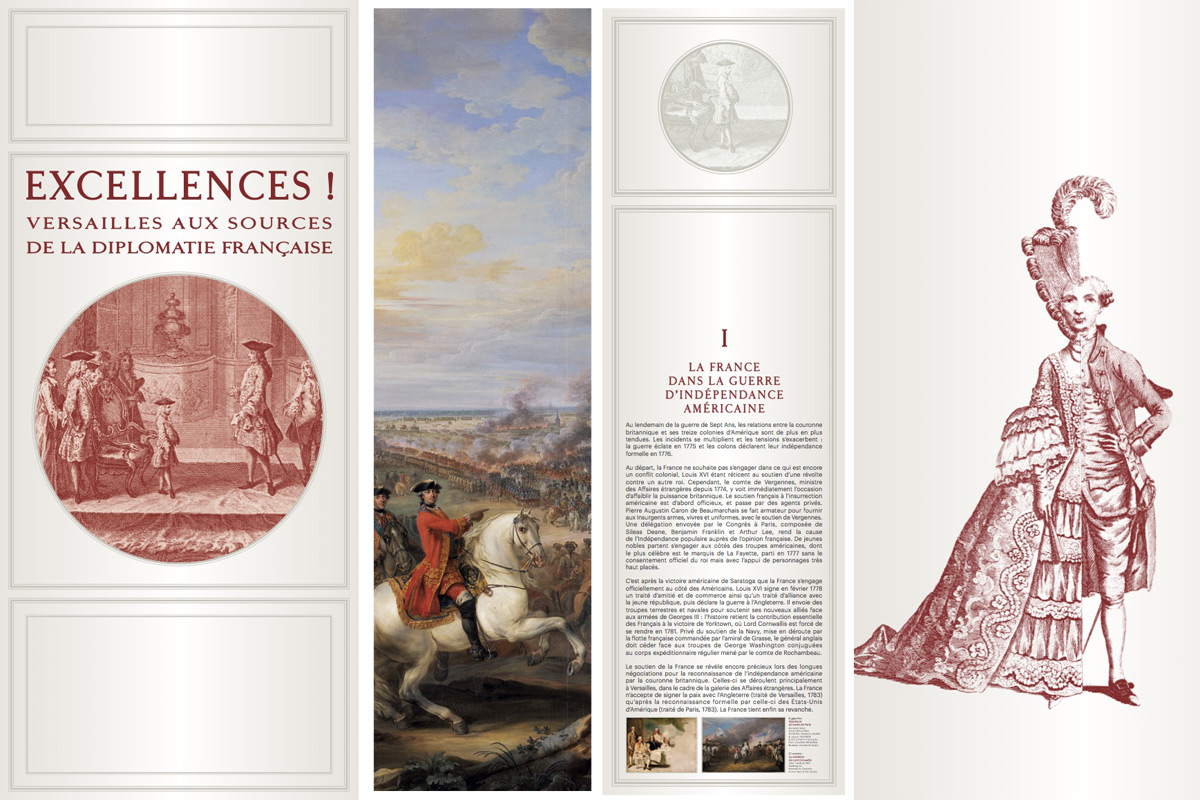
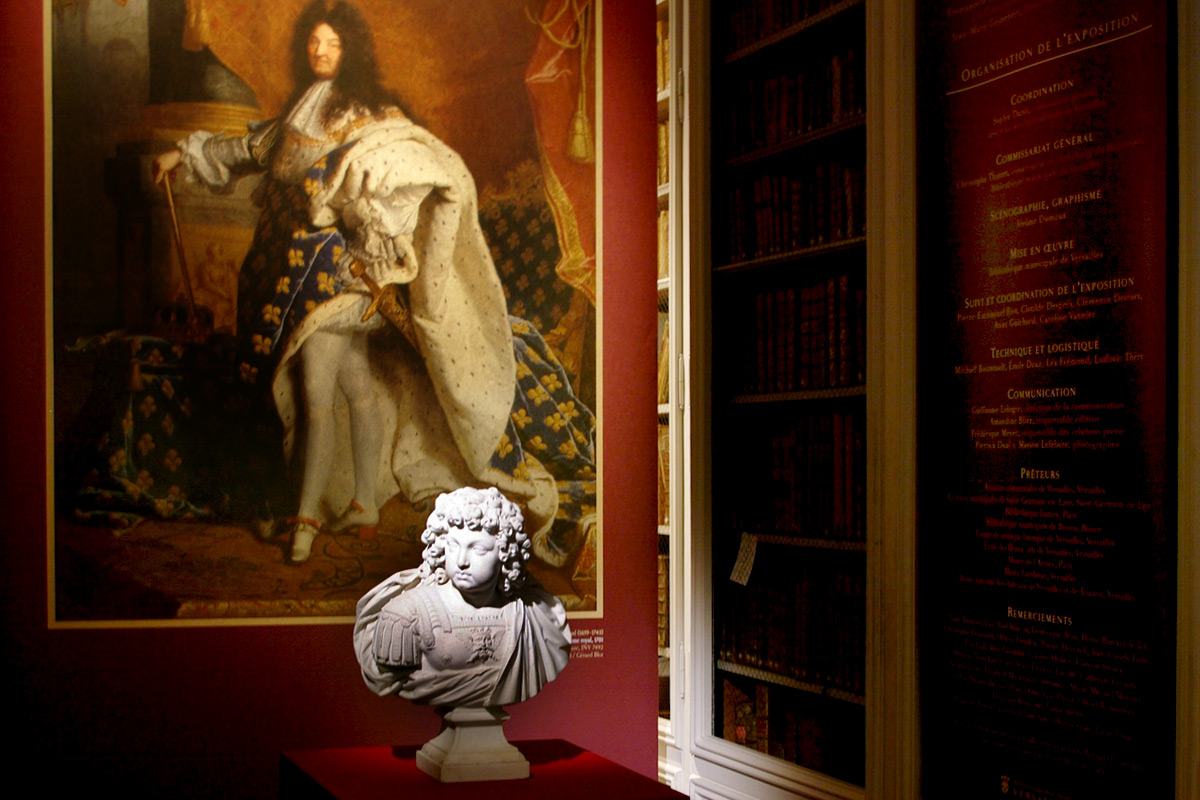
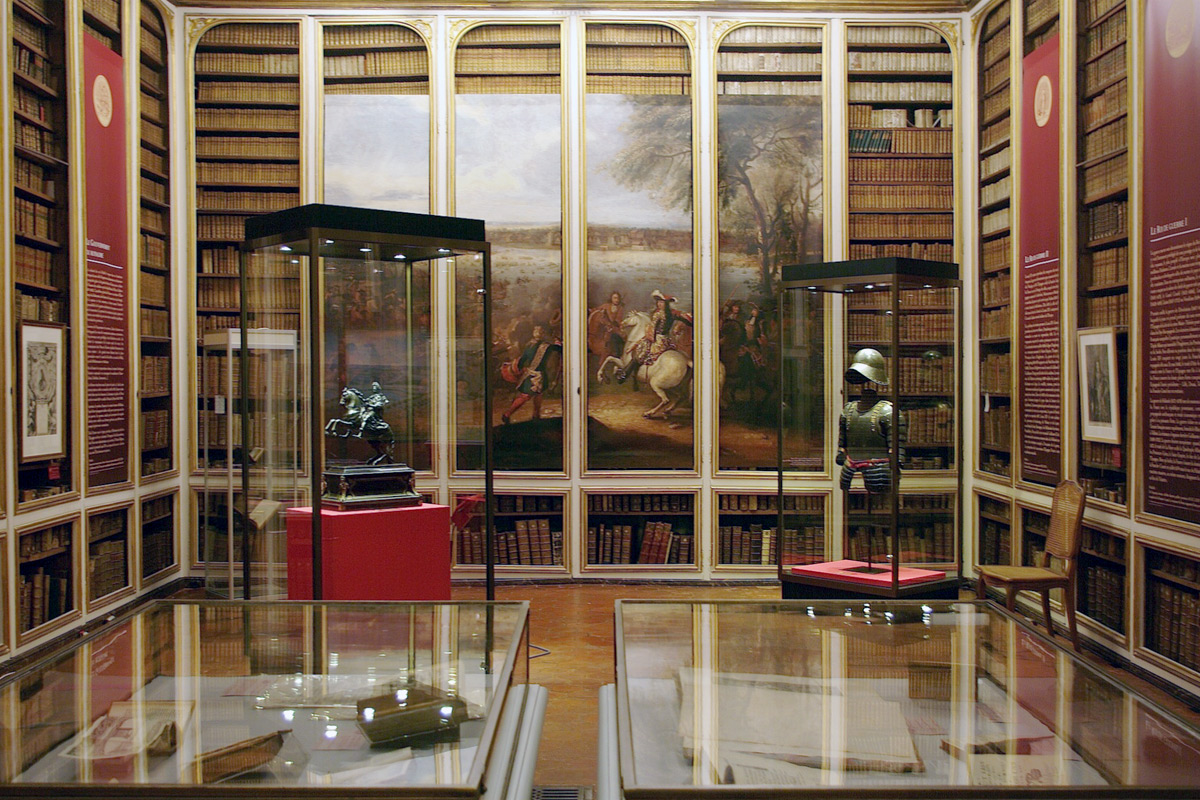
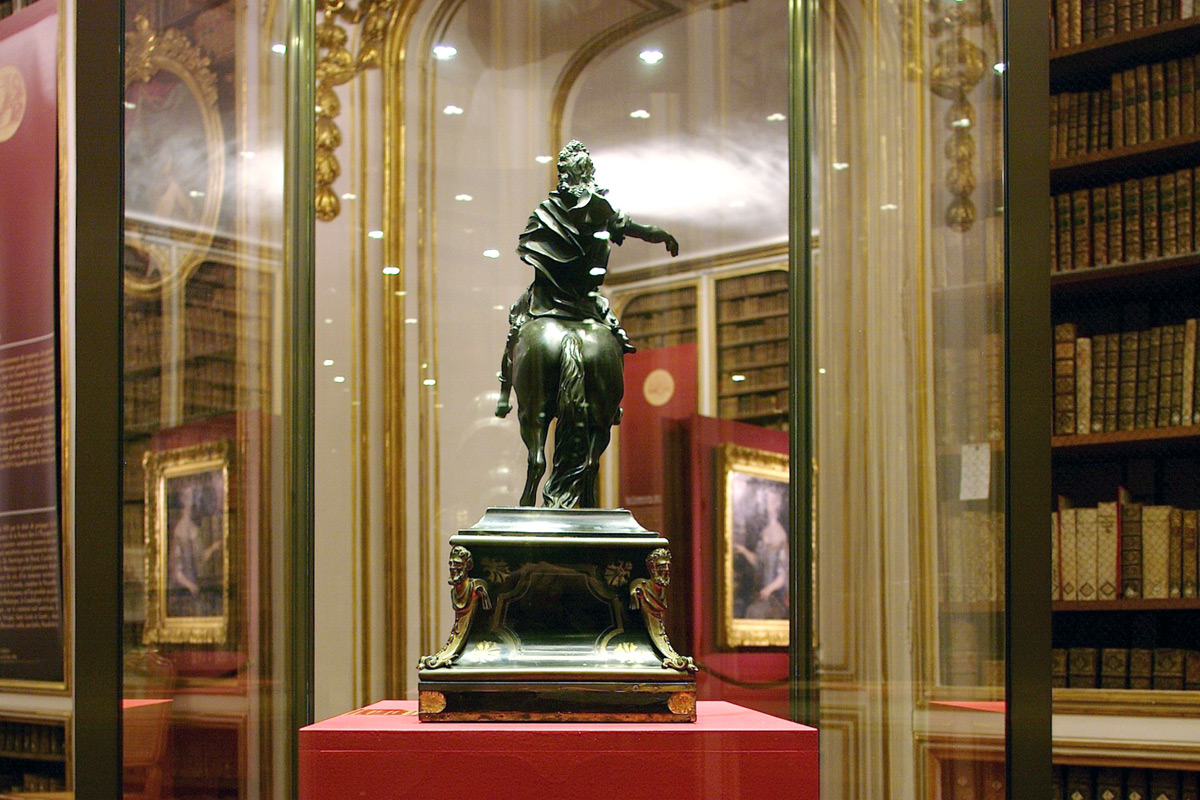
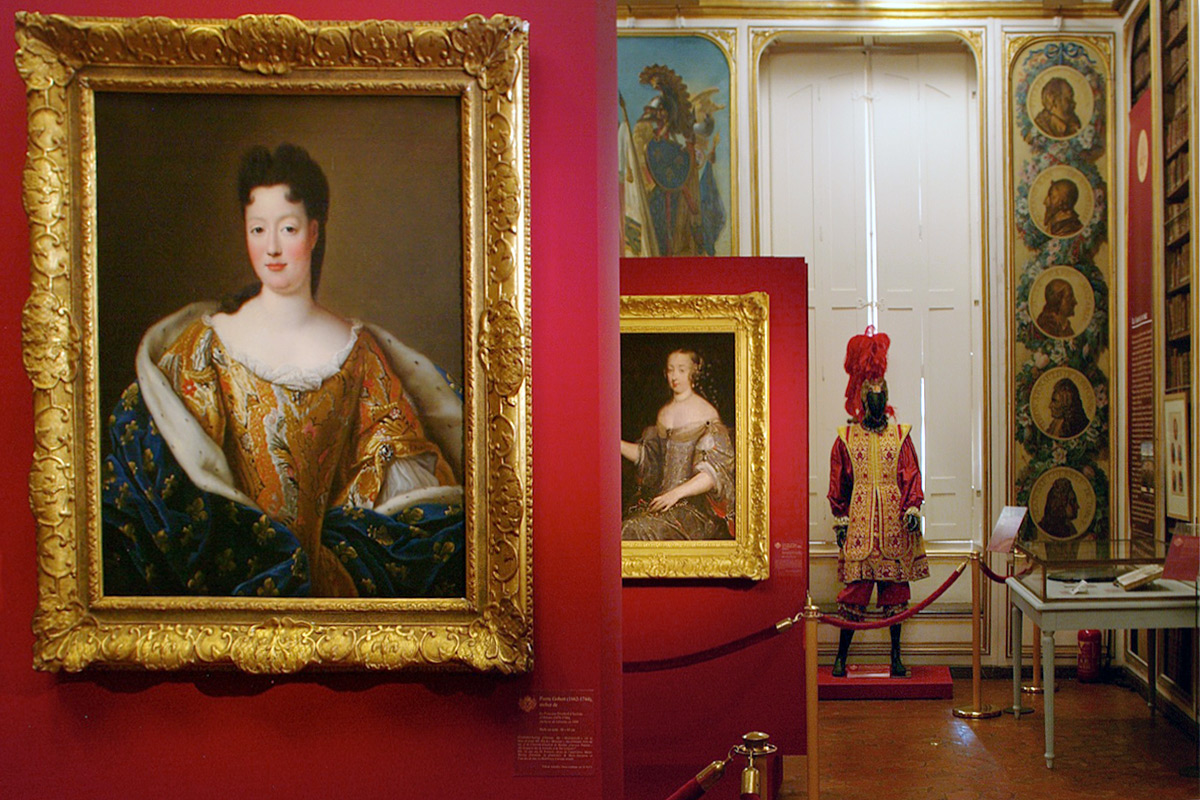
Design approach: the space is punctuated by large printed banners, serving both as signage and as decor through large-scale reproductions of paintings and documents. They are structured by discreet frames that organise the surfaces and evoke both handwriting and diplomatic treaties, expressing a sense of rigour, and become a simple decorative element that blends into the decor of the gallery and enhances it. A faint, almost watermark-like medallion of Louis XV, in whose gallery the exhibition takes place, crowns the banners and links all these elements. The colours used accompany these evocations. For the first time, books are displayed in the gallery’s cabinets. Finally, one room recreates a clerk’s office as it might have existed here in the 18th century.

Exhibition: Excellencies! Versailles at the Origins of French Diplomacy – image 1
Exhibition: Excellencies! Versailles at the Origins of French Diplomacy – image 2
Exhibition: Excellencies! Versailles at the Origins of French Diplomacy – image 3
Exhibition: Excellencies! Versailles at the Origins of French Diplomacy – image 4
Exhibition: Excellencies! Versailles at the Origins of French Diplomacy – image 5
Exhibition: Excellencies! Versailles at the Origins of French Diplomacy – image 6

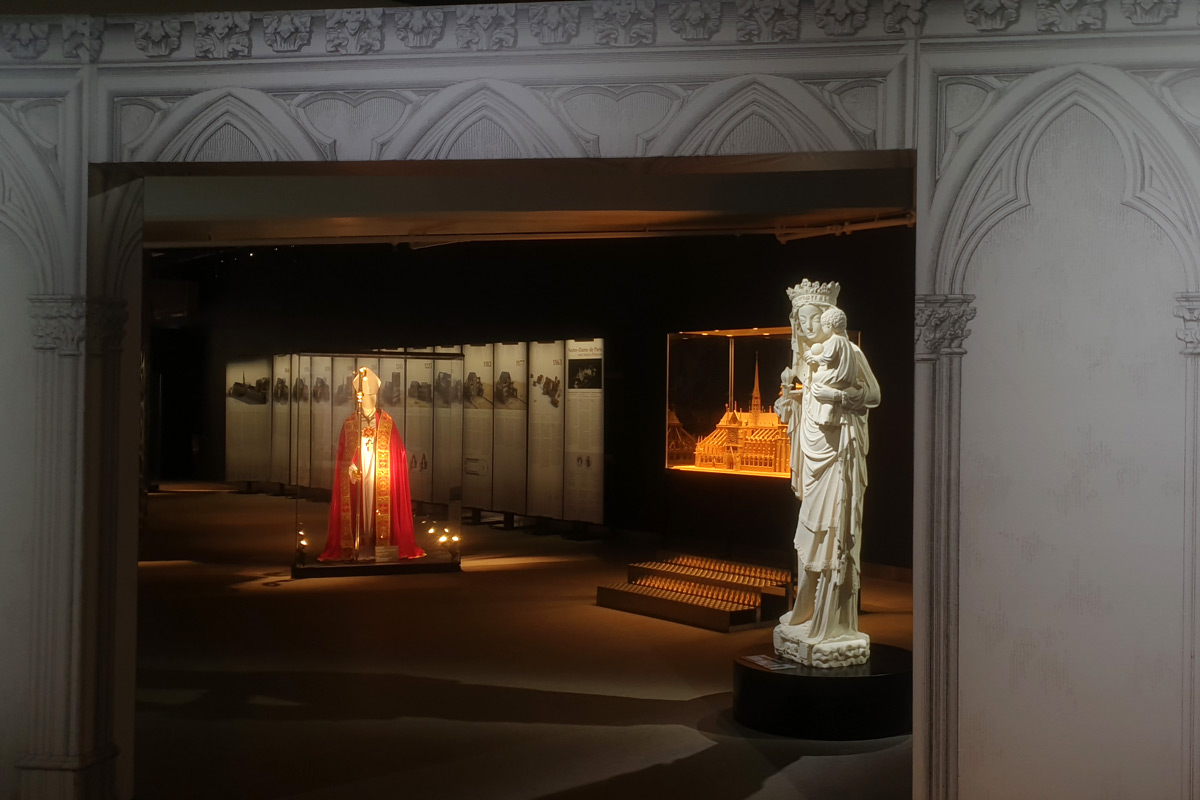
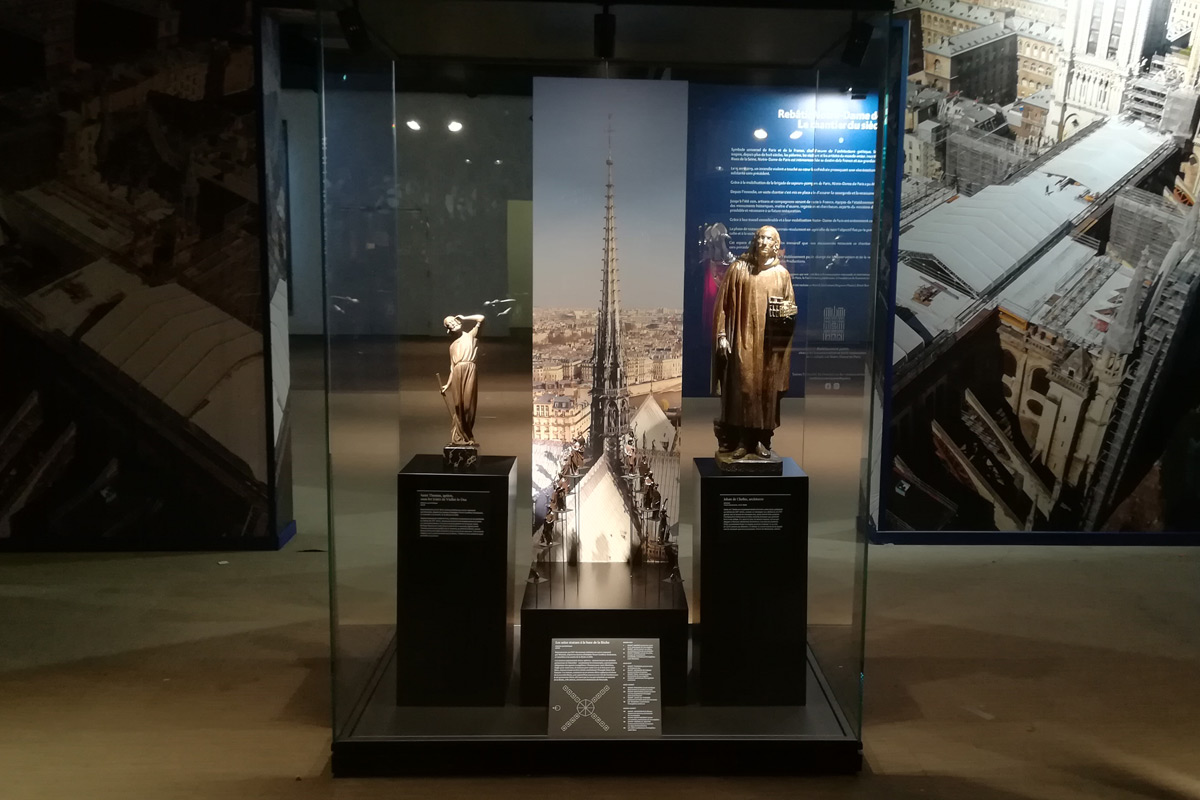
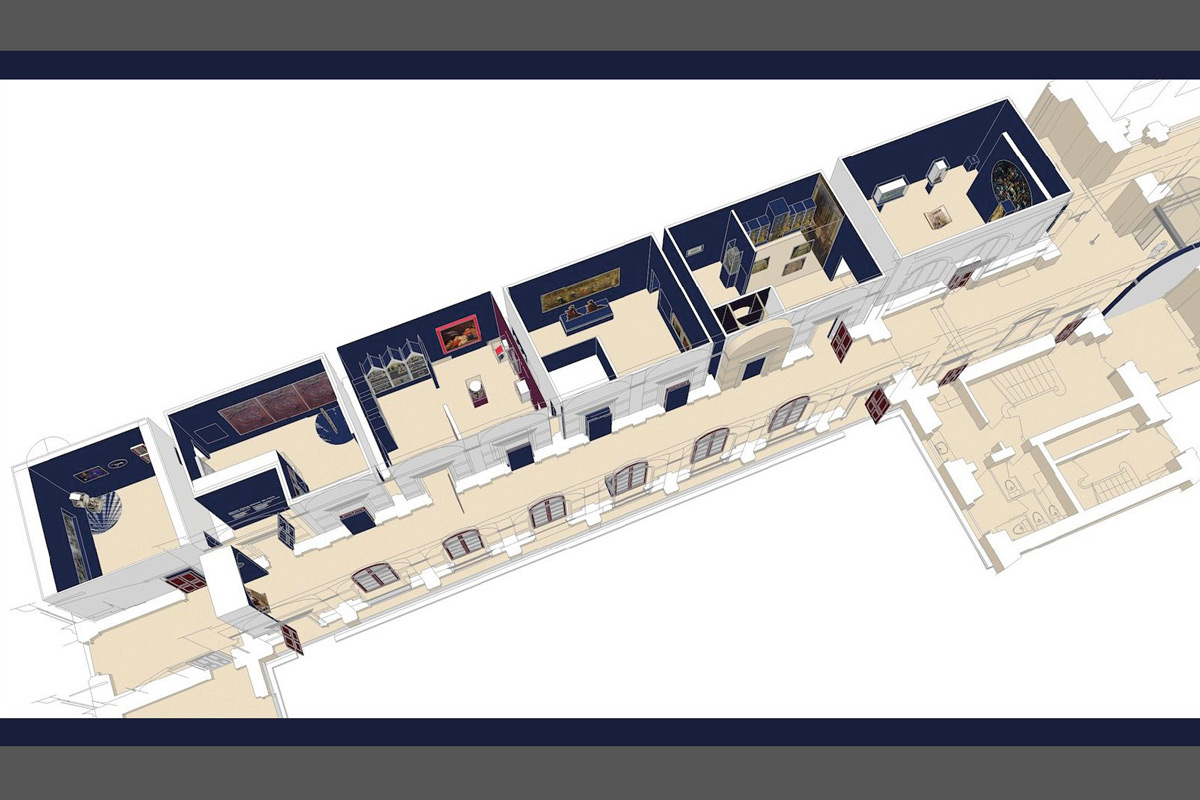
Exhibition: Bringing the Heart of Notre-Dame Back to Life

Paris, Fondation Notre-Dame, Espace Parking

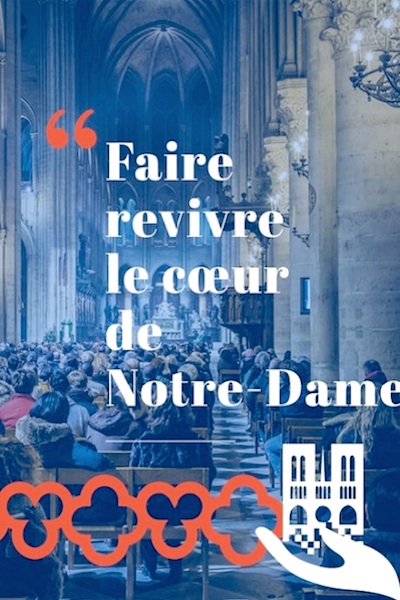
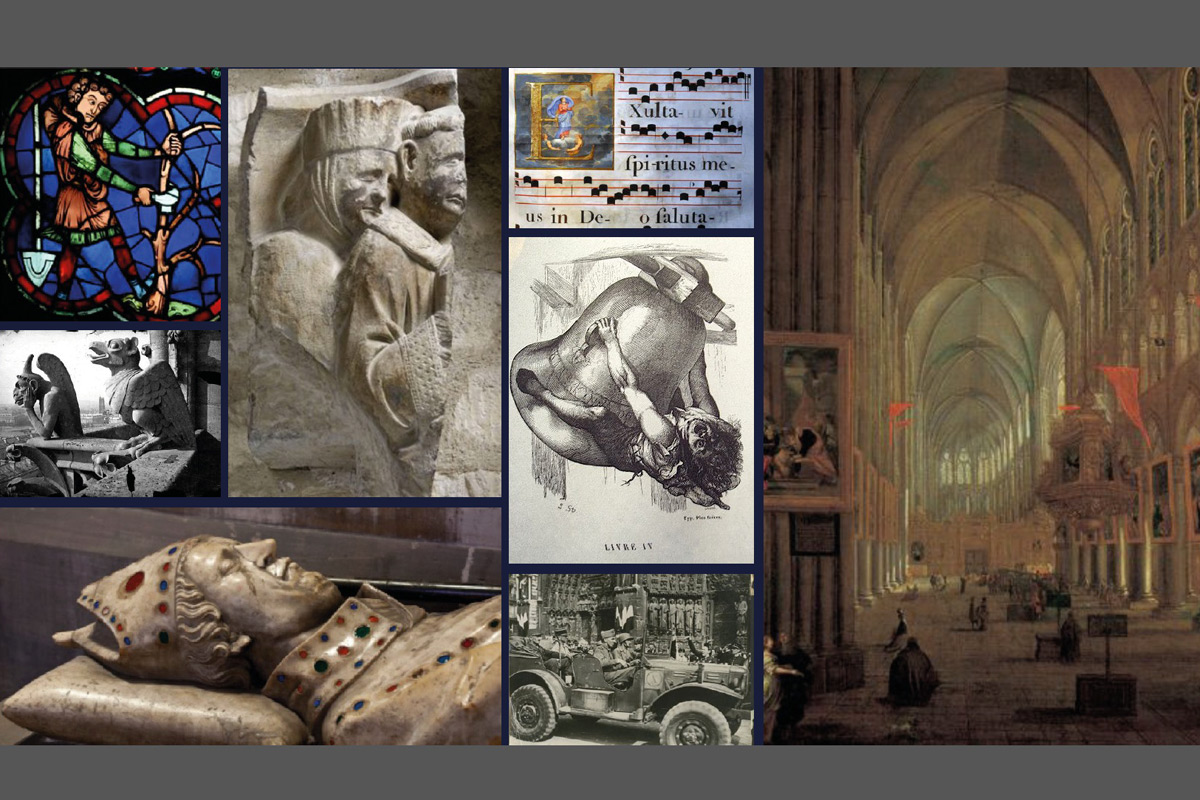
Faire Revivre le Cœur de Notre-Dame2024Bringing the Heart of Notre-Dame Back to Life

Scenography and graphic design. Exhibition from 22 April 2024 to December 2024
Curators
François Le Page, Laurène Ronda
Total area
100 m²
Works budget
€10,000
Attendance:

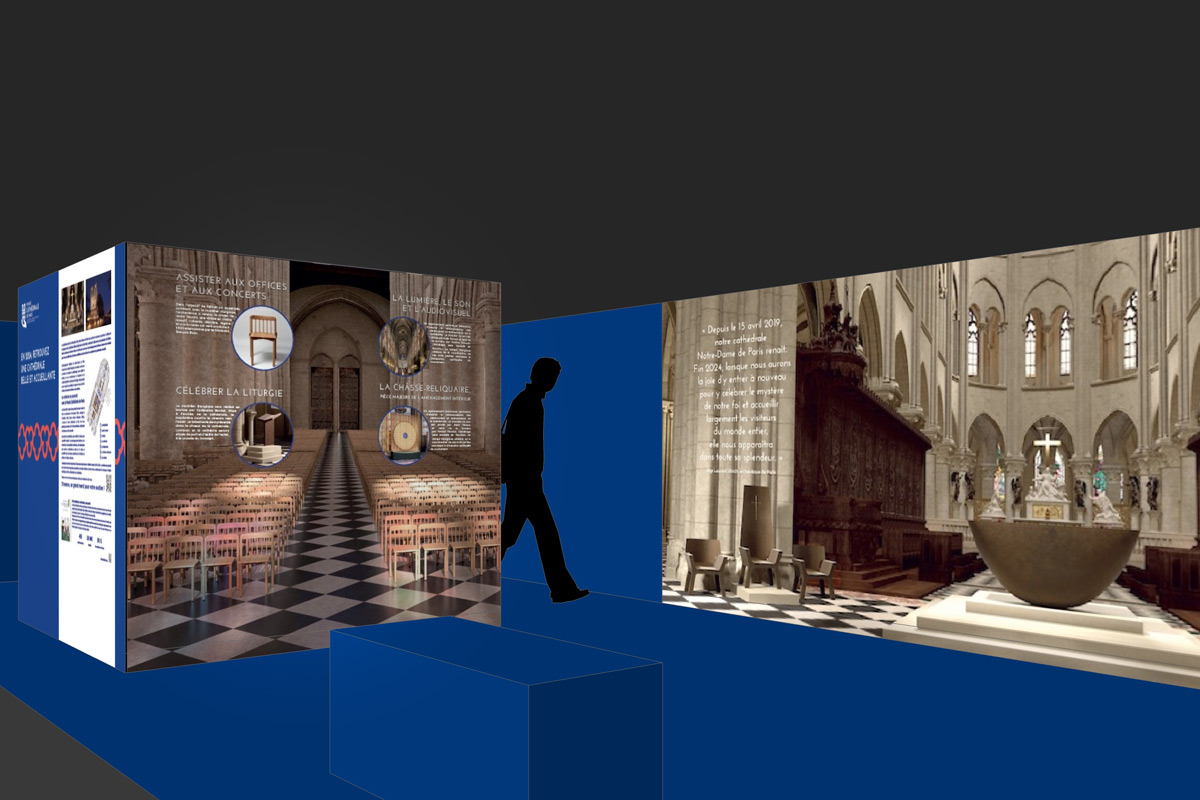
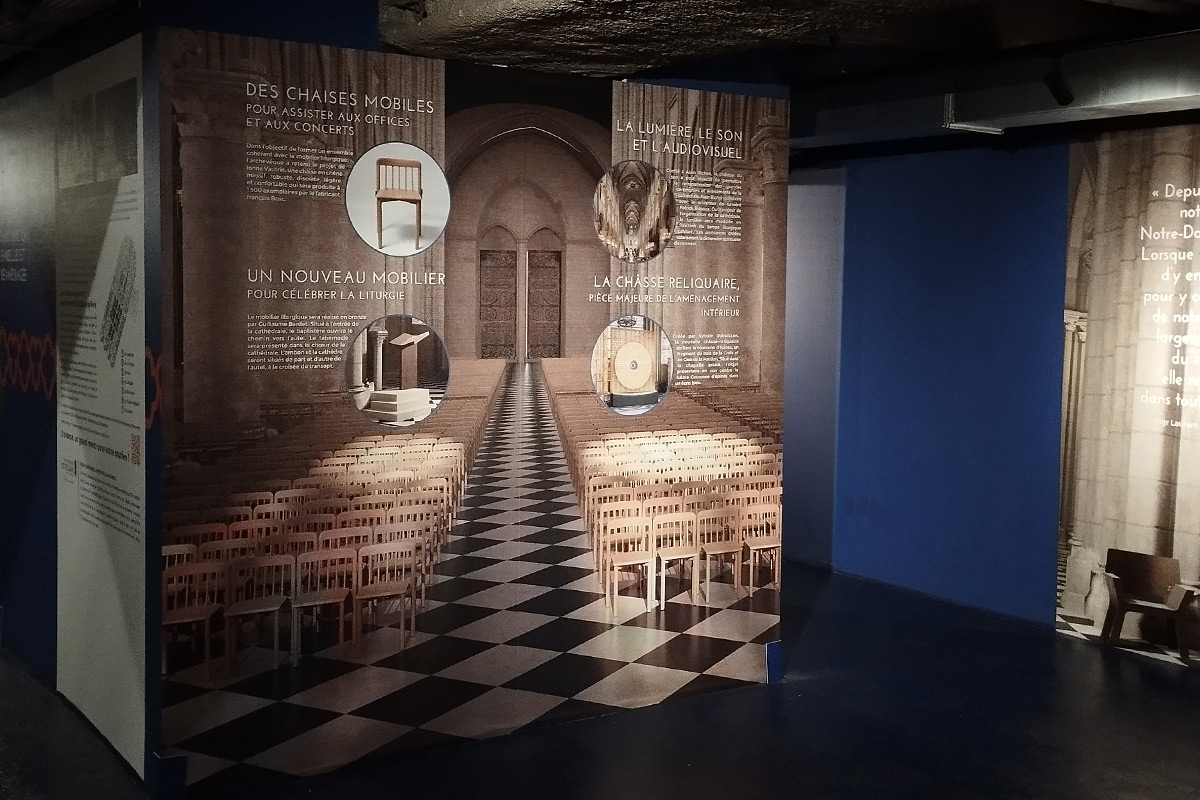
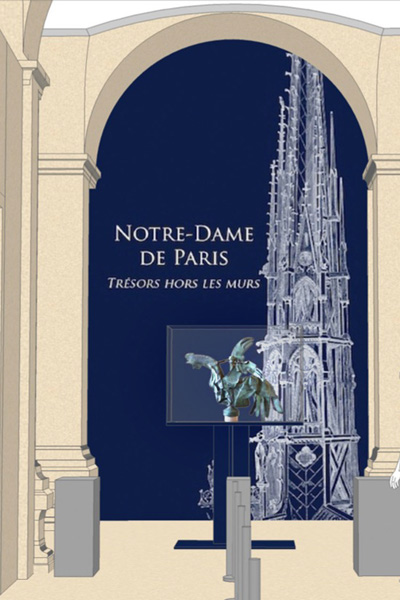
On 15 April 2019, Notre-Dame caught fire against the Paris sky. The day after the fire, the State designated the Fondation Notre-Dame as an official collector. Through the Fonds Cathédrale de Paris, generous donations were received from 70,400 individuals, companies and patrons.

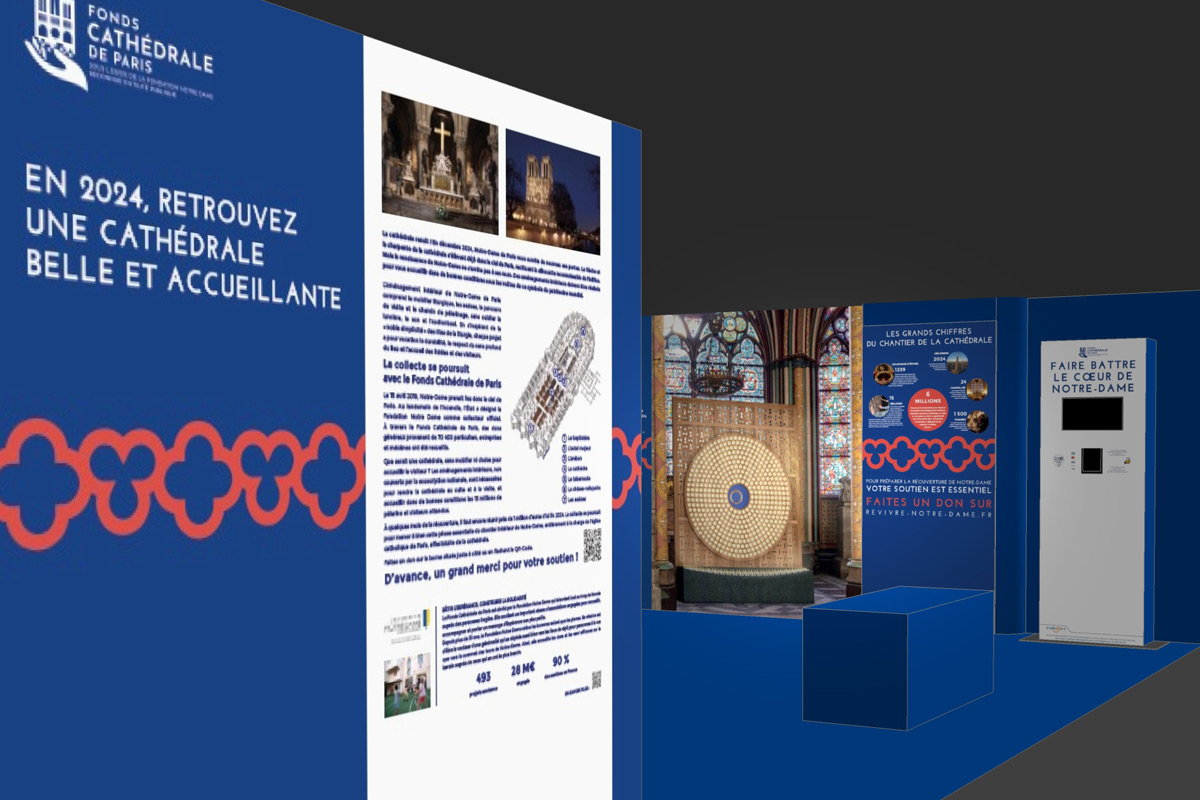
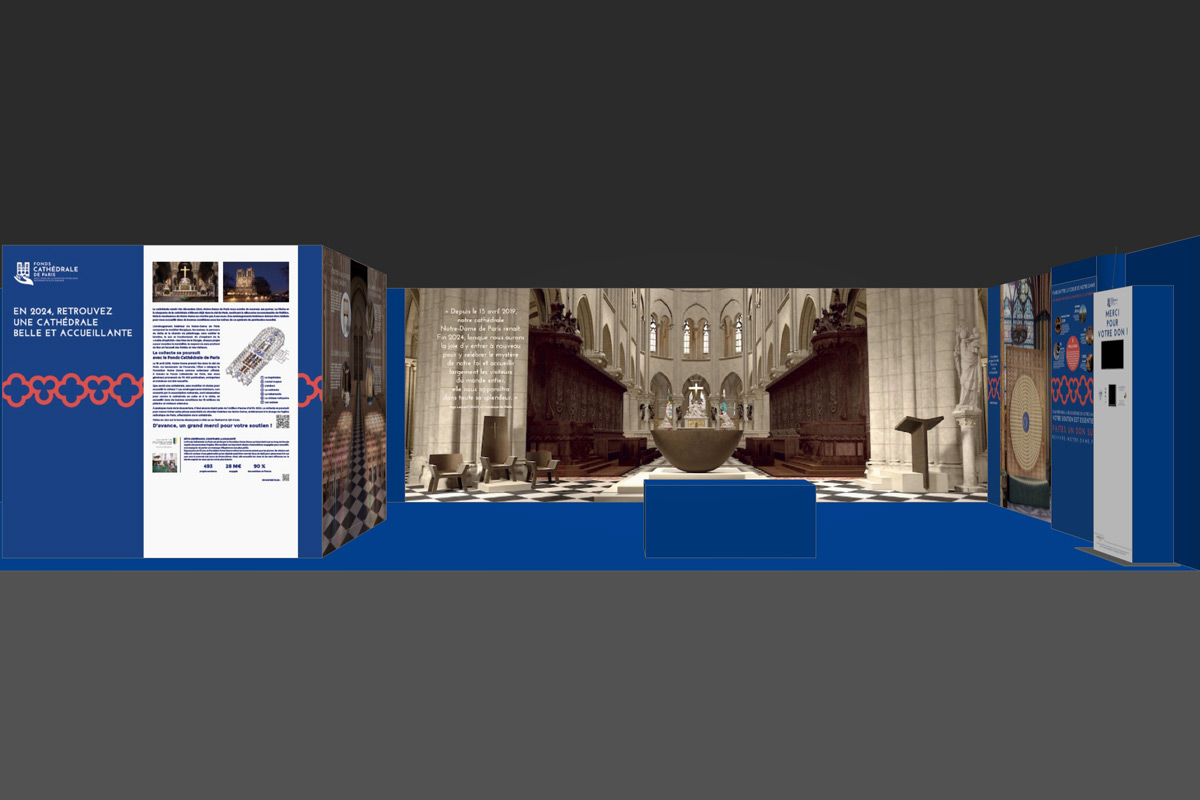
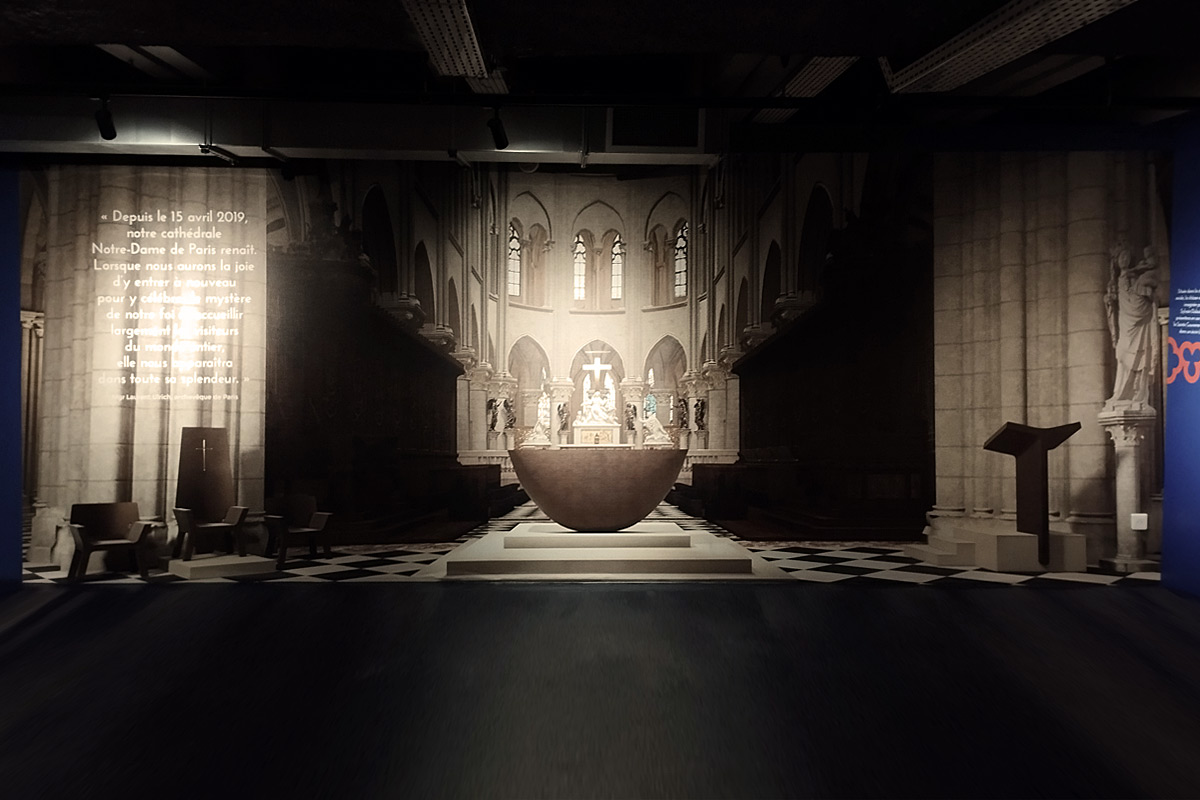
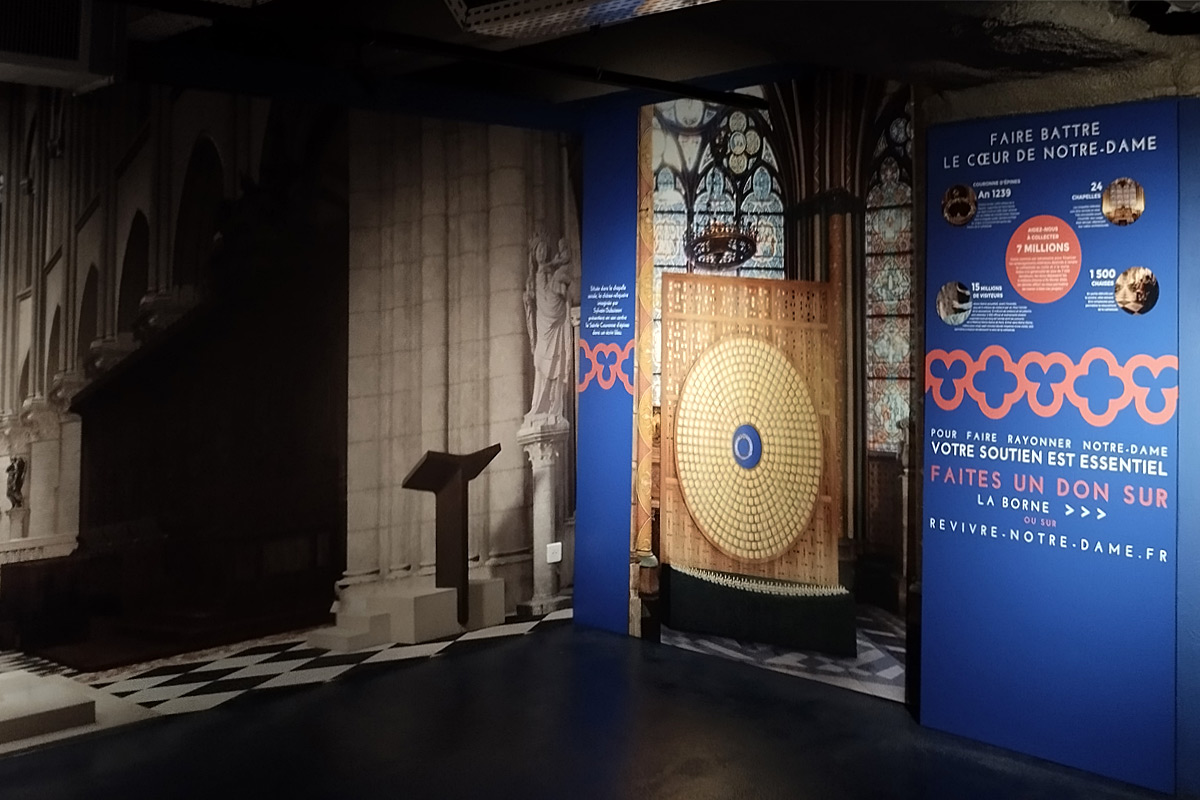
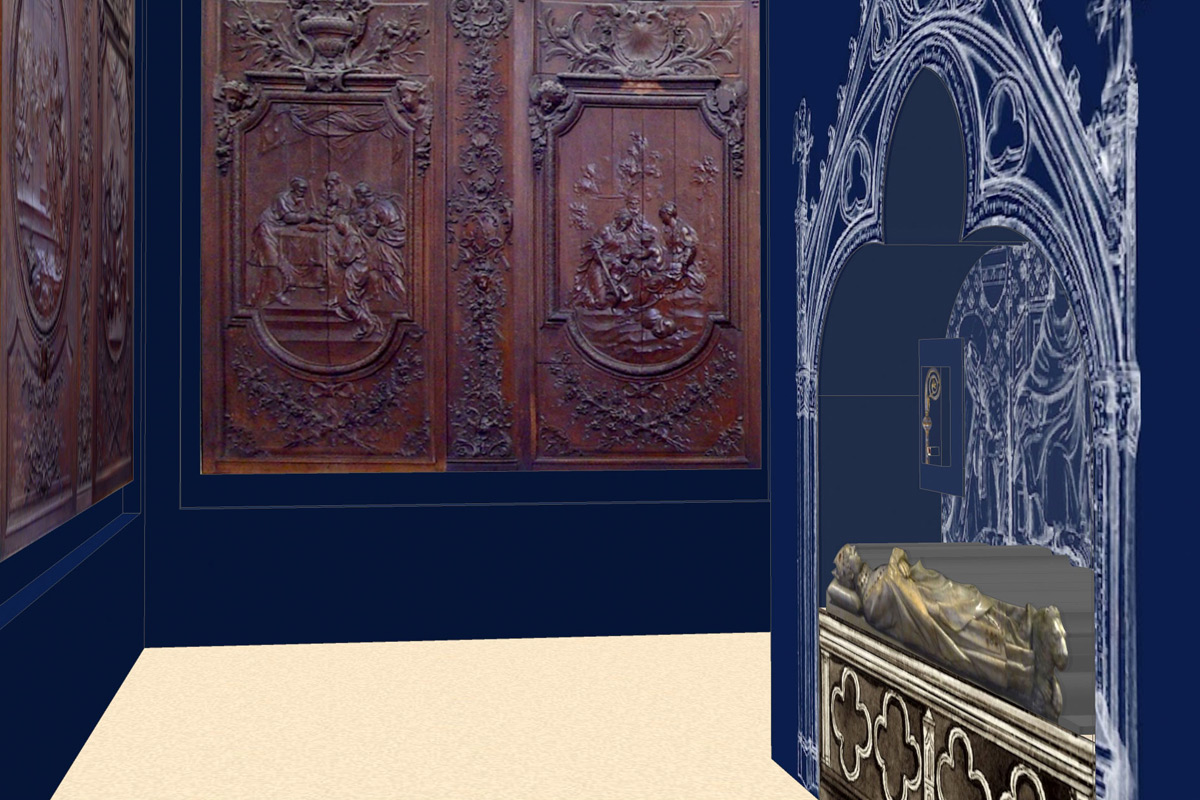
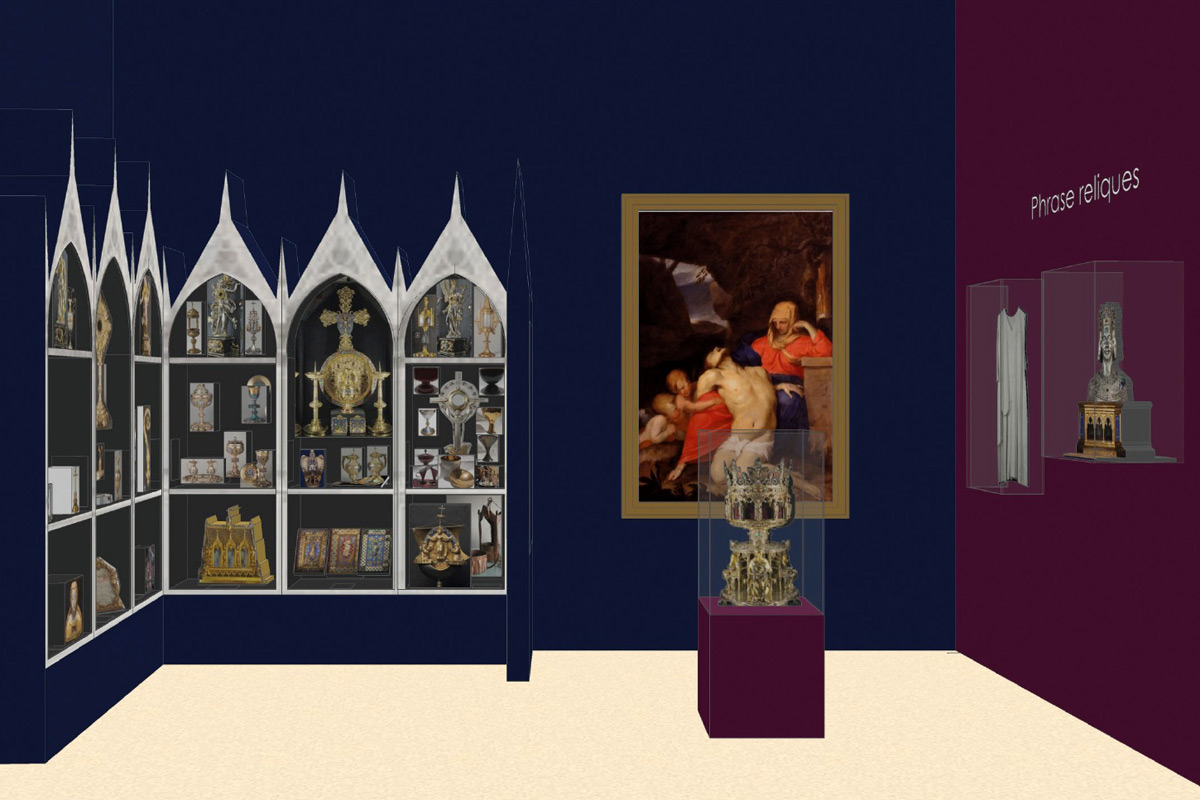
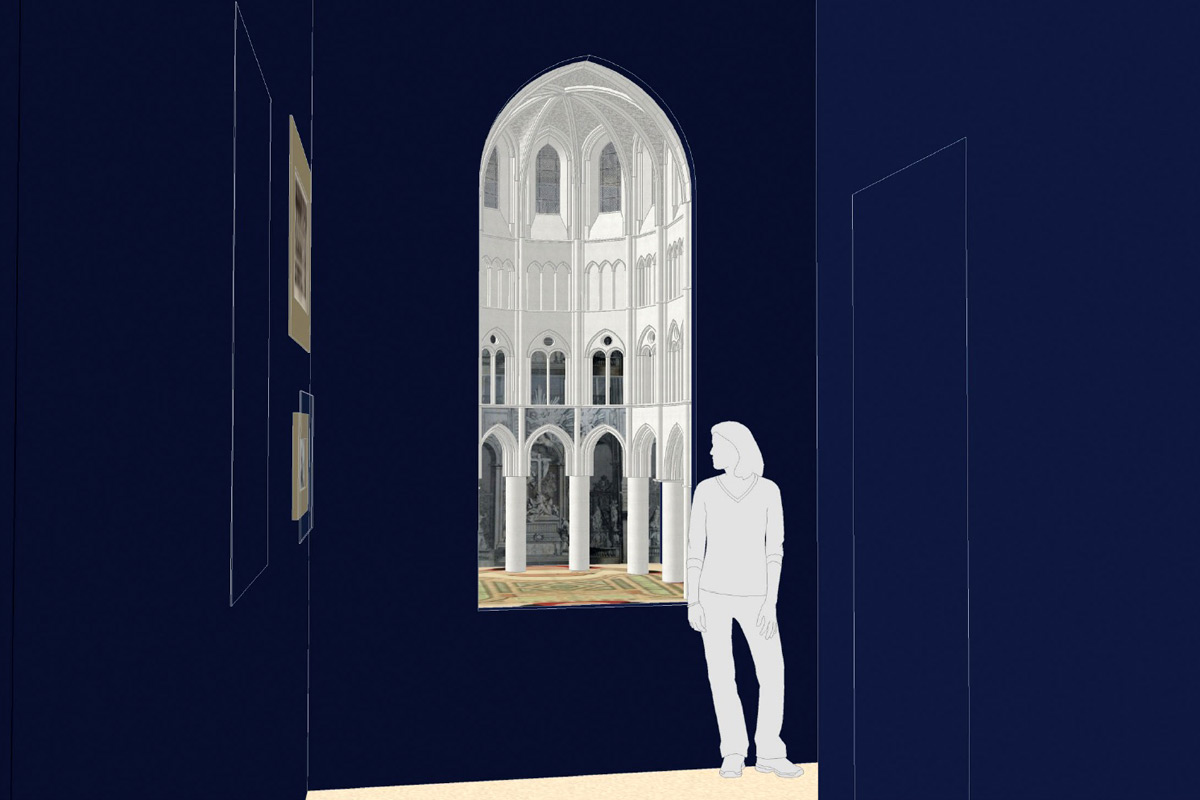
What would a cathedral be without furnishings or chairs to welcome visitors? The interior fit-out, not covered by the national subscription, is necessary to restore the cathedral to worship and to visitors, and to welcome in good conditions the 15 million pilgrims and visitors expected. The interior fit-out of Notre-Dame de Paris includes the liturgical furnishings, seating, the visitor route and the pilgrimage path, as well as lighting, sound and audiovisual systems. Each project aims for durability, respect for the deep meaning of the place, and a warm welcome for worshippers and visitors. This is what the educational exhibition installed in the “Espace Parking” presents, alongside the event exhibition “Éternelle Notre-Dame”.

Design approach: the scenography is immersive, with large-format reproductions of the 3D projects for the cathedral’s fit-out, overlaid with graphic compositions and educational information.

Exhibition: Bringing the Heart of Notre-Dame Back to Life – image 1
Exhibition: Bringing the Heart of Notre-Dame Back to Life – image 2
Exhibition: Bringing the Heart of Notre-Dame Back to Life – image 3
Exhibition: Bringing the Heart of Notre-Dame Back to Life – image 4
Exhibition: Bringing the Heart of Notre-Dame Back to Life – image 5
Exhibition: Bringing the Heart of Notre-Dame Back to Life – image 6

Exhibition: Saint Thomas Aquinas: A Wisdom Offered to All

Toulouse, Institut Catholique

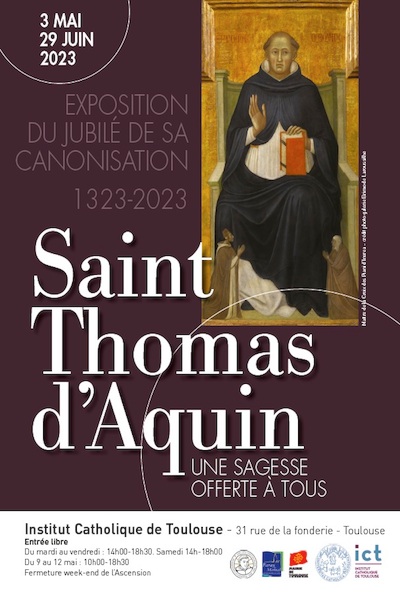
Saint Thomas d’Aquin, une Sagesse Offerte à Tous2023Saint Thomas Aquinas: A Wisdom Offered to All

Scenography and graphic design
Exhibition from 3 May to 29 June 2023
Curators
Claire Rousseau, Jacques Charles-Gaffiot
Total area
500 m²
100 works
objects, sculptures, paintings, works on paper, archive documents, books.
Works budget
€60,000
Attendance
25 000

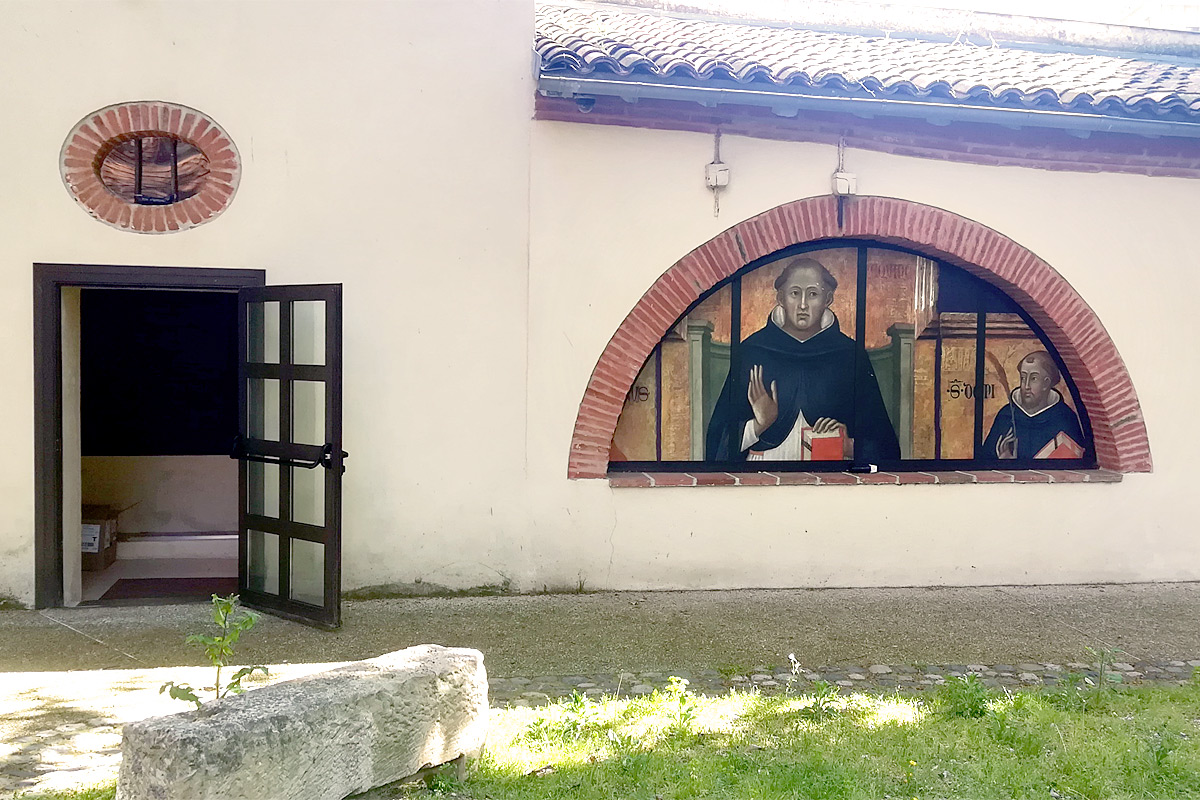
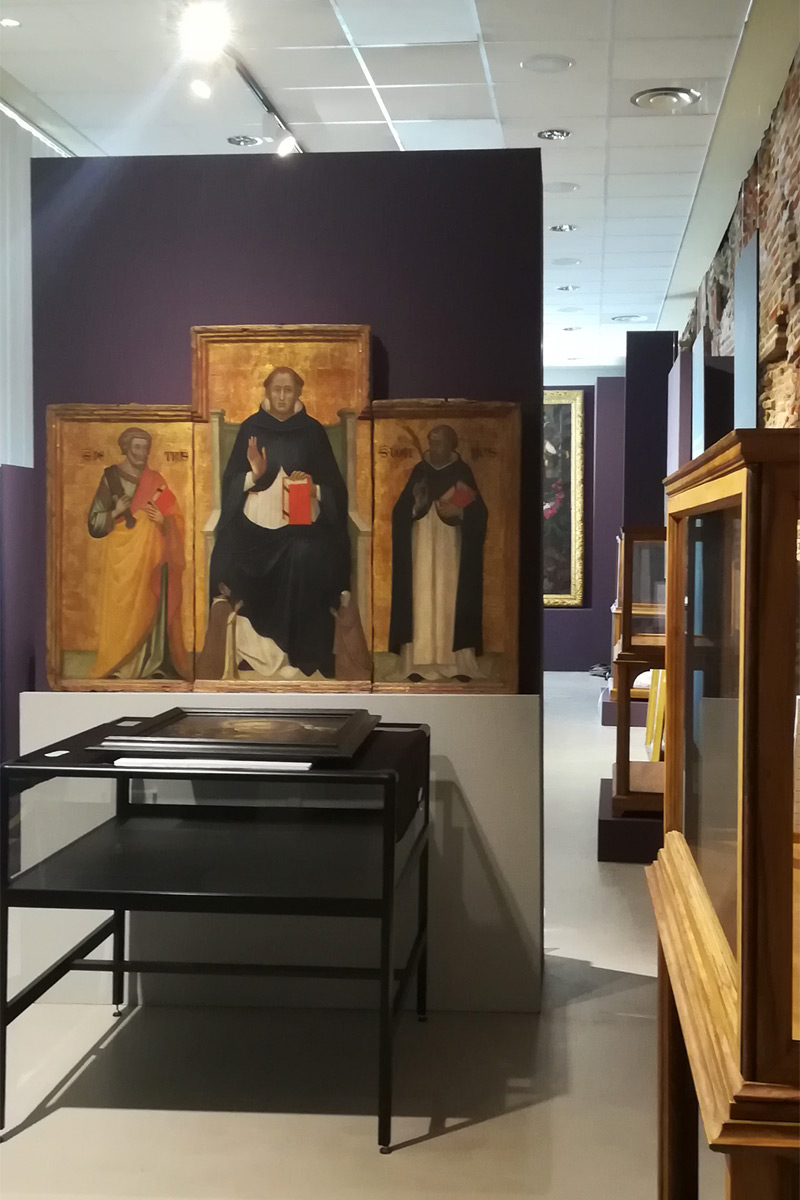
En 2023, l’Ordre des Prêcheurs célébrera le septième centenaire de la canonisation de Thomas d’Aquin à Avignon (13 juillet 1323). Figure centrale de la pensée médiévale chrétienne, Thomas d’Aquin (1225-1274) est passé du statut de principal théologien de son Ordre à celui de « Docteur commun de l’Église ». À ce titre, sa renommée est devenue universelle et ses travaux philosophiques et théologiques ont été adoptés comme un socle pour la formation des intelligences, tant au sein de l’Église, que dans les universités laïques.

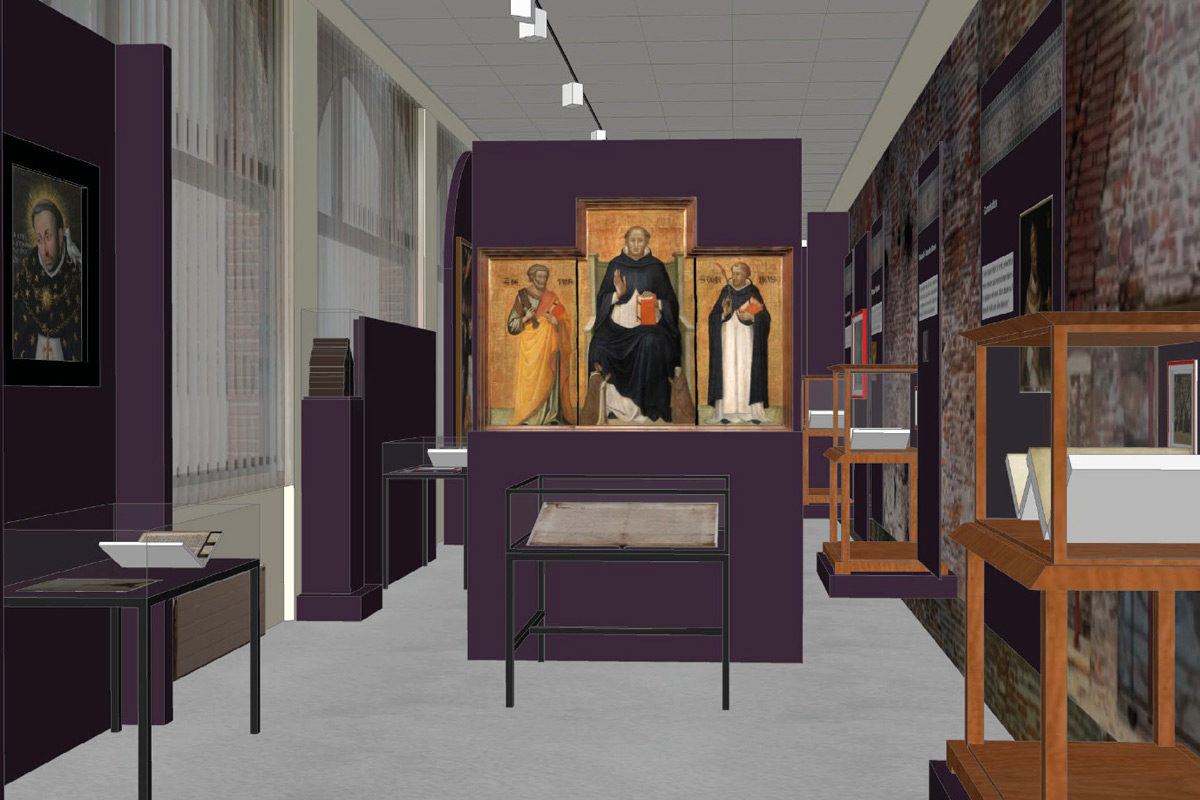
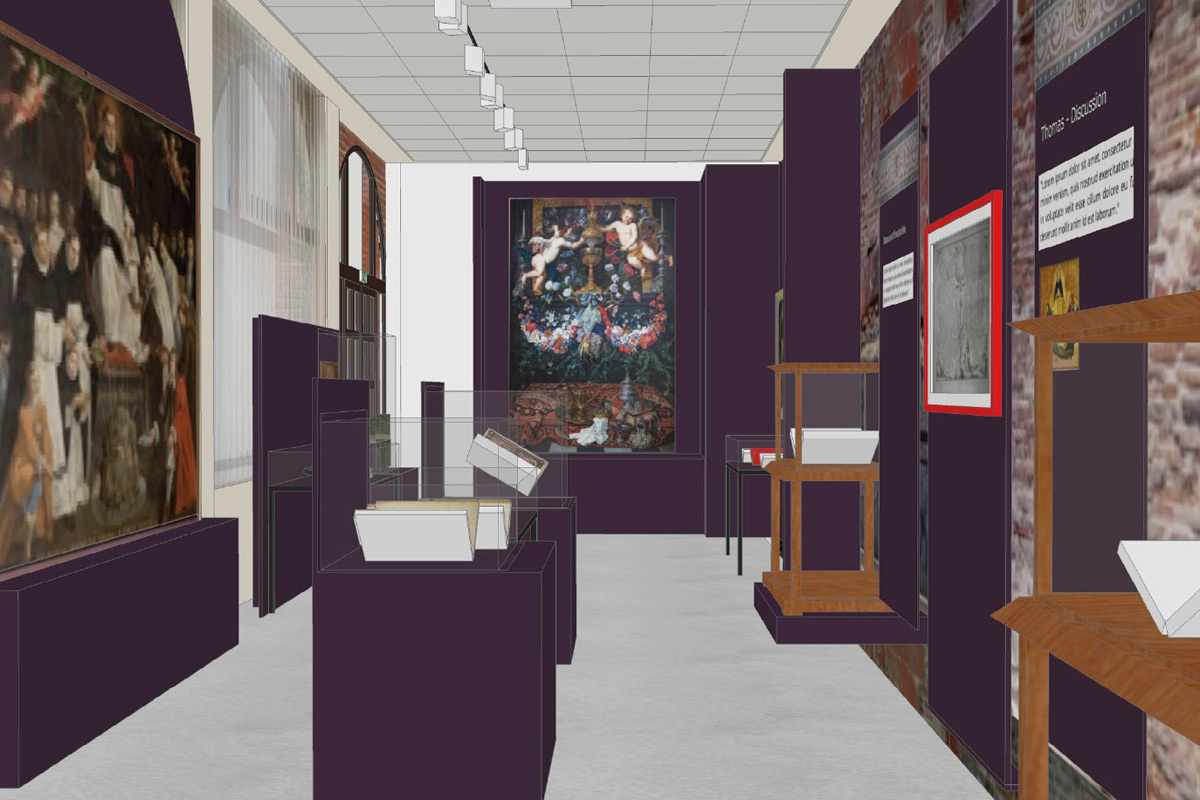
The exhibition presents major works of art never before shown to the public, belonging to private collectors, such as the altarpiece by the Master of the Cross of the Piani d’Invrea (1335) and Le Saint-Sacrement by Guillaume Gabron (17th century), as well as Antoine Nicolas’s painting Saint Thomas Aquinas, Fountain of Wisdom (1648), held at Notre-Dame de Paris.

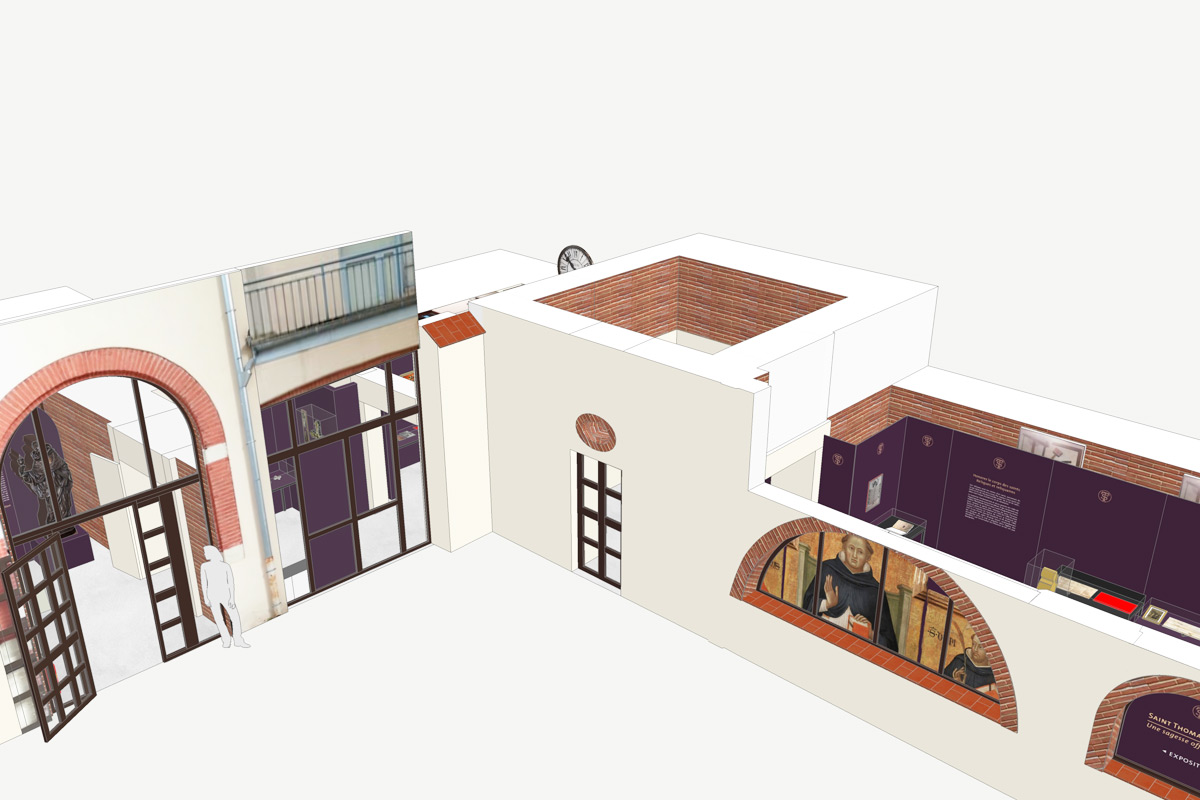
Design approach: the route is punctuated by very large paintings that are revealed one by one as visitors move through the spaces, following the four dimensions of the life of Thomas Aquinas.

First comes the path of a 13th-century child destined by his parents for religious life. The exhibition then turns to Thomas’s philosophical thought, intellectual influence and renown. Finally, by way of epilogue, it traces the stages of the cult of Saint Thomas Aquinas in Toulouse, in an atmosphere of contemplation.

L’exposition sera redéployée au musée du Hiéron de Paray-le-Monial (Saône-et-Loire) du 10 juillet au 1er octobre 2023

Exhibition: Saint Thomas Aquinas: A Wisdom Offered to All – image 1
Exhibition: Saint Thomas Aquinas: A Wisdom Offered to All – image 2
Exhibition: Saint Thomas Aquinas: A Wisdom Offered to All – image 3
Exhibition: Saint Thomas Aquinas: A Wisdom Offered to All – image 4
Exhibition: Saint Thomas Aquinas: A Wisdom Offered to All – image 5
Exhibition: Saint Thomas Aquinas: A Wisdom Offered to All – image 6

Exhibition: Notre-Dame Beyond Its Walls

Paris, Grande Arche de la Défense

Notre-Dame Hors les Murs2022Notre-Dame Beyond Its Walls

Scenography
Exhibition from 15 January 2022 to autumn 2022
Curators
Communications department of Notre-Dame Cathedral, Paris; Laurent Prades
Total area
200 m²
30 works
objects, sculptures, paintings, vestments, goldsmiths’ work.
Works budget
€35,000
Attendance:

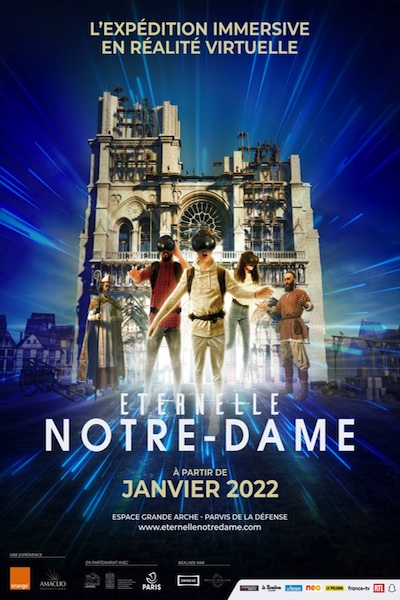
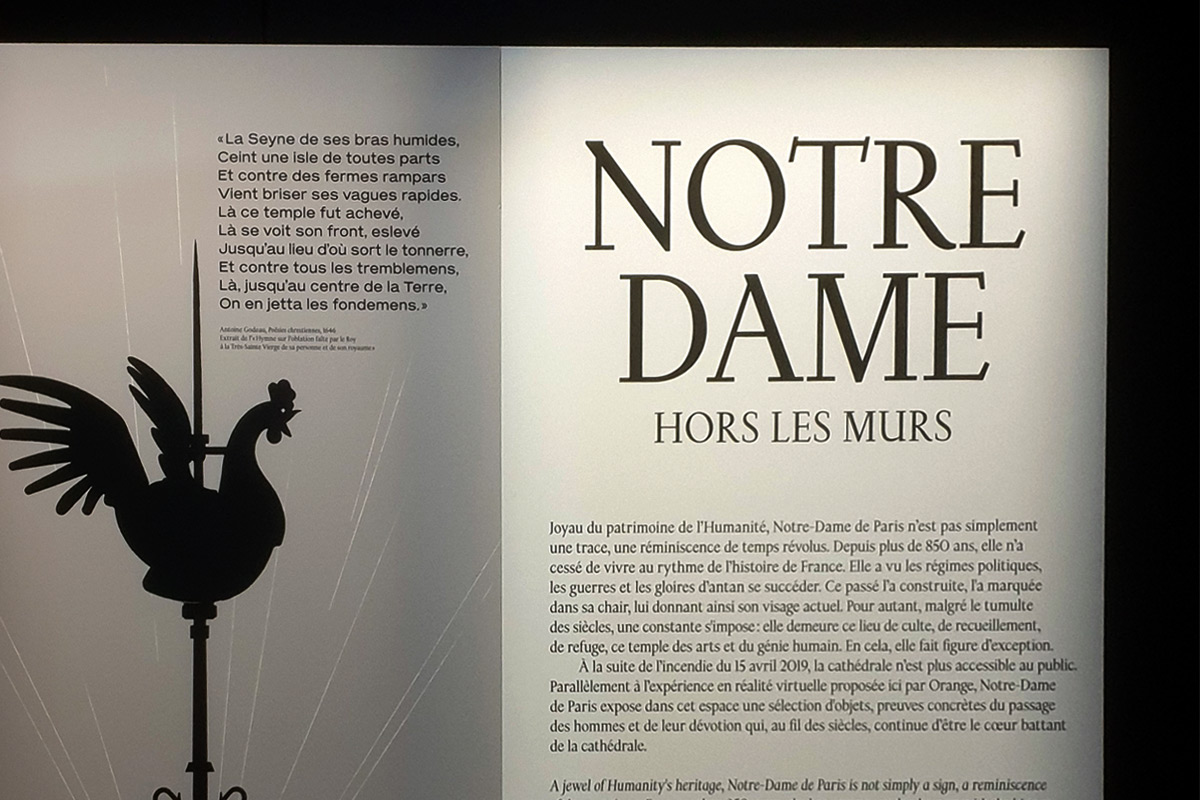
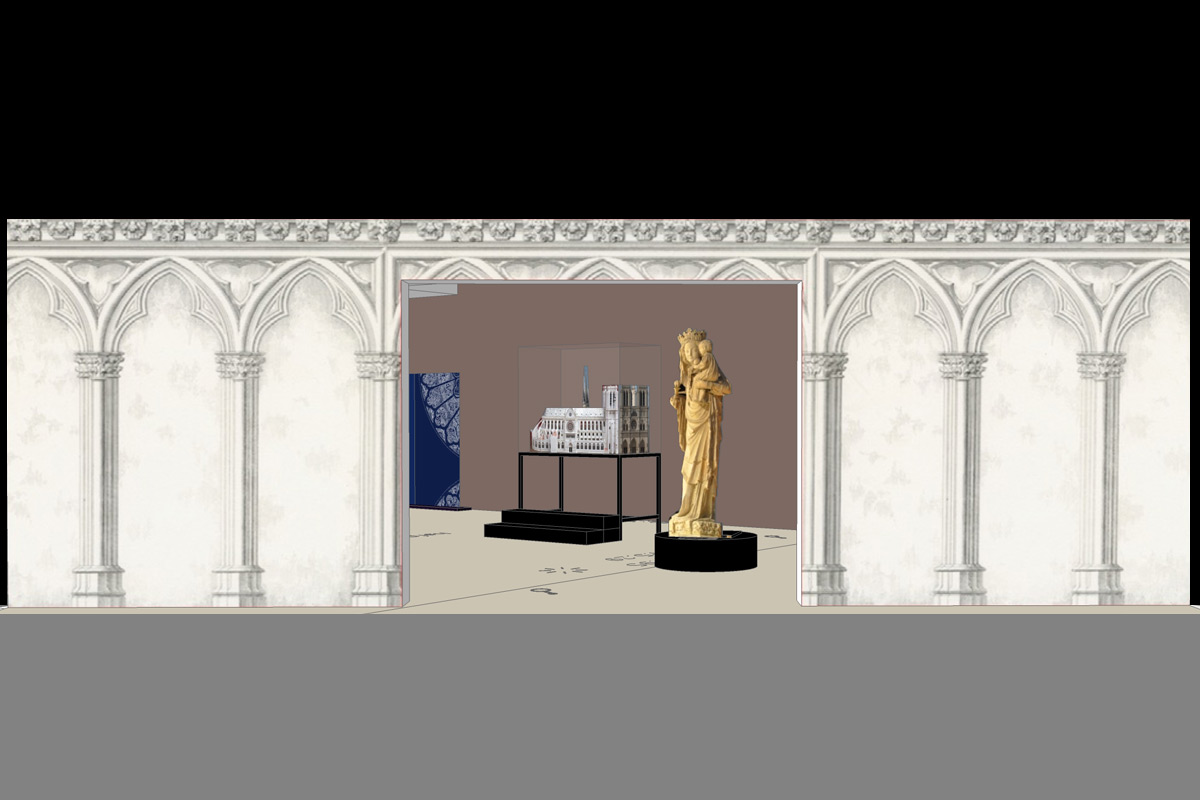
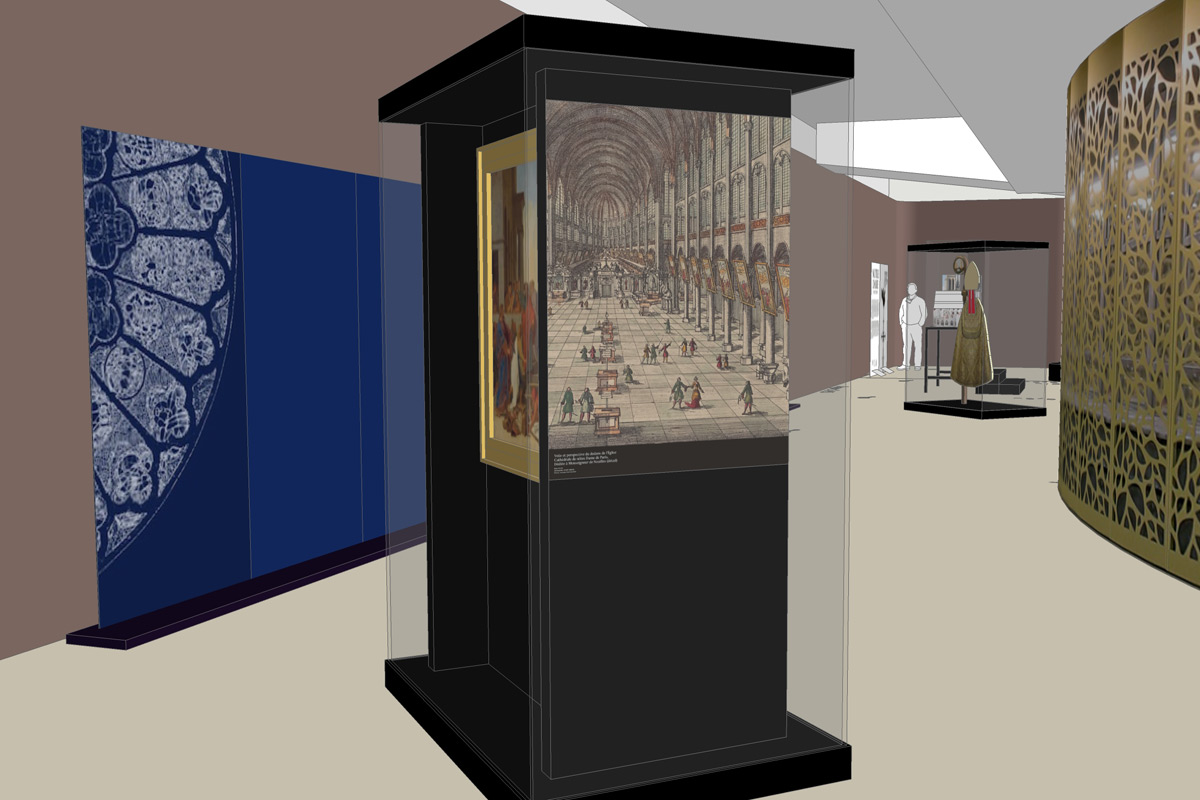
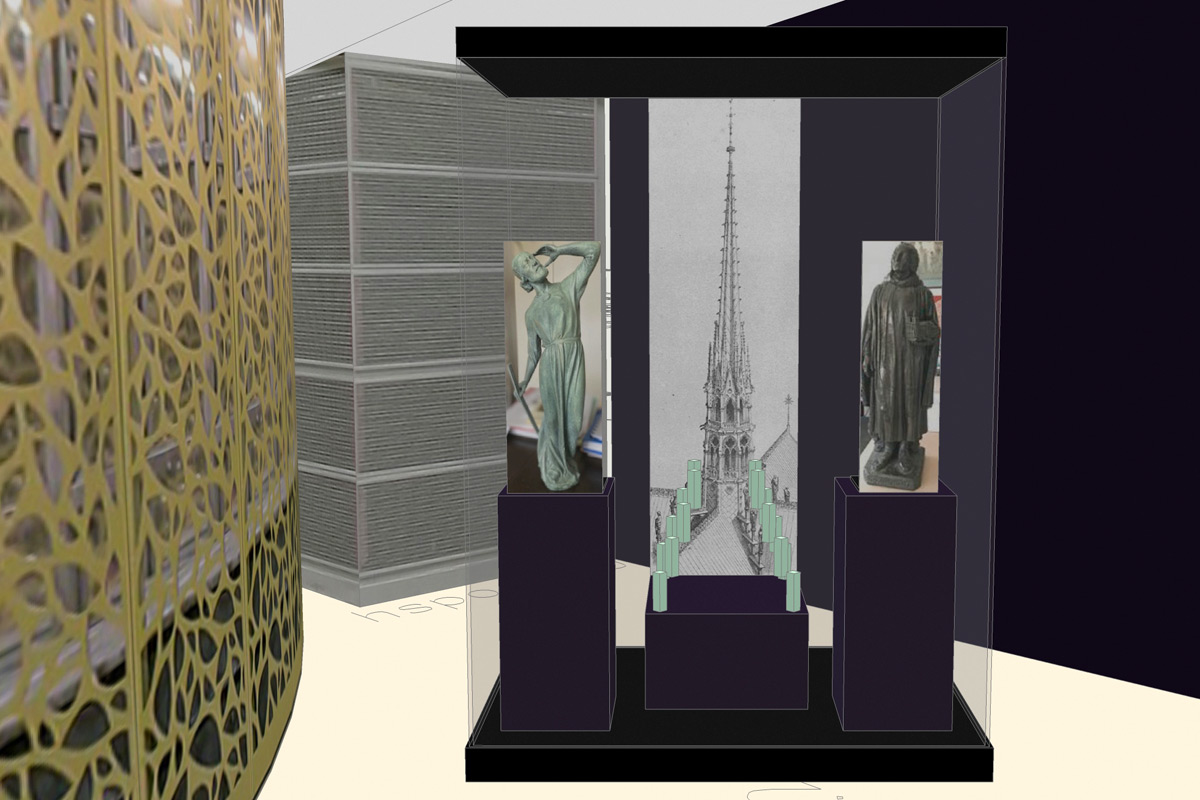
Alongside the immersive experience “Éternelle Notre-Dame”, held at the Grande Arche de la Défense from January 2022 and then moved beneath the cathedral forecourt, where it is currently located, a small exhibition presents the history, the main stages of construction and the function of the cathedral, with a selection of works from the cathedral.

Exhibition: Notre-Dame Beyond Its Walls – image 1
Exhibition: Notre-Dame Beyond Its Walls – image 2
Exhibition: Notre-Dame Beyond Its Walls – image 3
Exhibition: Notre-Dame Beyond Its Walls – image 4
Exhibition: Notre-Dame Beyond Its Walls – image 5
Exhibition: Notre-Dame Beyond Its Walls – image 6

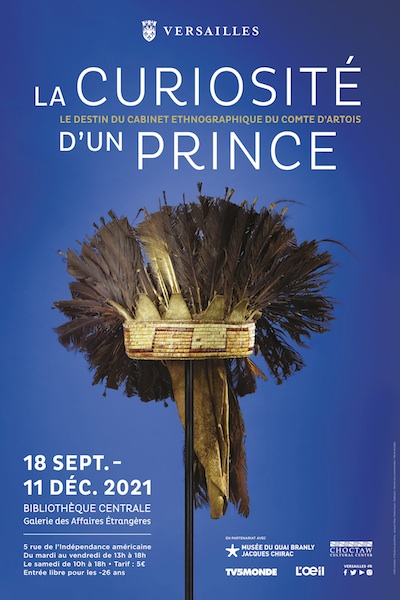
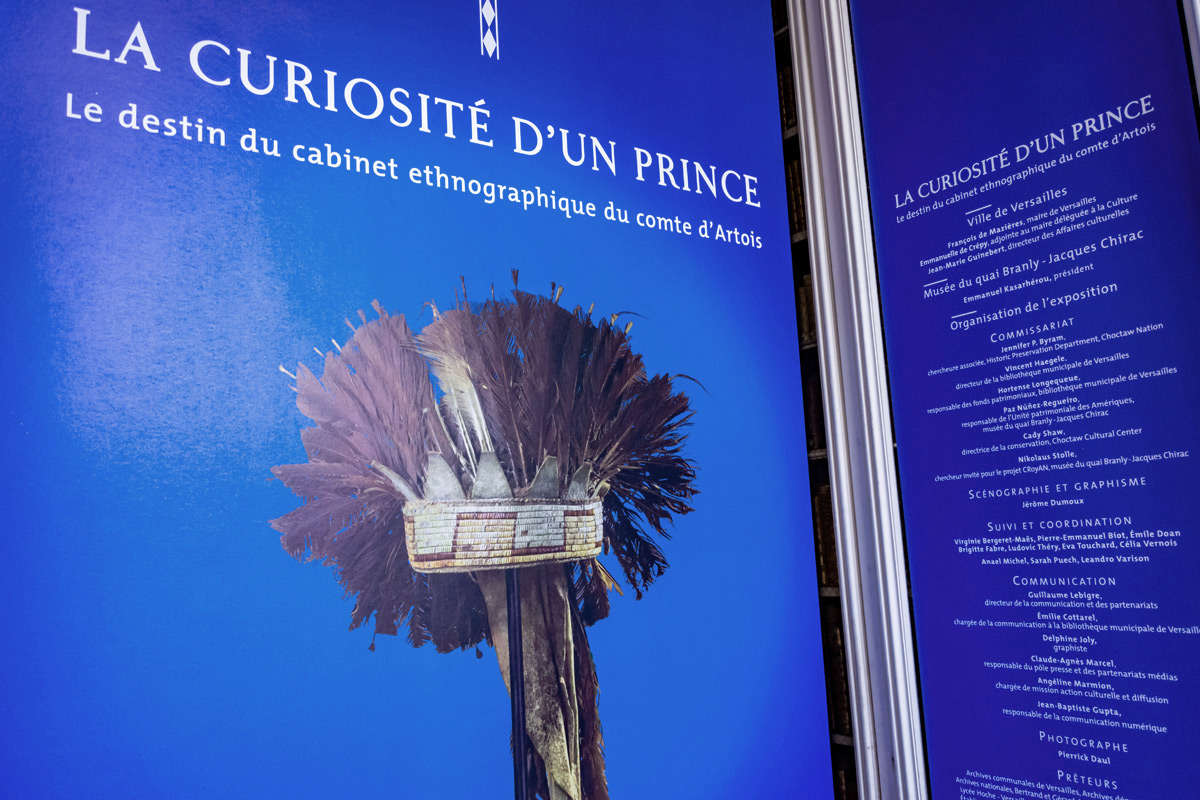
Exhibition: A Prince’s Curiosity: The Fate of the Comte d’Artois’s Ethnographic Cabinet

Versailles, former Hôtel des Affaires étrangères et de la Marine, Municipal Library

La Curiosité d’un Prince, le Destin du Cabinet Ethnographique du Comte d’Artois2021A Prince’s Curiosity: The Fate of the Comte d’Artois’s Ethnographic Cabinet

Scenography and graphic design
Exhibition from 18 September to 11 December 2021
Curators
Jennifer P. Byram, Vincent Haegele, Hortense Longequeue, Paz Nunez-Regueiro, Cady Shaw, Nikolaus Stolle
Total area
300 m²
70 works
objects, sculptures, paintings, works on paper, archive documents, books.
Works budget
€10,000
Attendance:

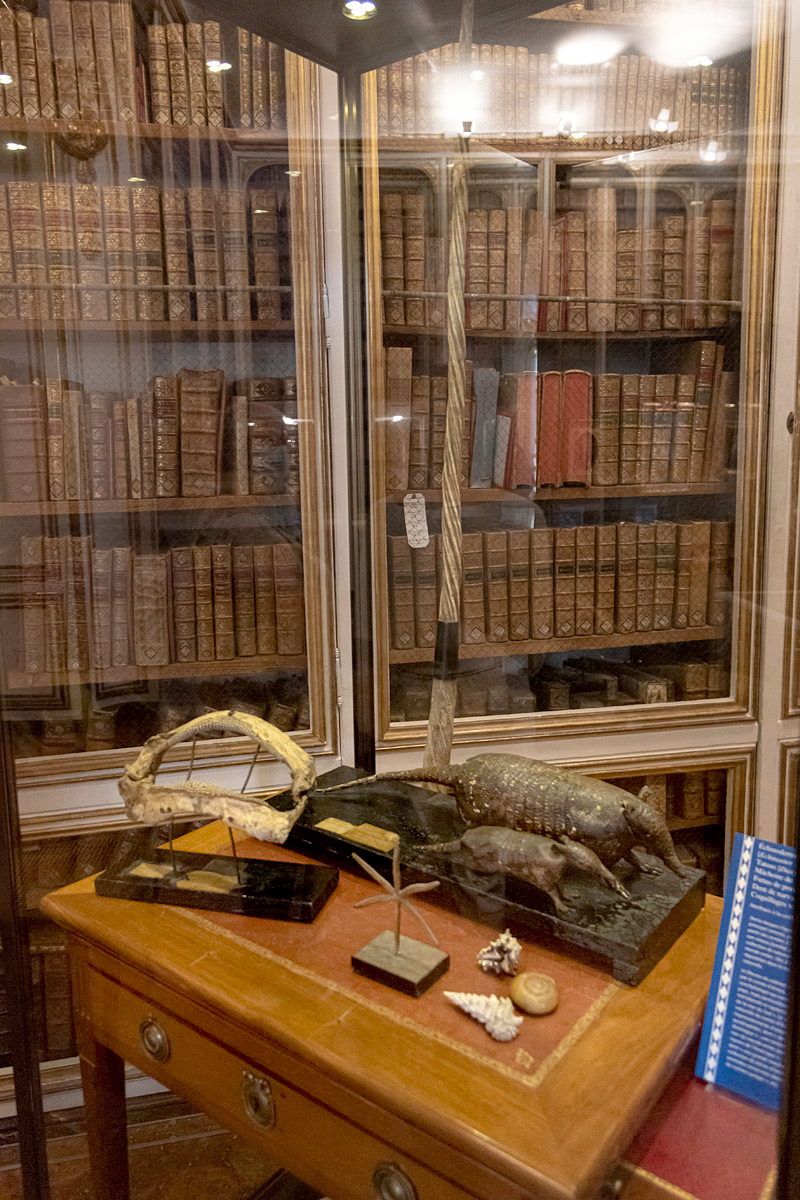
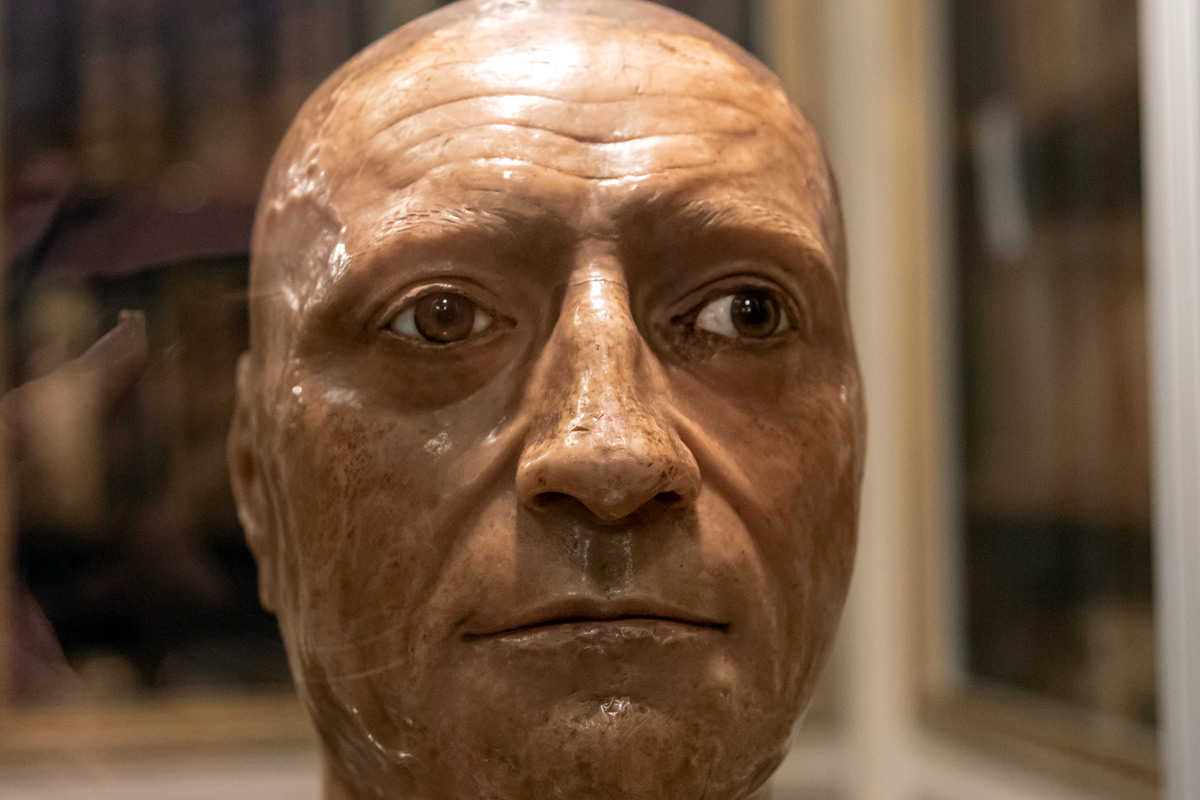
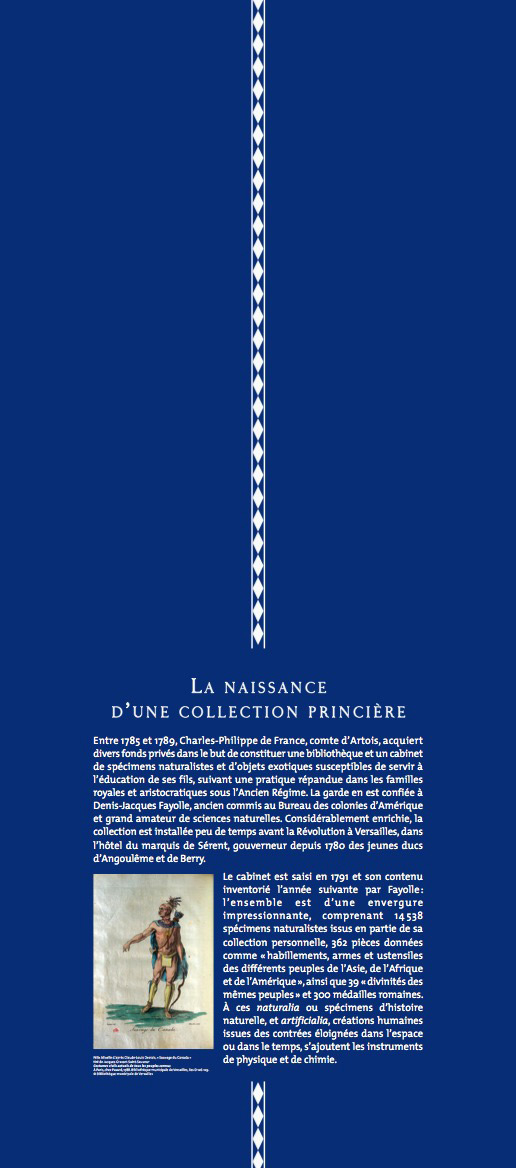
In 1785, Charles-Philippe de France, Comte d’Artois and younger brother of King Louis XVI, decided to build up a library and a remarkable cabinet of natural history specimens and exotic objects from all over the world for the education of his sons.

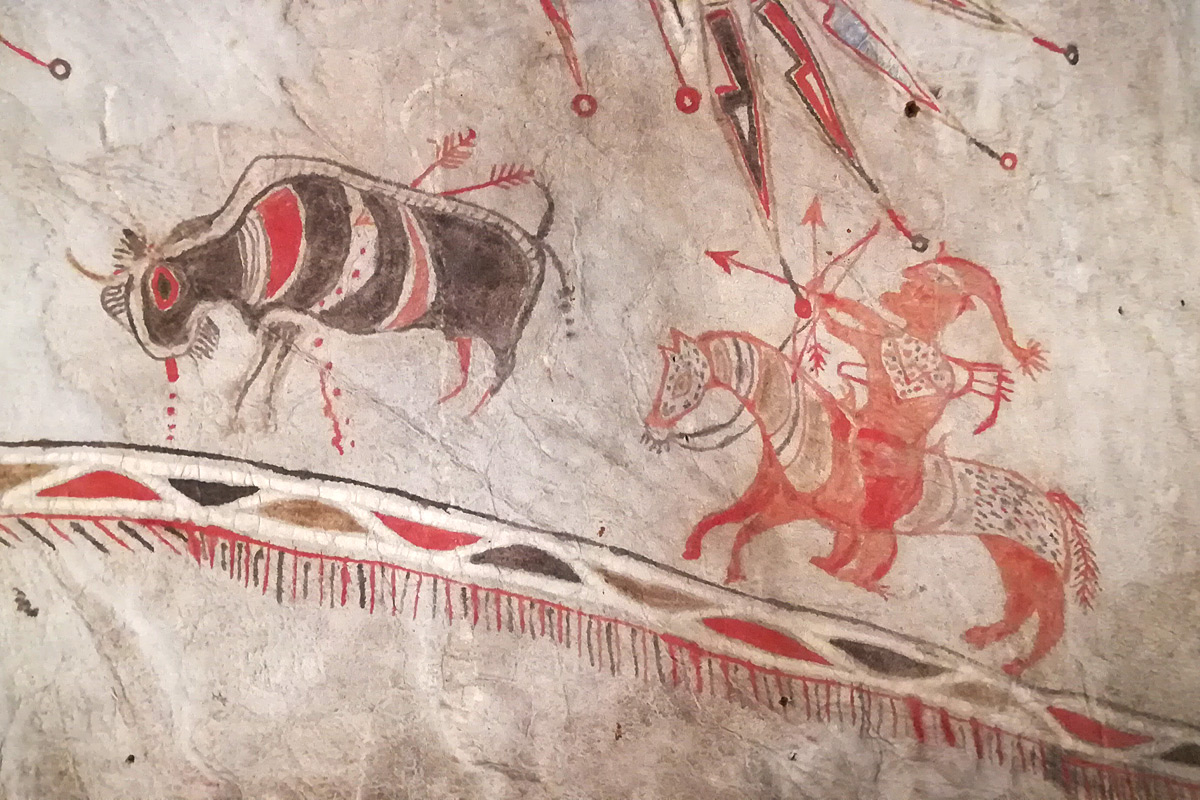
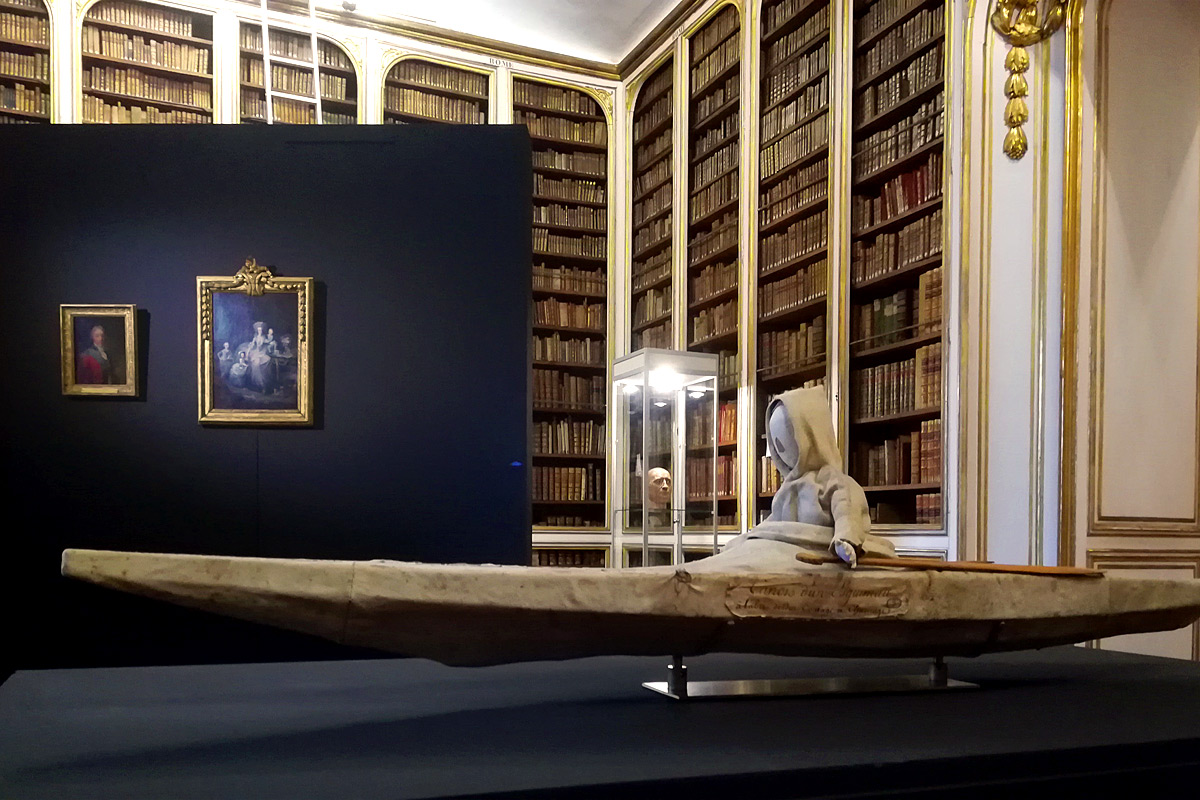
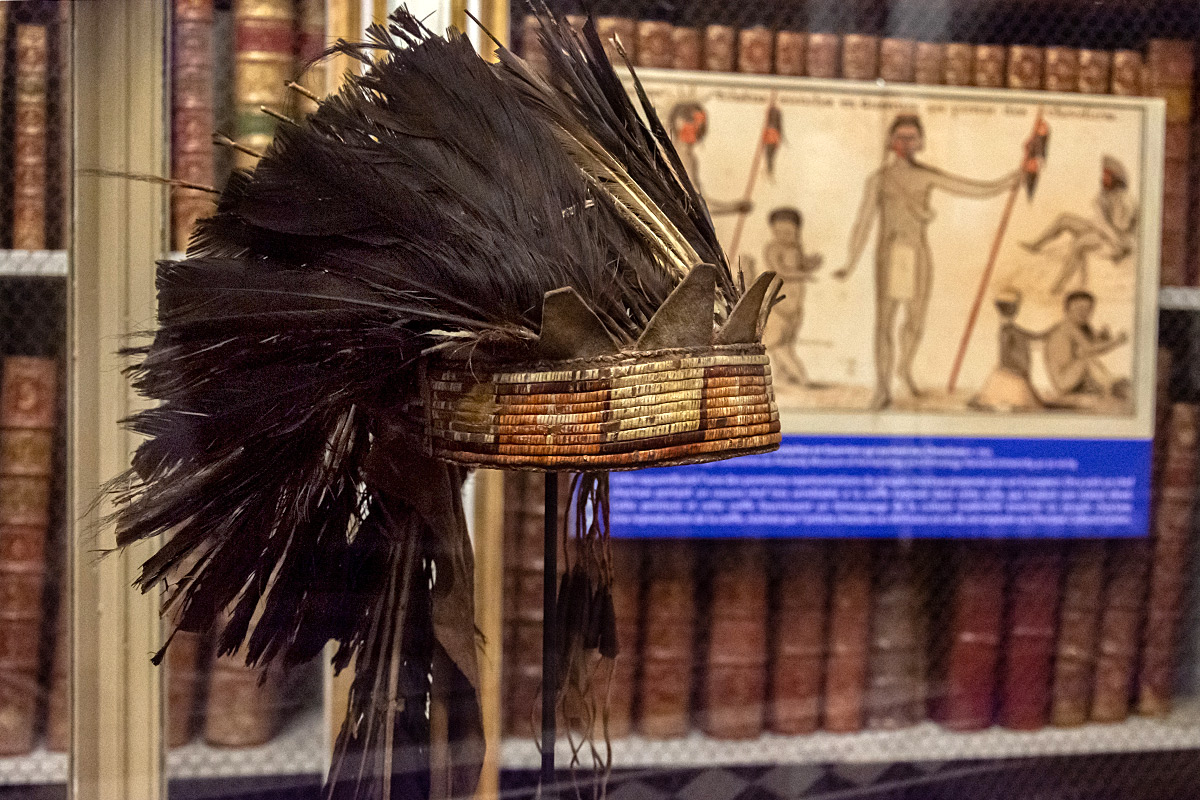
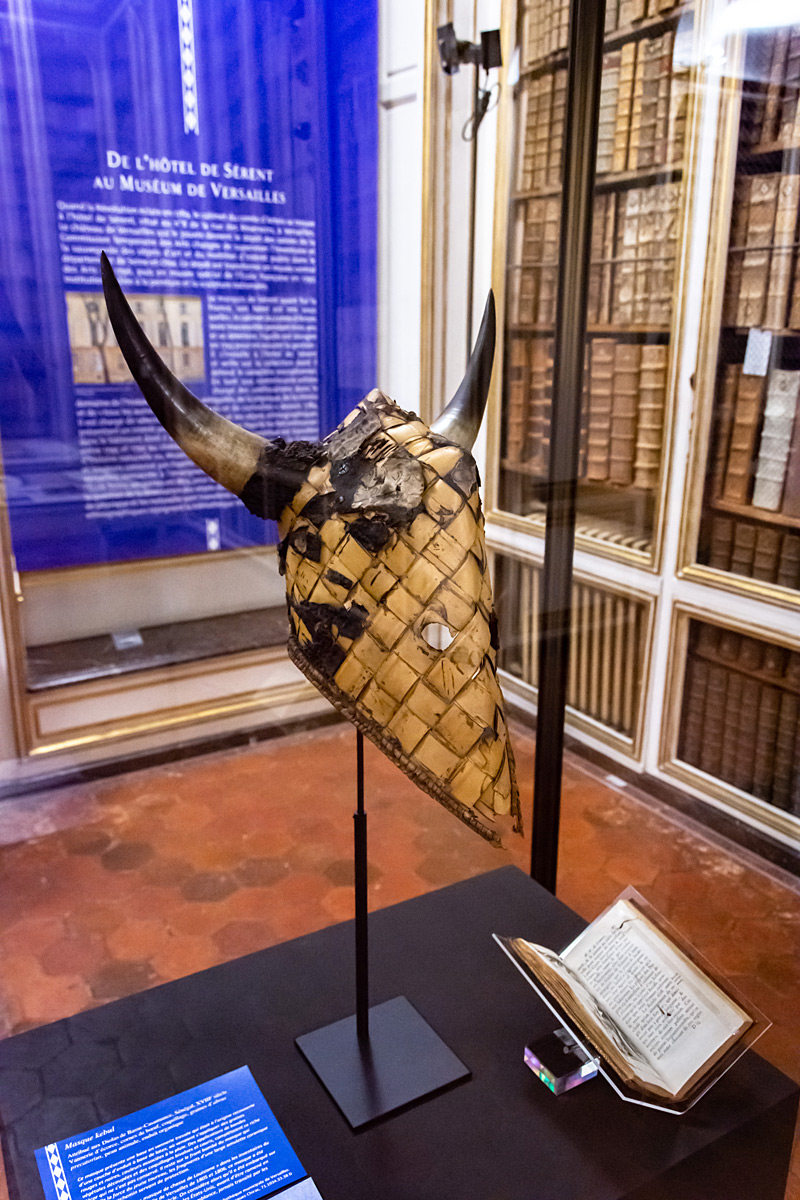
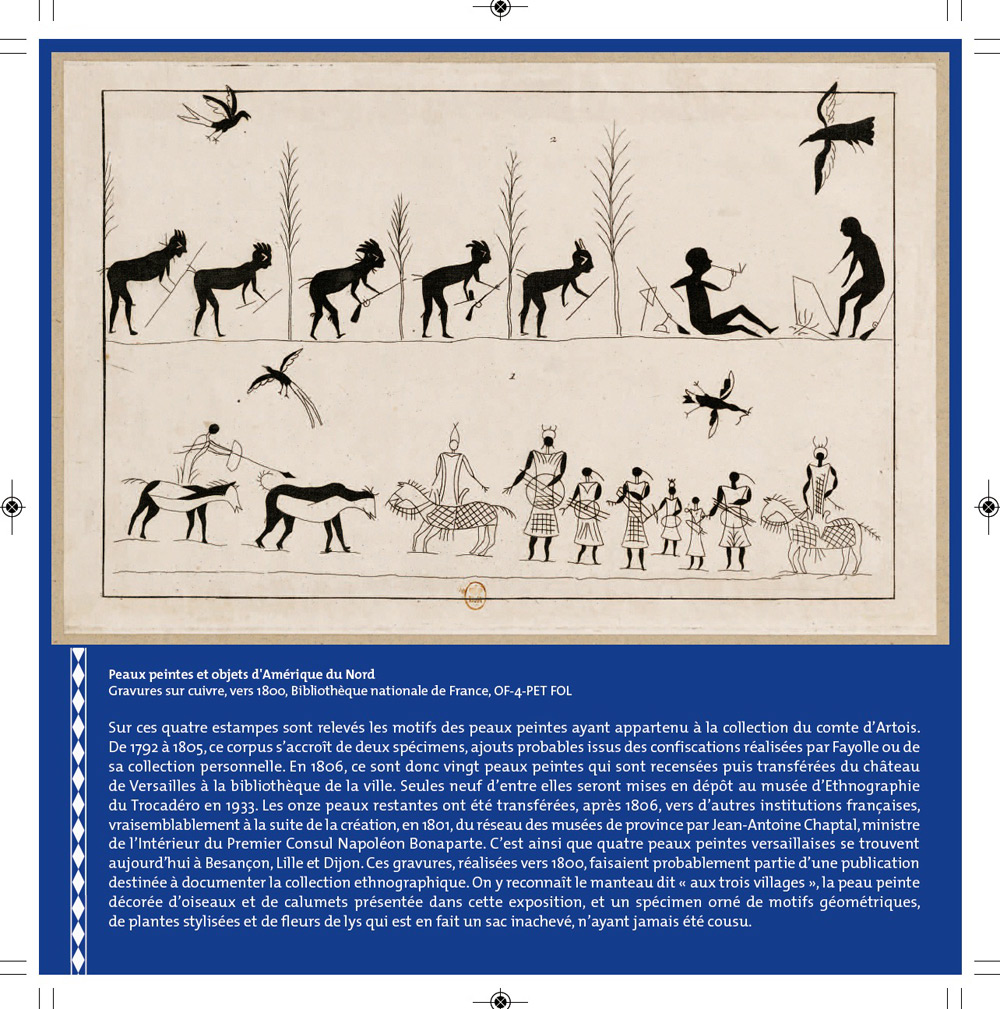
La bibliothèque municipale de Versailles hérite en 1806 de cette extraordinaire collection d’objets qui acquiert une renommée mondiale. S’étant enrichie au cours du XIXe s. par des dons versaillais, elle fut transférée en 1934 au musée d’Ethnographie du Trocadéro. Elle est aujourd’hui déposée, pour la plupart, au musée du quai Branly-Jacques Chirac. Elle compte ainsi 534 pièces d’Asie, d’Afrique, d’Océanie et des Amériques. L’exposition présente une sélection de pièces extrêmement rares, en particulier une coiffe d’apparat du Sud-Est ou des Plaines centrales ou méridionales nord-américaines, une peau peinte de même provenance à décor de calumets, d’oiseaux et de scène de chasse, ou encore le premier masque en provenance du continent africain arrivé en Europe.

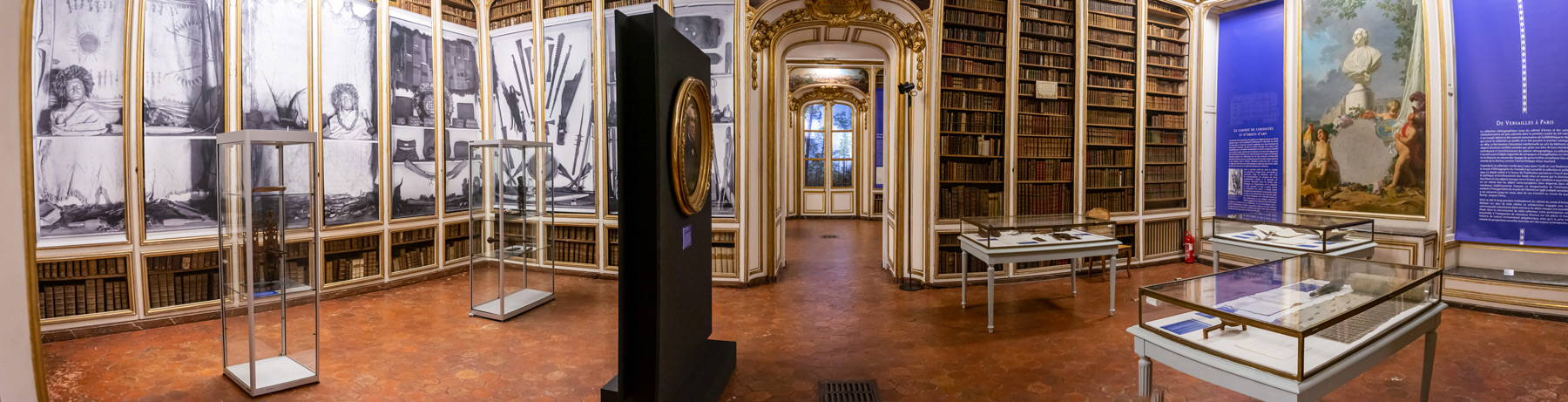
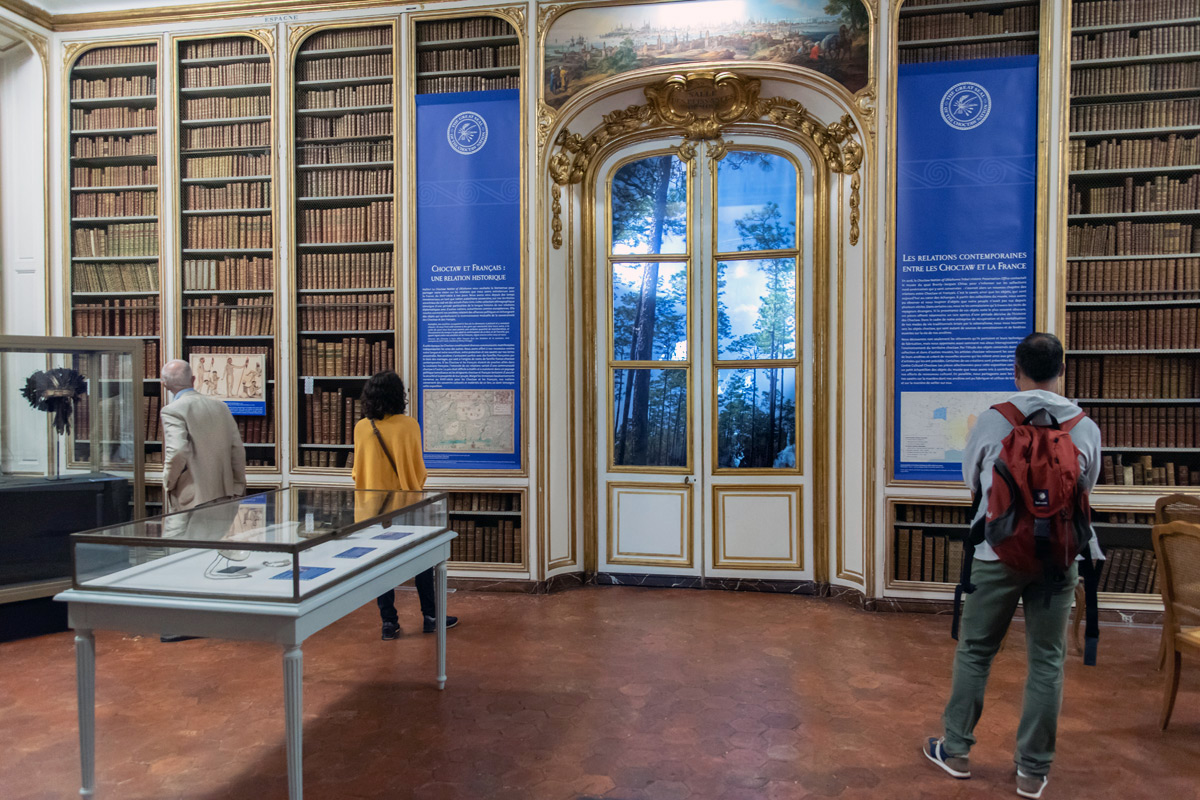
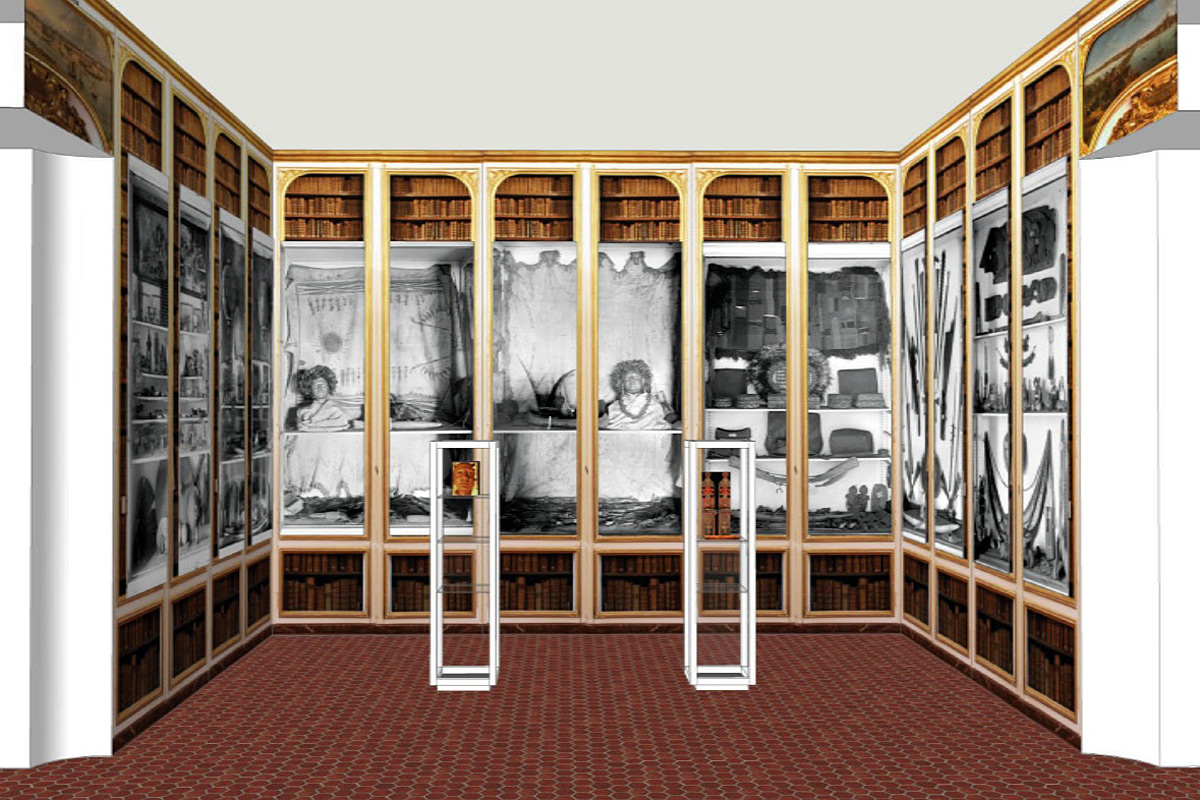
Parti pris scénographique : La scénographie évoque une double histoire, celle de la collection des objets ethnographiques du comte d’Artois, et l’histoire du lieu de l’exposition lui-même, l’ancien Hôtel des Affaires étrangères et de la Marine, écrin privilégié pour cette exposition et dont le décor peint enrichit le propos. Une salle propose la reconstitution partielle grâce à l’agrandissement monumental de photos d’époque, du cabinet ethnographique qui se trouvait à la bibliothèque municipale de Versailles avant 1897. En fin de parcours, la grande porte vitrée offre une vue sur un paysage de l’Oklahoma, territoire actuel des Choctaws.

Vues de l’exposition ci-dessous : ©Ville de Versailles / Marc O Carion

Exhibition: A Prince’s Curiosity: The Fate of the Comte d’Artois’s Ethnographic Cabinet – image 1
Exhibition: A Prince’s Curiosity: The Fate of the Comte d’Artois’s Ethnographic Cabinet – image 2
Exhibition: A Prince’s Curiosity: The Fate of the Comte d’Artois’s Ethnographic Cabinet – image 3
Exhibition: A Prince’s Curiosity: The Fate of the Comte d’Artois’s Ethnographic Cabinet – image 4
Exhibition: A Prince’s Curiosity: The Fate of the Comte d’Artois’s Ethnographic Cabinet – image 5
Exhibition: A Prince’s Curiosity: The Fate of the Comte d’Artois’s Ethnographic Cabinet – image 6
Exhibition: A Prince’s Curiosity: The Fate of the Comte d’Artois’s Ethnographic Cabinet – image 7
Exhibition: A Prince’s Curiosity: The Fate of the Comte d’Artois’s Ethnographic Cabinet – image 8
Exhibition: A Prince’s Curiosity: The Fate of the Comte d’Artois’s Ethnographic Cabinet – image 9
Exhibition: A Prince’s Curiosity: The Fate of the Comte d’Artois’s Ethnographic Cabinet – image 10
Exhibition: A Prince’s Curiosity: The Fate of the Comte d’Artois’s Ethnographic Cabinet – image 11
Exhibition: A Prince’s Curiosity: The Fate of the Comte d’Artois’s Ethnographic Cabinet – image 12

Exhibition: Jenny de Vasson: A Photographer in Versailles in 1900

Versailles, former Hôtel des Affaires étrangères et de la Marine, Municipal Library

Jenny de Vasson, une Photographe à Versailles en 19002020Jenny de Vasson: A Photographer in Versailles in 1900

Scenography and graphic design
Exhibition from 19 September to 24 October 2020
Curators
Gilles Wolkowitsch
Total area
300 m²
100 works
framed photographs, works on paper, paintings, archive documents, objects
Works budget
€7,000
Attendance
8,000 visitors

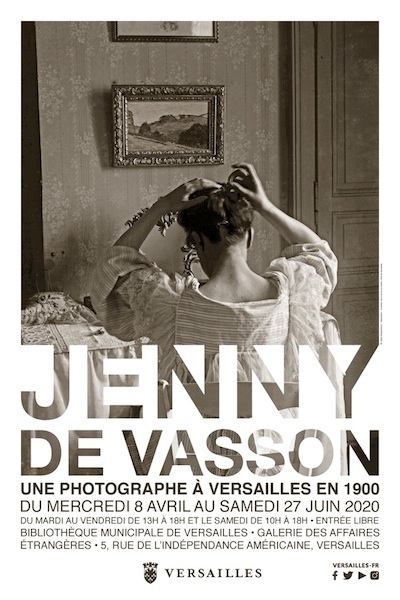
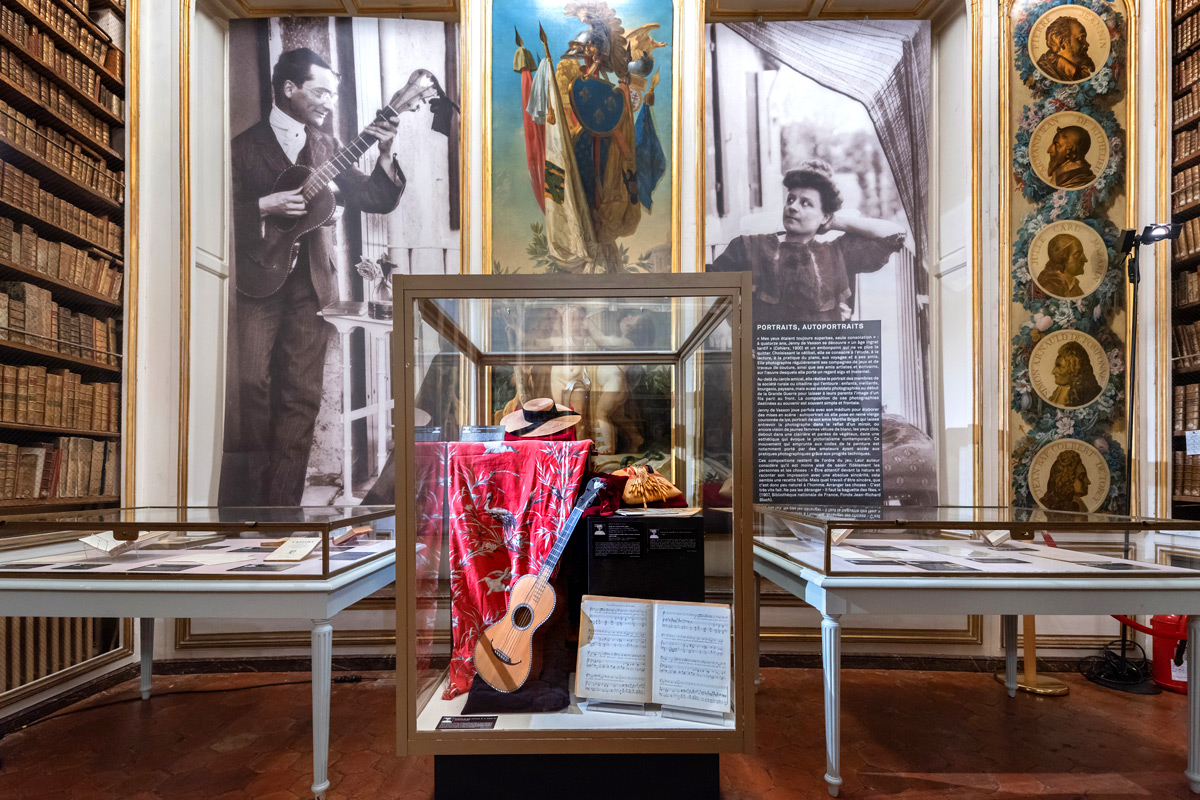
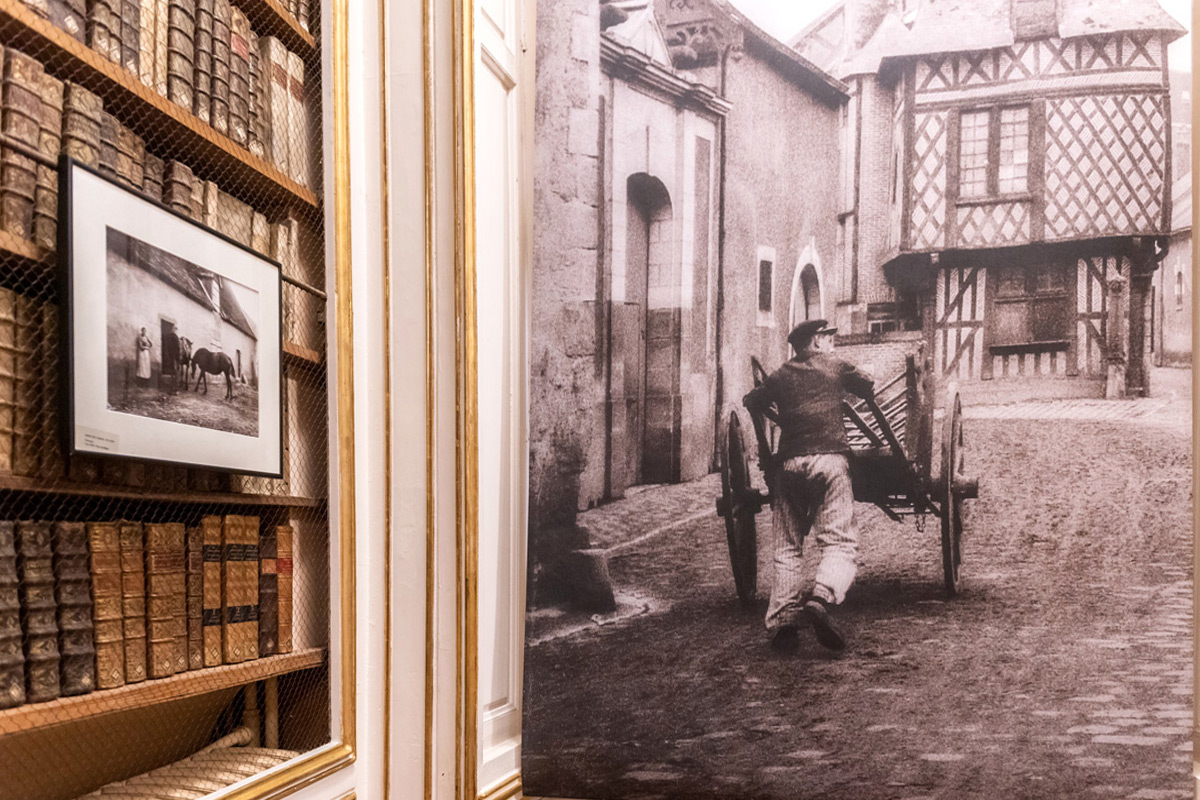
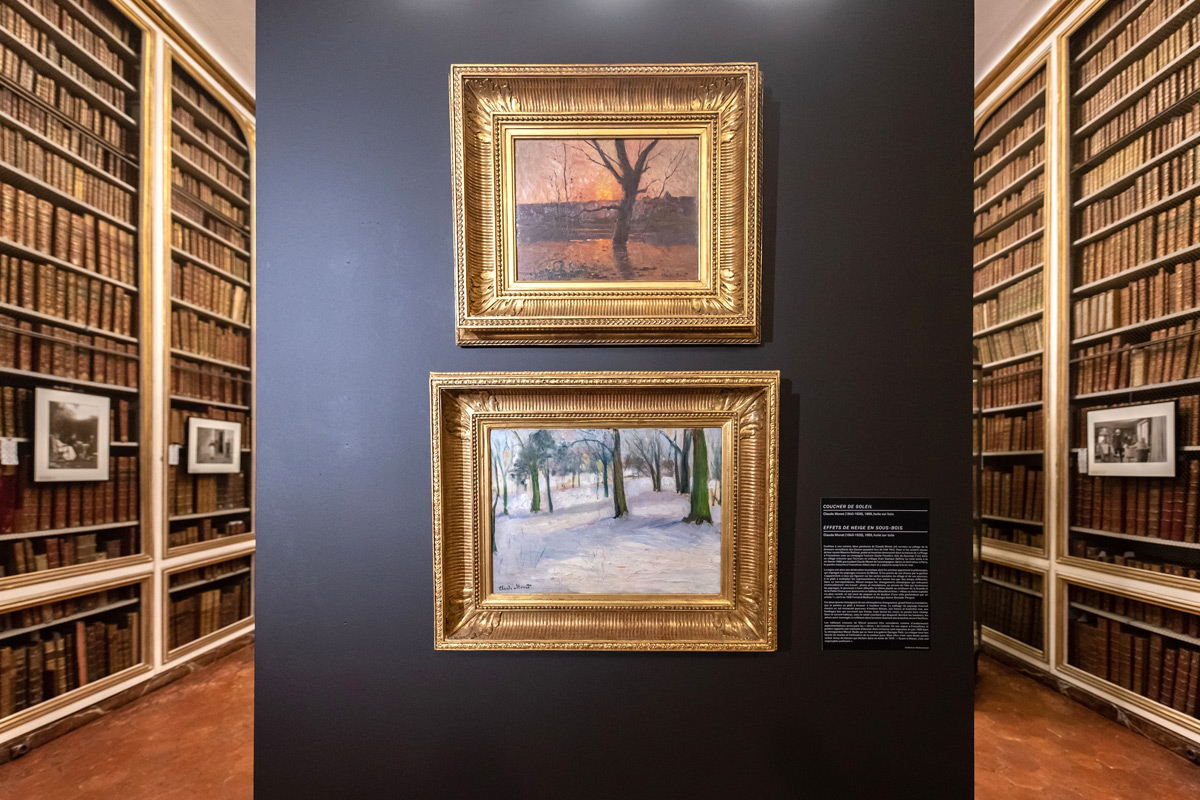
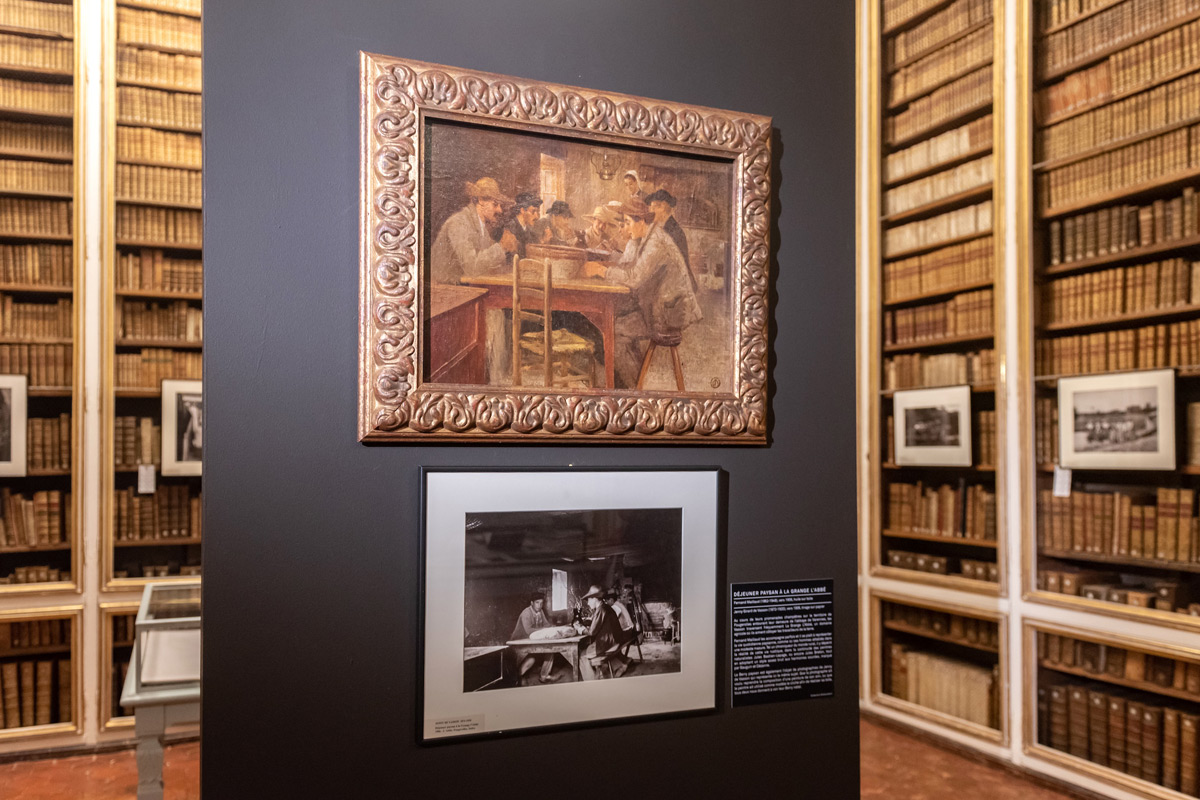
The exhibition “Jenny de Vasson: une photographe à Versailles en 1900” invites visitors to discover a little-known body of work. Born in 1872 into a family of notables from the Berry region, at a time when amateur photography was spreading among the well-off, Jenny de Vasson took hundreds of photographs of her family and of familiar or distant landscapes seen on her travels in France, Belgium, Spain, Greece, Italy and Switzerland. Close to artists such as Fernand Maillaud and Bernard Naudin and to writers such as Jean-Richard Bloch, André Maurois and Roger Martin du Gard, she divided her life between the Berry and Versailles, where she lived with her parents from 1902 until her death in 1920. Their town house on the impasse du Débarcadère, now passage Pilâtre de Rozier, held two small paintings by Claude Monet shown in this exhibition, as well as some of the letters signed by Jean Jaurès, Charles de Montalembert and George Sand that her father, Paulin de Vasson, gave to the municipal library. The hang presents her photographs, showing landscapes, streets and a whole rural and urban society at the turn of the century, with room for play, staging and dressing-up in a series of portraits and self-portraits.

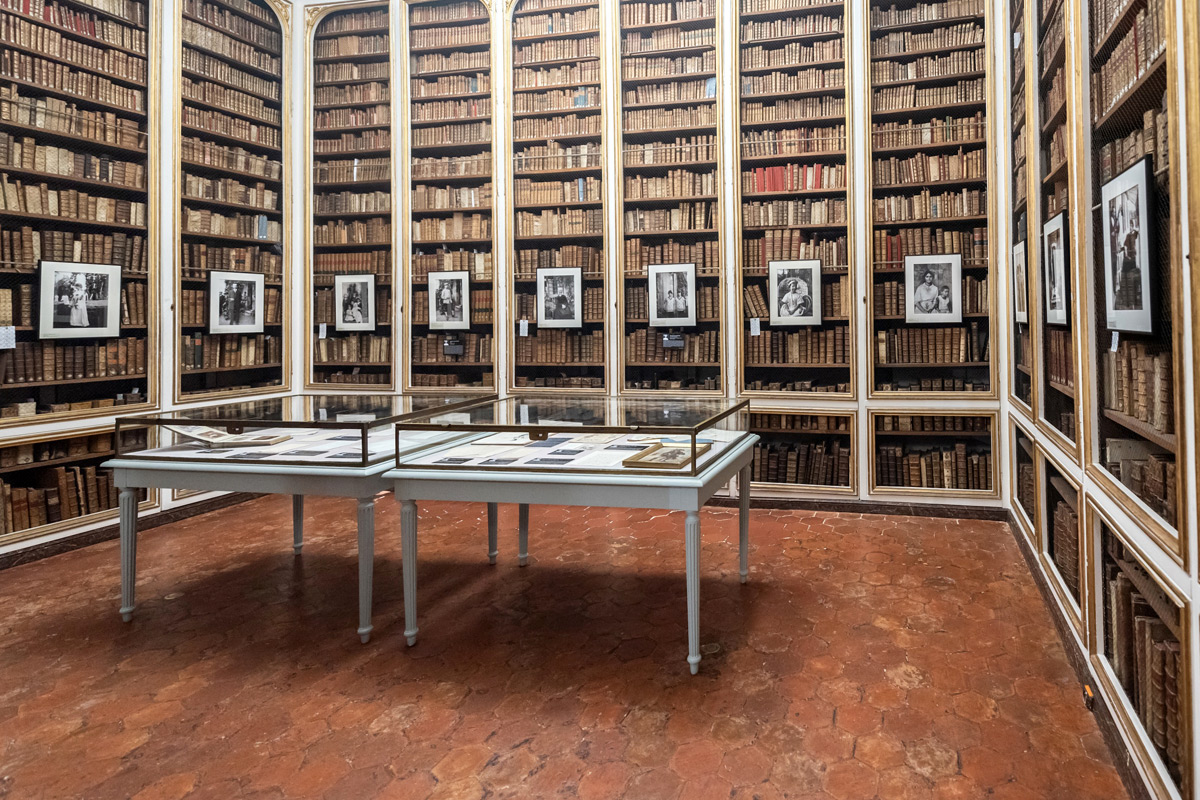
Design approach: the 100 photographs are framed identically and organised by theme in each of the exhibition’s five rooms. The route is punctuated by monumental enlargements of photographs, one of which features a self-portrait, so that the photographer is present throughout the exhibition.

Vues de l’exposition ci-dessous : ©Ville de Versailles / Marc O Carion

Exhibition: Jenny de Vasson: A Photographer in Versailles in 1900 – image 1
Exhibition: Jenny de Vasson: A Photographer in Versailles in 1900 – image 2
Exhibition: Jenny de Vasson: A Photographer in Versailles in 1900 – image 3
Exhibition: Jenny de Vasson: A Photographer in Versailles in 1900 – image 4
Exhibition: Jenny de Vasson: A Photographer in Versailles in 1900 – image 5
Exhibition: Jenny de Vasson: A Photographer in Versailles in 1900 – image 6
Exhibition: Jenny de Vasson: A Photographer in Versailles in 1900 – image 7

Exhibition: Seeing Notre-Dame de Paris Again: Treasures Beyond Its Walls

Hôtel-Dieu, AP-HP Paris

Revoir Notre-Dame de Paris, Trésors Hors les Murs2020Seeing Notre-Dame de Paris Again: Treasures Beyond Its Walls

Scenography and graphic design. Exhibition planned from summer 2020 to late 2022
Curators
Béatrix Saule, Marie-Hélène Didier, Jean-Michel Leniaud, Fr Gilles Drouin
Total area
approx. 350 m²
200 works
paintings, sculptures, stained glass, art objects, works on paper, archive documents.
Overall works budget
€1,500,000

Depuis l’incendie du 15 avril 2019, il est impossible d’accéder physiquement à la cathédrale, d’être initié à sa spiritualité dans ses murs, au message chrétien qui se lit dans son patrimoine. Si ce dernier a pu être quasiment intégralement sauvé la nuit du sinistre et les jours qui ont suivi, il est aujourd’hui inaccessible in situ, et ce pour plusieurs années. Suite à l’incendie, l’AP-HP (Assistance publique — Hôpitaux de Paris) a manifesté son souhait de mettre à disposition de la cathédrale des locaux dans l’Hôtel-Dieu, donnant sur le parvis de la cathédrale pour y déployer une exposition qui présenterait pendant la durée des travaux de restauration, des objets d’art provenant de la cathédrale, en lien avec son histoire et son message : peintures, sculptures, gravures, manuscrits, vitraux, ornements, pièces d’orfèvrerie, mobilier, maquettes, photographies… À partir d’objets soigneusement sélectionnés l’exposition aura pour but de faire découvrir ce qu’est fondamentalement la cathédrale, pourquoi elle a été faite, ce qu’elle représente aujourd’hui au sein d’une ville-monde comme Paris, en un mot initier au mystère de cette cathédrale dont l’incendie nous a révélé combien sa place était importante au cœur de notre ville, de notre nation, et par-delà nos frontières.

Design approach: the route begins with a prologue on the origins and great moments of the cathedral. Two main movements follow: the Ascent towards God, then the universal cathedral and its influence.

Each room is conceived around a theme symbolically carried by a major piece, a masterpiece around which other works revolve. Specific devices put certain works back in context to convey their meaning and their symbolic and spiritual significance more fully.

Nota bene : la réalisation de ce projet abouti a été interrompue par la pandémie de COVID 19 et sera abandonnée.

Exhibition: Seeing Notre-Dame de Paris Again: Treasures Beyond Its Walls – image 1
Exhibition: Seeing Notre-Dame de Paris Again: Treasures Beyond Its Walls – image 2
Exhibition: Seeing Notre-Dame de Paris Again: Treasures Beyond Its Walls – image 3
Exhibition: Seeing Notre-Dame de Paris Again: Treasures Beyond Its Walls – image 4
Exhibition: Seeing Notre-Dame de Paris Again: Treasures Beyond Its Walls – image 5
Exhibition: Seeing Notre-Dame de Paris Again: Treasures Beyond Its Walls – image 6

Exhibition: A Hundred Portraits for a Century: From Court to City under Louis XV and Louis XVI

Musée Lambinet, City of Versailles

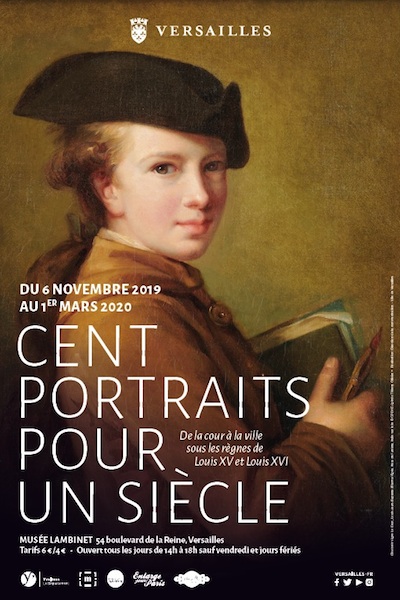
Cent Portraits pour un Siècle, de la Cour à la Ville Sous les Règnes de Louis XV et Louis XVI2019A Hundred Portraits for a Century: From Court to City under Louis XV and Louis XVI

Scenography and graphic design
Exhibition from 6 November 2019 to 1 March 2020
Curators
Xavier Salmon, director of the Department of Prints and Drawings, Musée du Louvre
Total area
300 m²
100 works
paintings, works on paper
Works budget
€5,000
Attendance:

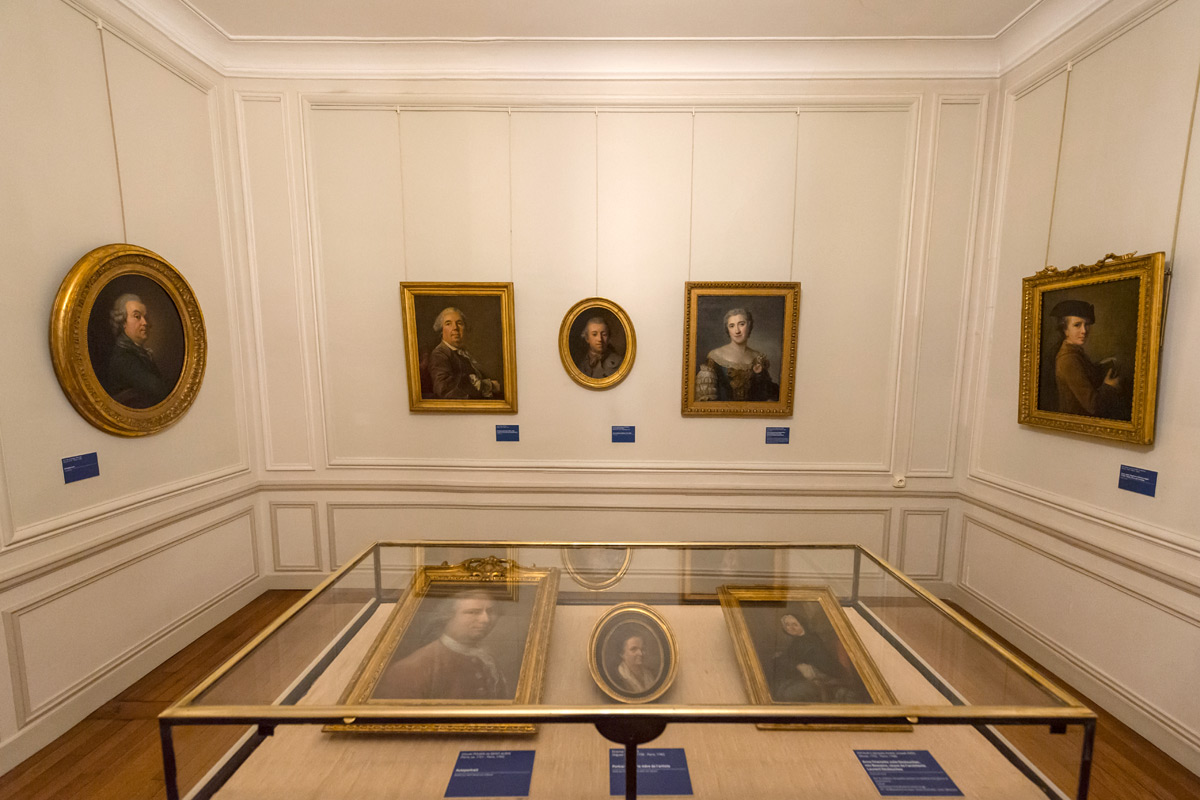
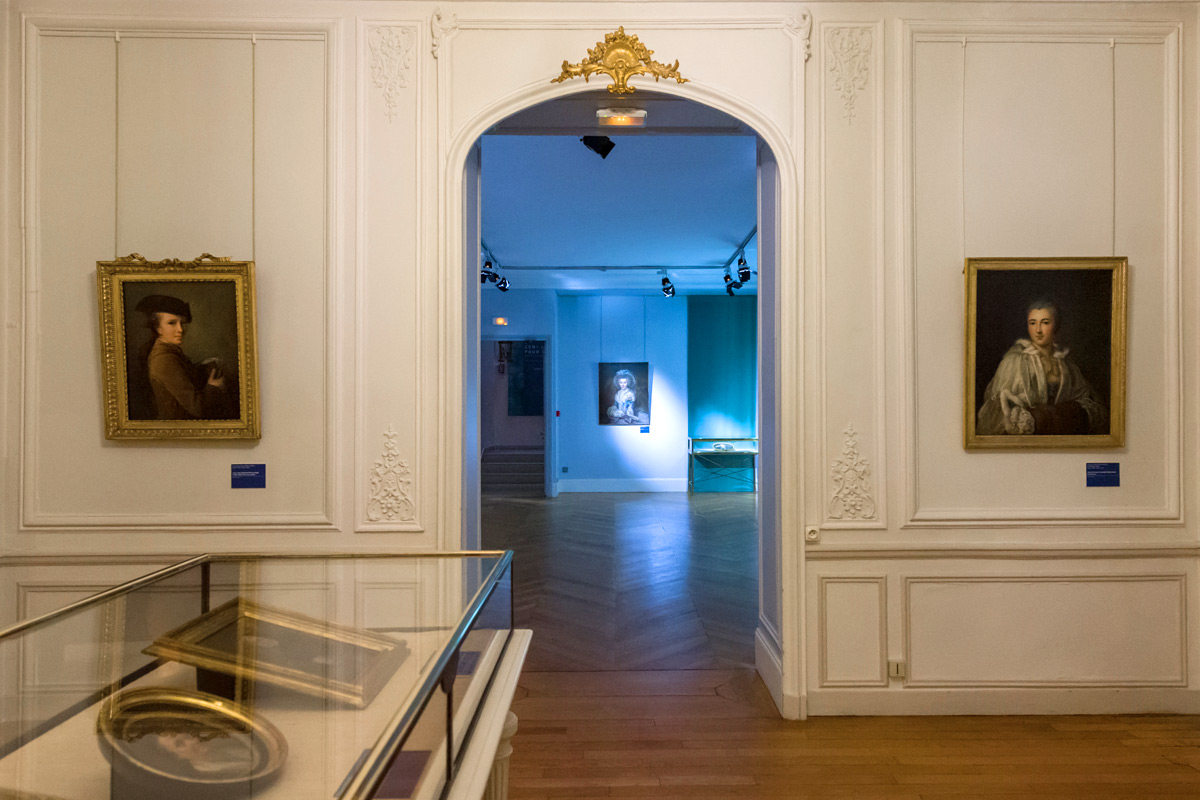
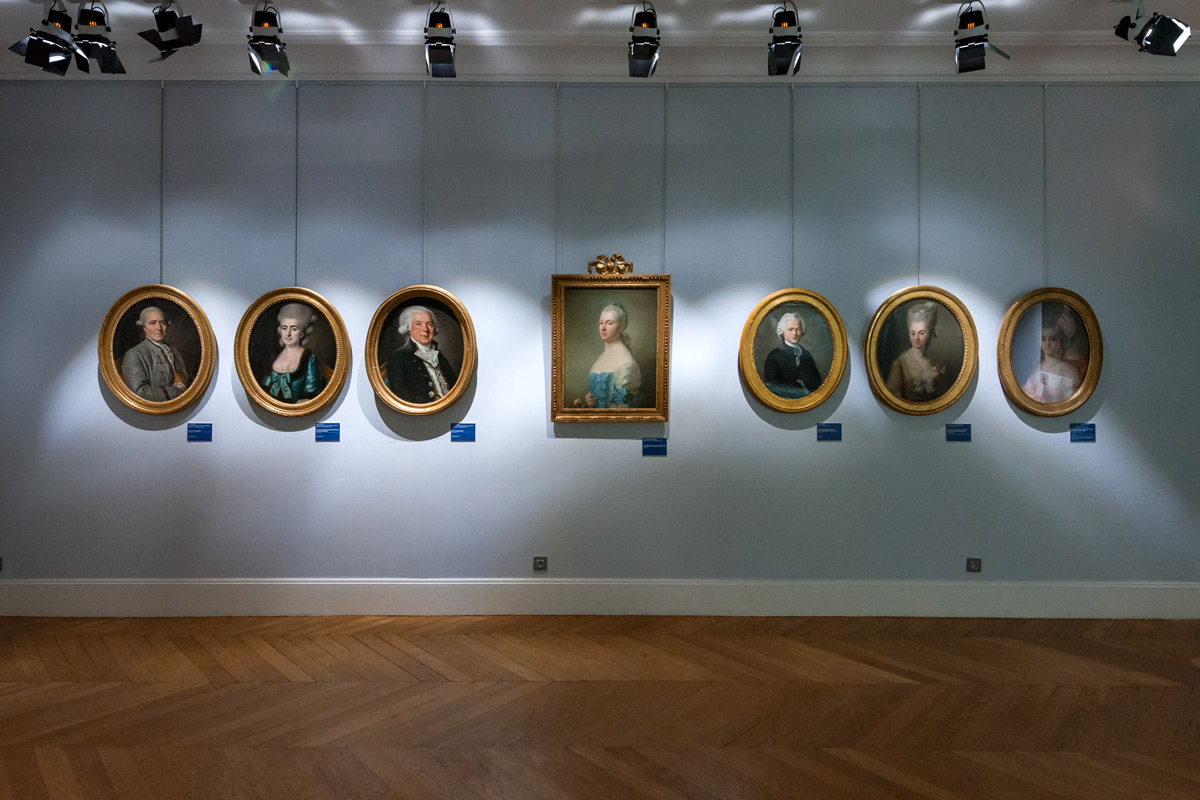
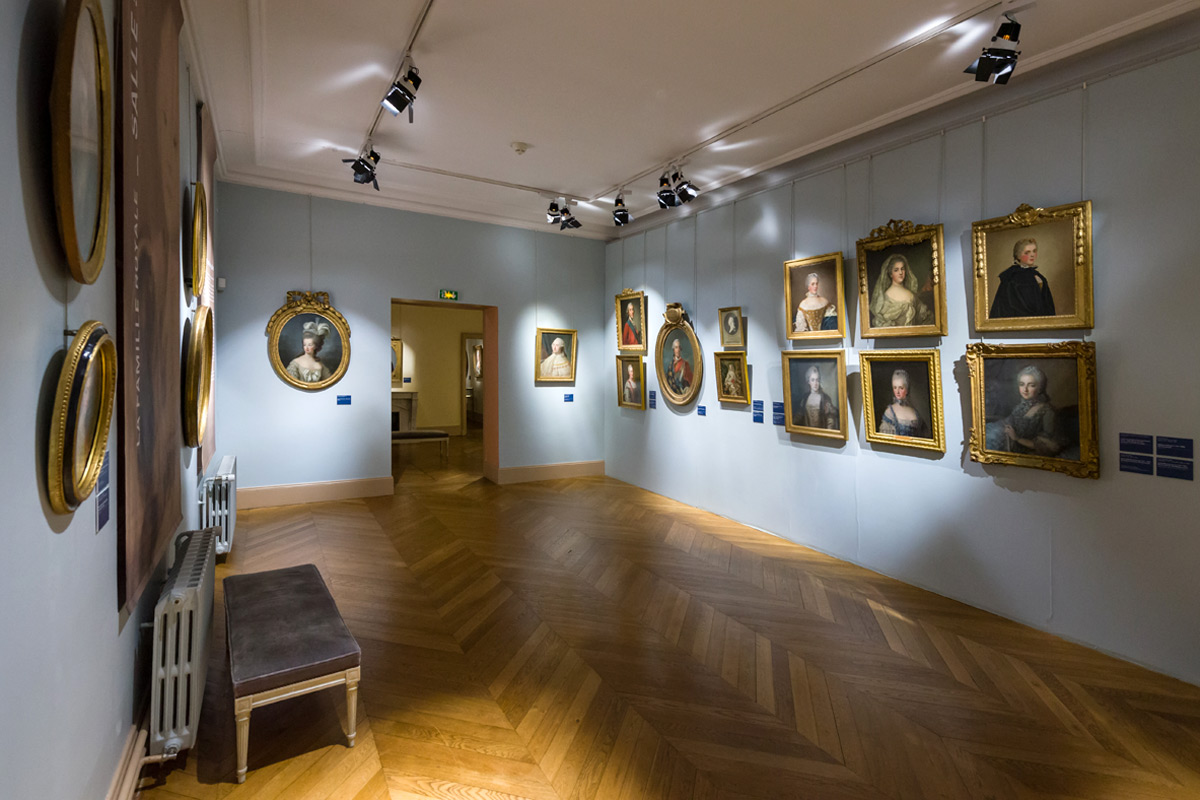
With nearly fifty painted and drawn portraits and a collection largely devoted to the 18th-century art of living, the Musée Lambinet was the ideal place to host “Cent portraits pour un siècle. De la cour à la ville sous les règnes de Louis XV et Louis XVI”. The exhibition brings together a selection of works from the exceptional private collection assembled by the Conservatoire du portrait du XVIIIe siècle (CPDHS), which for more than thirty years has sought to gather the likenesses of the contemporaries of Louis XV and Louis XVI. The names of the greatest artists, such as Louis-Michel Van Loo, Joseph-Siffrède Duplessis and Élisabeth Vigée Le Brun, sit alongside those of far less famous masters.

The 18th century was undoubtedly the century of the portrait. Everyone wanted their own likeness, to show their social standing, their success, or their feelings for the person who would receive the portrait. This is why the genre was practised by so many artists.

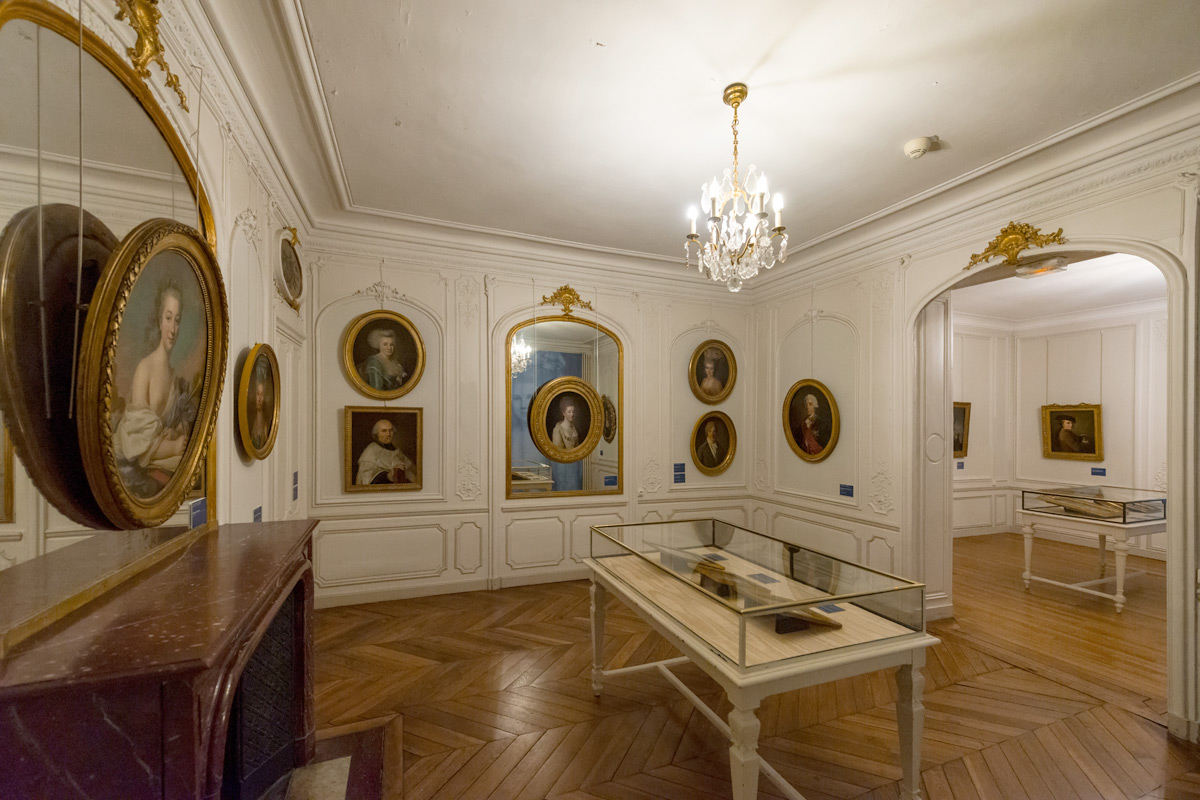
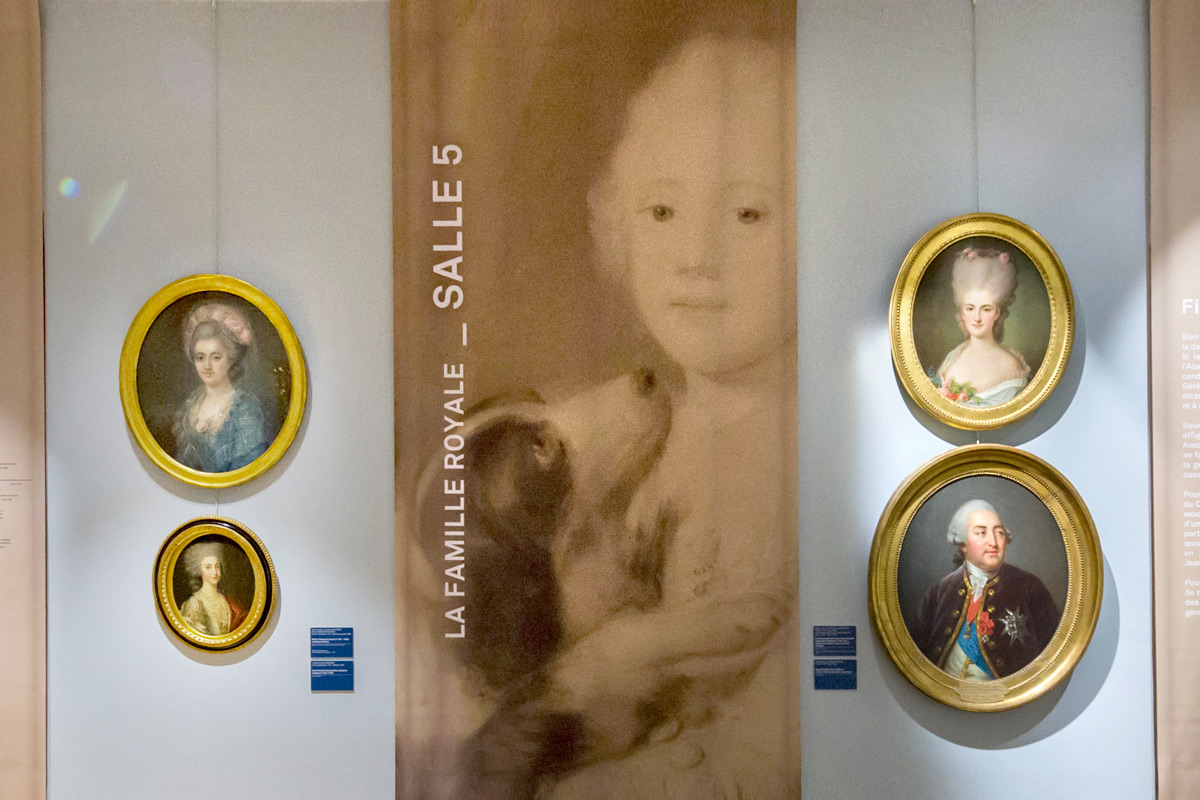
Parti pris scénographique : le parcours de l’exposition se déroule sur huit salles et se découpe en quatre sections : la ville, et les provinces de France au rez-de-chaussée, la famille royale et la cour à l’étage.

The signage consists of large printed elements placed in front of each of the room windows, evoking curtains and giving the spaces the character of salons. Each section is identified by a distinct colour – blue, green, gold or red – used for these printed “curtains”.

Exhibition: A Hundred Portraits for a Century: From Court to City under Louis XV and Louis XVI – image 1
Exhibition: A Hundred Portraits for a Century: From Court to City under Louis XV and Louis XVI – image 2
Exhibition: A Hundred Portraits for a Century: From Court to City under Louis XV and Louis XVI – image 3
Exhibition: A Hundred Portraits for a Century: From Court to City under Louis XV and Louis XVI – image 4
Exhibition: A Hundred Portraits for a Century: From Court to City under Louis XV and Louis XVI – image 5
Exhibition: A Hundred Portraits for a Century: From Court to City under Louis XV and Louis XVI – image 6

Exhibition: Antonio de La Gandara, Gentleman Painter of the Belle Époque

Musée Lambinet, City of Versailles

Antonio de La Gandara, Gentilhomme-Peintre de la Belle Époque2018Antonio de La Gandara, Gentleman Painter of the Belle Époque

Scenography and graphic design
Exhibition from 3 November 2018 to 24 February 2019
Curators
Xavier Mathieu, biographer and president of the Association des Amis d’Antonio de La Gandara
Total area
300 m²
200 works
paintings, works on paper, art objects, archive documents, books, multimedia
Works budget
€5,000
Attendance:

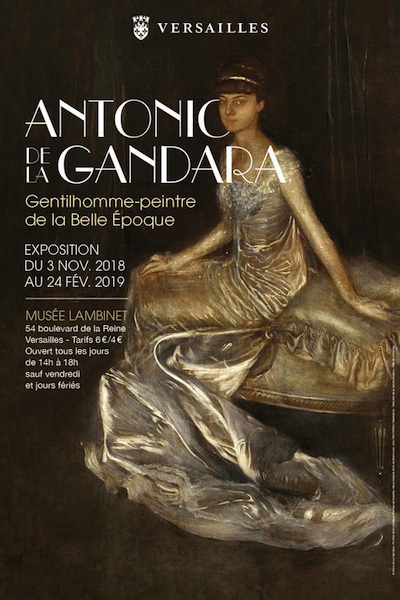
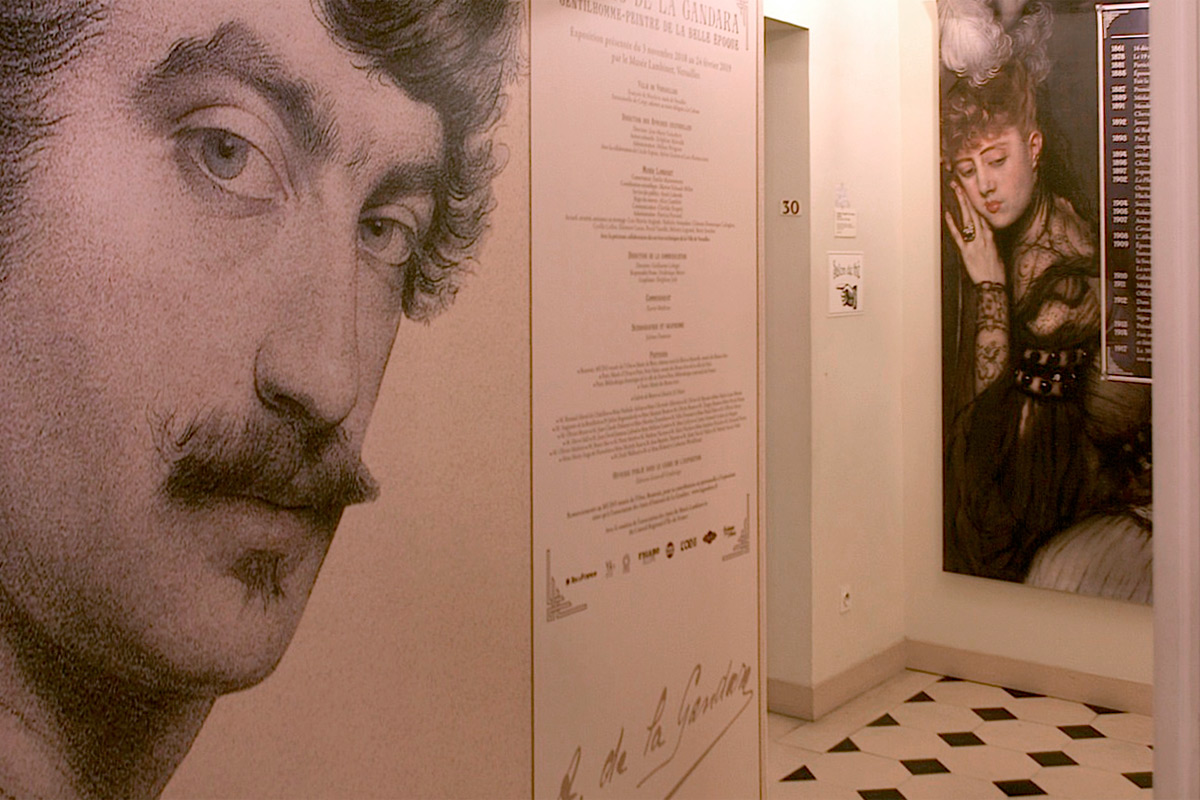
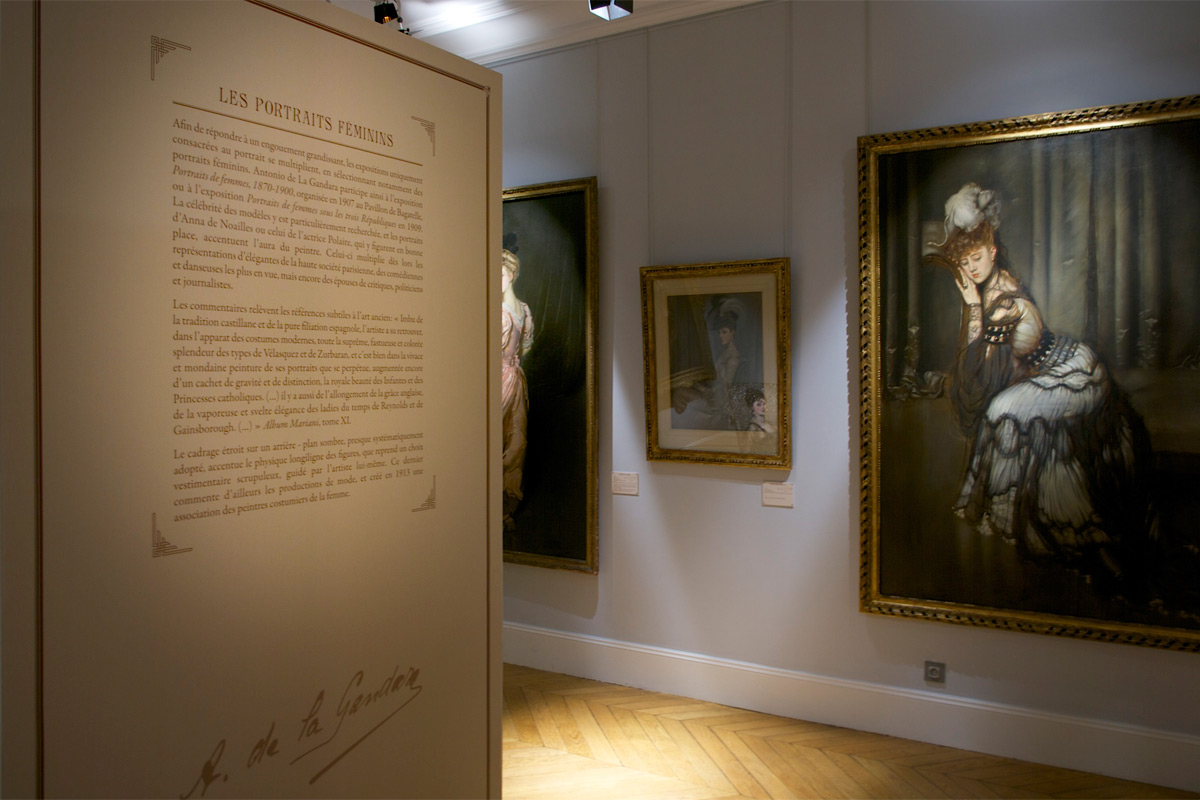
With the first retrospective devoted to the painter Antonio de La Gandara since his death in 1917, the Musée Lambinet pays tribute to a talented, unjustly neglected artist whose reputation is resurfacing as the art of the “Belle Époque” returns to favour.

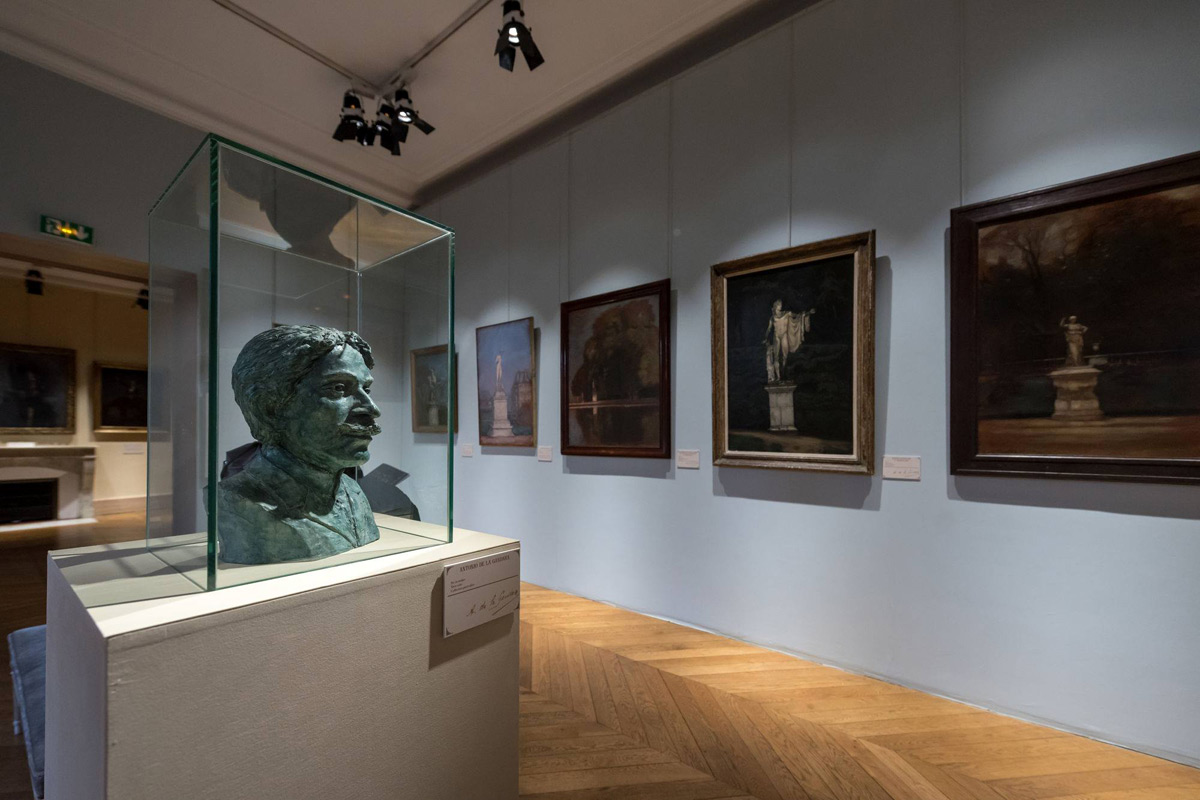
A great friend of Versailles, he first visited at the invitation of Robert de Montesquiou, who then lived at 53 avenue de Paris (today no. 93). The painter returned again and again, notably to paint the gardens of the palace park, even renting a summer residence in Versailles from 1911. A man of his time, La Gandara frequented society salons, the Opéra and the theatre world in search of inspiration and models. He was a familiar of the Comtesse de Noailles, Anatole France, Henri de Régnier, Gabriele D’Annunzio and Maurice Barrès, as well as Debussy, Saint-Saëns and Satie. With 120 works and around a hundred objects and documents, the Musée Lambinet exhibition presents the full richness of La Gandara’s career and the many facets of his talent.

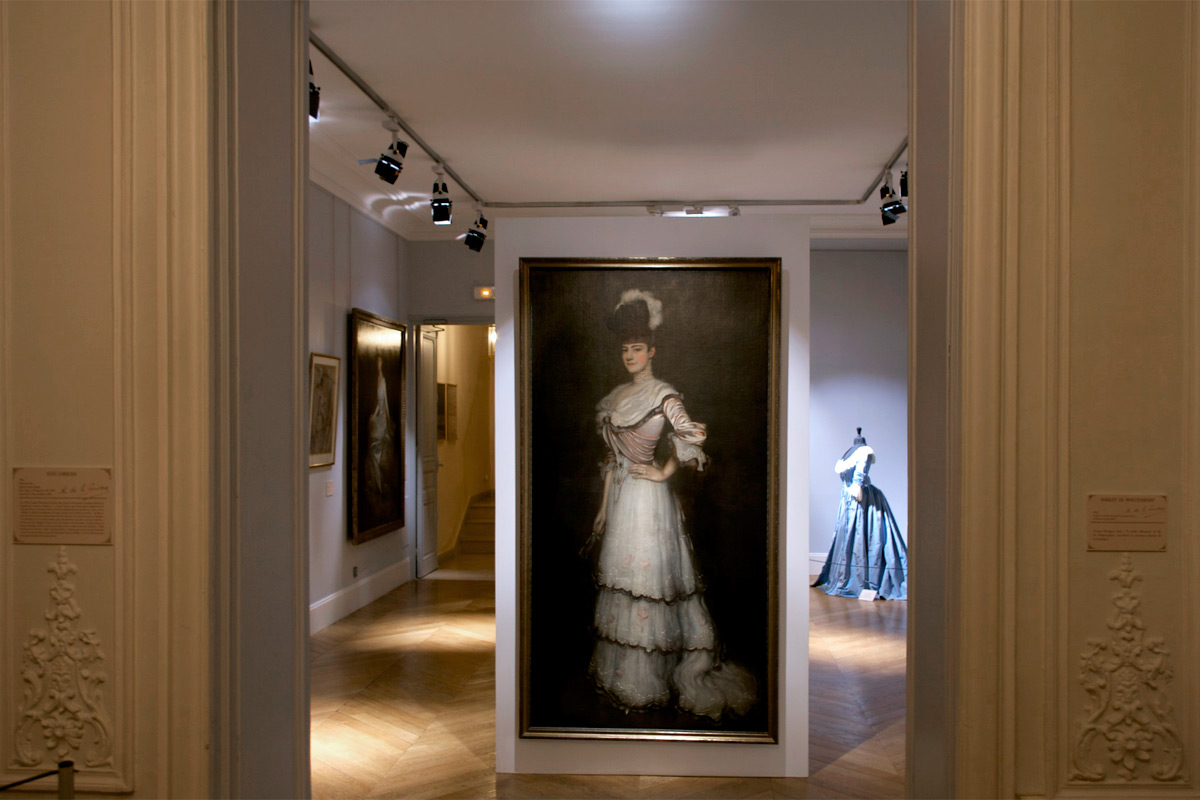
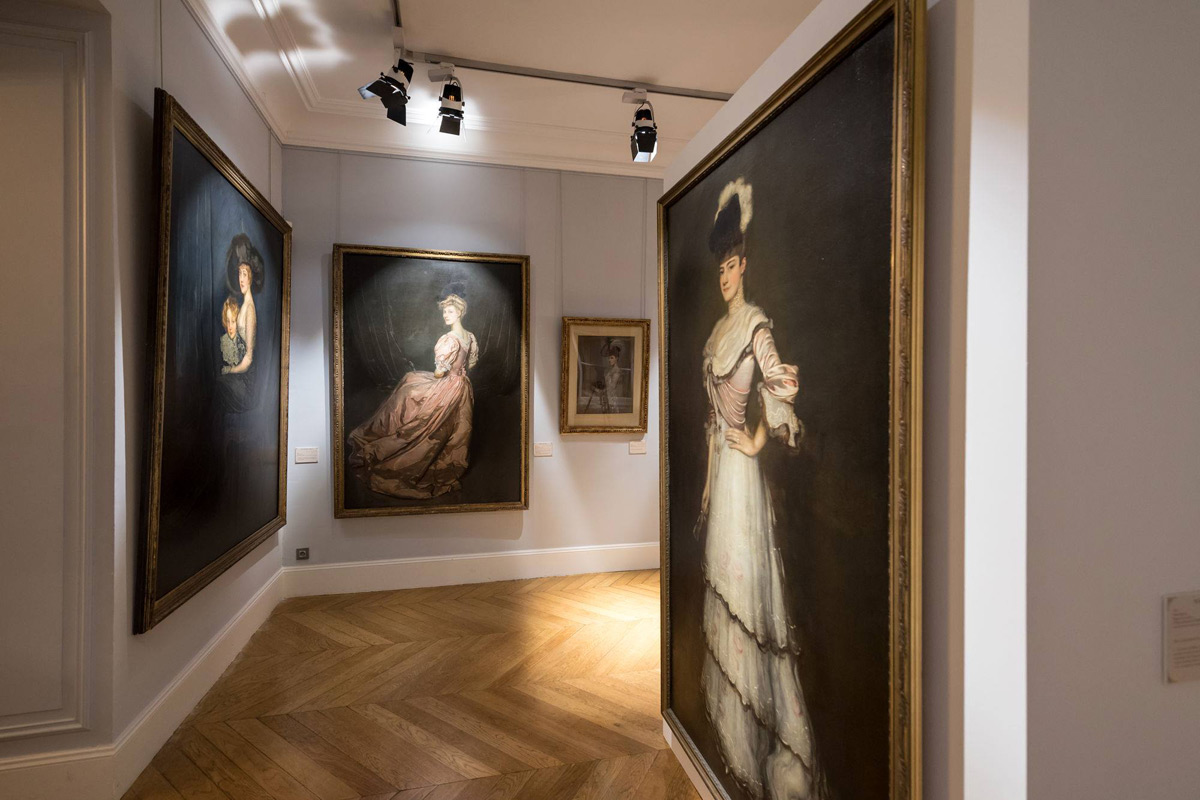
Design approach: the exhibition route runs through eight rooms and favours a thematic rather than chronological presentation, to give a better understanding of the painter’s work.

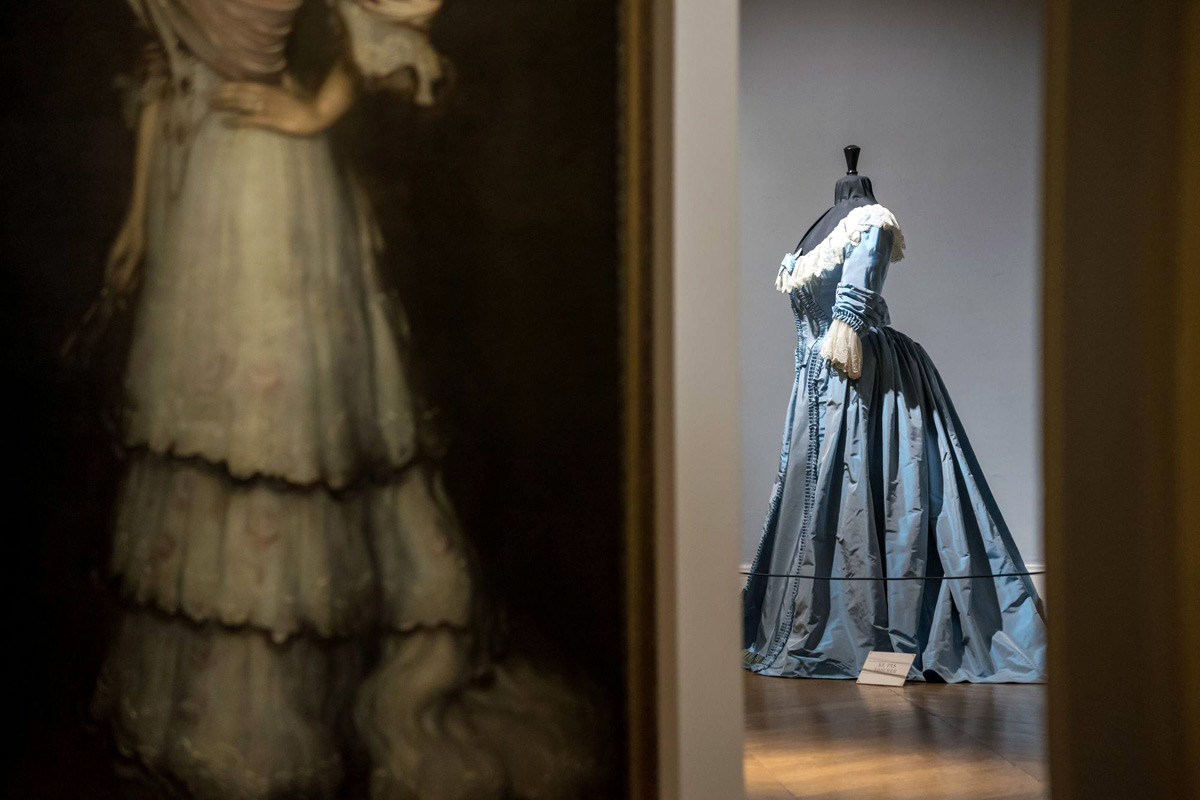
The route thus has a rhythm: on the ground floor, visitors discover the early works, then the pastels, then the male portraits, then the large female portraits presented in one of the exhibition’s largest rooms. Upstairs come the gardens and parks, then the symbolist and mystical works, and finally, in the last two rooms, the prints and drawings.

The exhibition signage (room texts and labels) is designed in a 1900s style.

Exhibition: Antonio de La Gandara, Gentleman Painter of the Belle Époque – image 1
Exhibition: Antonio de La Gandara, Gentleman Painter of the Belle Époque – image 2
Exhibition: Antonio de La Gandara, Gentleman Painter of the Belle Époque – image 3
Exhibition: Antonio de La Gandara, Gentleman Painter of the Belle Époque – image 4
Exhibition: Antonio de La Gandara, Gentleman Painter of the Belle Époque – image 5
Exhibition: Antonio de La Gandara, Gentleman Painter of the Belle Époque – image 6

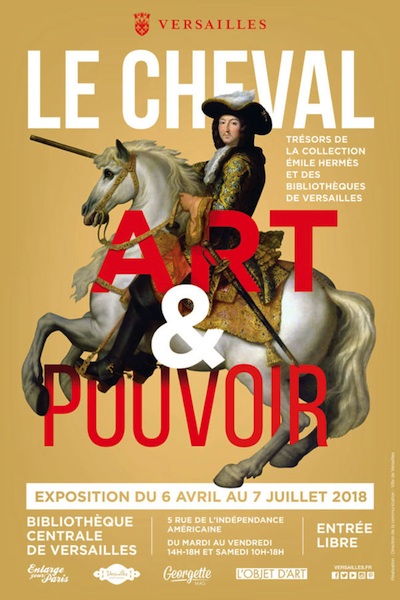
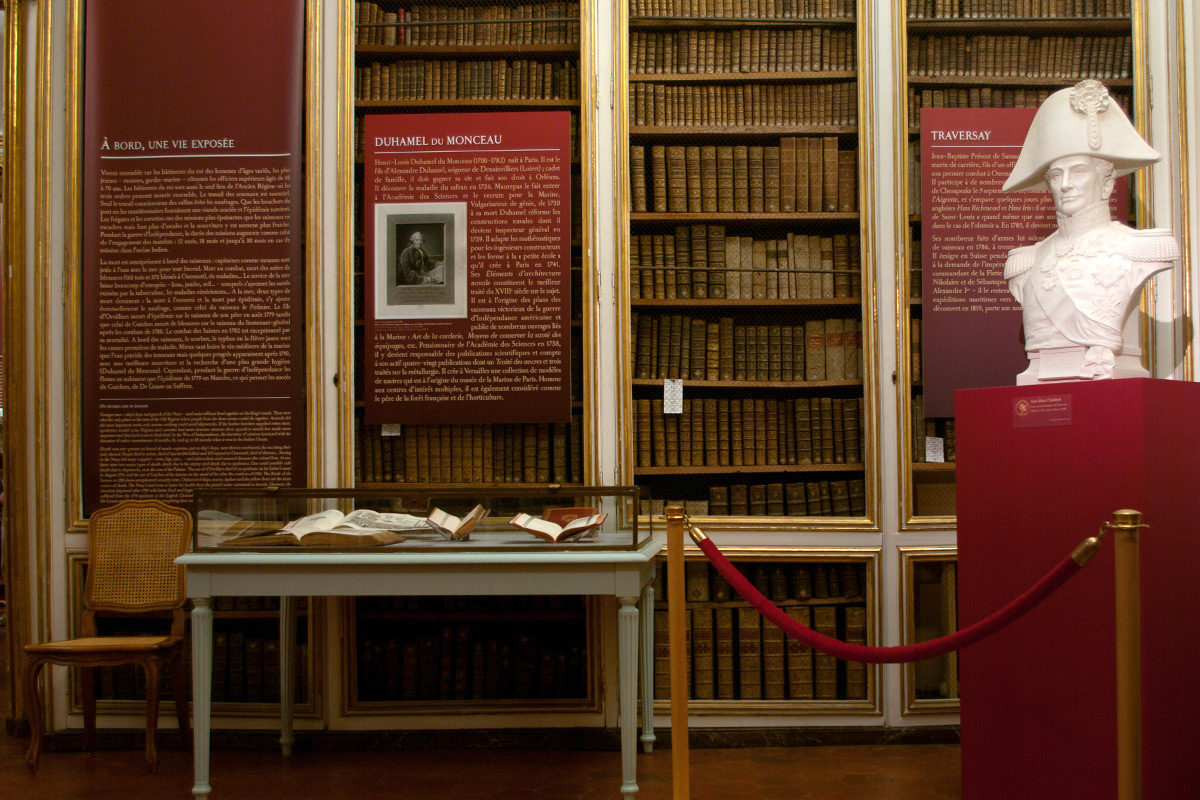
Exhibition: The Horse, Art and Power: Treasures from the Émile Hermès Collection and the Libraries of Versailles

Former Hôtel des Affaires étrangères et de la Marine, Municipal Library, City of Versailles

Le Cheval, Art et Pouvoir, Trésors de la Collection Émile Hermès et des Bibliothèques de Versailles2018The Horse, Art and Power: Treasures from the Émile Hermès Collection and the Libraries of Versailles

Scenography and graphic design
Exhibition from 6 April to 7 July 2018
Curators
Vincent Haegele and the heritage collections department of the house of Hermès
Total area
300 m²
100 works
art objects, furniture, sculptures, paintings, works on paper, archive documents, books, audiovisual
Works budget
€15,000
Attendance
8,000 visitors

Versailles has long had a special bond with the horse. The libraries’ collections bear witness to this passion, born with the installation of the absolute monarchy at the palace and which continues to this day.

Le cheval est l’un des symboles absolus du pouvoir. Il est un élément indispensable aux grandes cérémonies extérieures, à la représentation que se fait le pouvoir de lui-même.

It was the house of Hermès that supplied courts, republics, short-lived sovereigns and the most enduring dynasties alike with all the trappings they needed.

Émile Hermès was a major figure in leathercraft, which he raised to the level of an art, and a great collector of everything connected with the horse. Today his collection still occupies several floors of the headquarters of the house that bears his name.

This major documentary exhibition was designed entirely in collaboration with the heritage collections department of the house of Hermès.

Design approach: the aim is to take over Louis XV’s Foreign Affairs Gallery with a clear, rhythmic route full of discoveries, using large decors featuring the horse, printed on paper and hung on the grilles of the library cabinets.

These large decors also take us into the office of Émile Hermès, whom we see surrounded by his collection. The choice of colours evokes Émile Hermès’s recently restored offices.

Finally, these large decors also carry the exhibition texts.


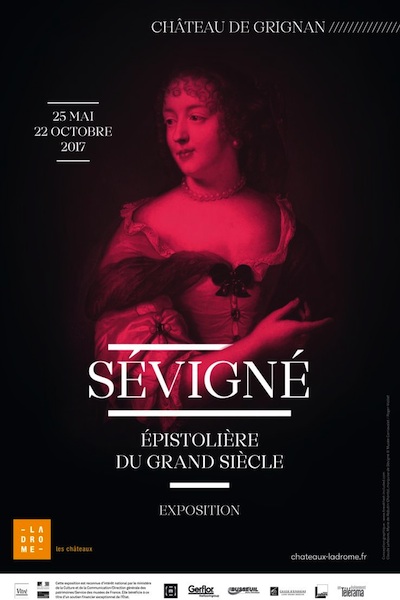
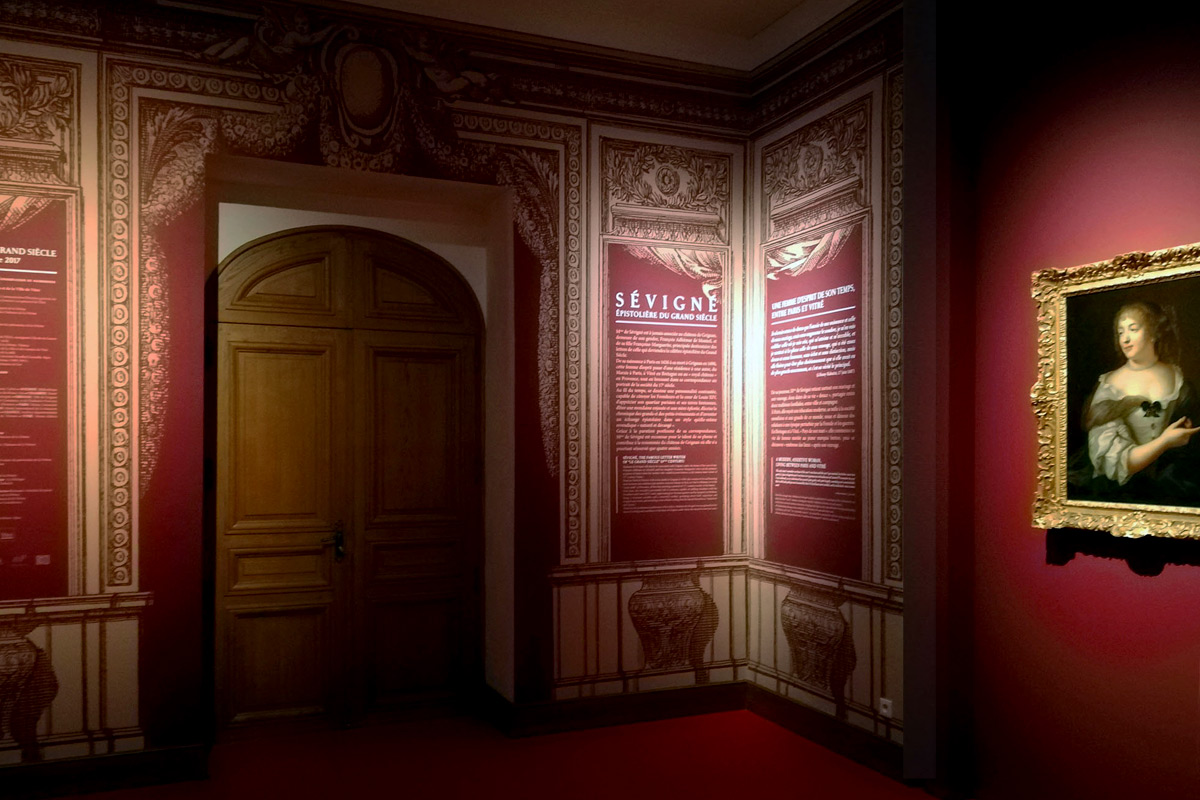
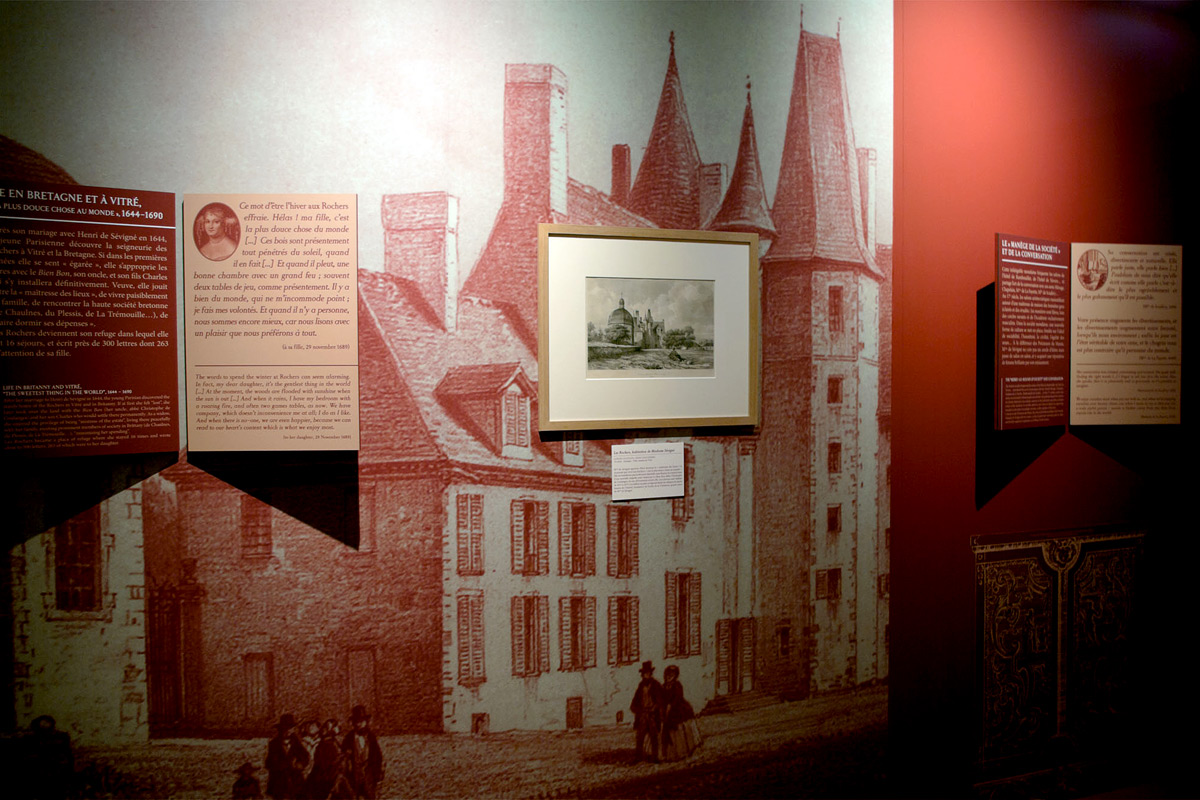
Exhibition: Sévigné, Letter Writer of the Grand Siècle

Château de Grignan, Drôme – Les Châteaux de la Drôme

Sévigné, Épistolière du Grand Siècle2017Sévigné, Letter Writer of the Grand Siècle

Scenography and graphic design
Exhibition from 25 May 2017 to 22 October 2017
Curators
Chrystèle Burgard
Total area
205 m²
115 works
art objects, paintings, works on paper, archive documents, books, audiovisual
Works budget
€50,000
Attendance:

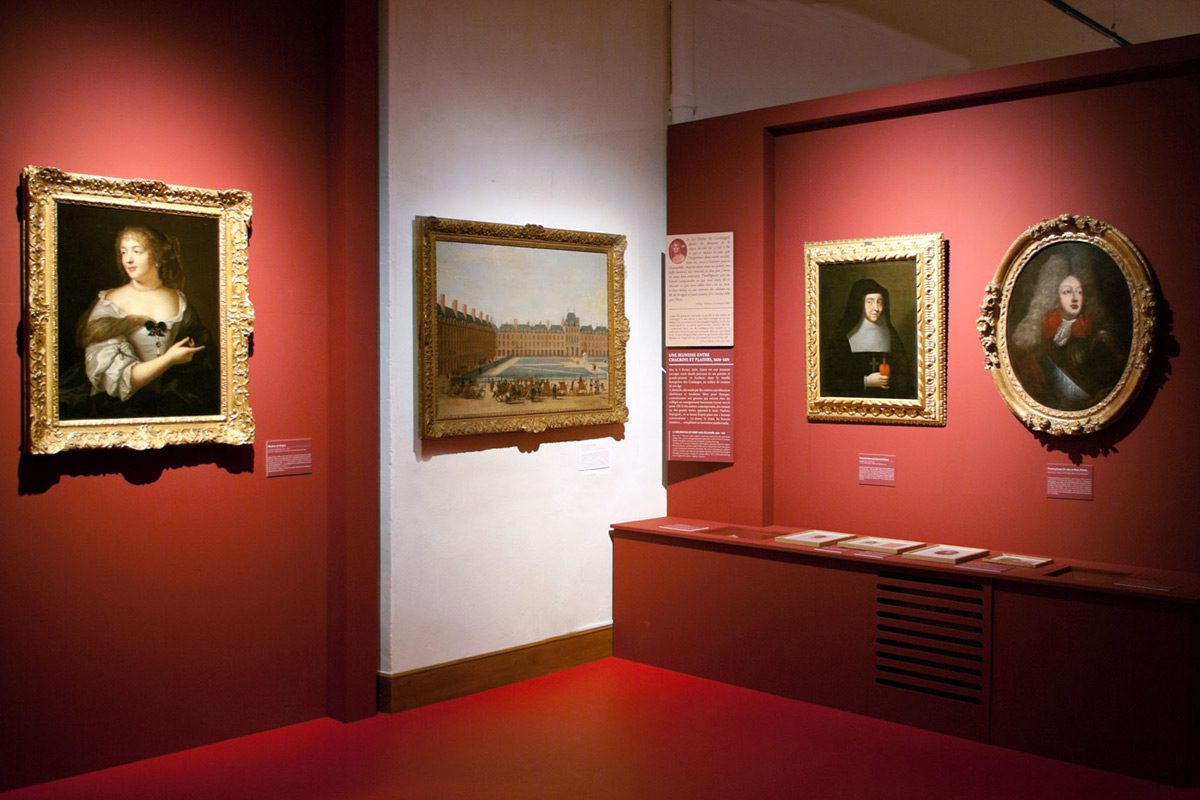
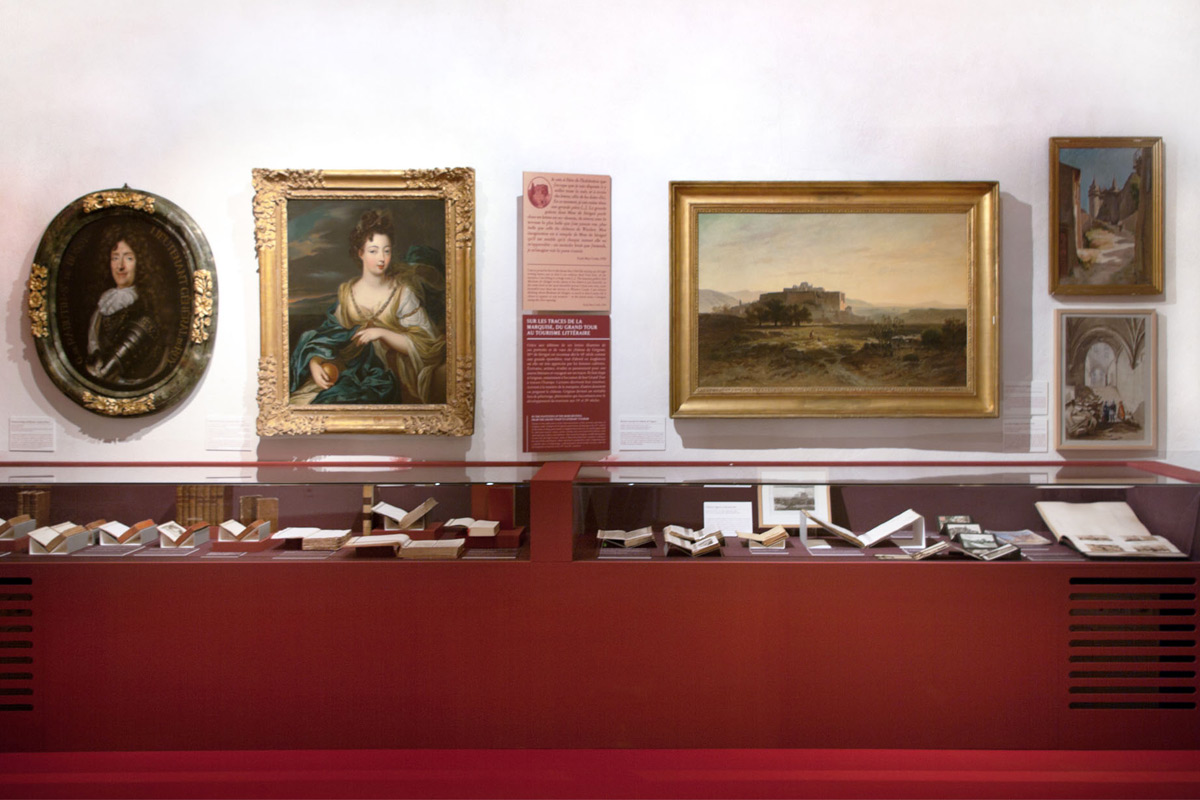
Le château de Grignan est à jamais associé à Madame de Sévigné, femme de lettres devenue célèbre après la parution de sa correspondance. Elle a souvent décrit la « magnificence » du château où vivait sa fille Françoise-Marguerite, mariée au comte de Grignan, gouverneur de Provence. Elle n’y séjourne que quatre années mais « l’effet Sévigné » marque définitivement les lieux et la mémoire collective.

Few exhibitions have been devoted to this literary figure. None had yet taken place at Grignan, nor explored in depth the letter writer’s ties with the château.

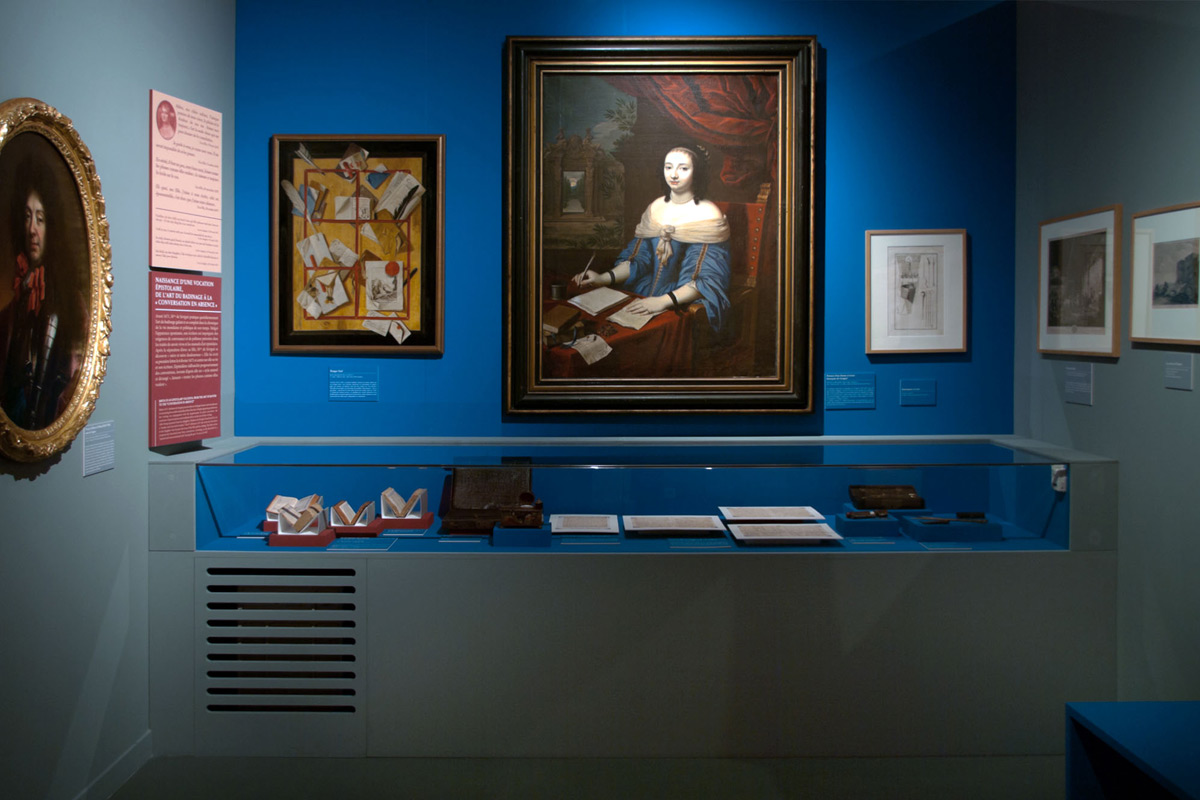
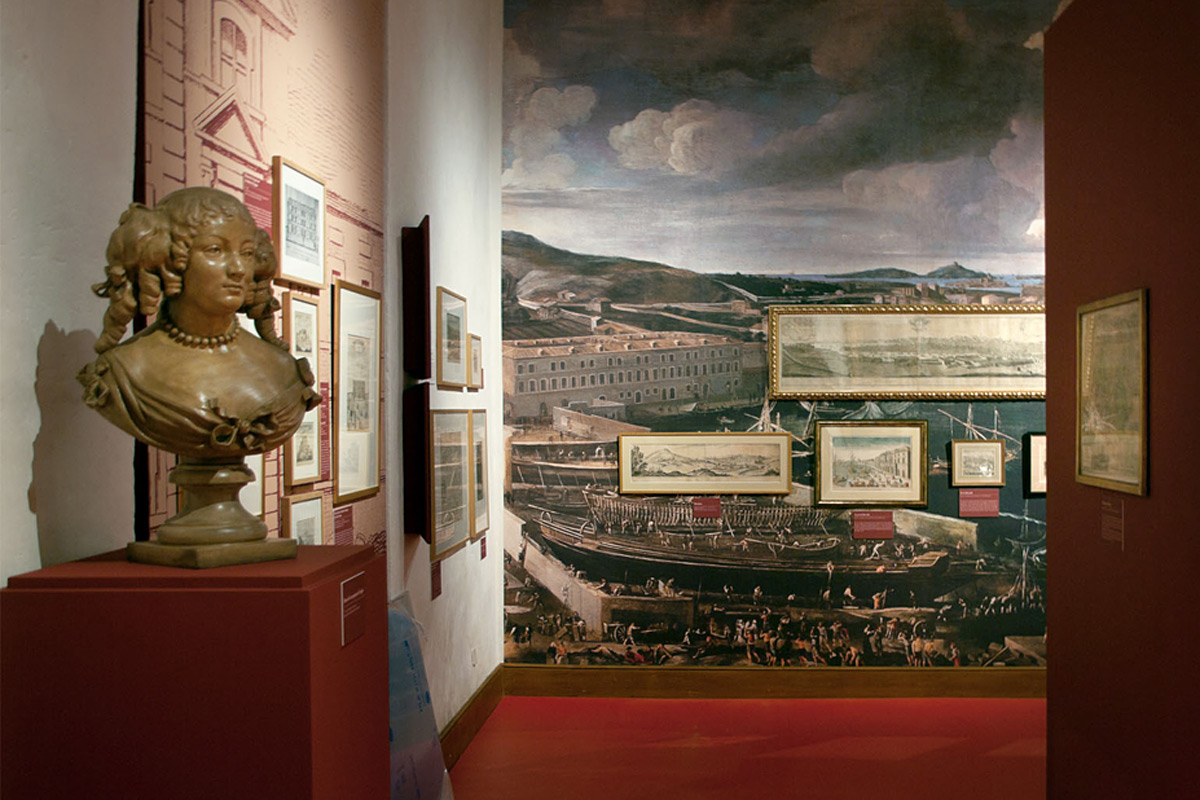
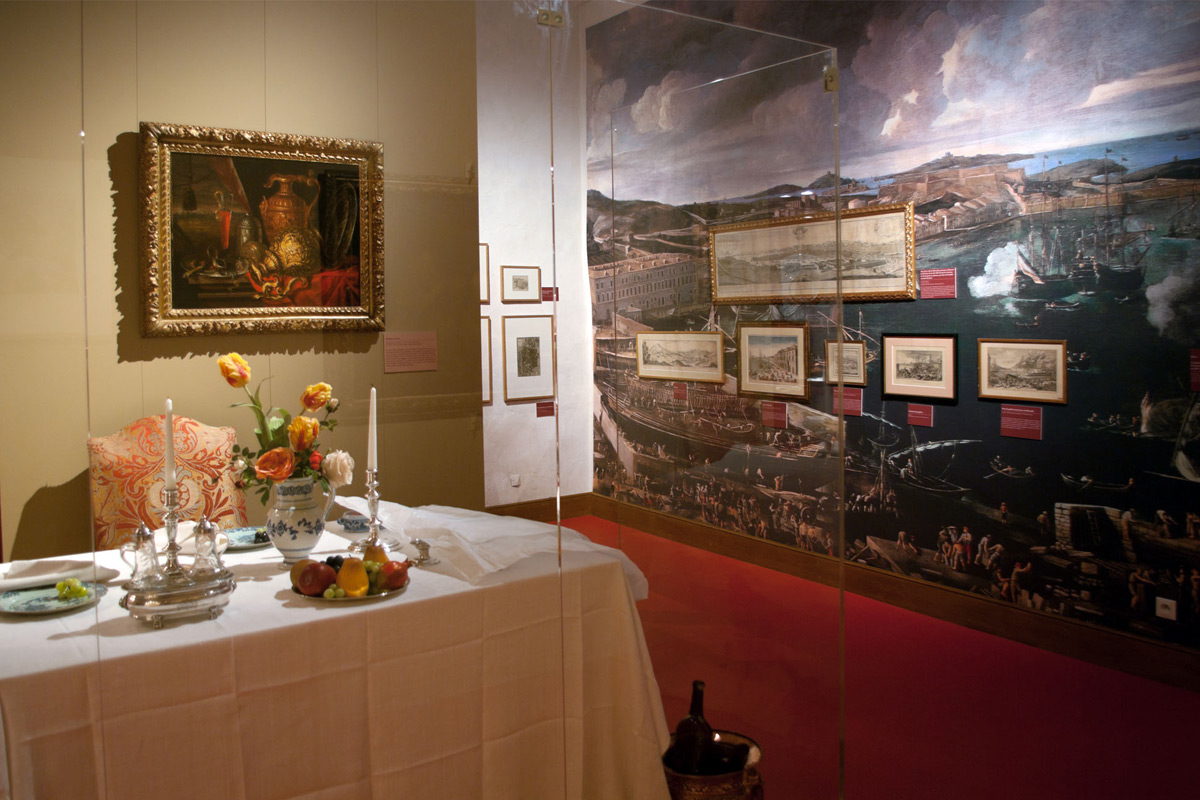
The exhibition sets out to trace Madame de Sévigné’s life between Paris, Vitré in Brittany and Grignan, highlighting the development of her writing and her place in the world of letters. It also looks at the way of life and of living in Provence.

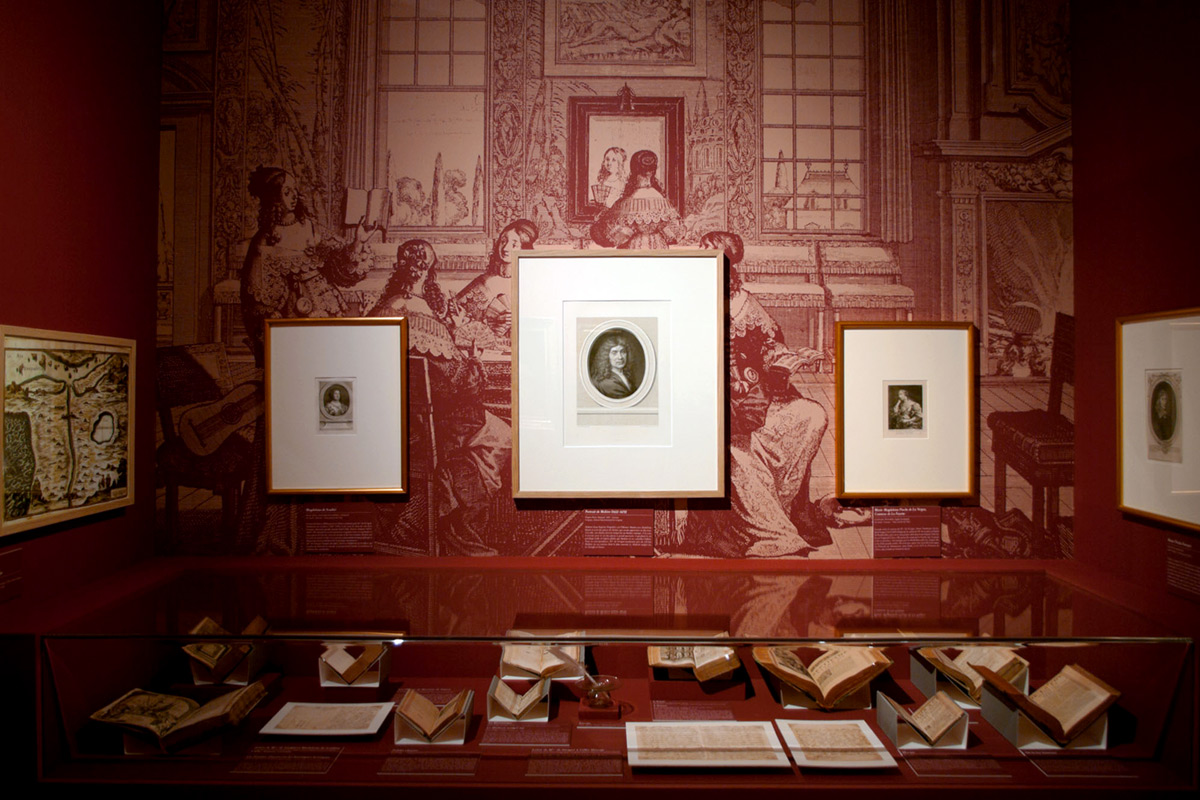
Recognised as being of national interest by the Ministry of Culture and Communication, it presents around a hundred pieces illustrating the Grand Siècle – paintings, art objects, manuscripts, books, engravings – from the collections of the Château de Grignan, national museums, cultural institutions and private collections.

Design approach:

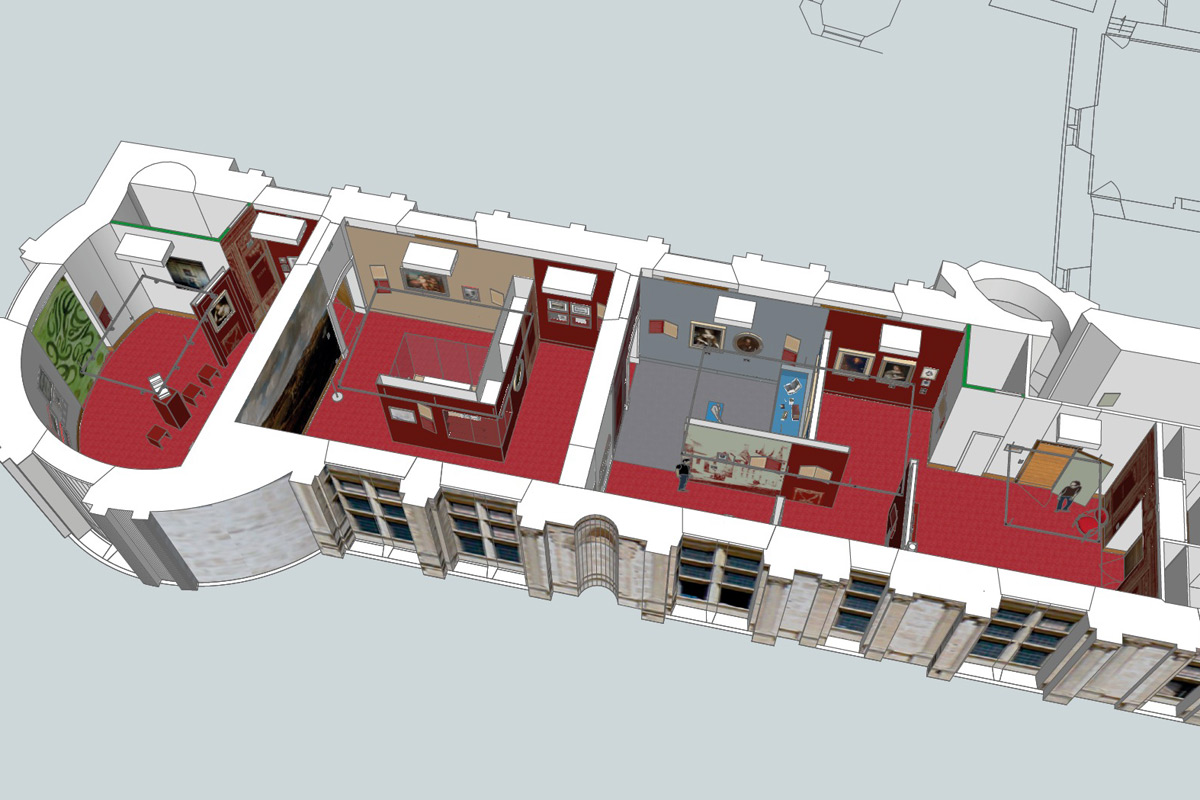
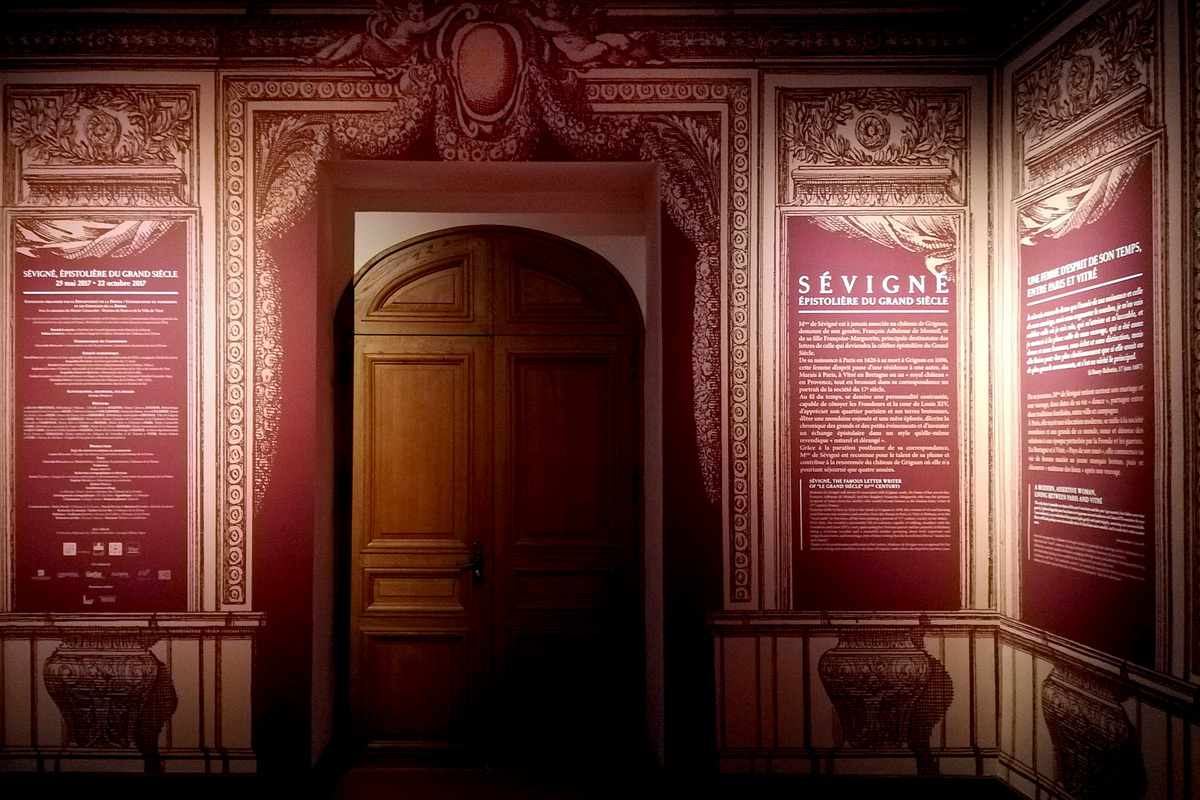
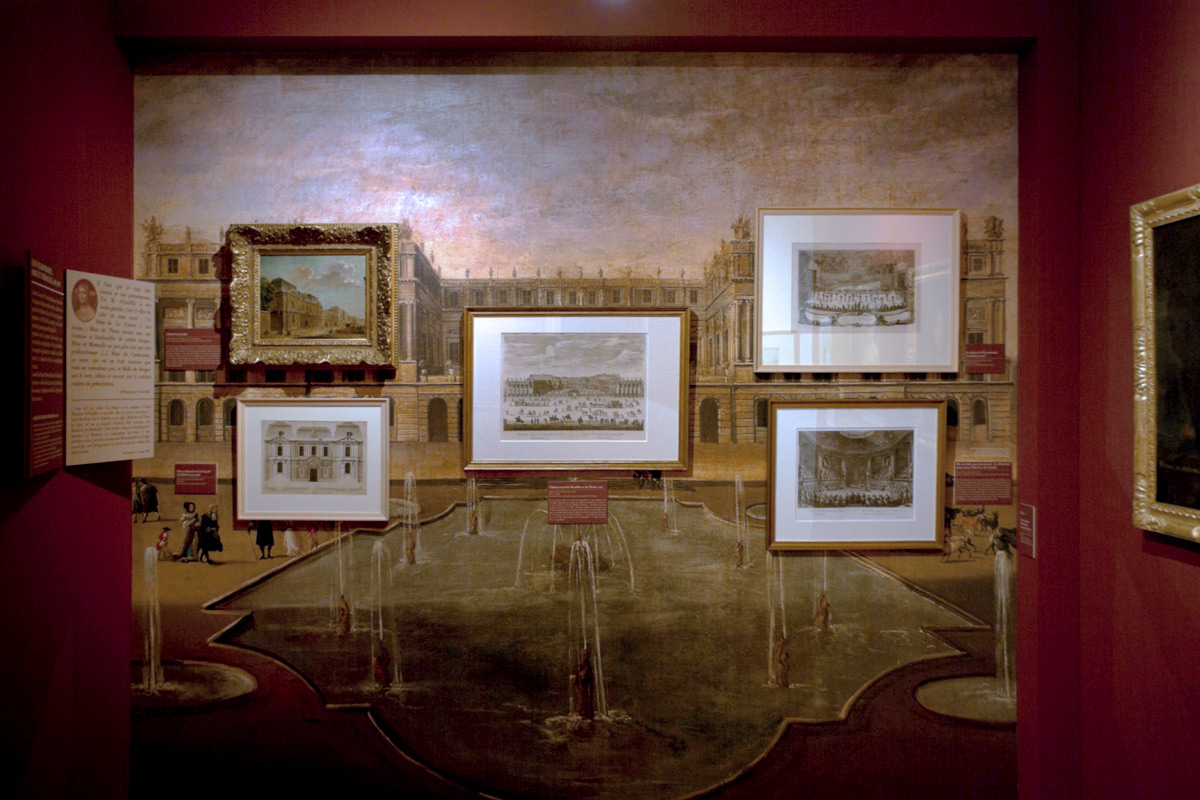
The route, made up of three spaces, is organised around four main themes. It evokes the 17th-century interiors of great houses, where layering decorative elements was fashionable: tapestries, mirrors, paintings… in the manner of the interiors in Abraham Bosse’s engravings of the Foolish Virgins.

The scenography gives a special place to the Marquise’s correspondence, which, like a “guide”, always vividly describes places, her travels, her encounters and her feelings. Quotations, words and letters punctuate the space.

Exhibition: Sévigné, Letter Writer of the Grand Siècle – image 1
Exhibition: Sévigné, Letter Writer of the Grand Siècle – image 2
Exhibition: Sévigné, Letter Writer of the Grand Siècle – image 3
Exhibition: Sévigné, Letter Writer of the Grand Siècle – image 4
Exhibition: Sévigné, Letter Writer of the Grand Siècle – image 5
Exhibition: Sévigné, Letter Writer of the Grand Siècle – image 6
Exhibition: Sévigné, Letter Writer of the Grand Siècle – image 7
Exhibition: Sévigné, Letter Writer of the Grand Siècle – image 8
Exhibition: Sévigné, Letter Writer of the Grand Siècle – image 9
Exhibition: Sévigné, Letter Writer of the Grand Siècle – image 10
Exhibition: Sévigné, Letter Writer of the Grand Siècle – image 11

Exhibition: The Montansier, a Theatre for Versailles

City of Versailles, Versailles Municipal Archives, King’s Great Stables, Versailles

Le Montansier, un Théâtre pour Versailles2017The Montansier, a Theatre for Versailles

Scenography and graphic design
Exhibition from 16 September 2017 to 2 December 2017
Curators
Pierre-Hippolyte Pénet
Total area
200 m²
80 works
art objects, costumes, works on paper, archive documents, books, audiovisual
Works budget
€5,000
Attendance:

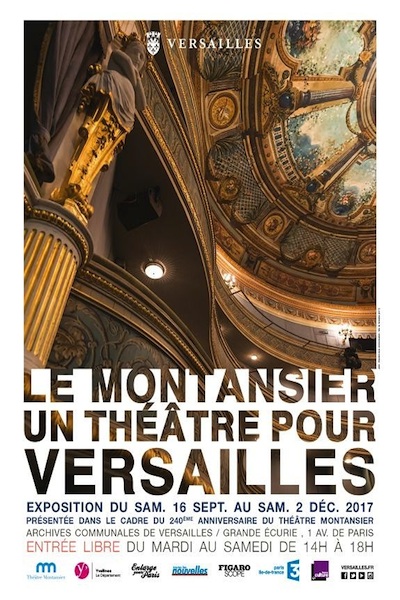
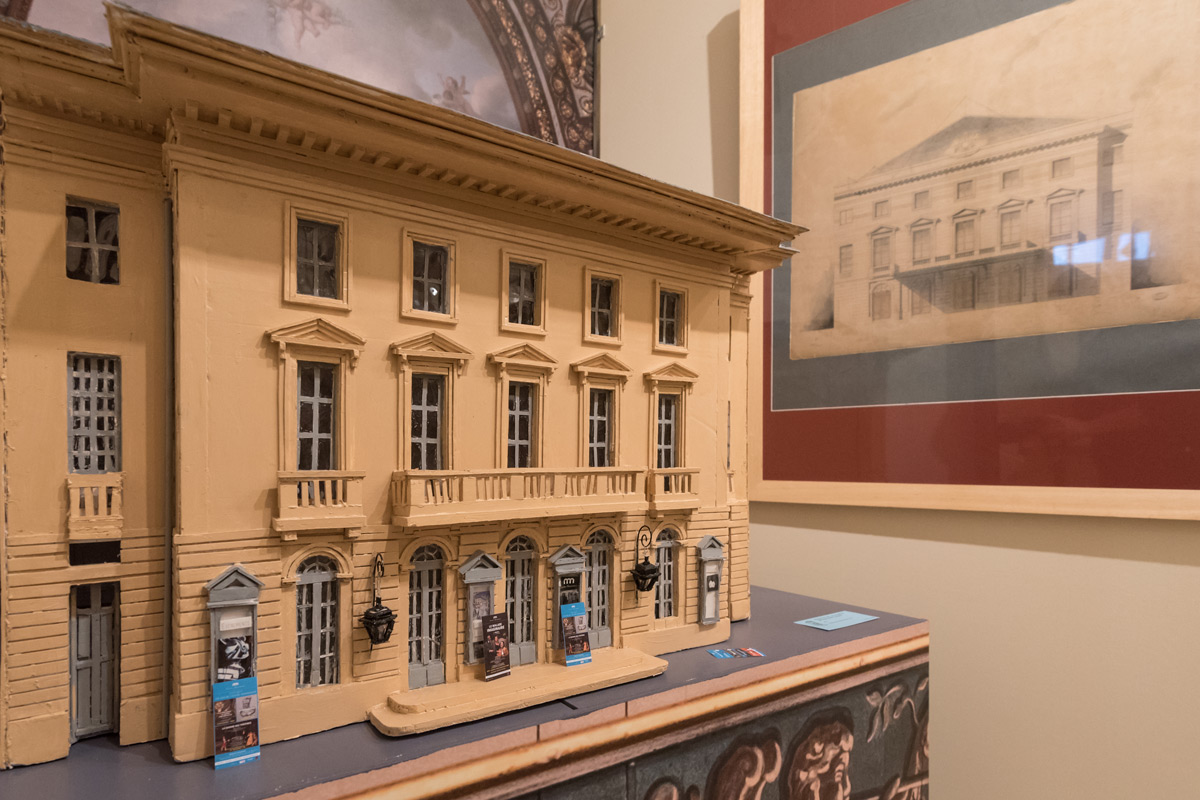
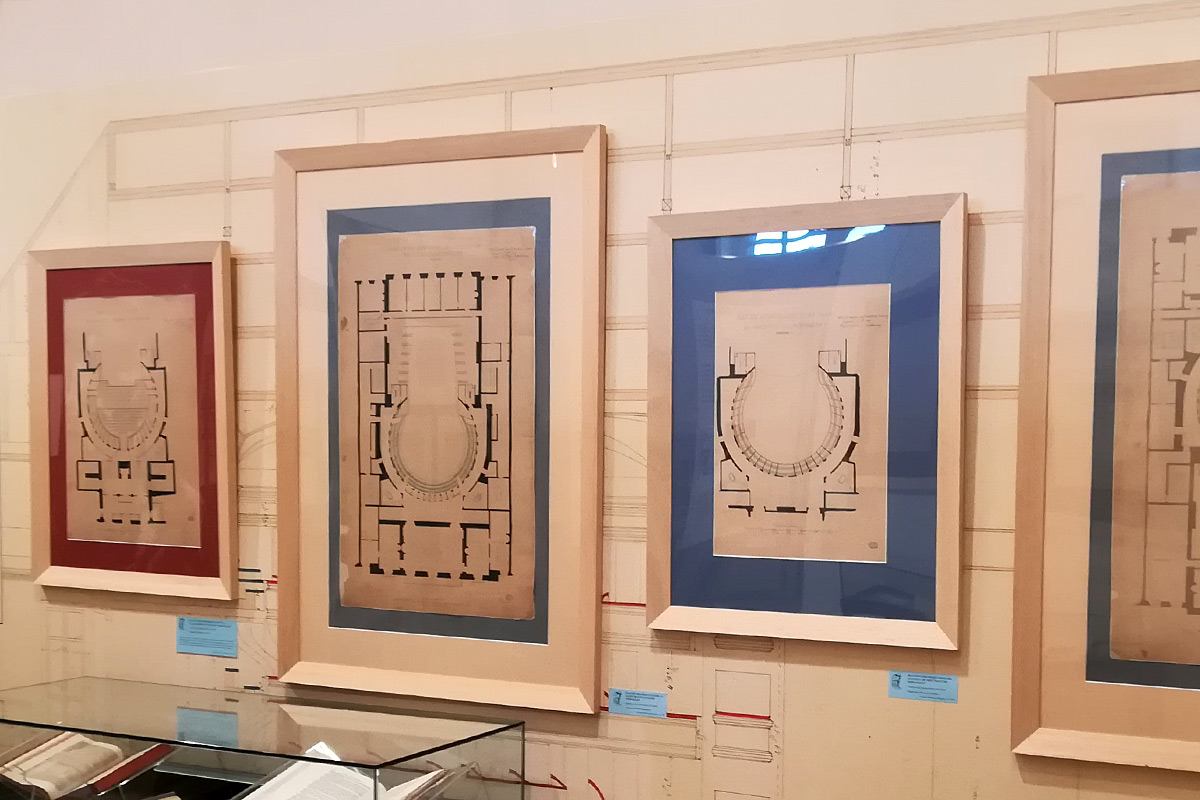
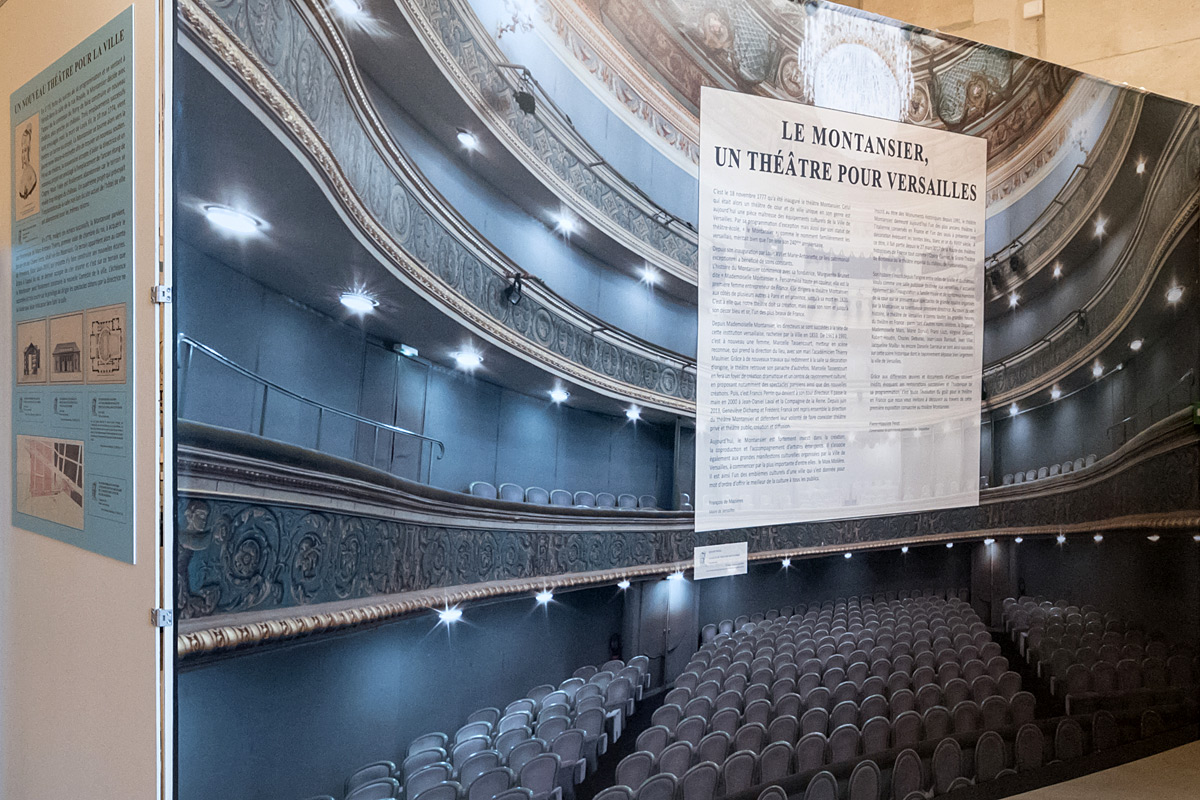
The City of Versailles is holding an exhibition at the municipal archives devoted to its theatre, the Montansier, which celebrates its 240th anniversary in 2017.

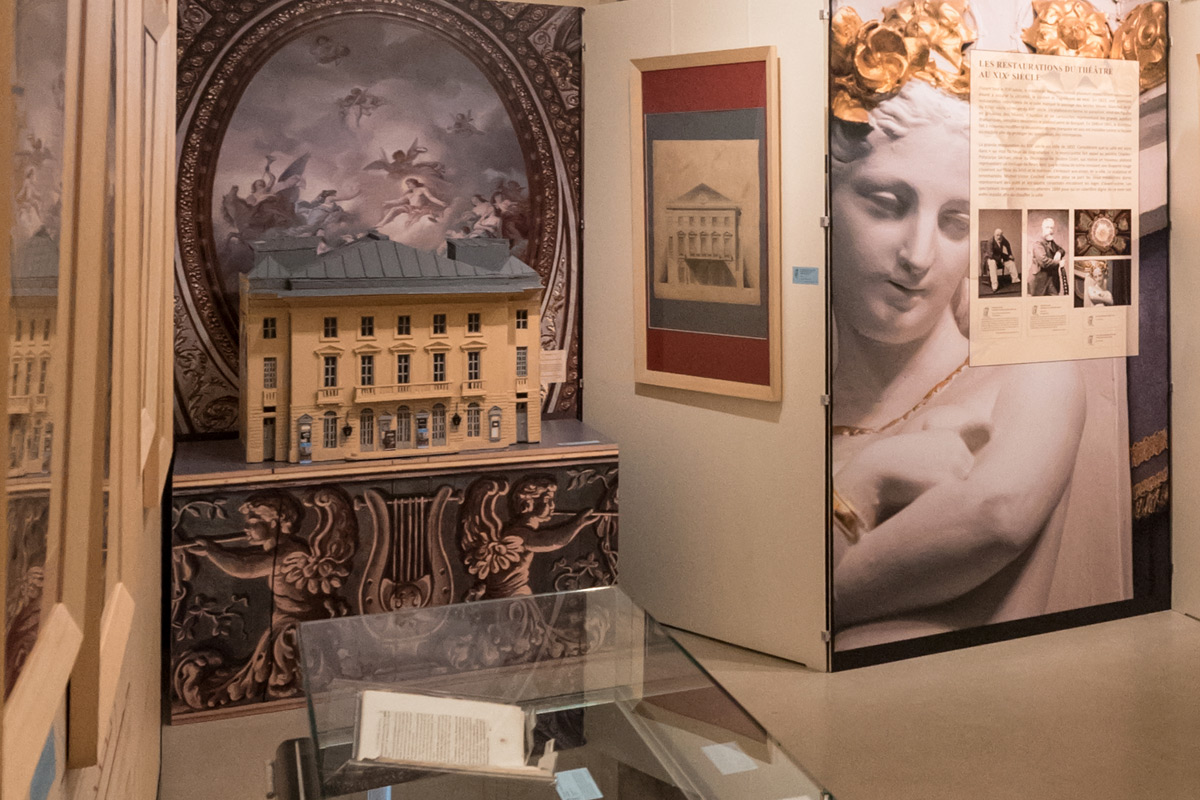
The first part is devoted to the building, its construction, architecture and renovations; the second turns the spotlight on two great ladies who presided over its destiny: its founder, Mademoiselle Montansier, and Marcelle Tassencourt, its director for thirty years until 1991.

Design approach:

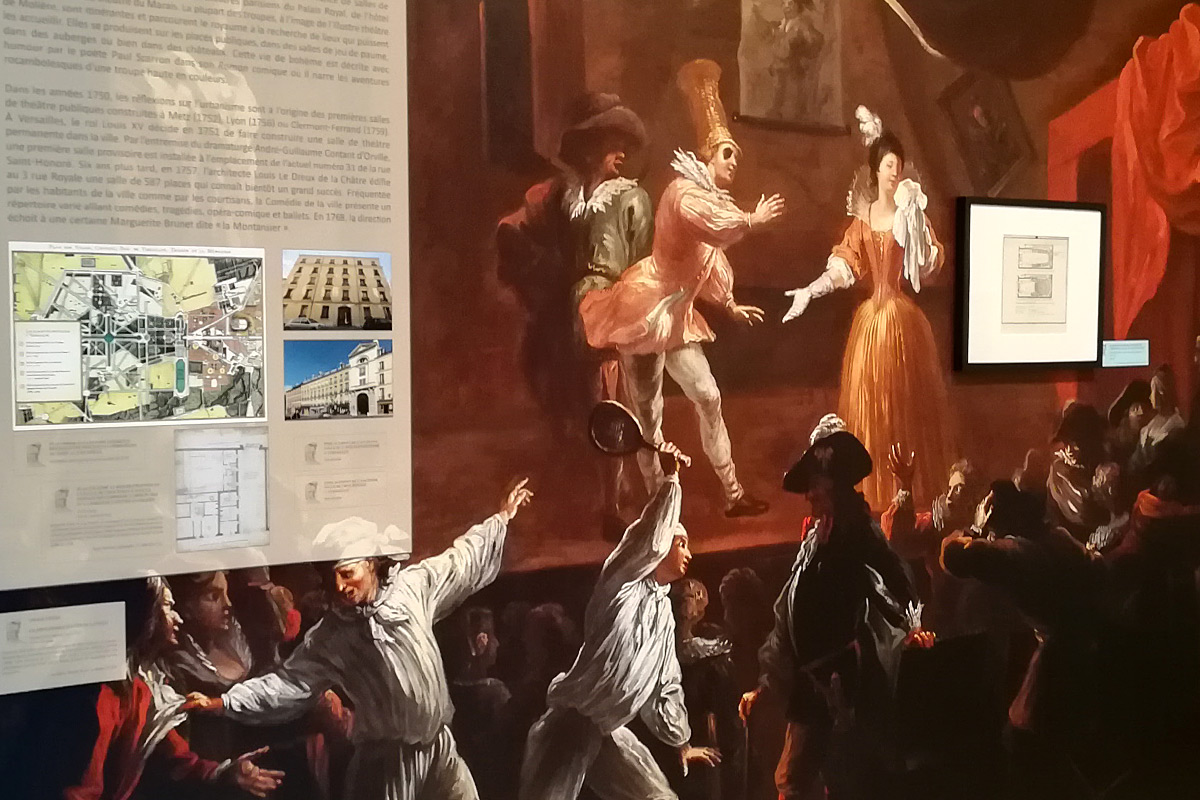
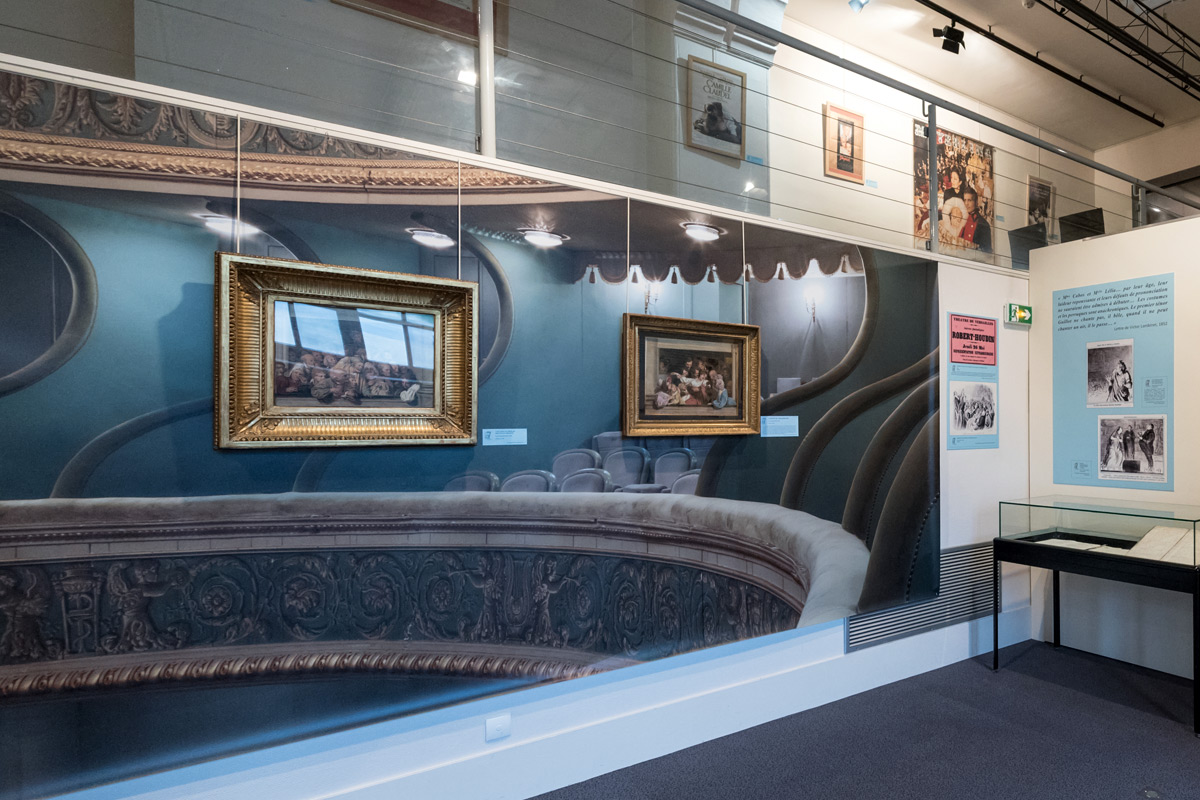
A very legible route is favoured, defined by display walls that guide visitors and give rhythm to the narrative while keeping surprises in store. Large printed visuals (paintings, plans, interior views of the theatre) cover part of these walls for each section, inviting visitors on a tour that immerses them in the theatre and its history.

Exhibition: The Montansier, a Theatre for Versailles – image 1
Exhibition: The Montansier, a Theatre for Versailles – image 2
Exhibition: The Montansier, a Theatre for Versailles – image 3
Exhibition: The Montansier, a Theatre for Versailles – image 4
Exhibition: The Montansier, a Theatre for Versailles – image 5
Exhibition: The Montansier, a Theatre for Versailles – image 6

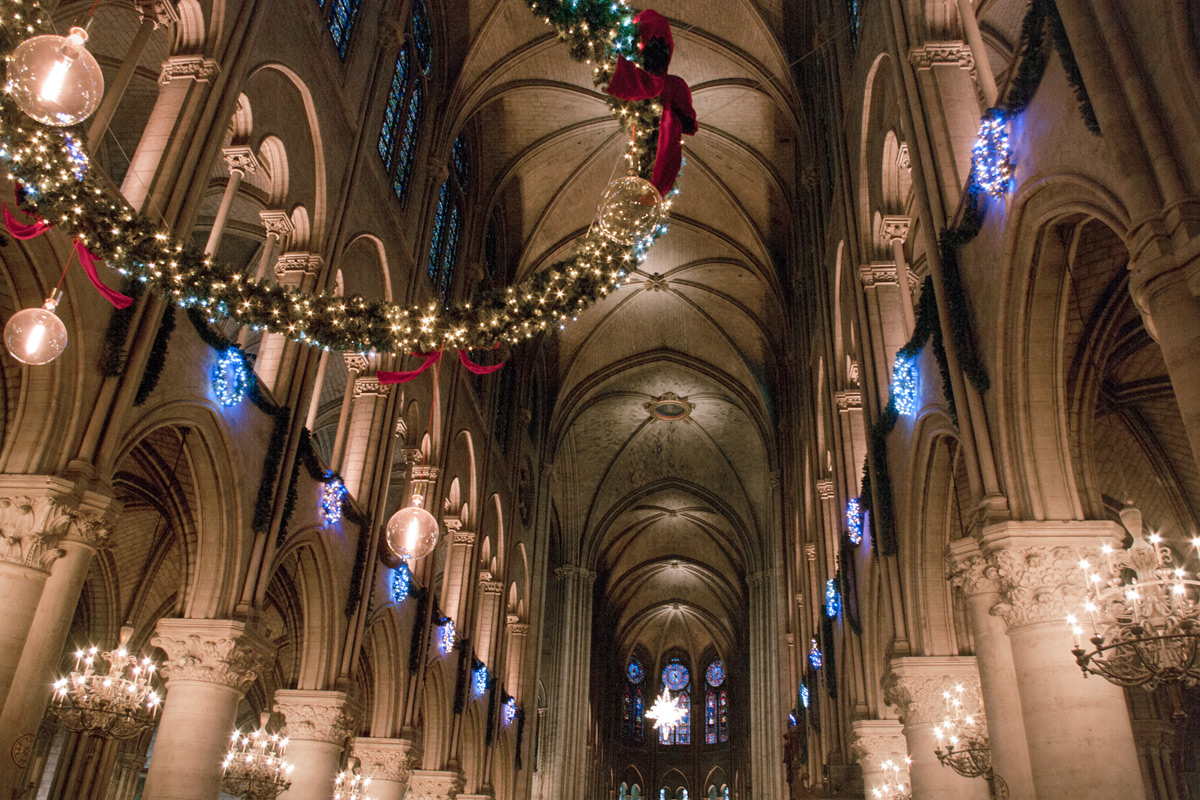
Exhibition: Noël 2016

Notre-Dame Cathedral, Paris

Installations monumentales à Notre-Dame de Paris - Noël 20162017Monumental Installations at Notre-Dame de Paris - Christmas 2016

Scenography. From 14 December 2016 to 20 January 2017. Client: Laurent Prades, general manager of the cathedral
Works budget
€45,000

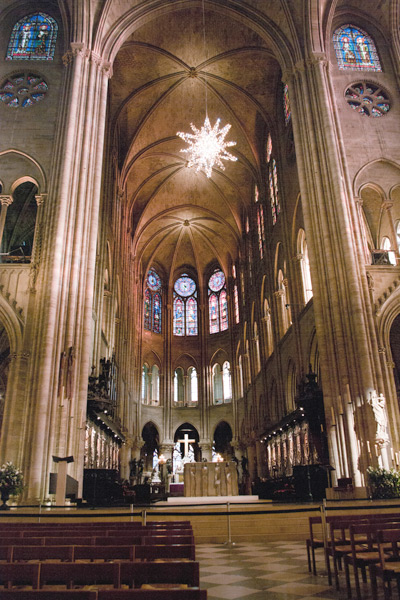
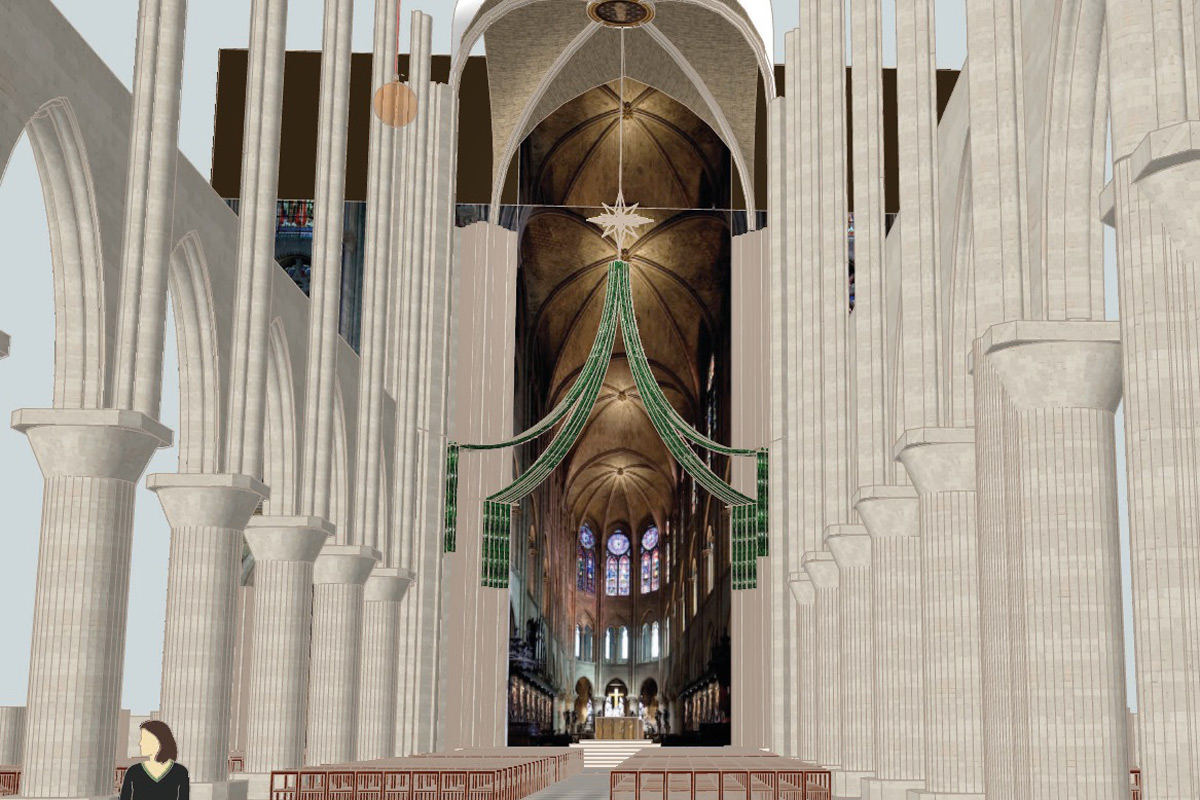
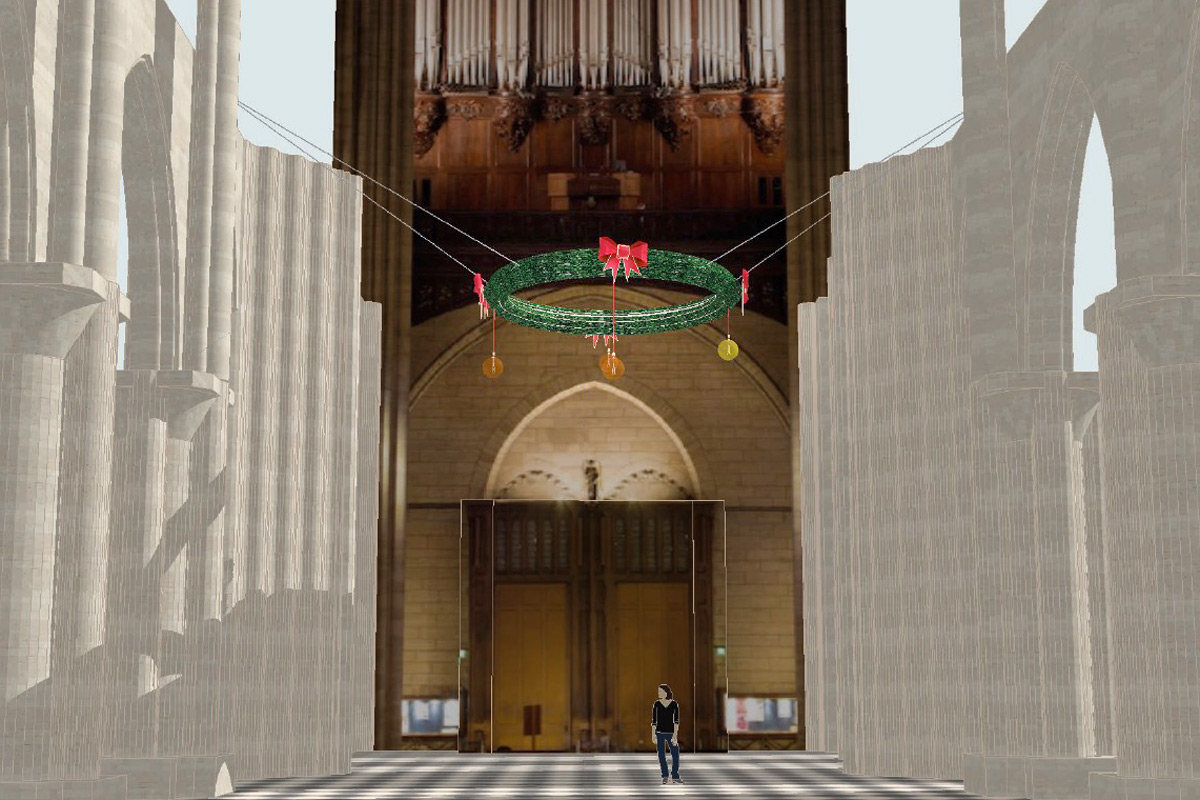
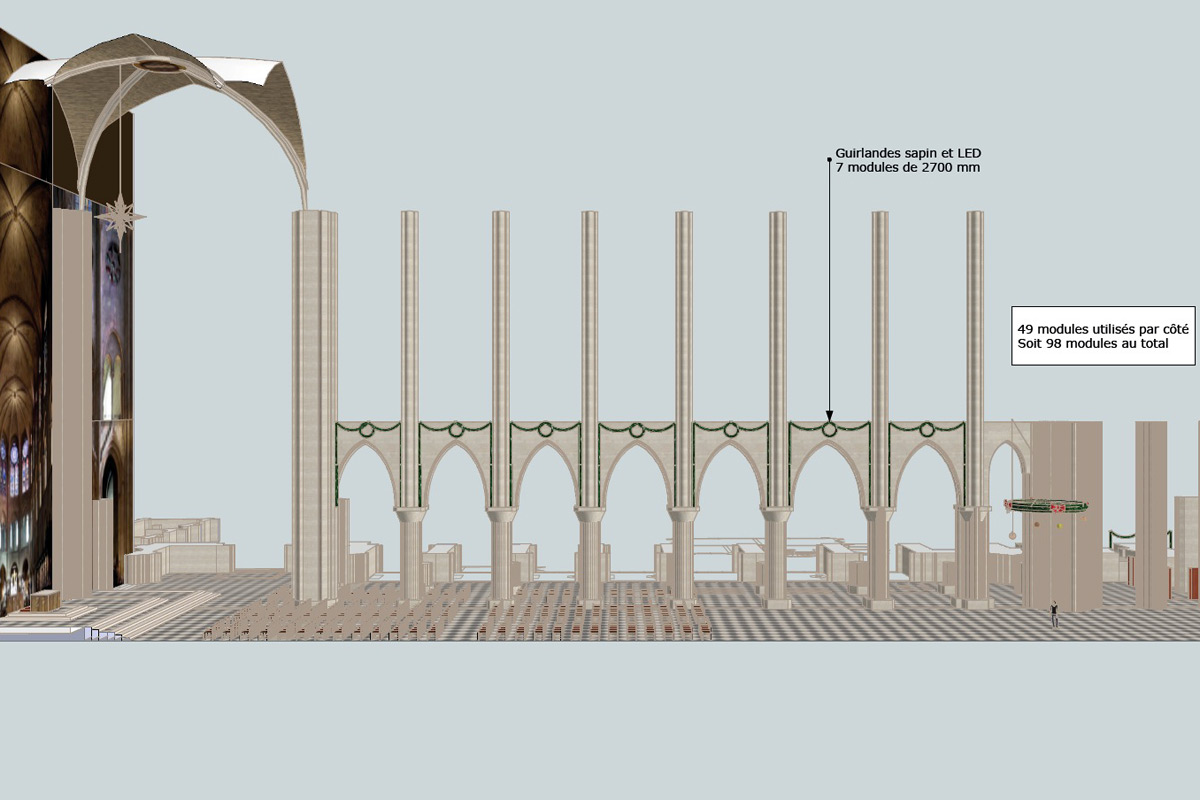
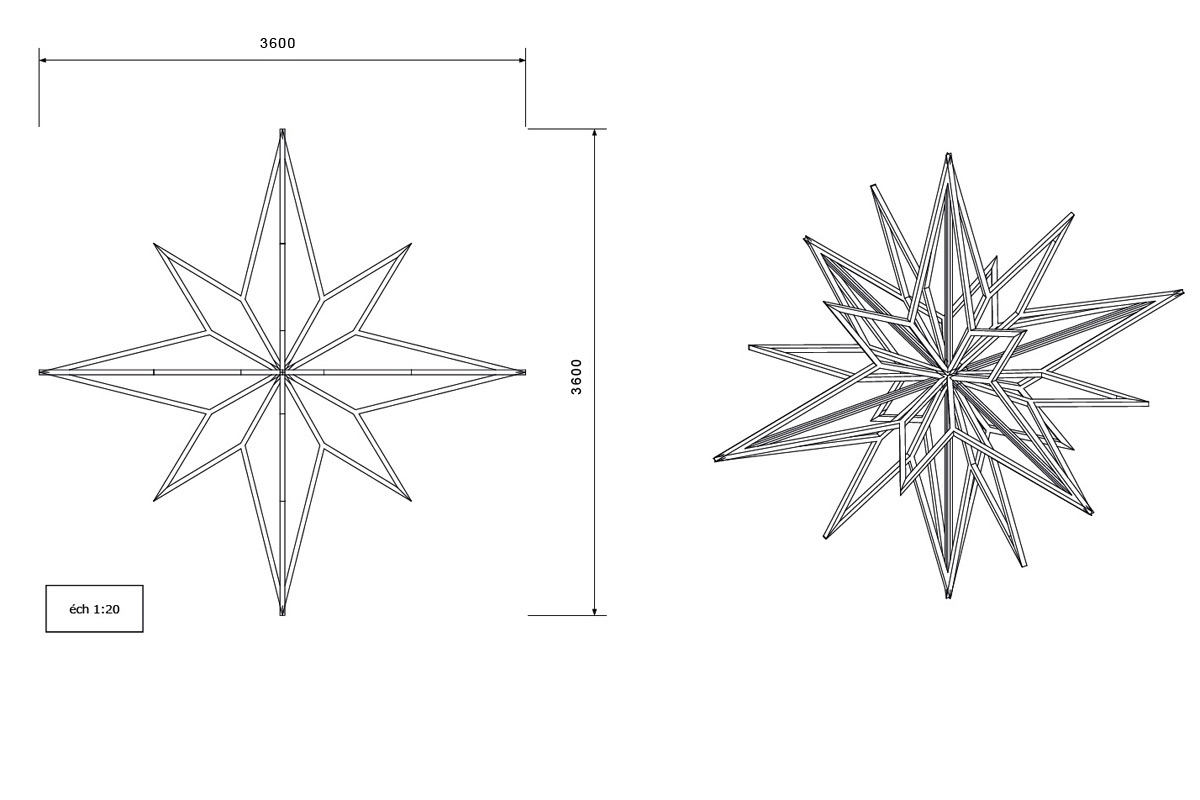
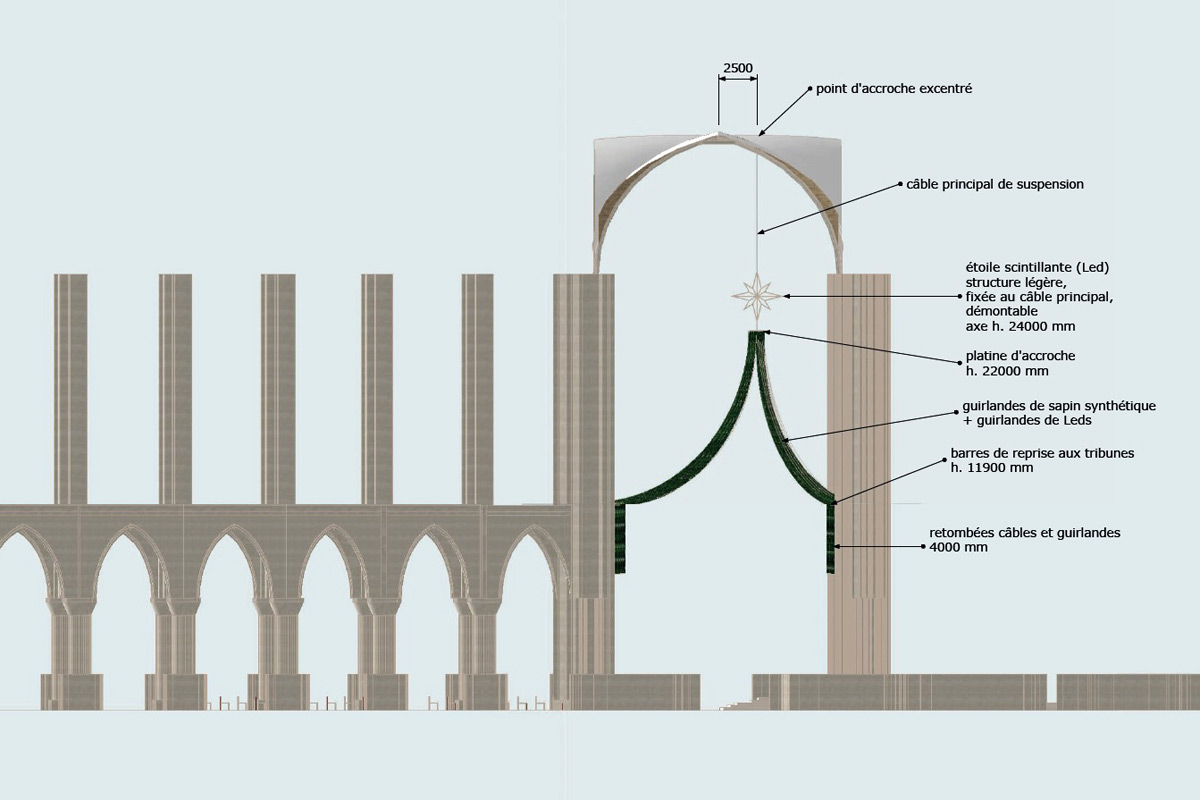
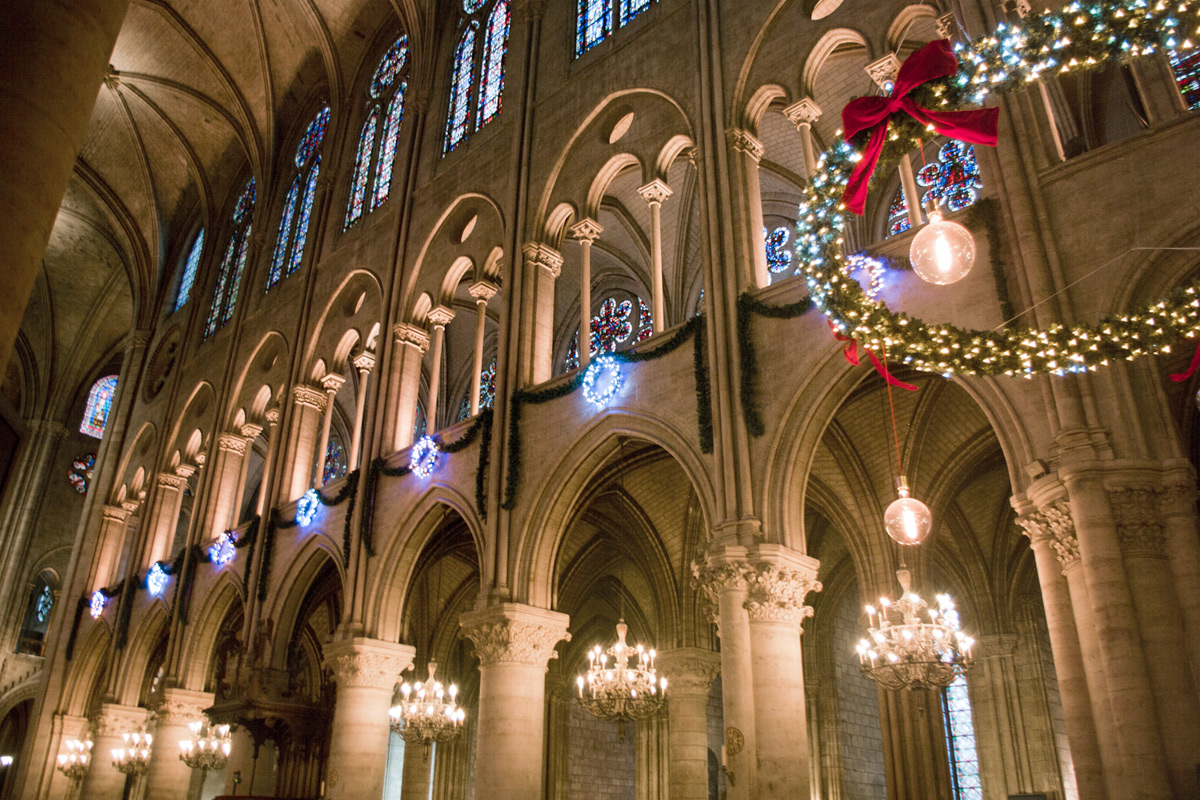
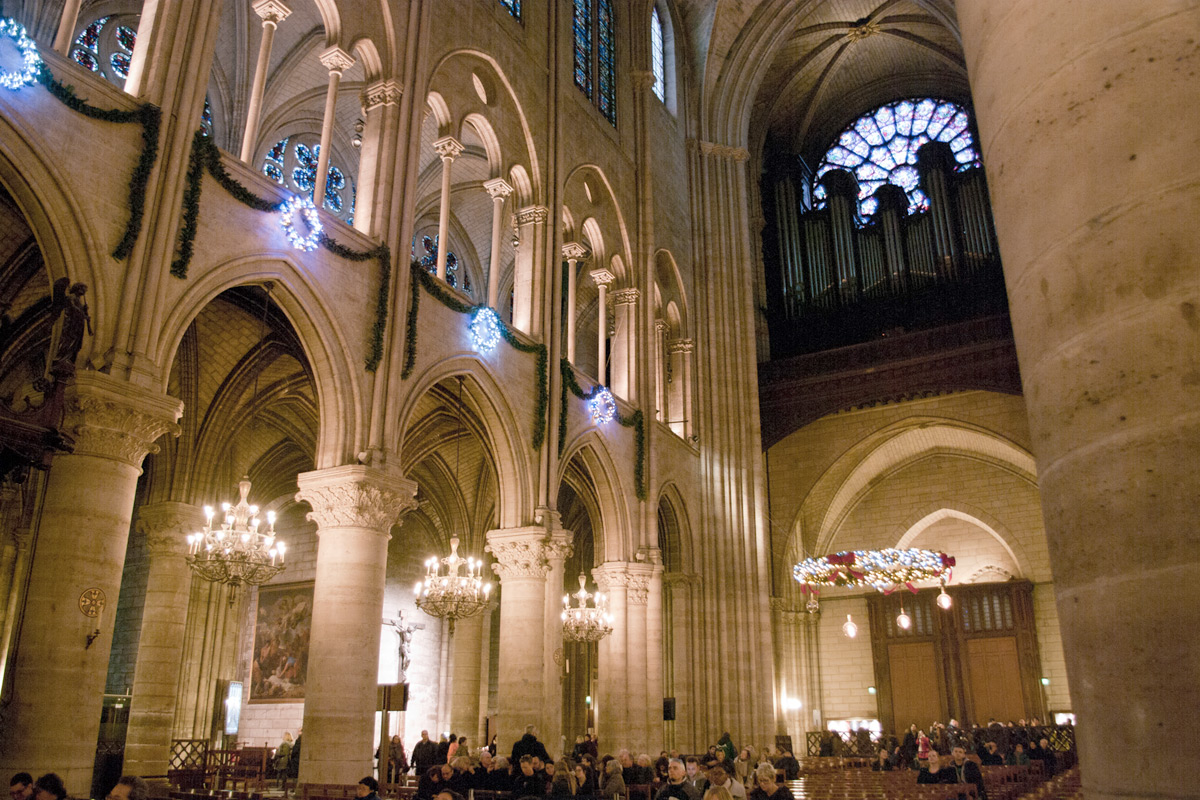
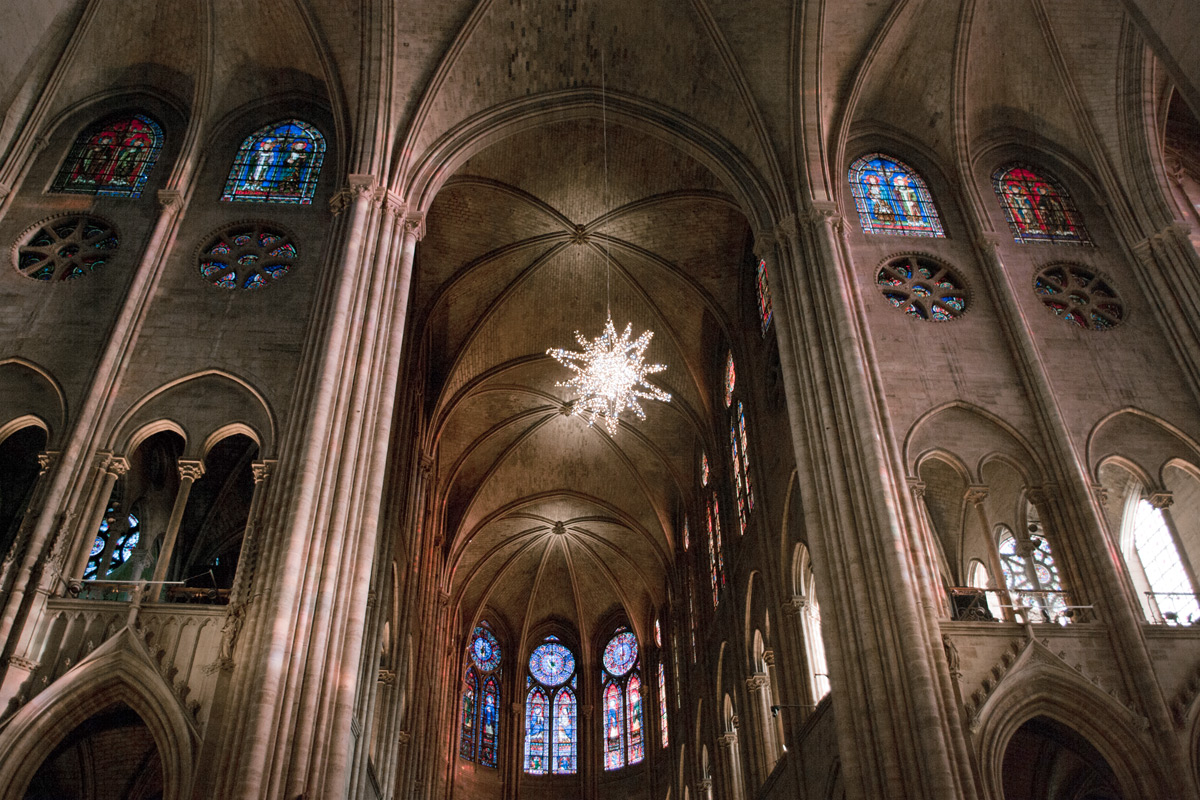
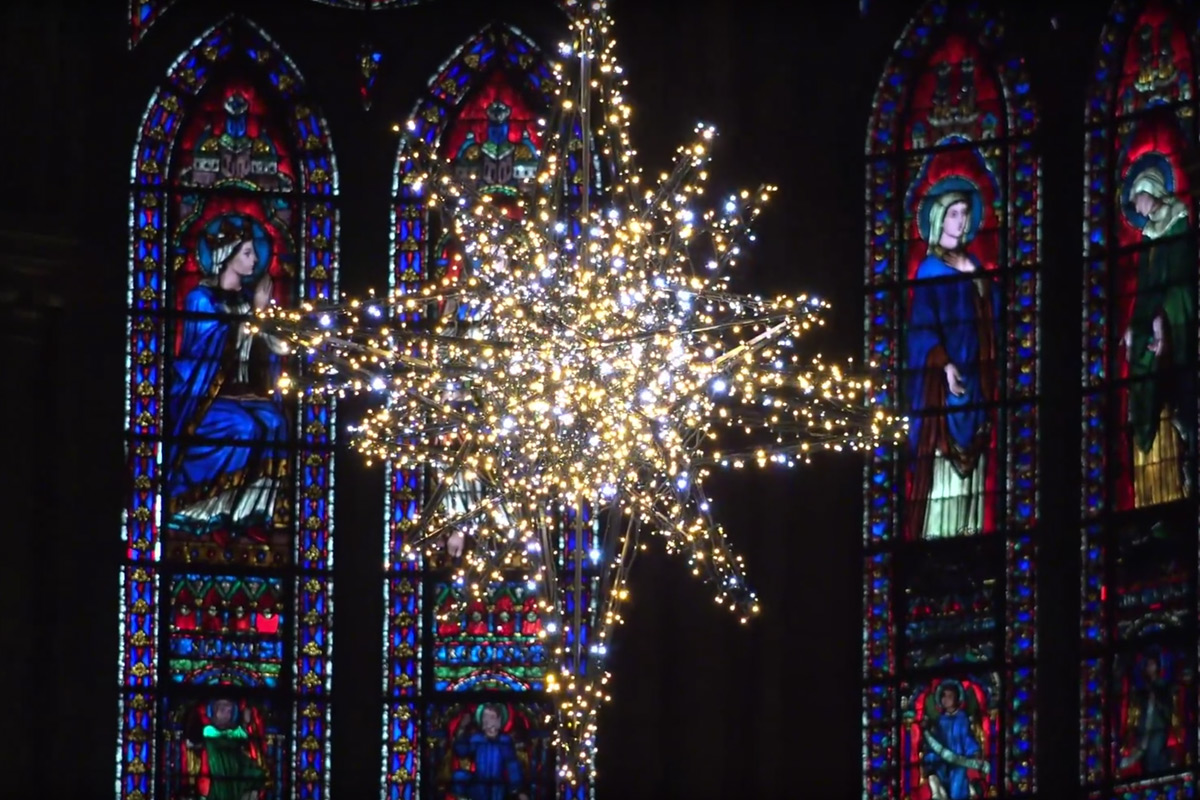
After the attacks of 2015, Notre-Dame Cathedral in Paris no longer had administrative permission to install, as every year, a monumental Christmas tree on the forecourt, and wished to offer the public a Christmas decor inside the cathedral. The decor was designed to fill the entire cathedral, with a monumental Advent wreath more than 4 metres in diameter suspended at the entrance to the nave, illuminated garlands and wreaths on either side of the nave at gallery level, and finally a large illuminated fir canopy linking each of the four pillars of the transept crossing, starting from a monumental illuminated star 3.60 metres in diameter suspended 24 metres high.

For technical reasons, it was not possible to build the whole of the great canopy in time, and it was to be completed in following years; only the monumental illuminated star was made and installed.

Exhibition: Noël 2016 – image 1
Exhibition: Noël 2016 – image 2
Exhibition: Noël 2016 – image 3
Exhibition: Noël 2016 – image 4
Exhibition: Noël 2016 – image 5
Exhibition: Noël 2016 – image 6
Exhibition: Noël 2016 – image 7
Exhibition: Noël 2016 – image 8
Exhibition: Noël 2016 – image 9
Exhibition: Noël 2016 – image 10

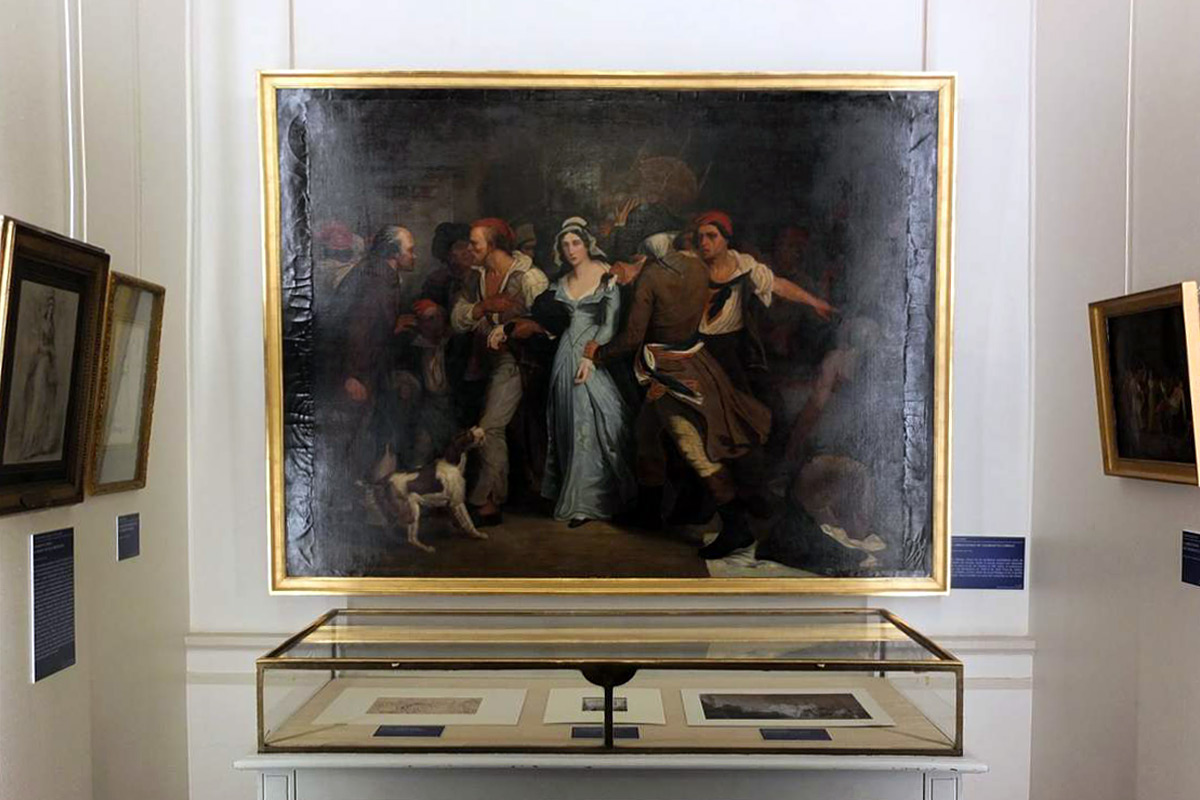
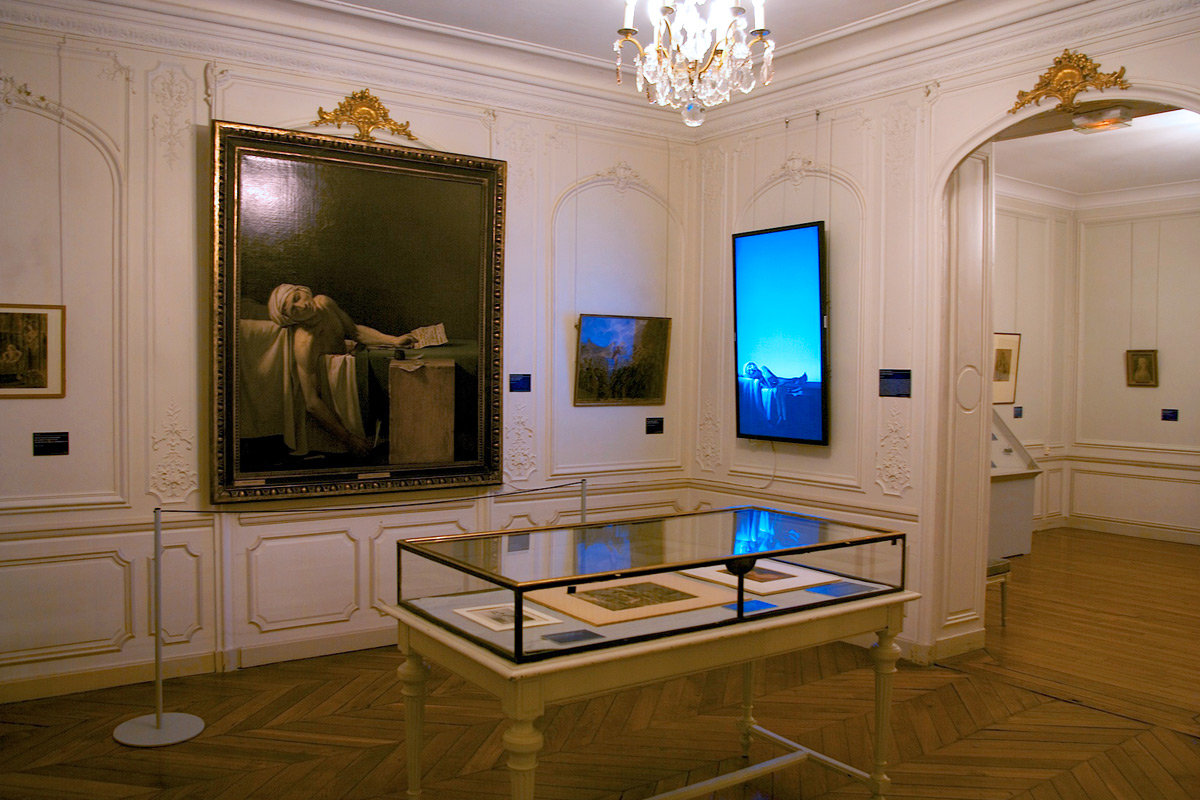
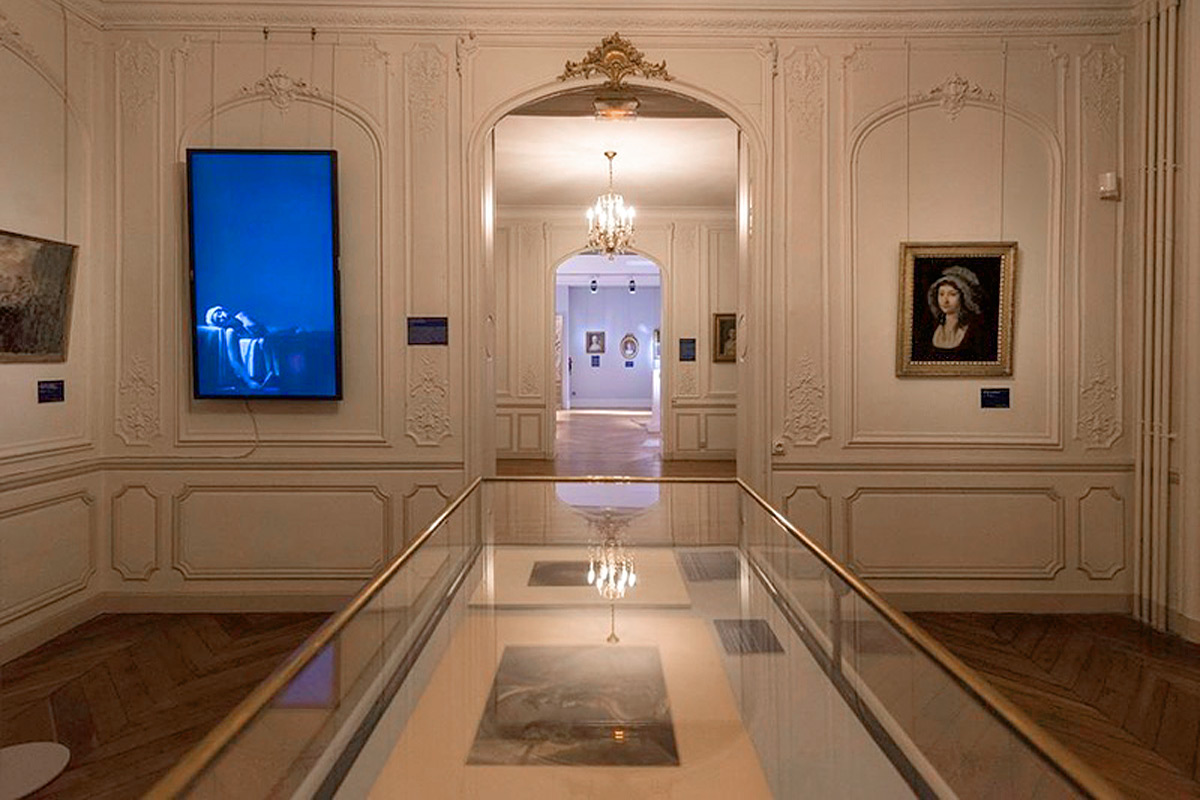
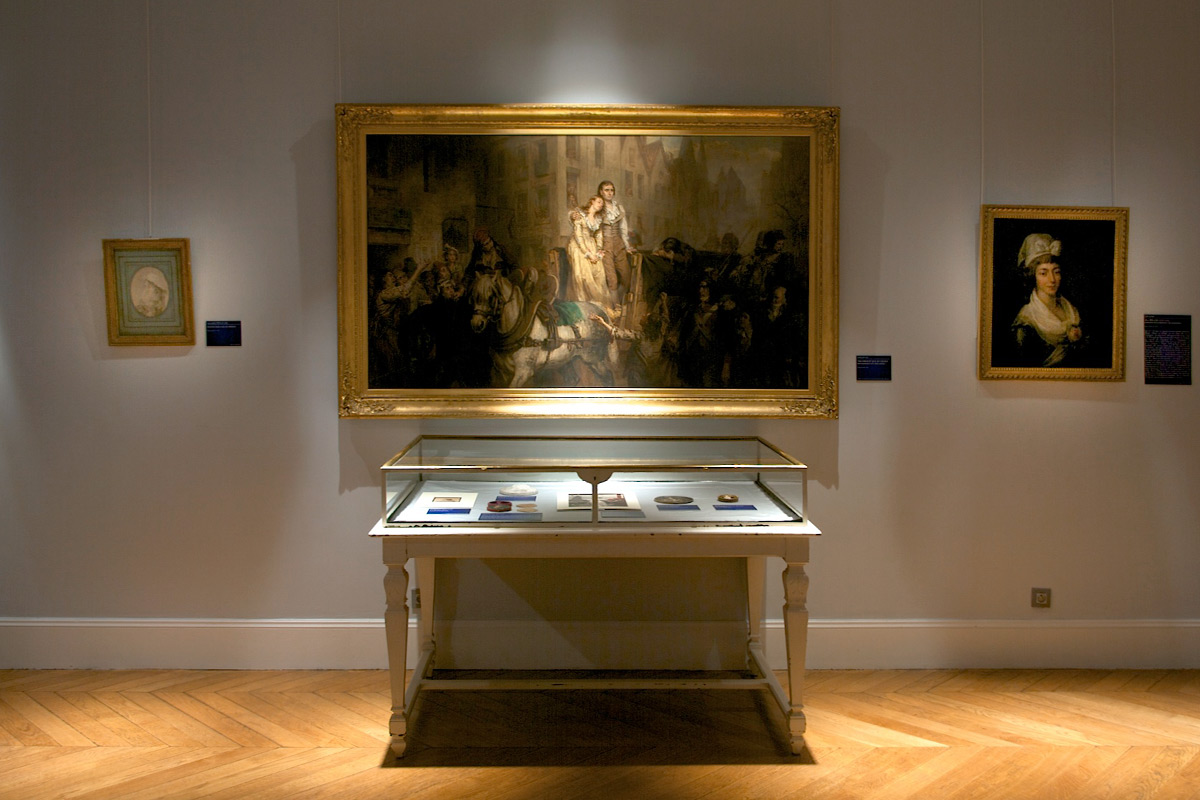
Exhibition: Amazons of the Revolution: Women in the Turmoil of 1789

Musée Lambinet, Versailles

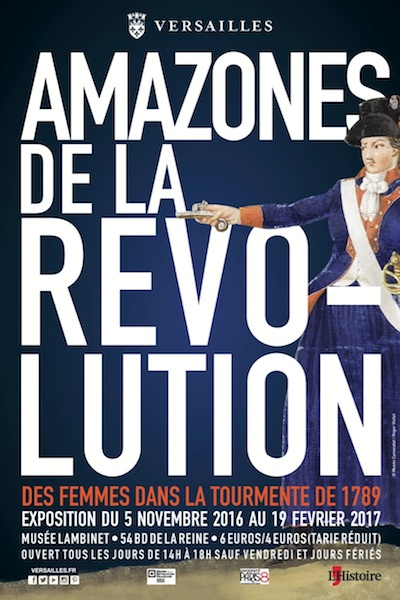
Amazones de la Révolution, les Femmes dans la Tourmente de 17892016Amazons of the Revolution: Women in the Turmoil of 1789

Scenography and graphic design
Exhibition from 5 November 2016 to 5 March 2017
Curators
Martial Poirson
Total area
300 m²
120 works
old master and contemporary paintings, works on paper, art objects, sculpture, archive documents, books, multimedia, video games, video art
Works budget
€5,000
Attendance:

The exhibition explores women’s relationship with the violence of revolutionary events, whether they stood among the victims or the executioners. It offers a perspective on the more collective images associated with these women, which have inspired representations and the arts through the centuries, from painting and sculpture to film, comics and video games.

Design approach: through the connections made between the works, the dialogue created between them and the way they face one another, the scenography of Amazones de la Révolution favours a clear spatial arrangement and reading of the exhibition’s narrative.

With a rhythmic route alternating striking atmospheres that appeal to the emotions with more intimate settings for study and reflection, the scenography helps visitors grasp this turbulent period of history. It highlights the major role played by women in the course of the French Revolution and seeks to give them their rightful place.

Exhibition: Amazons of the Revolution: Women in the Turmoil of 1789 – image 1
Exhibition: Amazons of the Revolution: Women in the Turmoil of 1789 – image 2
Exhibition: Amazons of the Revolution: Women in the Turmoil of 1789 – image 3
Exhibition: Amazons of the Revolution: Women in the Turmoil of 1789 – image 4
Exhibition: Amazons of the Revolution: Women in the Turmoil of 1789 – image 5
Exhibition: Amazons of the Revolution: Women in the Turmoil of 1789 – image 6

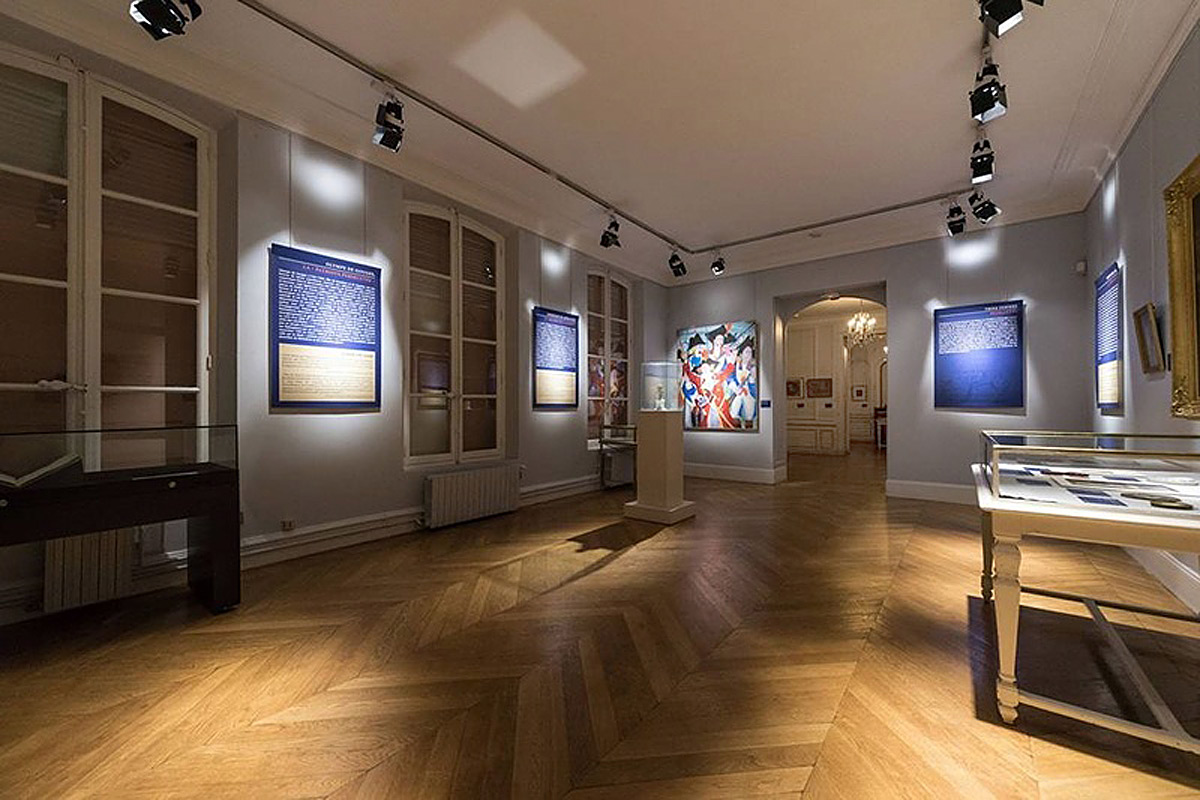
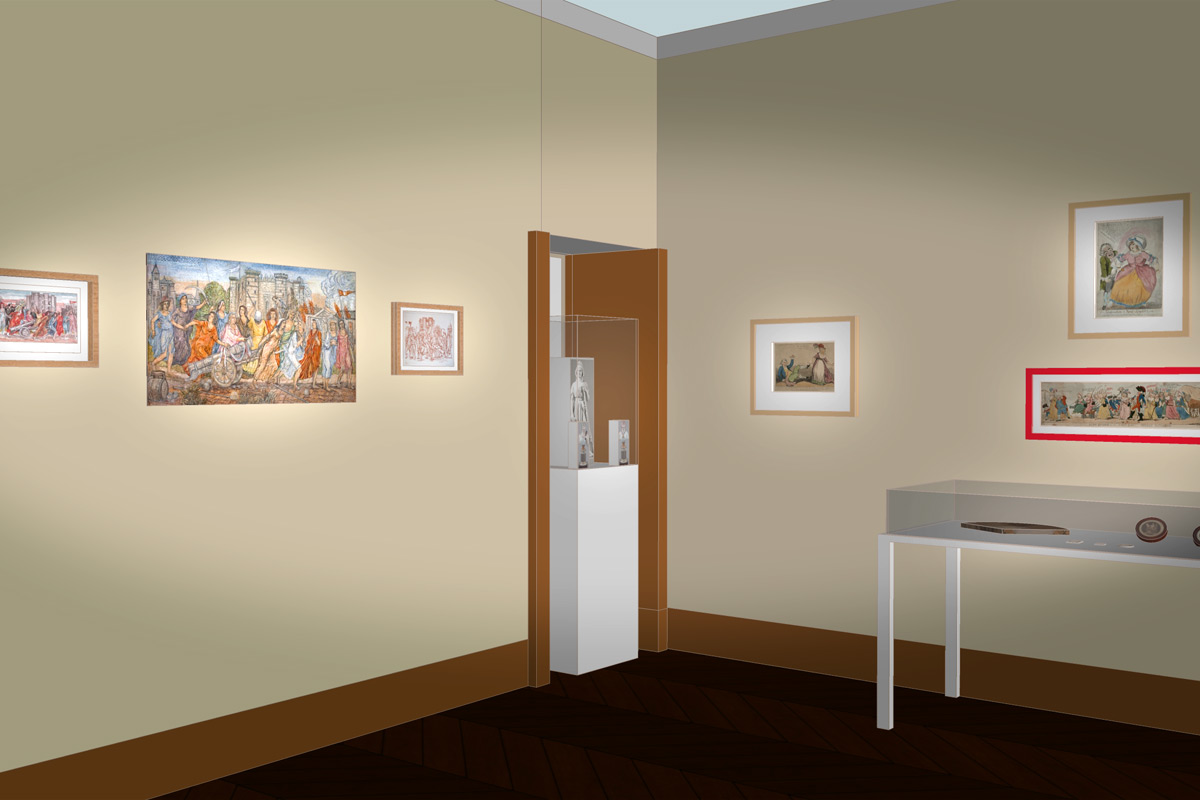
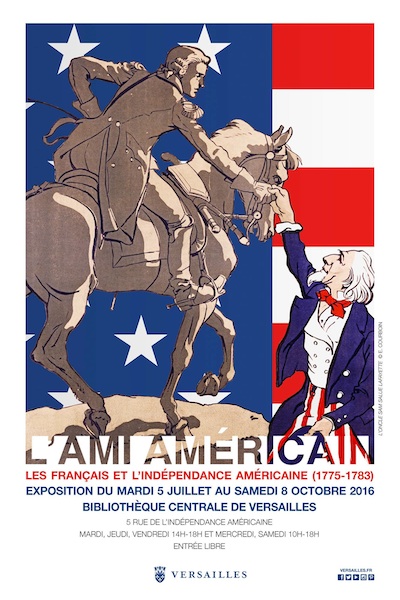
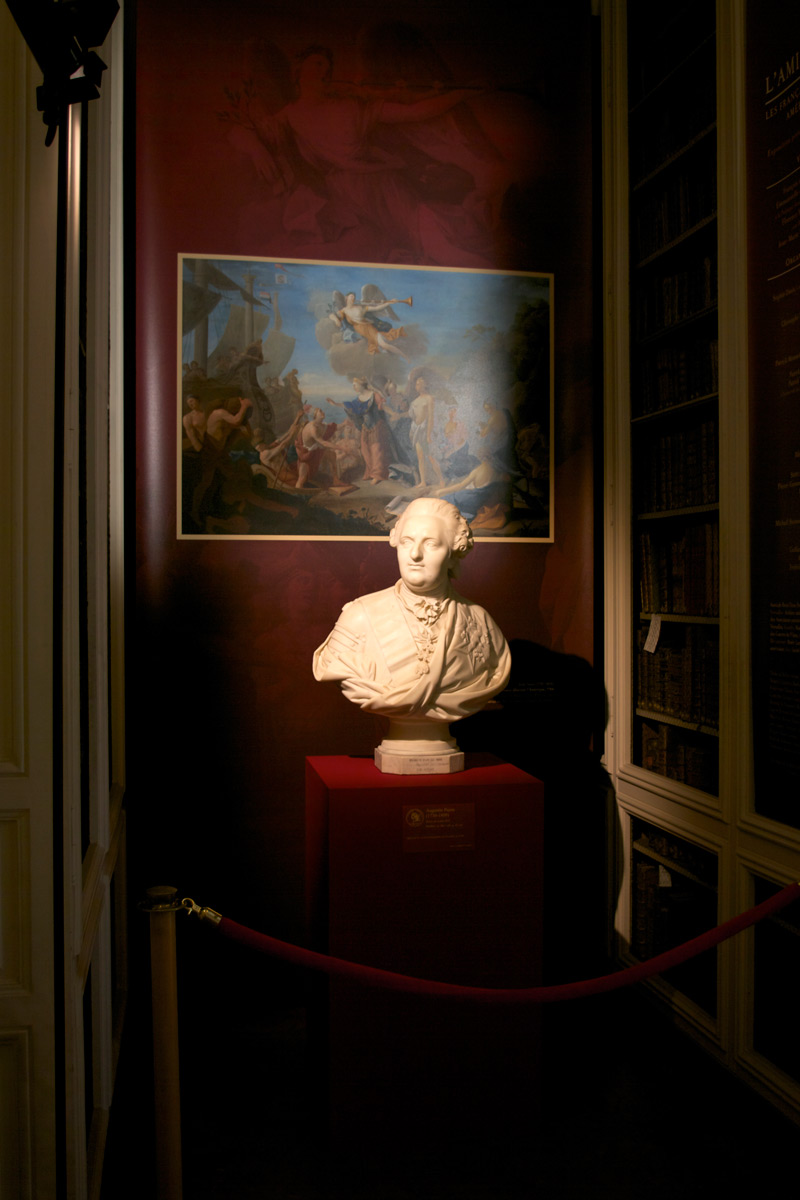
Exhibition: The American Friend: The French and American Independence

Former Hôtel des Affaires étrangères et de la Marine, Municipal Library, City of Versailles

L’Ami Américain, les Français et l’Indépendance Américaine2016The American Friend: The French and American Independence

Scenography and graphic design
Exhibition from 5 July 2016 to 8 October 2016
Curators
Christophe Thomet
Total area
300 m²
100 works
art objects, furniture, sculptures, paintings, works on paper, archive documents, books, audiovisual
Works budget
€15,000
Attendance
8,000 visitors

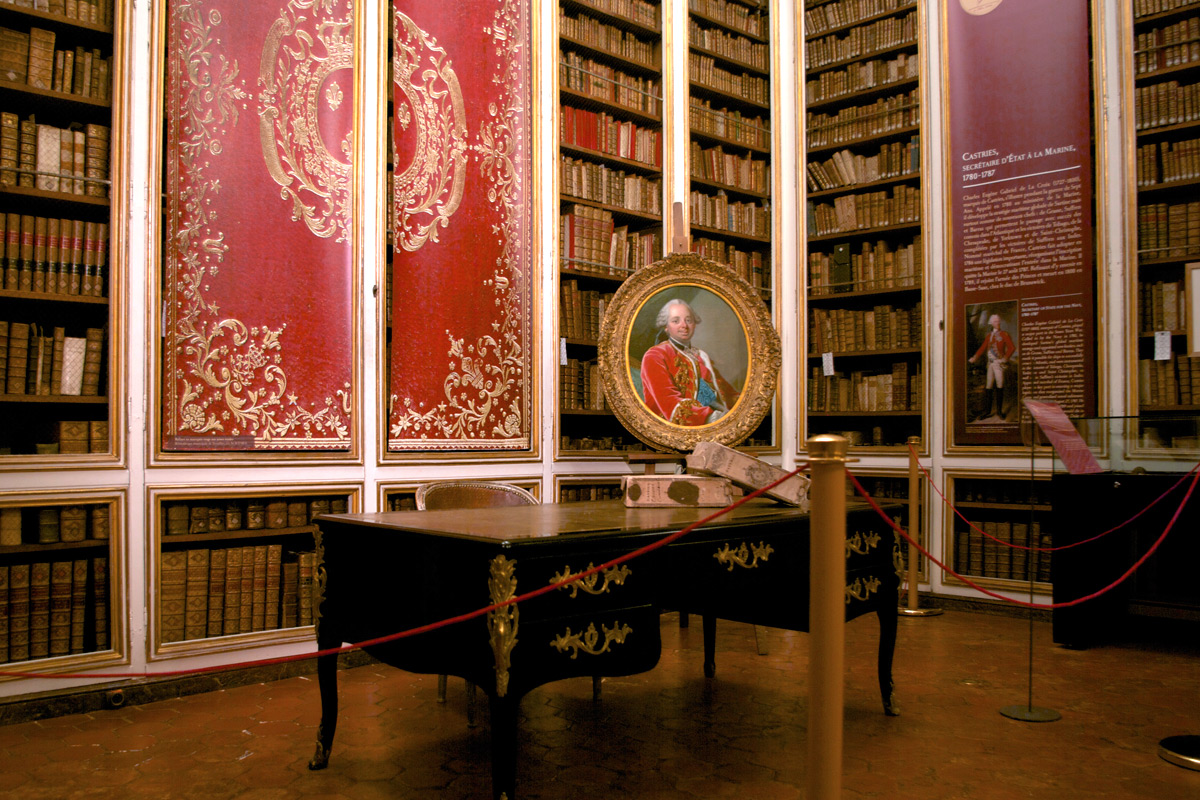
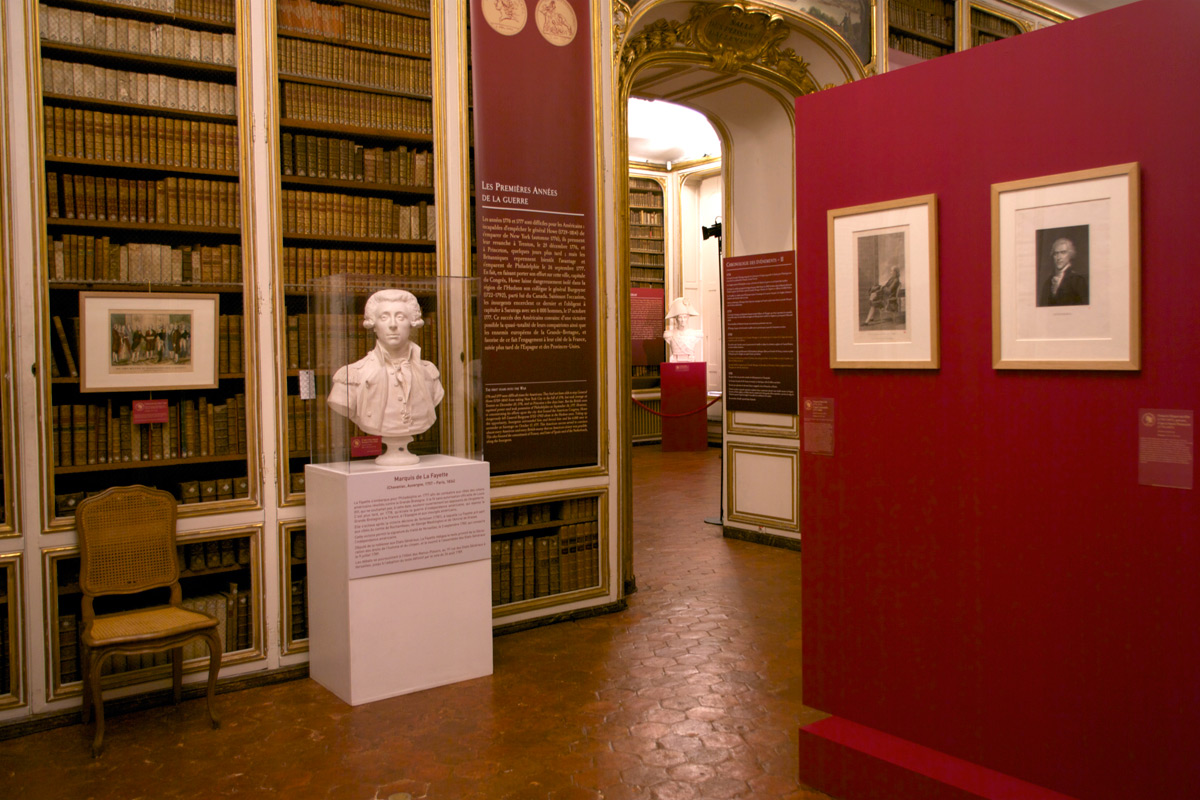
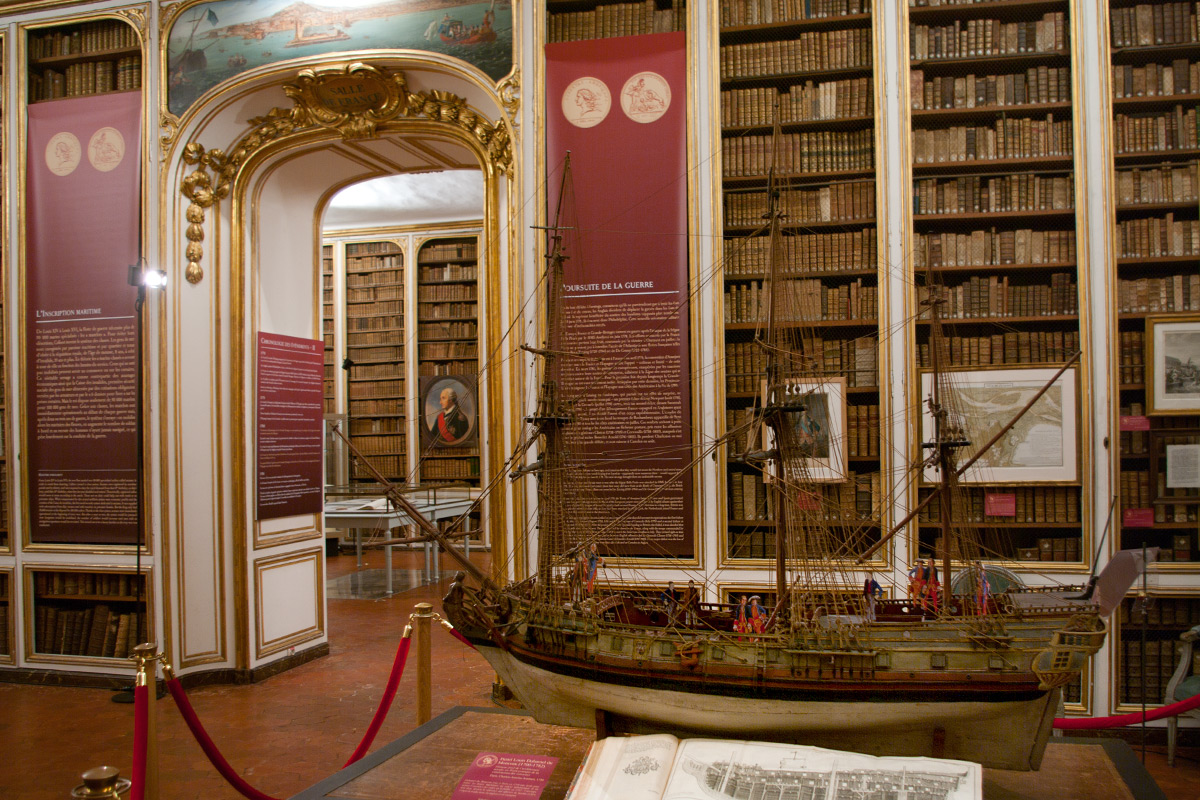
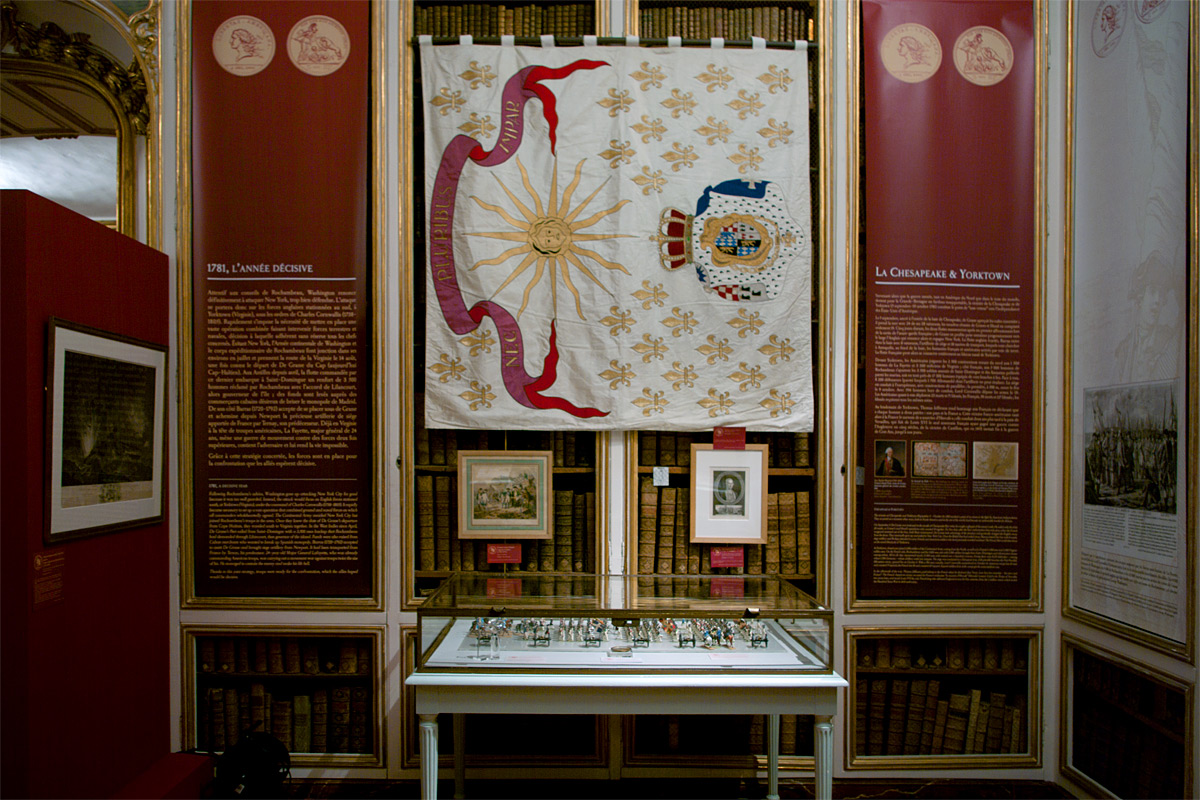
To mark the 240th anniversary of the signing of the Declaration of Independence of the United States of America (4 July 1776), the Versailles Municipal Library recalls the context of this chapter of history, little known to the French. It highlights the strategic role played by France, then ruled by Louis XVI, who had come to the throne only two years earlier.

The exhibition is held in one of the places where the Treaties of Paris and Versailles (3 September 1783), which ended the American War of Independence, were negotiated: the library was then the seat of the Ministry of Foreign Affairs, ever since the building was constructed in 1761-1762 by the Duc de Choiseul, Louis XV’s Secretary of State for Foreign Affairs. The decor has remained unchanged ever since.

Design approach: the aim is to take over Louis XV’s Foreign Affairs Gallery with a clear, rhythmic route full of discoveries, using large decors printed on paper and hung on the grilles of the library cabinets, with enlarged graphic elements treated as watermarks, as well as paintings.

These large decors also carry the exhibition signage.

Exhibition: The American Friend: The French and American Independence – image 1
Exhibition: The American Friend: The French and American Independence – image 2
Exhibition: The American Friend: The French and American Independence – image 3
Exhibition: The American Friend: The French and American Independence – image 4
Exhibition: The American Friend: The French and American Independence – image 5
Exhibition: The American Friend: The French and American Independence – image 6

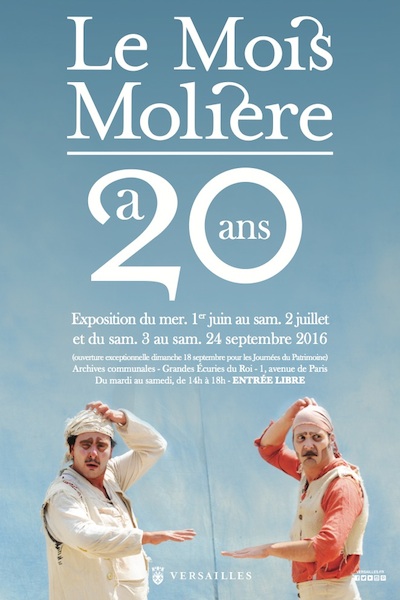
Exhibition: The Mois Molière Turns 20

City of Versailles, Versailles Municipal Archives, King’s Great Stables, Versailles

Le Mois Molière a 20 Ans2016The Mois Molière Turns 20

Scenography and graphic design
Exhibition from 1 June 2016 to 24 September 2016
Curators
Corinne Hubert
Total area
200 m²
80 works
art objects, costumes, works on paper, archive documents, books, audiovisual
Works budget
€5,000
Attendance:

An exhibition on the history of the Versailles theatre festival “Le Mois Molière”.

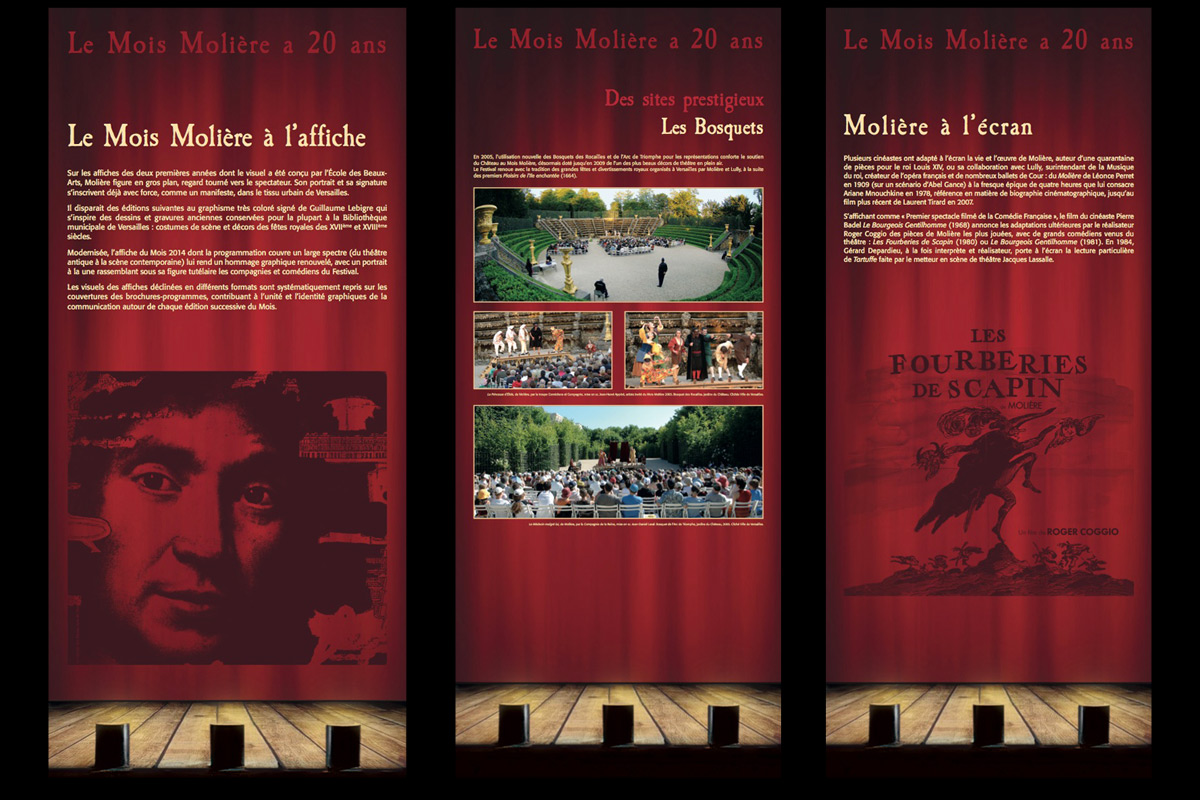
For the 2016 Mois Molière, the Versailles municipal archives present an exhibition revisiting the festival’s last 20 years! Costumes and props from previous editions, commedia dell’arte masks, engravings and costume designs lent by the Versailles municipal libraries and the Musée Lambinet, and photographs of the festival’s finest venues complete a colourful scenography.

Filmed interviews with several heads of theatre schools and companies, notably Carlo Boso, founder of the Académie Internationale des Arts du Spectacle, shed new light on the actors’ work, in rehearsal and in performance, throughout the year.

Design approach:

The scenography is theatrical. It consists mainly of enlarged printed elements arranged to create perspective with “legs” (side drapes) and reveals in the form of “doors”. The aesthetic approach is that of a theatre set.

An alcove recreates a dressing room.

Exhibition: The Mois Molière Turns 20 – image 1

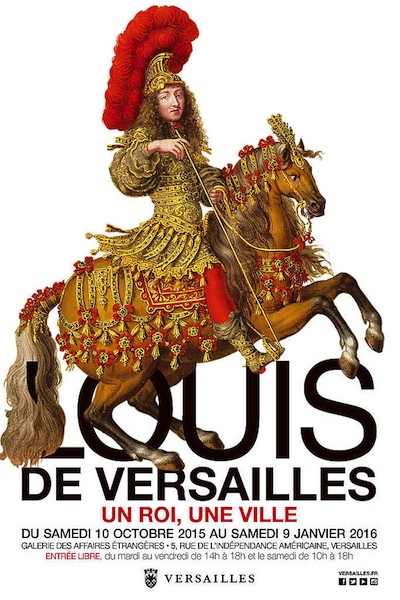
Exhibition: Louis of Versailles: A King, a City

Former Hôtel des Affaires étrangères et de la Marine, Municipal Library, City of Versailles

Louis de Versailles, un Roi, une Ville2015Louis of Versailles: A King, a City

Scenography and graphic design
Exhibition from 10 October 2015 to 9 January 2016
Curators
Christophe Thomet
Total area
300 m²
100 works
art objects, furniture, sculptures, paintings, stage costumes, works on paper, archive documents, books, audiovisual
Works budget
€25,000
Attendance
7,500 visitors

Le Roi-Soleil s’est éteint le 1er septembre 1715. Trois siècles plus tard, la ville de Versailles se remémore ses heures royales à travers une exposition consacrée à son royal concepteur. Archives communales, Bibliothèque municipale, École des Beaux-arts et Musée Lambinet conjuguent leurs collections pour retracer la vie du roi. L’exposition a aussi bénéficié de prêts exceptionnels de l’Établissement public du Château de Versailles, du Centre de musique baroque de Versailles, de la Bibliothèque municipale de Rouen, de la Bibliothèque Forney (Paris), du Musée de l’Armée (Paris) et de la Ville de Saint-Germain-en-Laye.

Design approach: the aim is to take over Louis XV’s Foreign Affairs Gallery using large decors printed on paper and hung on the grilles of the library cabinets, with large reproductions of paintings as well as old plans of the city of Versailles.
These large decors also carry the exhibition signage.

The project favours limited timber construction and a simple, relatively quick installation before the works are put in place.

Exhibition: Louis of Versailles: A King, a City – image 1
Exhibition: Louis of Versailles: A King, a City – image 2
Exhibition: Louis of Versailles: A King, a City – image 3
Exhibition: Louis of Versailles: A King, a City – image 4
Exhibition: Louis of Versailles: A King, a City – image 5
Exhibition: Louis of Versailles: A King, a City – image 6
Exhibition: Louis of Versailles: A King, a City – image 7
Exhibition: Louis of Versailles: A King, a City – image 8
Exhibition: Louis of Versailles: A King, a City – image 9

Exhibition: The Fabric of Heroes: History Told by Toile de Jouy

Musée Lambinet, Versailles

La Fibre des Héros, l’Histoire Racontée Par la Toile de Jouy2015The Fabric of Heroes: History Told by Toile de Jouy

Scenography and graphic design
Exhibition from 19 September 2015 to 20 December 2015
Curators
Françoise Roussel-Leriche
Total area
300 m²
65 works
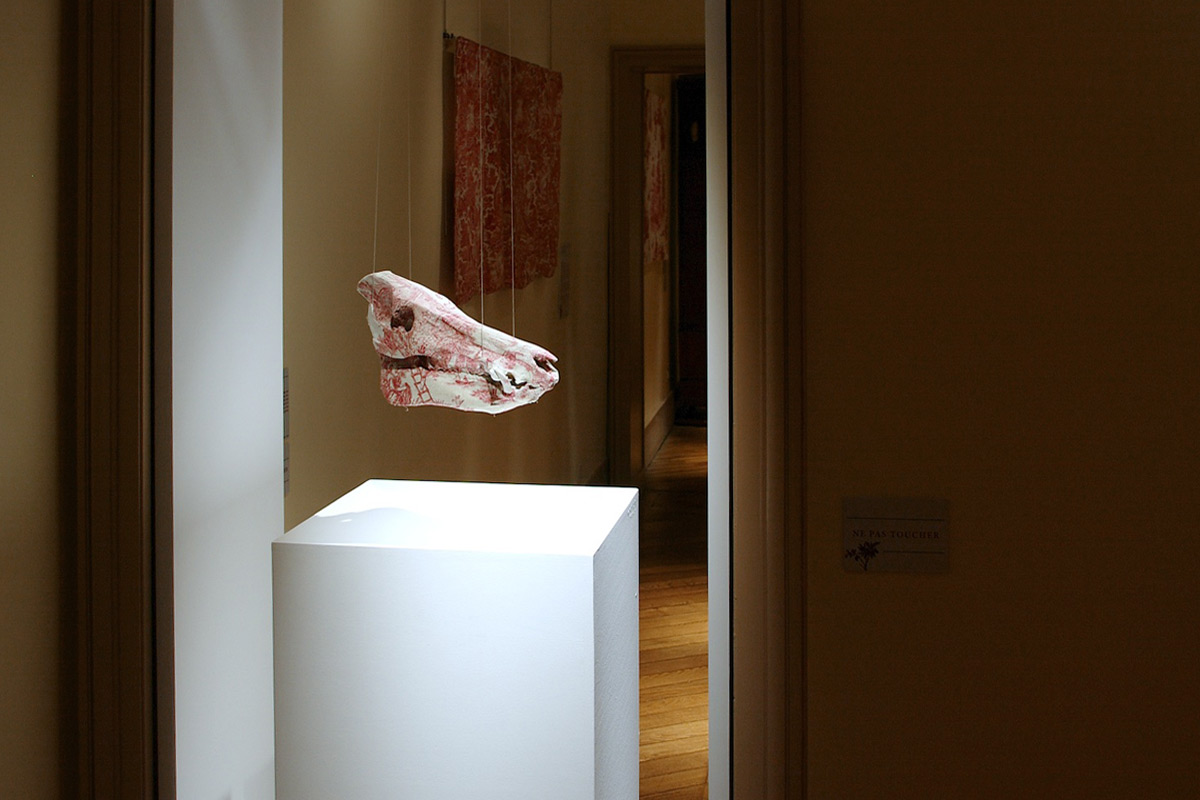
textiles, paintings, works on paper, contemporary work, archive documents, books
Works budget
€5,000
Attendance
4,000 visitors

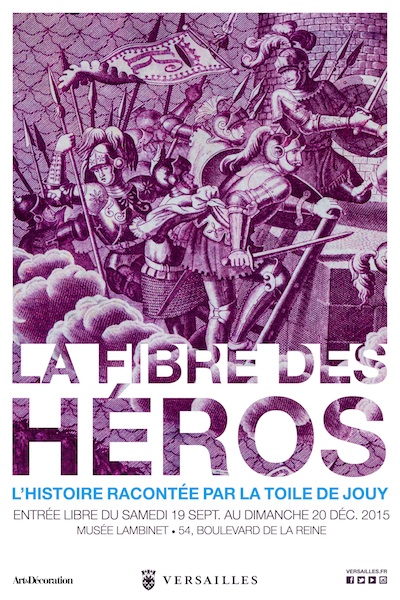
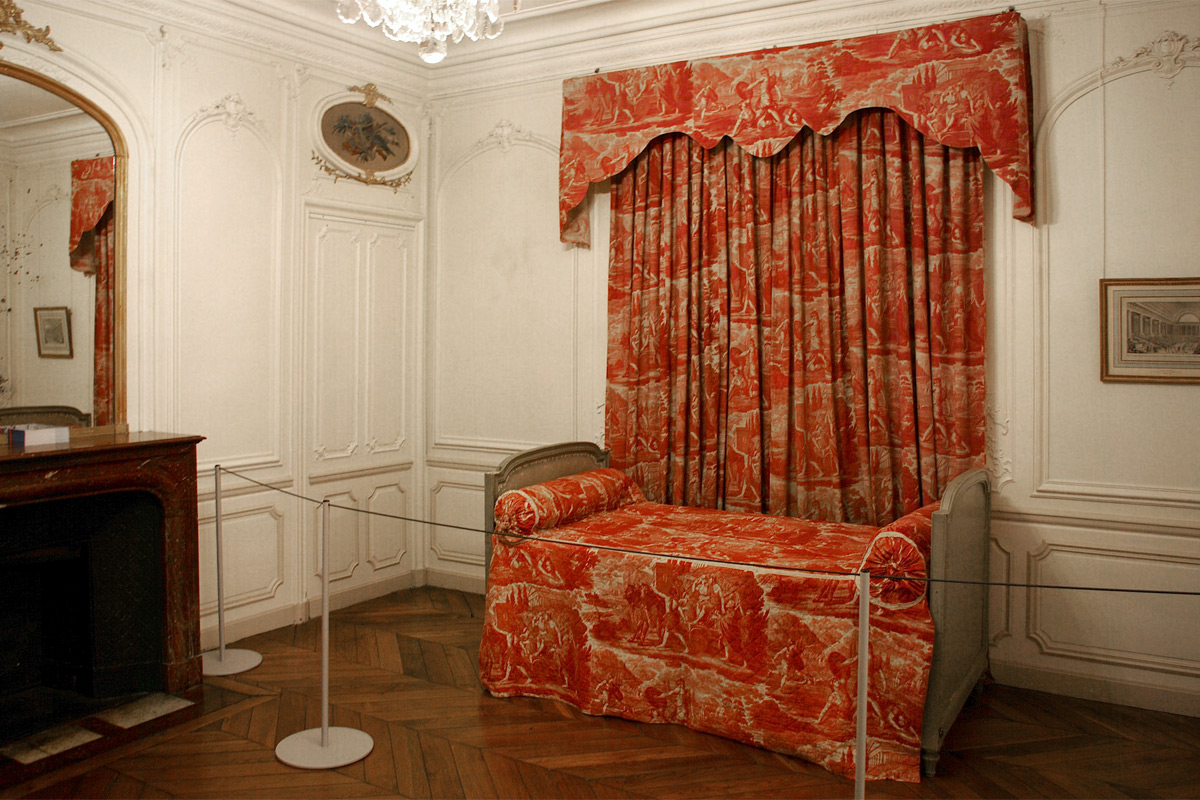
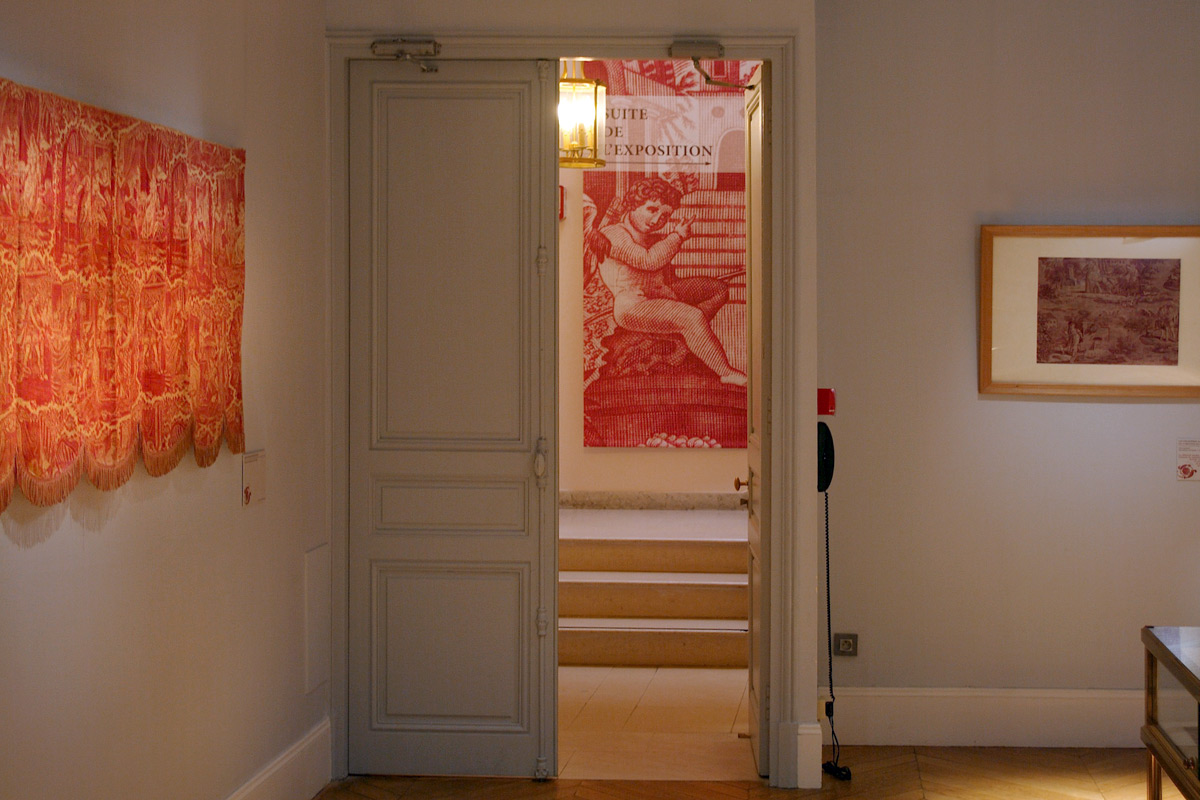
Dans le cadre des commémorations nationales du bicentenaire de la disparition de Christophe-Philippe Oberkampf (1738-1815), fondateur de la manufacture de Jouy, le musée Lambinet présente l’exposition La fibre des héros.

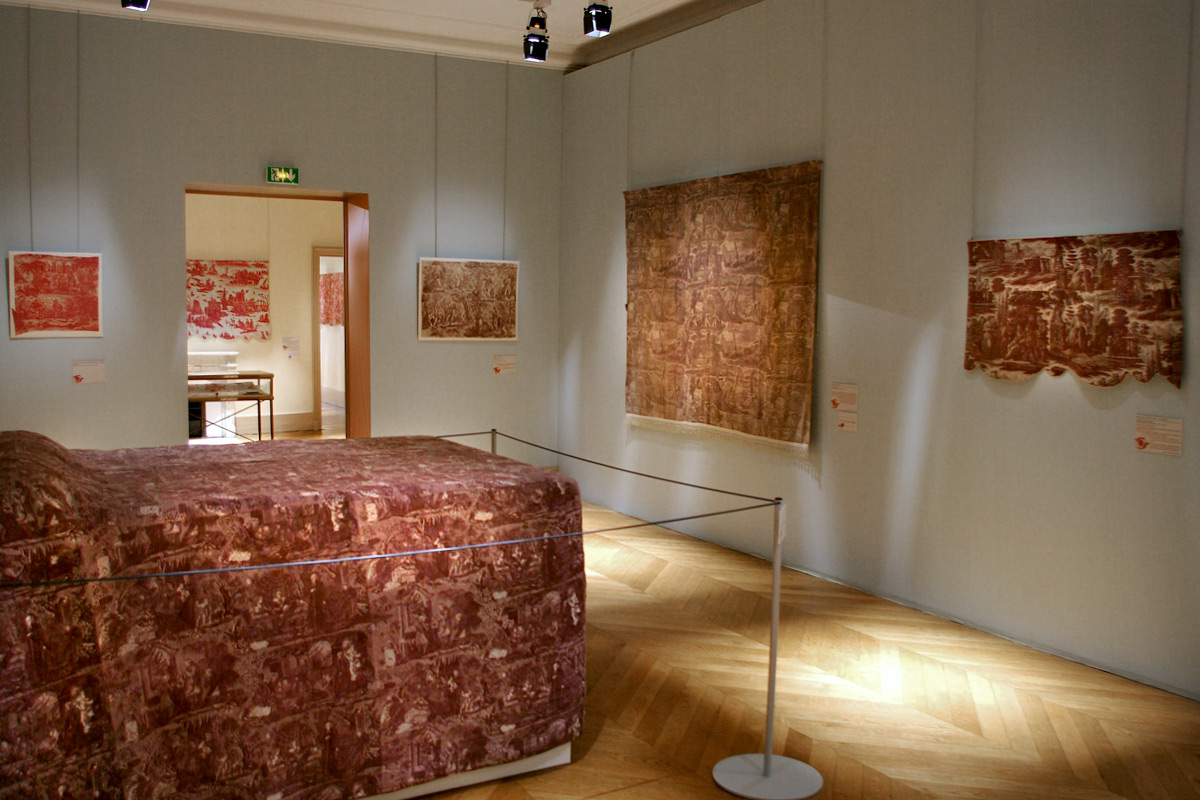
It shows how printed cloth reflected the ideals and events that captured society’s interest at the end of the 18th century and in the first half of the 19th.

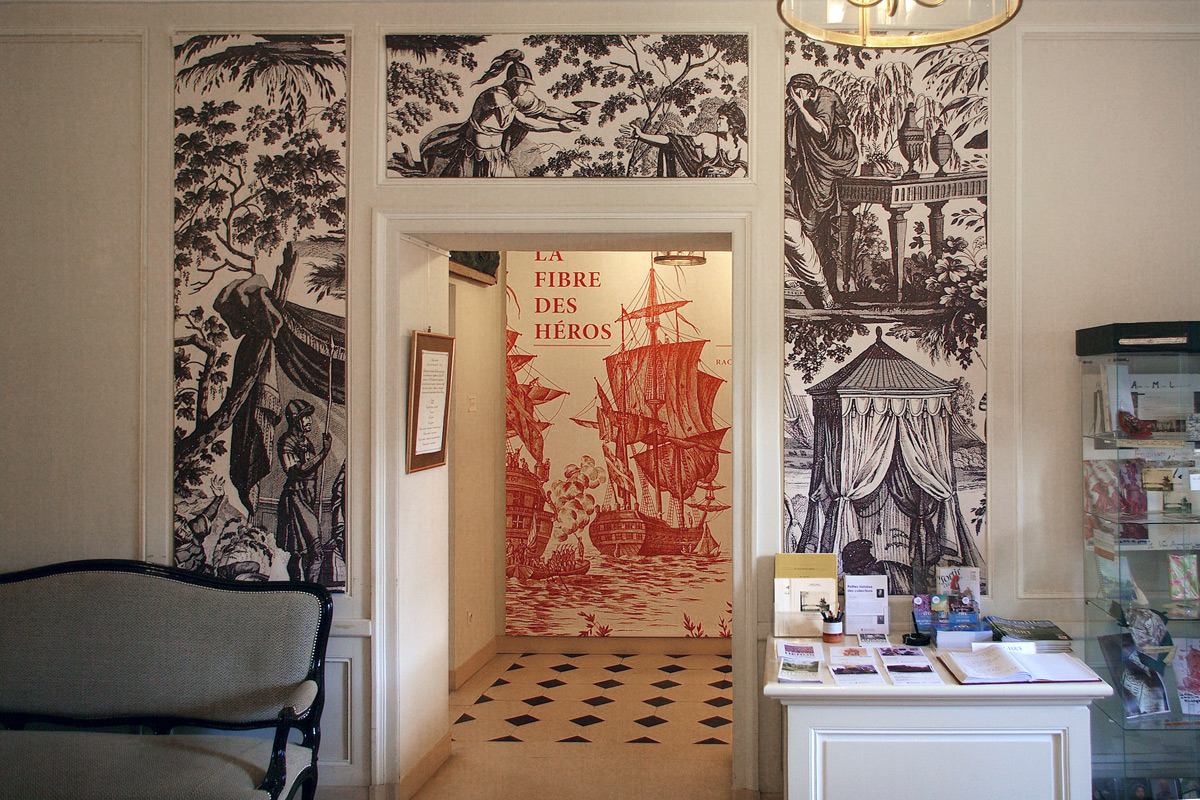
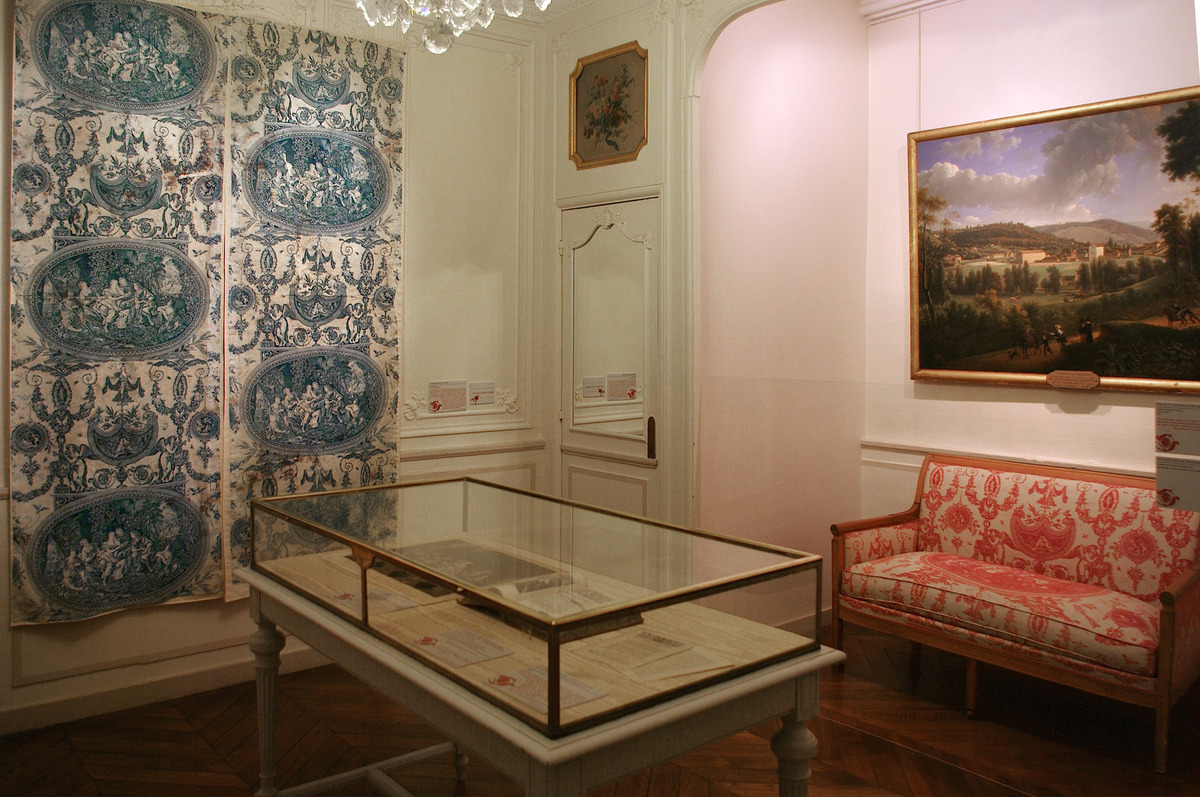
Design approach: to create a clear, rhythmic route in a textile world where the material, the very essence of toile de Jouy, becomes the tangible and essential support for the visitor’s imagination.

The works are also shown in context or can be seen up close.

An invitation to travel, discovery and adventure, the exhibition follows in the footsteps of the heroes, along the warp and weft threads, from the embarkation on the ship depicted at the entrance to the exhibition.

As most of the works are fragile and sensitive to light, considerable work went into the lighting, designed in indirect touches.

Exhibition: The Fabric of Heroes: History Told by Toile de Jouy – image 1
Exhibition: The Fabric of Heroes: History Told by Toile de Jouy – image 2
Exhibition: The Fabric of Heroes: History Told by Toile de Jouy – image 3
Exhibition: The Fabric of Heroes: History Told by Toile de Jouy – image 4
Exhibition: The Fabric of Heroes: History Told by Toile de Jouy – image 5
Exhibition: The Fabric of Heroes: History Told by Toile de Jouy – image 6

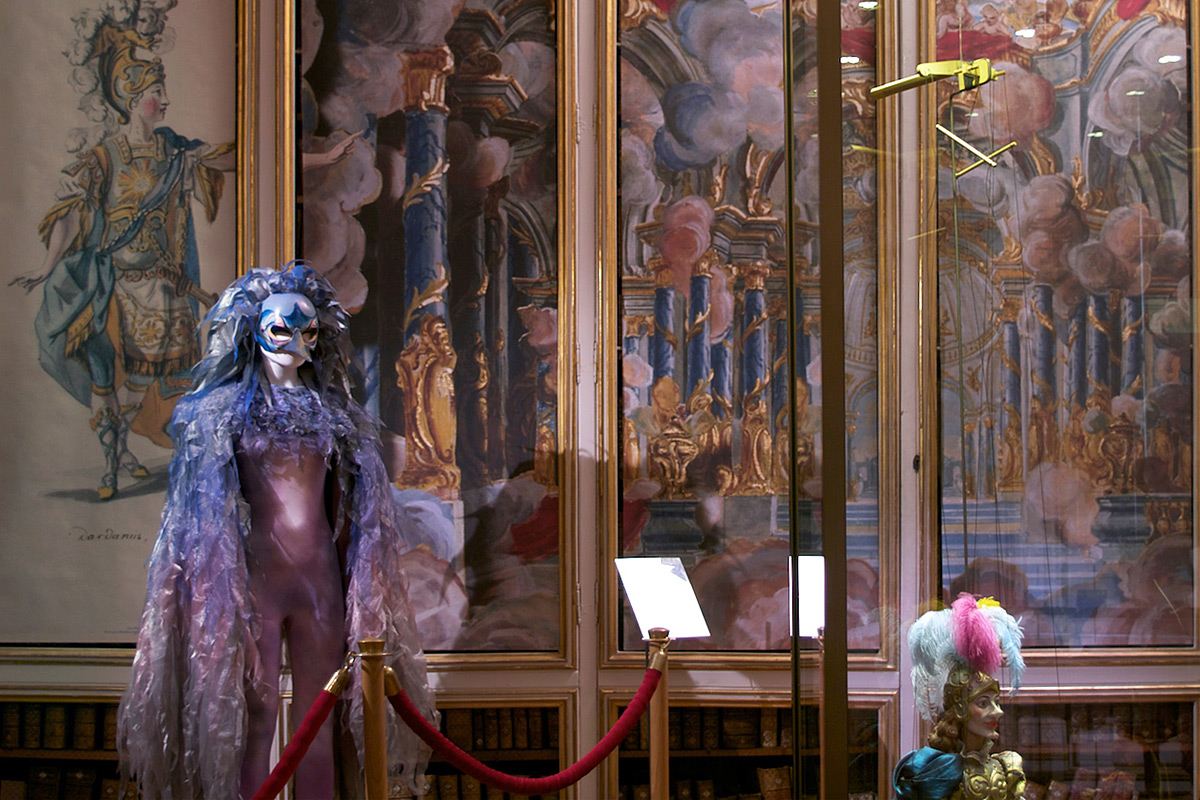
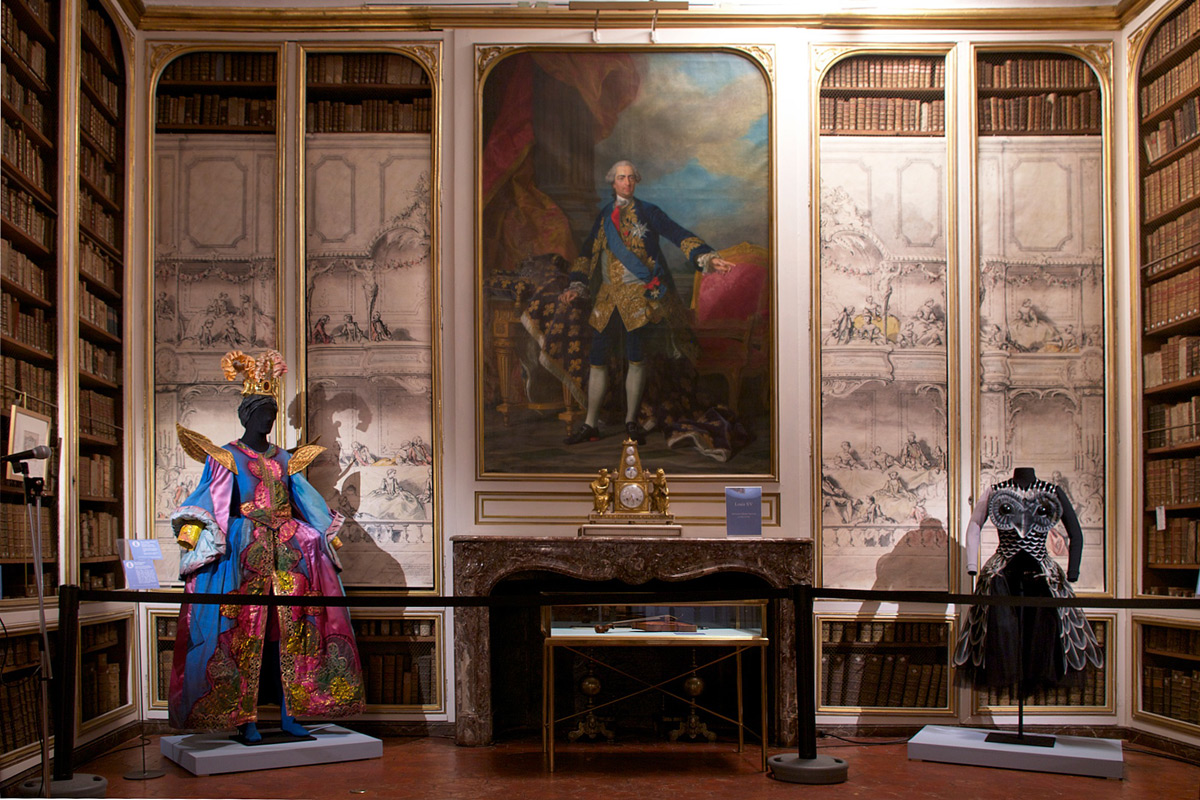
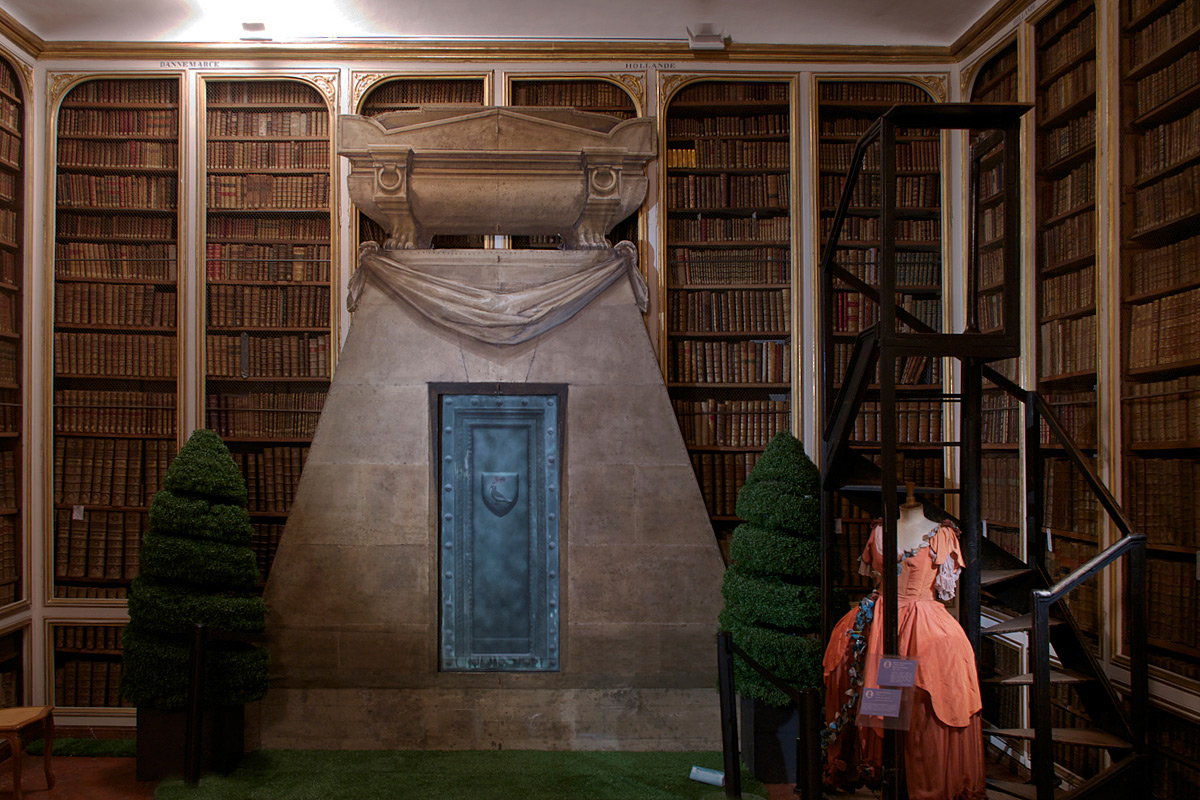
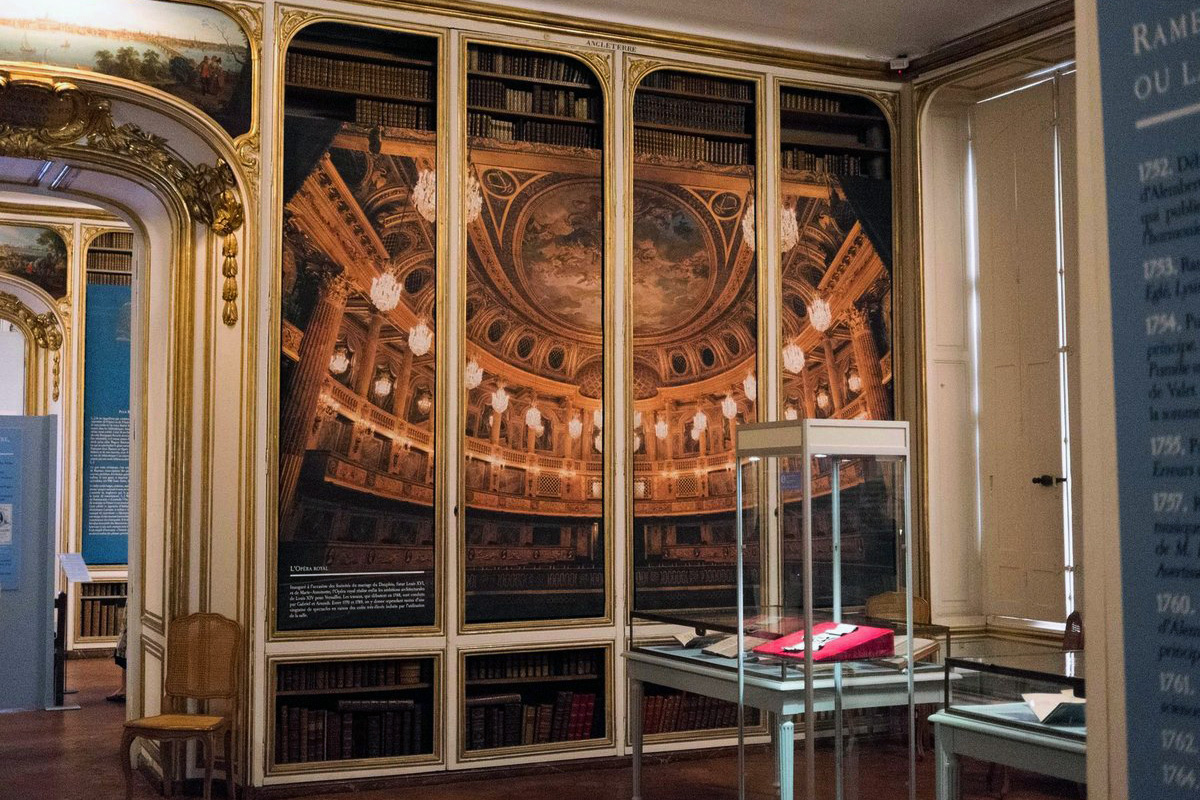
Exhibition: Rameau et Son Temps

Former Hôtel des Affaires étrangères et de la Marine, Municipal Library, City of Versailles

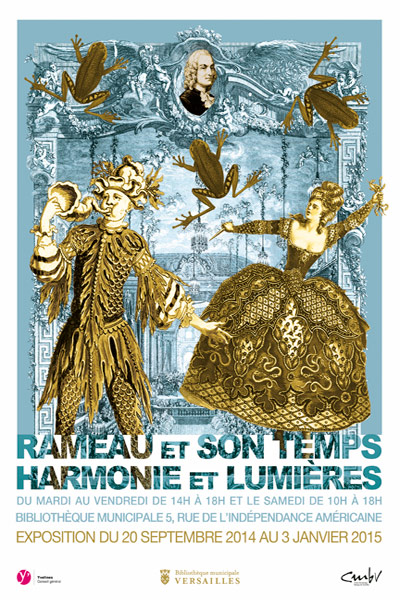
Rameau et son Temps, Harmonie et Lumières2014Rameau and His Time, Harmony and Enlightenment

Scenography and graphic design
Exhibition from 20 September 2014 to 3 January 2015
Curators
Christophe Thomet
Total area
300 m²
100 works
art objects, furniture, sculptures, paintings, stage costumes, works on paper, archive documents, books, audiovisual
Works budget
€30,000
Attendance
8,000 visitors

As part of the Rameau Year, and alongside Dijon, Lille and the Library-Museum of the Paris Opéra, the City of Versailles celebrates the composer who died 250 years ago. The exhibition was developed in collaboration with the Centre de musique baroque de Versailles.
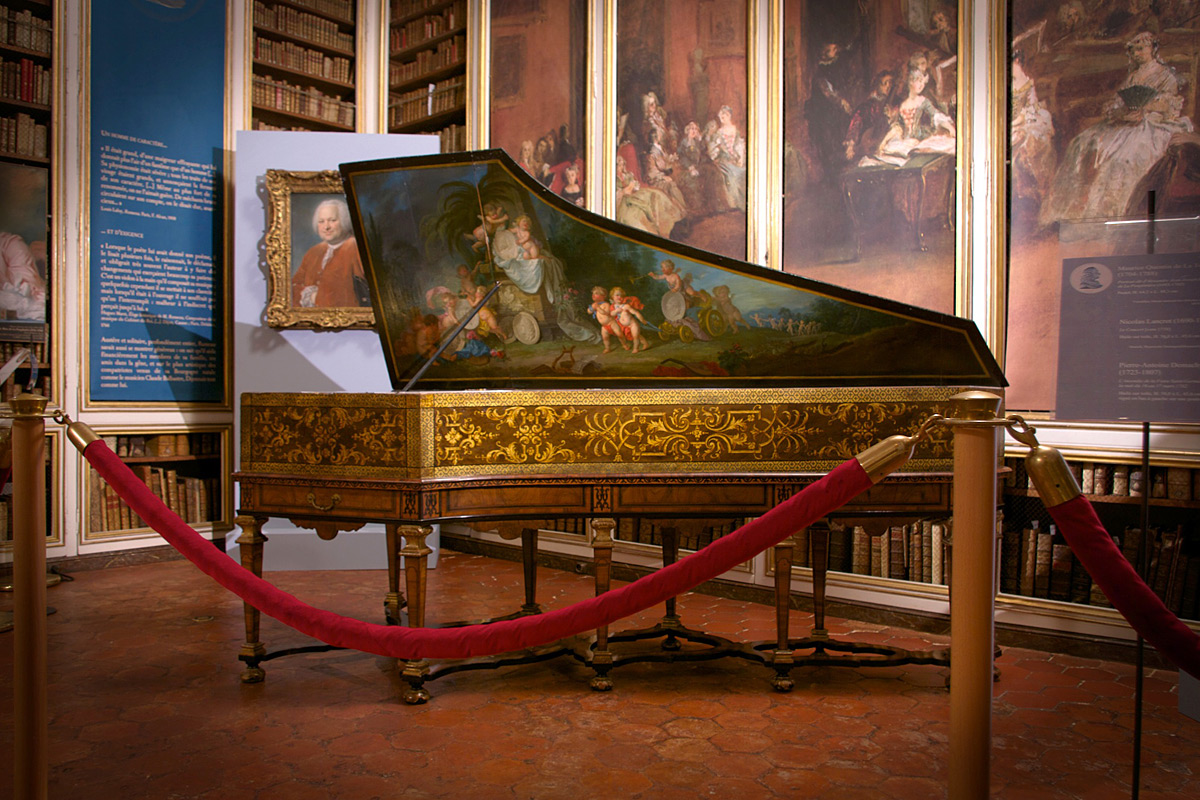
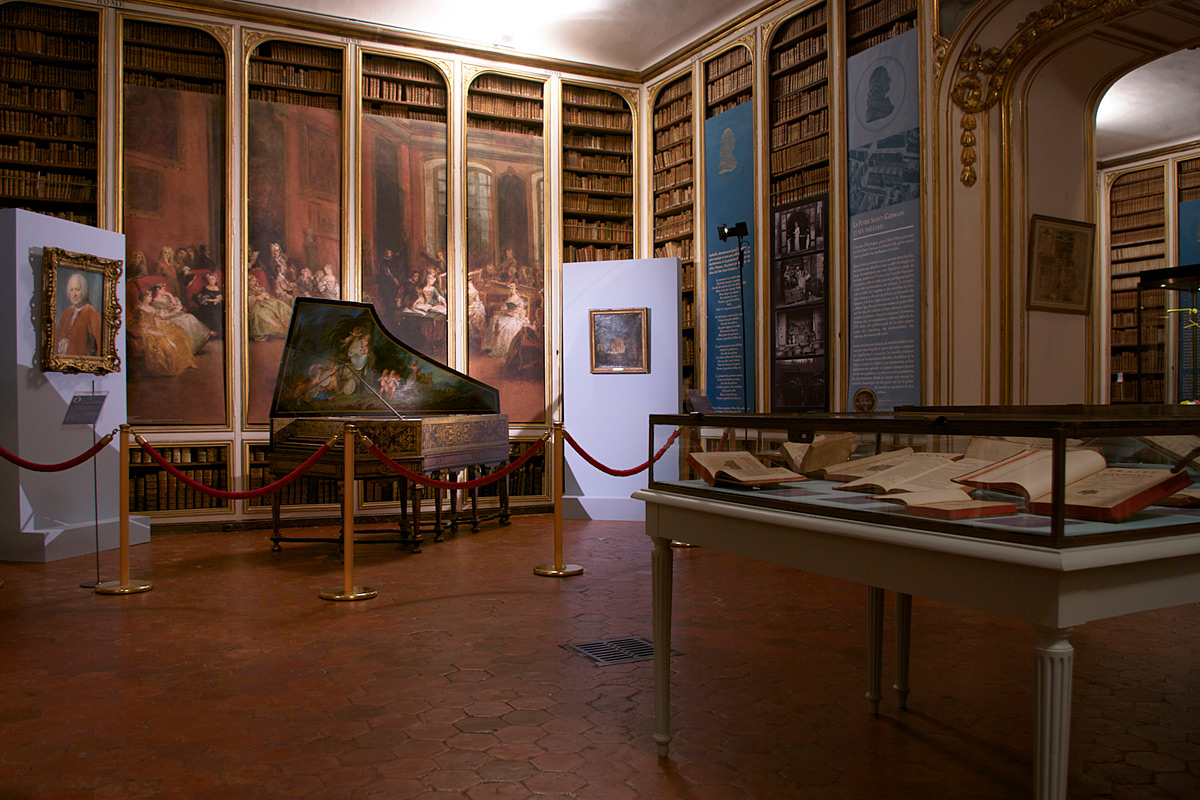
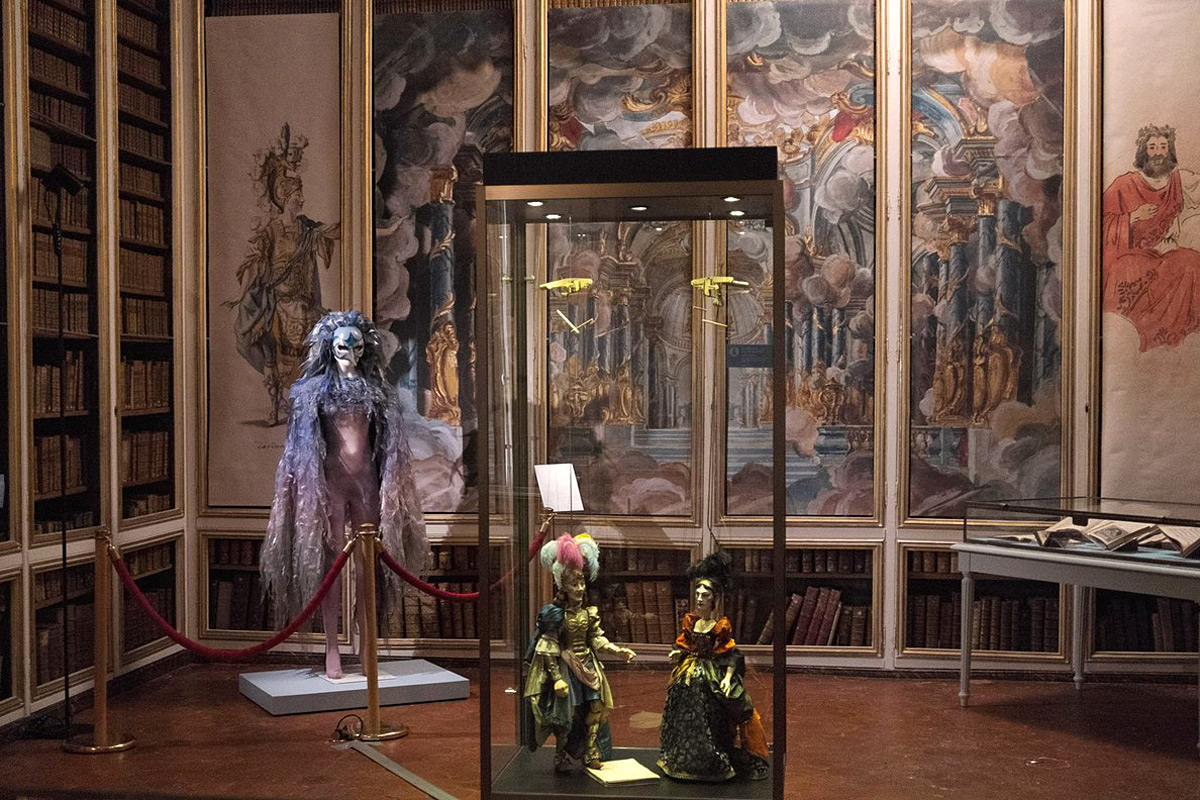
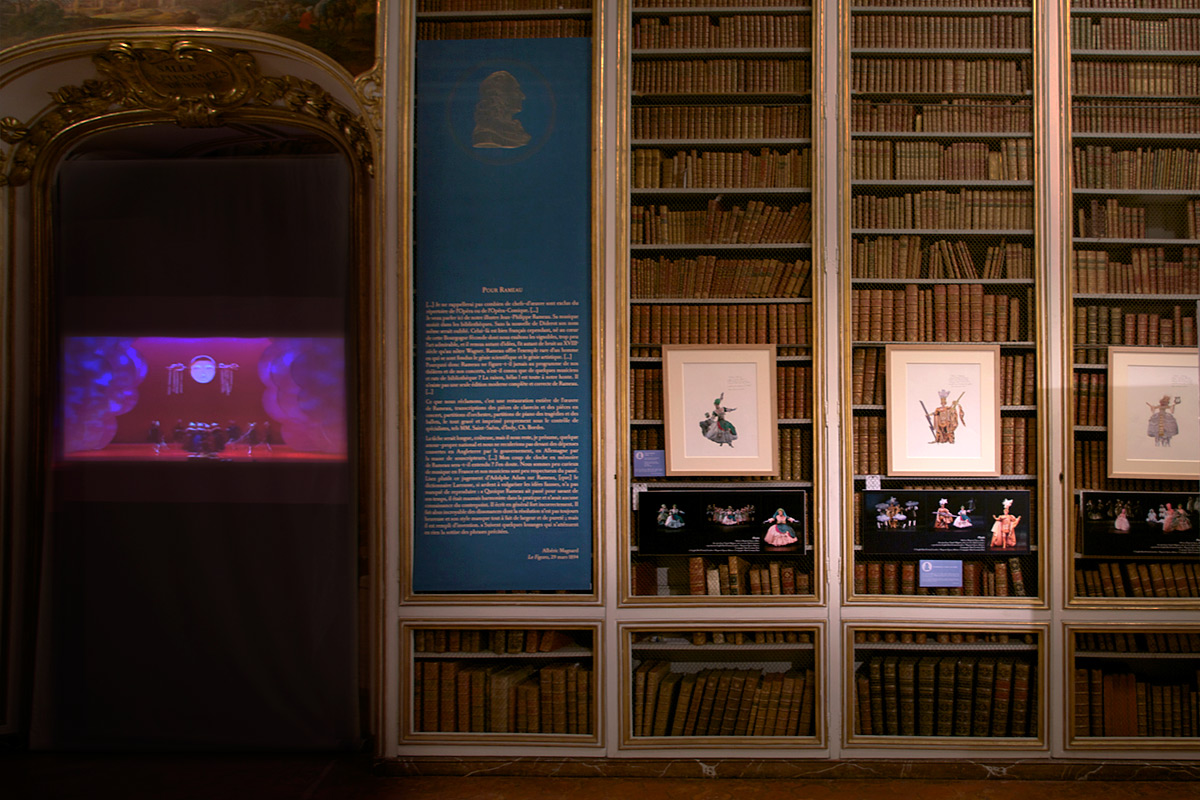
Design approach: the aim is to transform Louis XV’s Foreign Affairs Gallery with large decors printed on canvas and hung on the grilles of the library cabinets.

These decors evoke the exhibition’s theme – Rameau and the Opera – and also carry the exhibition signage.

The project favours limited timber construction and a simple, relatively quick installation before the works are put in place.

Exhibition: Rameau et Son Temps – image 1
Exhibition: Rameau et Son Temps – image 2
Exhibition: Rameau et Son Temps – image 3
Exhibition: Rameau et Son Temps – image 4
Exhibition: Rameau et Son Temps – image 5
Exhibition: Rameau et Son Temps – image 6
Exhibition: Rameau et Son Temps – image 7
Exhibition: Rameau et Son Temps – image 8

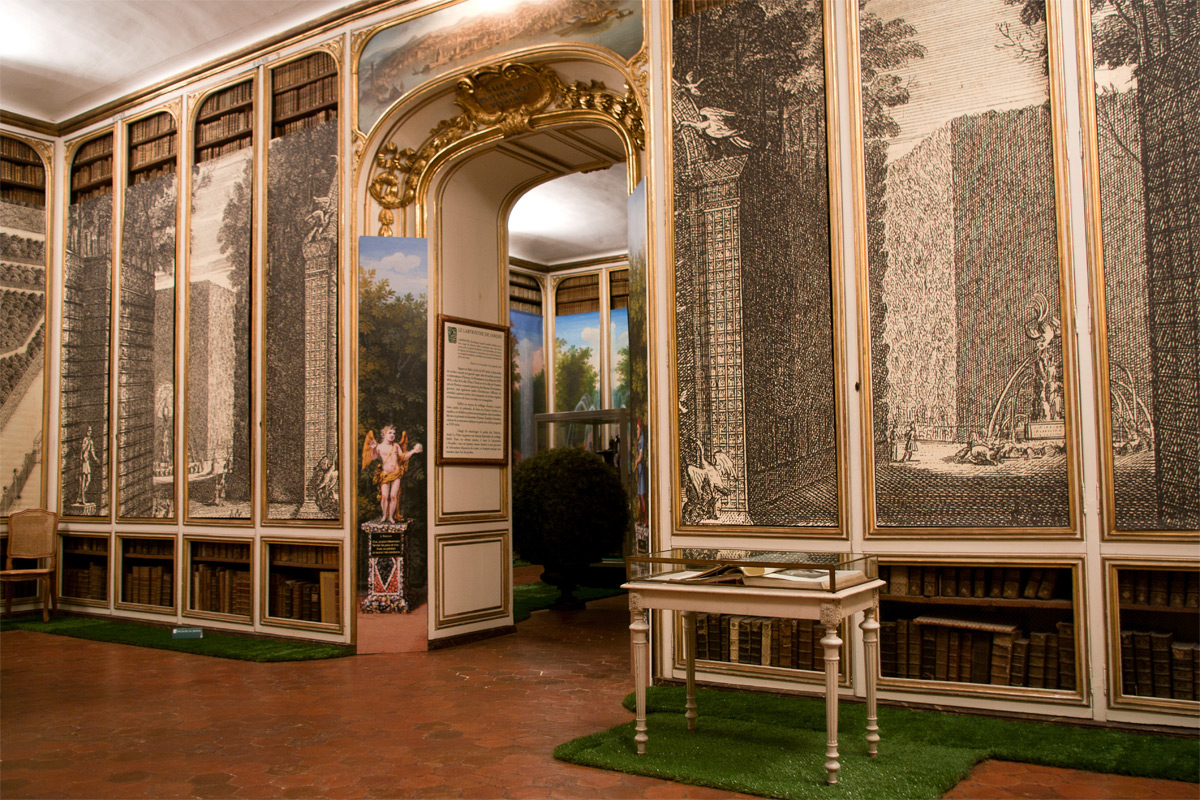
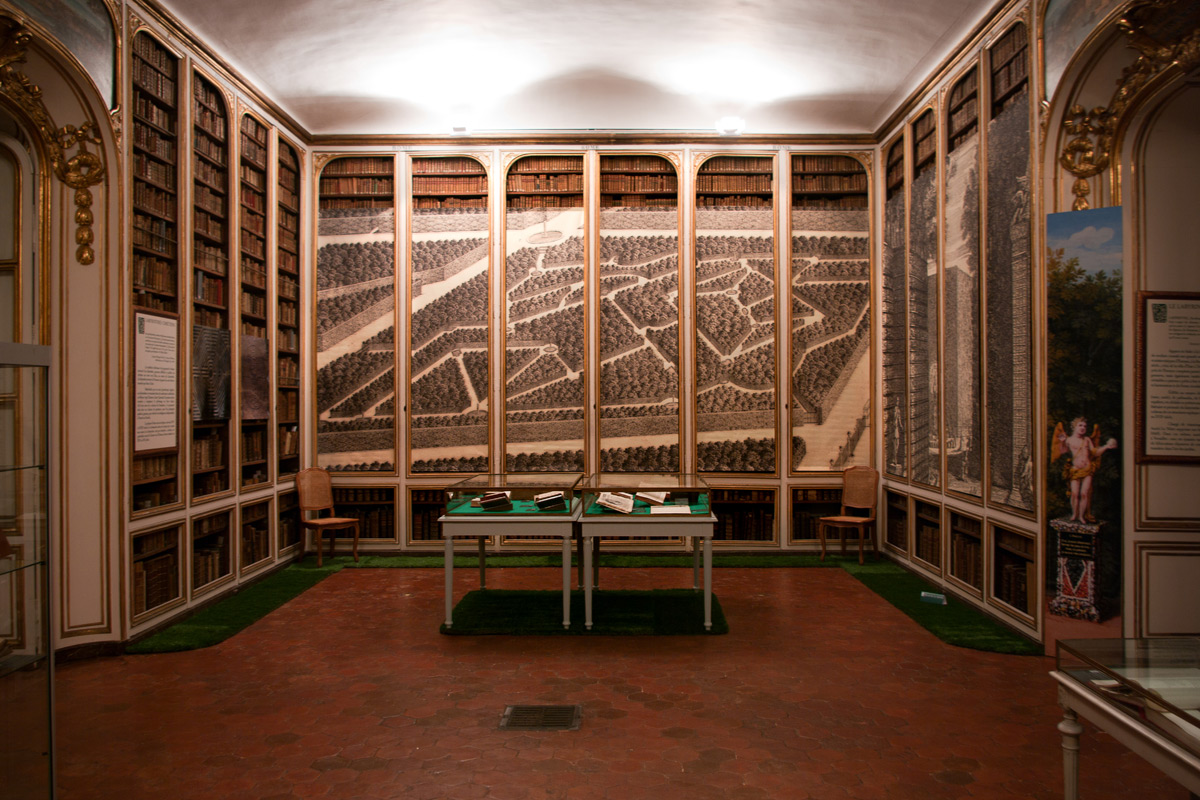
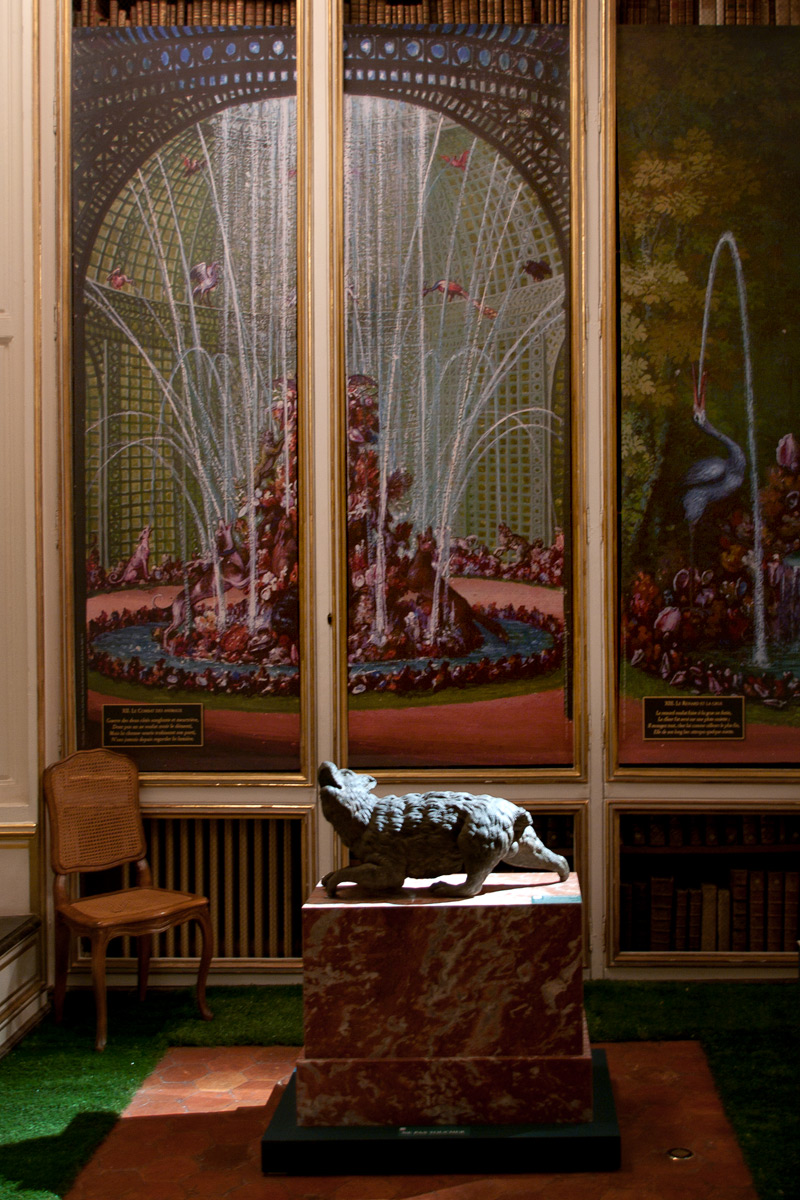
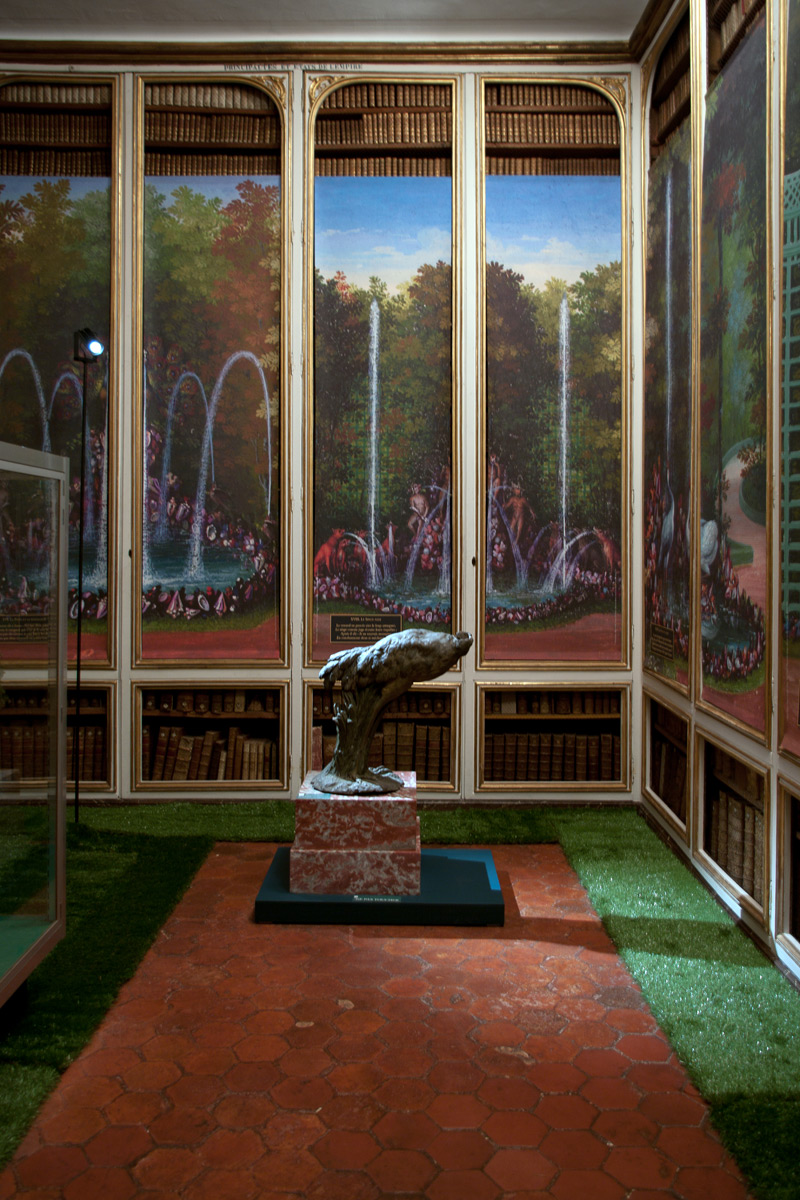
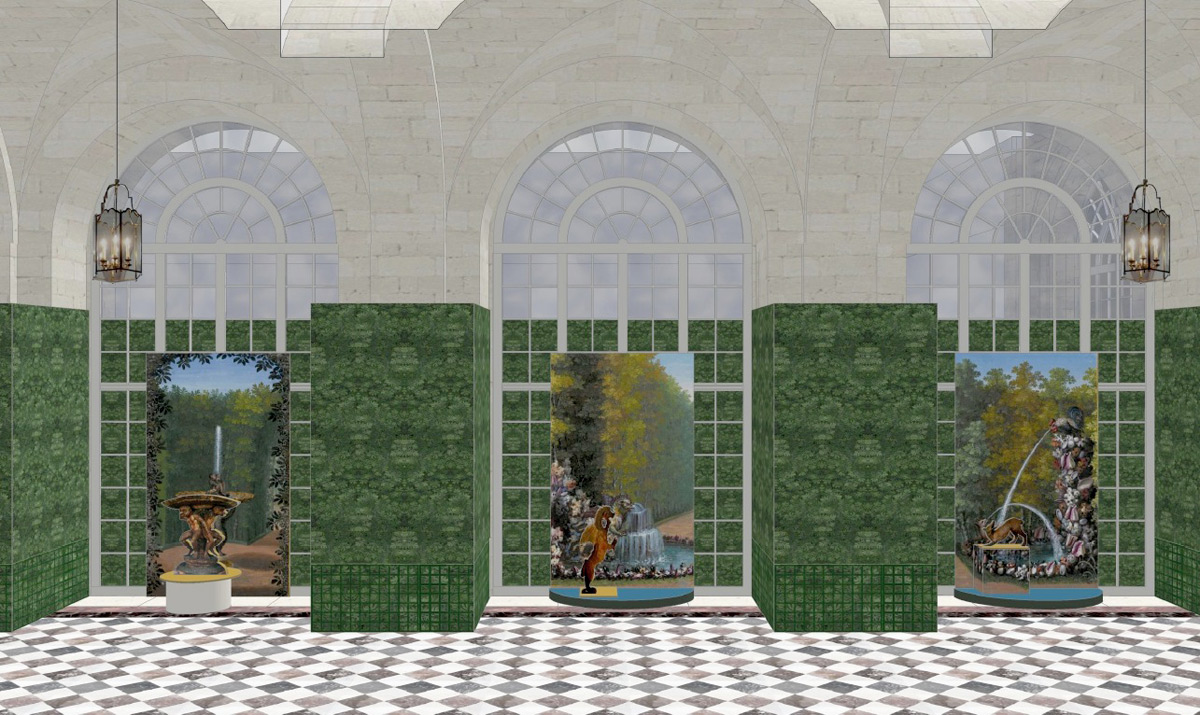
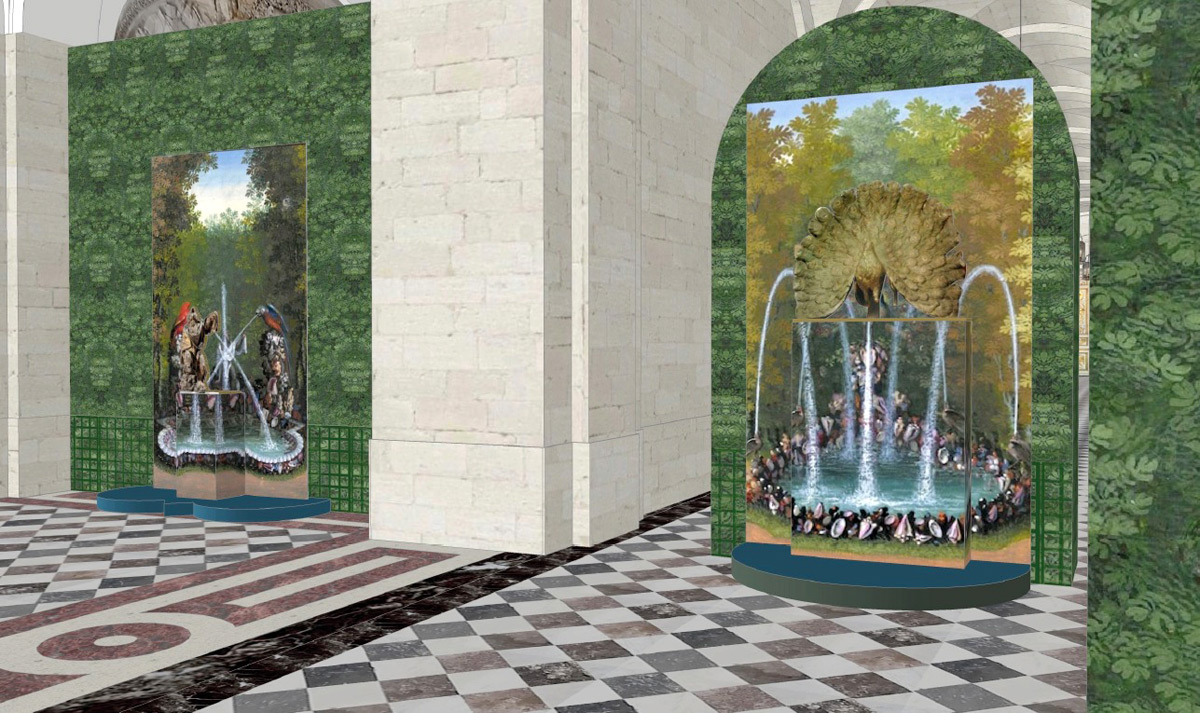
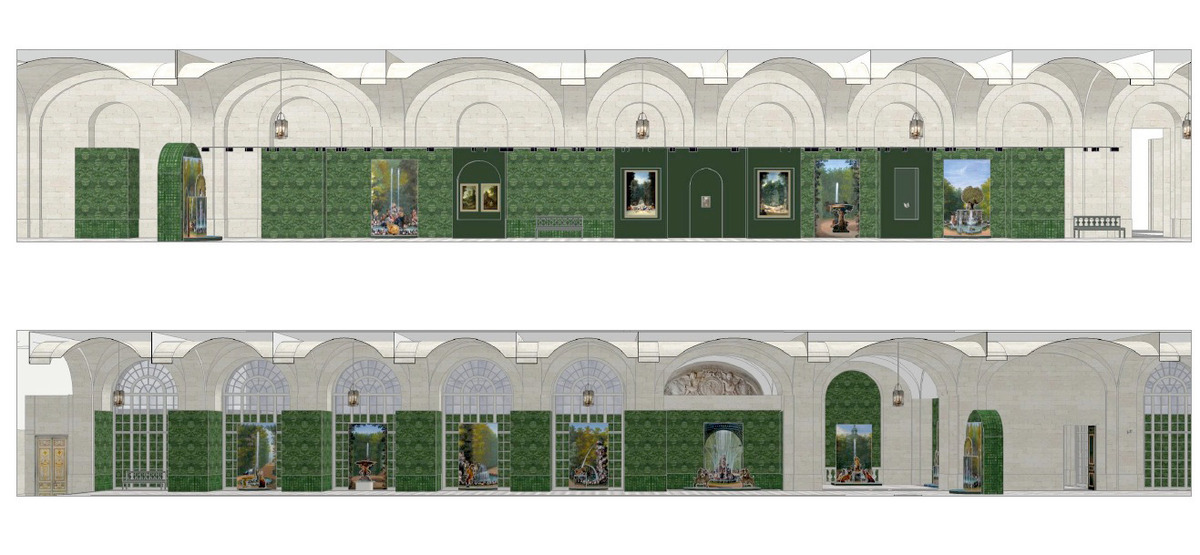
Exhibition: Le Labyrinthe de Versailles

Former Hôtel des Affaires étrangères et de la Marine, Municipal Library, City of Versailles

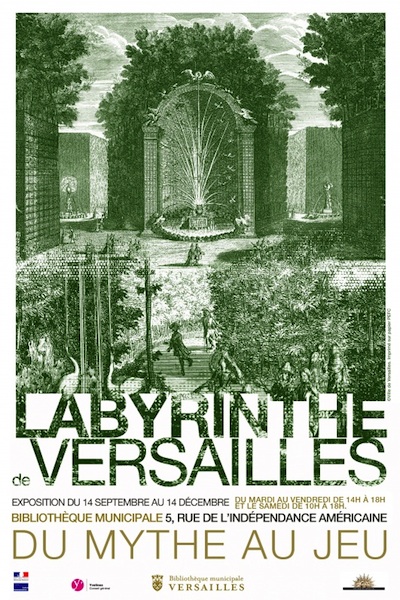
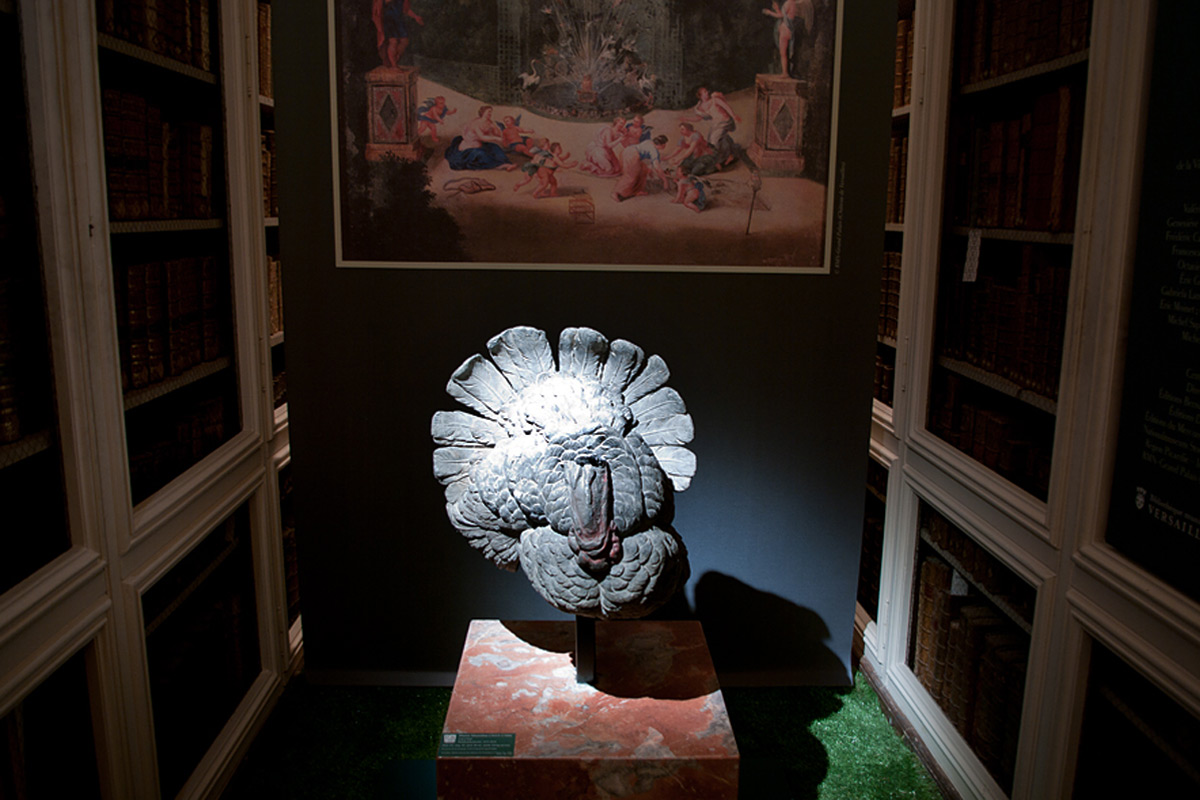
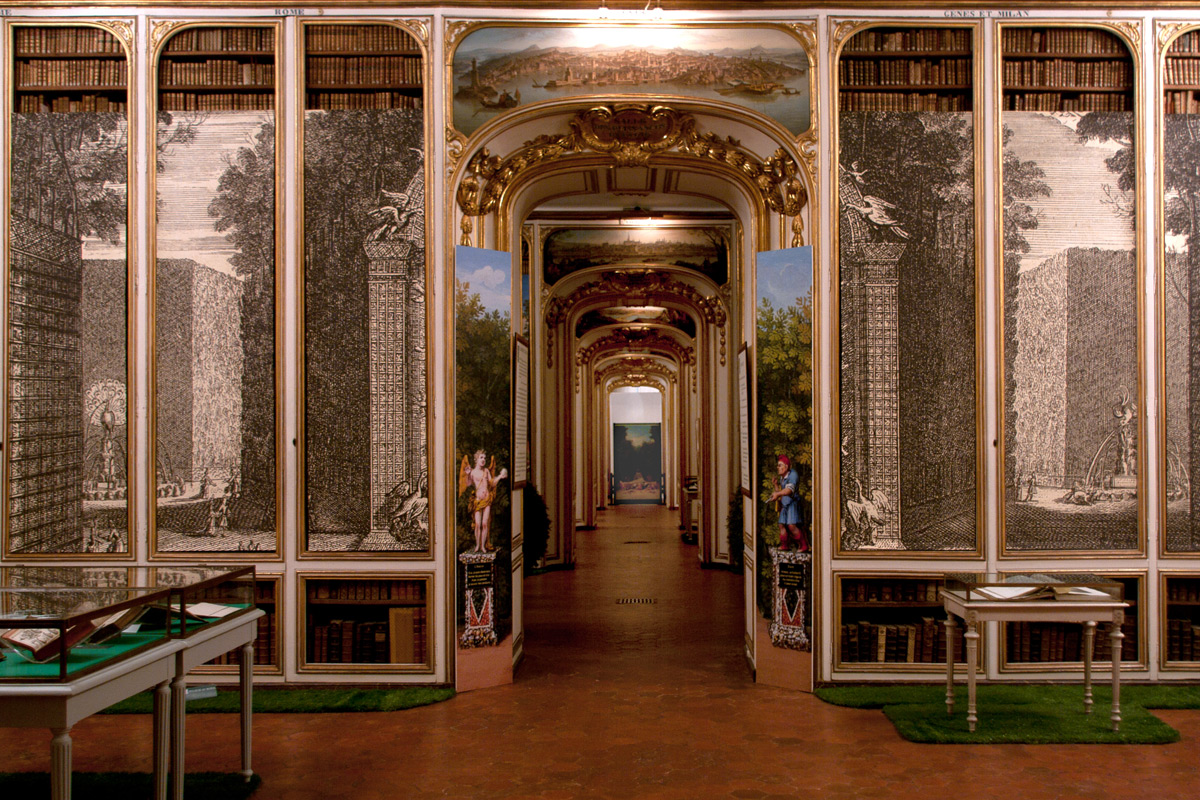
Le Labyrinthe de Versailles, du Mythe au Jeu2013The Labyrinth of Versailles, from Myth to Game

Scenography and graphic design
Exhibition from 14 September 2013 to 14 December 2013
Curators
Élisabeth Maisonnier
Total area
300 m²
100 works
art objects, furniture, sculptures, paintings, works on paper, archive documents, books, audiovisual
Works budget
€30,000
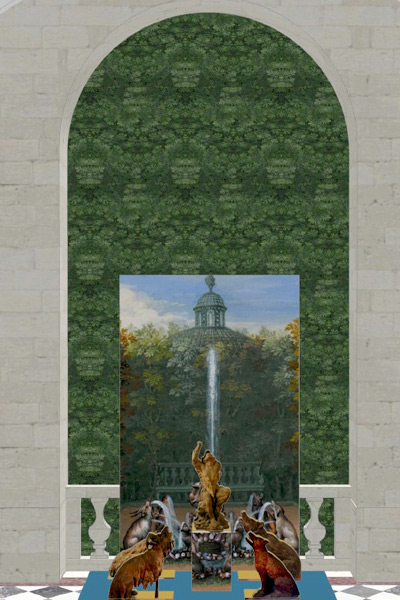
Attendance
8,000 visitors

Designed and planted by Le Nôtre in the Petit Parc of the Palace of Versailles from 1665, the Labyrinth grove occupied the site of today’s Queen’s Grove. It remains a myth: lost as early as 1775, it still retains an aura of mystery and contributes to the fascination exerted by the palace… The exhibition presents pieces that preserve the memory of this vanished grove: some of the lead statues that adorned it, the King’s copy of the Labyrinthe de Versailles engraved by Sébastien Le Clerc and coloured in gouache – one of the masterpieces of 17th-century painted books (Petit Palais collections) – as well as paintings, plans and engravings.

Design approach: large printed decors immerse visitors in what the groves of the Versailles Labyrinth might have looked like.

Work on the floor creates paths for visitors to follow. The floor layout evokes a garden plan with its parterres (of artificial turf) and paths (the gallery’s terracotta tiled floor), which continue into the large reproductions of the Labyrinth’s various groves.

Exhibition: Le Labyrinthe de Versailles – image 1
Exhibition: Le Labyrinthe de Versailles – image 2
Exhibition: Le Labyrinthe de Versailles – image 3
Exhibition: Le Labyrinthe de Versailles – image 4
Exhibition: Le Labyrinthe de Versailles – image 5
Exhibition: Le Labyrinthe de Versailles – image 6
Exhibition: Le Labyrinthe de Versailles – image 7
Exhibition: Le Labyrinthe de Versailles – image 8
Exhibition: Le Labyrinthe de Versailles – image 9
Exhibition: Le Labyrinthe de Versailles – image 10

Finalist projects

Exhibition: Marie-Antoinette et Louis XVI à Fontainebleau. Splendeur et douceur de vivre

Rmn-Grand Palais, Château de Fontainebleau

Marie-Antoinette et Louis XVI à Fontainebleau, Splendeur et Douceur de Vivre2025Marie-Antoinette and Louis XVI at Fontainebleau, Splendour and the Sweetness of Life

Finalist project, not built

Esquisse de scénographie pour l’exposition « Marie-Antoinette et Louis XVI à Fontainebleau. Splendeur et douceur de vivre », prévue au château de Fontainebleau, dans la salle de la Belle Cheminée, du 10 octobre 2026 au 25 janvier 2027.

240 years after their last stay, Marie-Antoinette and Louis XVI return to the Château de Fontainebleau for a major exhibition.

Through their many stays there – seven visits between 1774 and 1786 – marked by political and family events, the two sovereigns showed their attachment to Fontainebleau. The remarkable surviving decors (the Turkish Boudoir, the Silver Boudoir, the Queen’s Grand Cabinet, the King’s Powder Room, the Salle des Buffets, the Trinity Chapel, etc.), created under the direction of the architects Richard Mique, Nicolas-Marie Potain and Pierre Rousseau, still bear witness today to this moment of grace in the history of the Château.

Portraits, drawings, sculptures, art objects: more than 120 remarkable works connected with the Château are brought together thanks to loans from some twenty prestigious French and foreign institutions, such as the Palace of Versailles, the Musée du Louvre, the Bibliothèque nationale de France and the Gulbenkian Museum in Lisbon. They shed light on court life on the eve of the Revolution, evoking in particular theatre and music.

Design approach:

• A theatrical route, given rhythm by the lighting and the different colours assigned to each section, and by a range of light, soft graphics.

• Une exposition très identifiée « Fontainebleau et les apports de Louis XVI et de Marie-Antoinette ». On pourra utiliser comme motif graphique le chiffre de Marie-Antoinette par exemple, ou bien reprendre un dessin de grotesque de Pierre Rousseau, pour souligner la thématique des appartements et des décors voulus par Louis XVI et Marie-Antoinette pour Fontainebleau.

• Lighting is essential to create theatrical immersion. It contributes to the rhythm of the route and to the changes of atmosphere according to the theme of each section.

• The section texts are printed on backlit reflective fabrics, stapled and stretched over wooden frames. Each section of the exhibition is thus marked by a luminous landmark.

• La Salle à manger : une évocation fragmentaire pourra être proposée, avec un mur principal pour la présentation de deux des grands tableaux d’Hubert Robert, accrochés de part et d’autre de la cheminée historique remise en place dans ce décor, et surmontée d’un miroir. Face à ce mur principal, une cimaise avec une vitrine « buffet » encastrée proposera les éléments de la table royale.

• The raised floor will be covered with black carpet to heighten the theatrical effect of the spaces.

Exhibition: Marie-Antoinette et Louis XVI à Fontainebleau. Splendeur et douceur de vivre – image 1
Exhibition: Marie-Antoinette et Louis XVI à Fontainebleau. Splendeur et douceur de vivre – image 2
Exhibition: Marie-Antoinette et Louis XVI à Fontainebleau. Splendeur et douceur de vivre – image 3
Exhibition: Marie-Antoinette et Louis XVI à Fontainebleau. Splendeur et douceur de vivre – image 4
Exhibition: Marie-Antoinette et Louis XVI à Fontainebleau. Splendeur et douceur de vivre – image 5
Exhibition: Marie-Antoinette et Louis XVI à Fontainebleau. Splendeur et douceur de vivre – image 6

Exhibition: The King’s Animals

Palace of Versailles, Upper Stone Gallery, Africa and Crimea Rooms, Versailles

Les Animaux du Roi2020The King’s Animals

Finalist project, not built

The Établissement public du château, du musée et du domaine national de Versailles is organising an exhibition entitled “Les animaux du roi” in the Africa and Crimea Rooms, to be shown from 12 October 2021 to 13 February 2022.

Aménagé en pleine campagne, au cœur de la grande forêt giboyeuse d’Île-de-France, Versailles a favorisé le développement d’un nouveau rapport au monde animal. Cette exposition a pour ambition d’en explorer les contours, en développant plusieurs thèmes : d’abord la place de l’animal comme objet d’étude pour les scientifiques, de collection, et importante source d’inspiration pour les artistes de l’époque. Ensuite, la nature symbolique et politique des animaux sauvages qui se déploie dans les décors intérieurs de Versailles. L’animal est sollicité pour prendre part à des programmes concernant le décor des grandes demeures et de leurs jardins à une échelle sans précédent. Et enfin l’animal comme compagnon des princes et des souverains. Omniprésents à la cour, les animaux de compagnie (chiens, chats, oiseaux…) agrémentent le quotidien des petits princes et des souverains eux-mêmes. Cette attention au monde animal a permis l’émergence d’une nouvelle sensibilité en opposition à la vision cartésienne de l’animal-machine alors dominante.
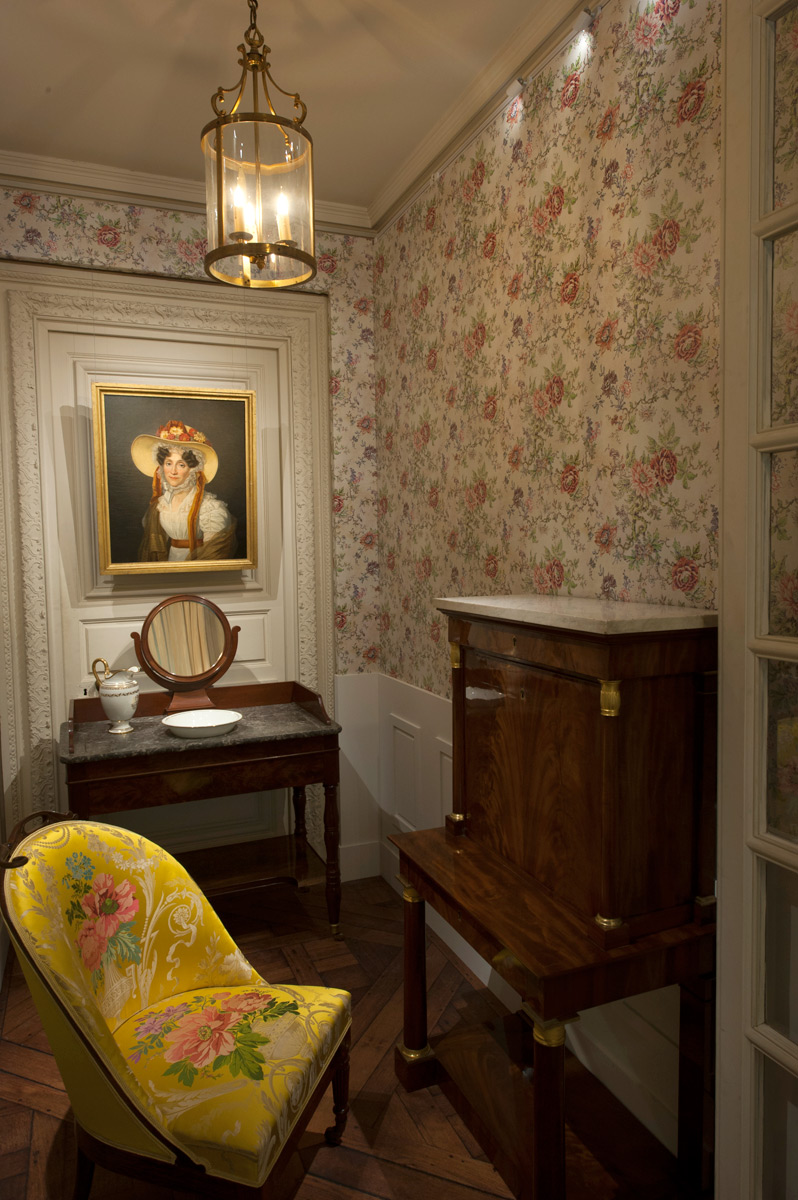
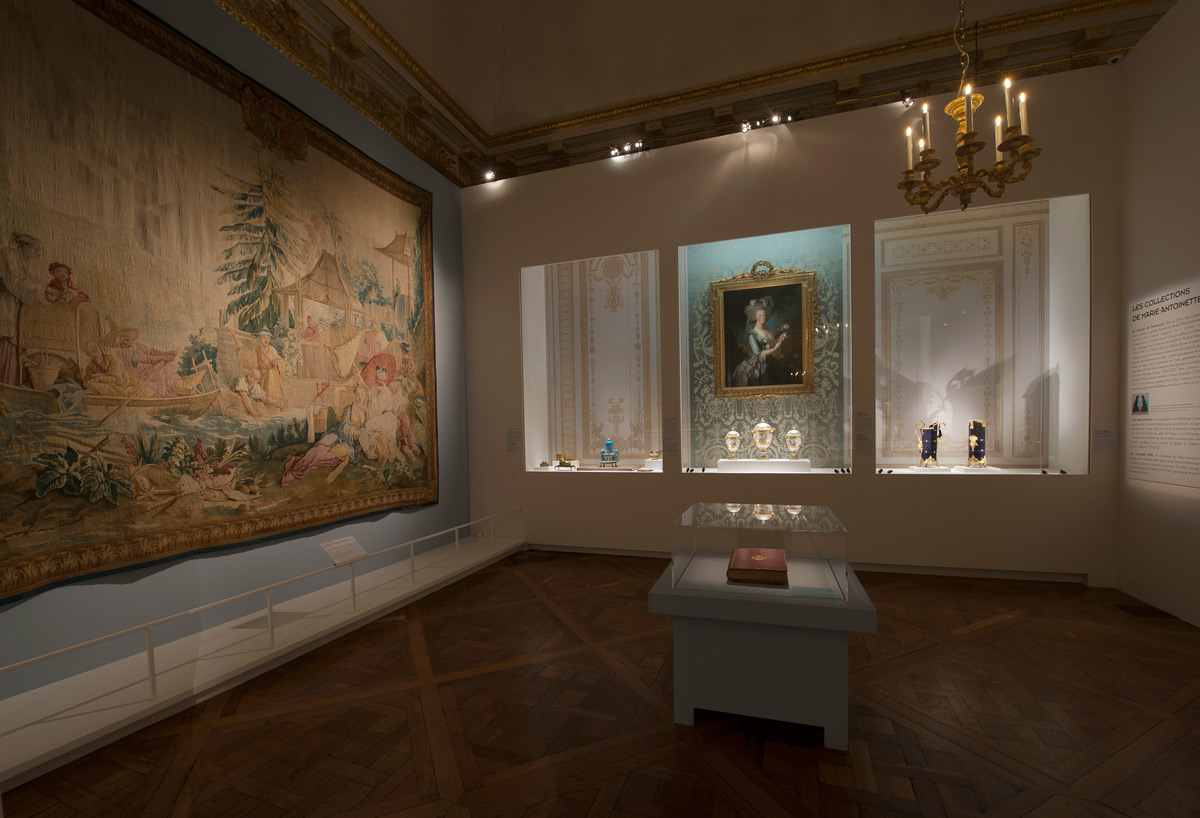
Design approach: the aim of this project is to be both educational and playful by bringing the animals to life. The existing architecture will be respected and enhanced.

Two highlights will punctuate the route: the most faithful possible evocations of two emblematic places at Versailles that have since disappeared: the Labyrinth grove in the Upper Stone Gallery, and the Versailles Menagerie with its interior decor in one of the exhibition rooms.
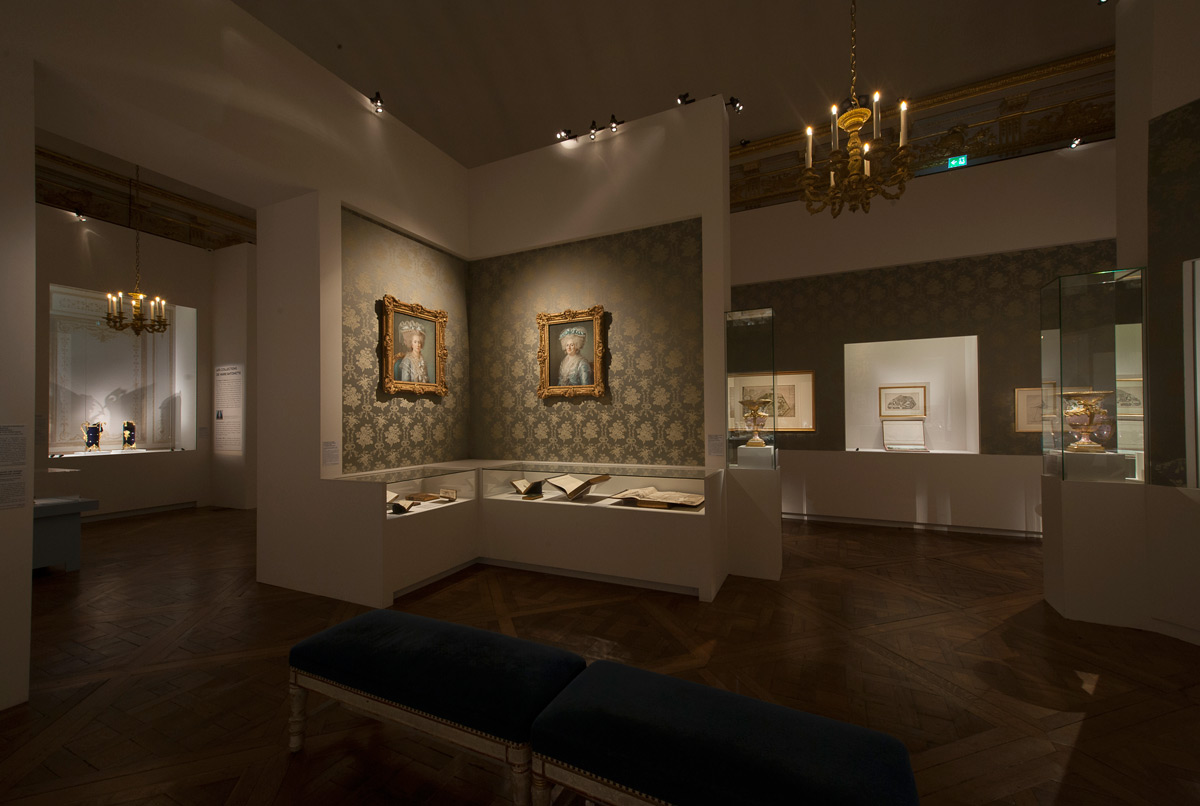
Exhibition: The King’s Animals – image 1
Exhibition: The King’s Animals – image 2
Exhibition: The King’s Animals – image 3
Exhibition: The King’s Animals – image 4
Exhibition: The King’s Animals – image 5
Exhibition: The King’s Animals – image 6

Exhibition: Napoleon’s Lost Palaces

Mobilier national, Galerie des Gobelins, Paris

Palais Disparus de Napoléon2020Napoleon’s Lost Palaces

Finalist project, not built

Programmée en 2021, année du bicentenaire de la mort de Napoléon et 150e anniversaire de l’incendie de Saint-Cloud, de Meudon et des Tuileries, l’exposition « Les palais disparus de Napoléon Ier » évoque cette grande entreprise de faste politique, dont le Mobilier national, héritier du Garde-meuble impérial conserve de précieux témoins.
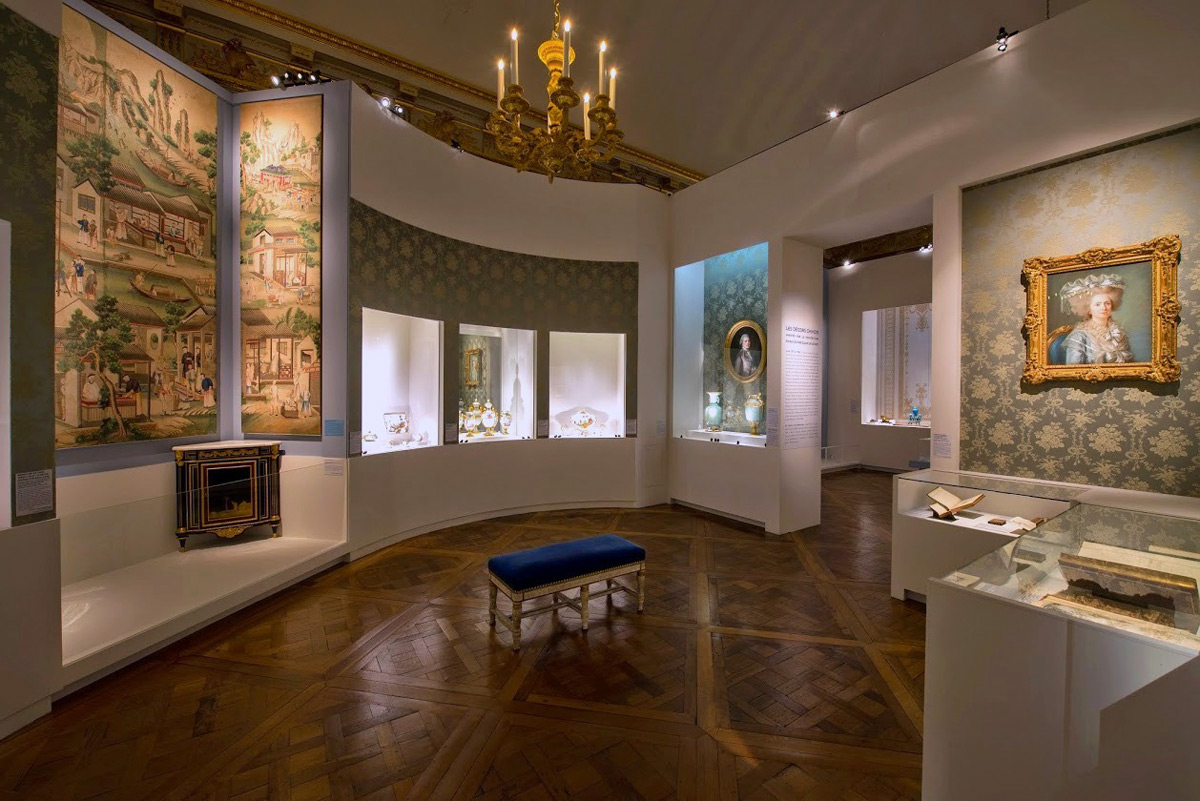
“No power of any kind can be conceived without pomp,” said the Emperor.

Among the many events planned in France in 2021 to celebrate Napoleon I, the Mobilier national exhibition aims to “bring back to life” the Tuileries Palace, seat of power, and the country residences of Saint-Cloud and Meudon, through works of art that adorned them between 1799 and 1815.

Design approach:

• Transform the Galerie des Gobelins into a palace with rooms en enfilade, using adaptable architectural display walls. The architecture of the gallery lends itself perfectly to this: it could be the wing of a palace.

• The theatricality of power, the theatricality of scenography. A dramatic effect at the entrance to the exhibition: the demolished palaces (rather than at the end of the route, as suggested by the curators). A sumptuous finale: the decor of the Tuileries. A dynamic, rhythmic route alternating between spectacular stagings (the Emperor) and more intimate spaces (Joséphine).
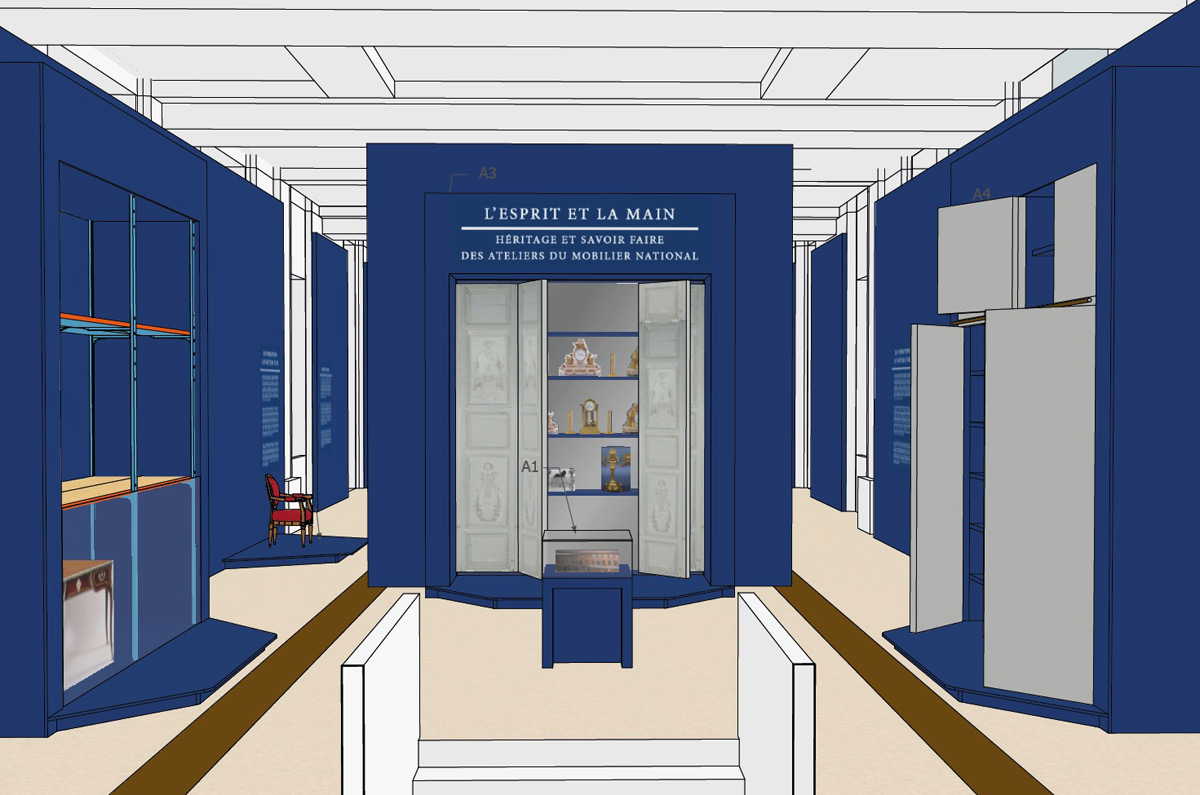
• For some rooms, reconstruction of textile decors from samples preserved by the Mobilier national.

• Evocative choices for the exhibition’s colours and signage.

• A carefully crafted lighting atmosphere, with “candlelight” for certain salons.
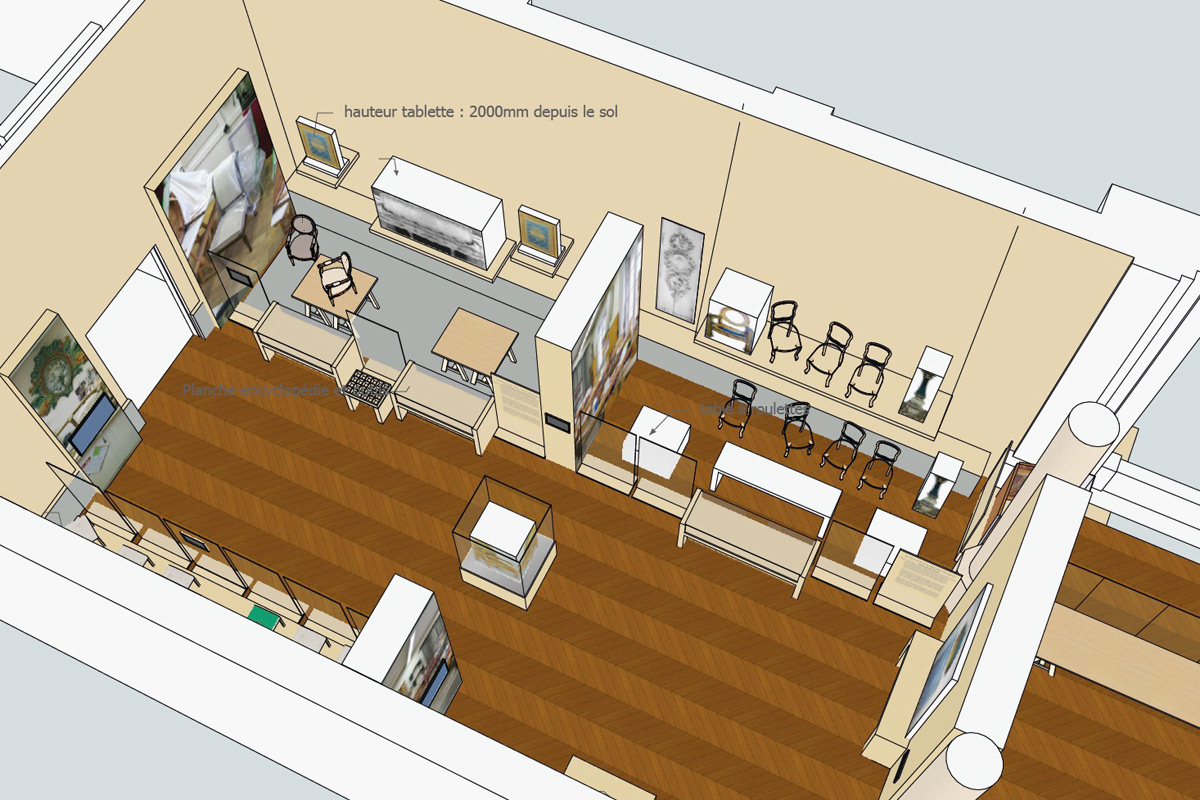
Exhibition: Napoleon’s Lost Palaces – image 1
Exhibition: Napoleon’s Lost Palaces – image 2
Exhibition: Napoleon’s Lost Palaces – image 3
Exhibition: Napoleon’s Lost Palaces – image 4
Exhibition: Napoleon’s Lost Palaces – image 5
Exhibition: Napoleon’s Lost Palaces – image 6

Exhibition: Versailles, Dream Architectures, 1660–1815

Palace of Versailles, Upper Stone Gallery, Versailles

Versailles, Architectures Rêvées, 1660-18152018Versailles, Dream Architectures, 1660–1815

Finalist project, not built

Dans le cadre de la première biennale d’architecture et de paysage de la région Île-de-France, le château de Versailles, présente du 4 mai au 4 août 2019 dans la Galerie de pierre haute, un rassemblement inédit de 120 dessins de projets d’architecture élaborés entre les XVIIe et XIXe siècles pour le Château de Versailles et ses Jardins.
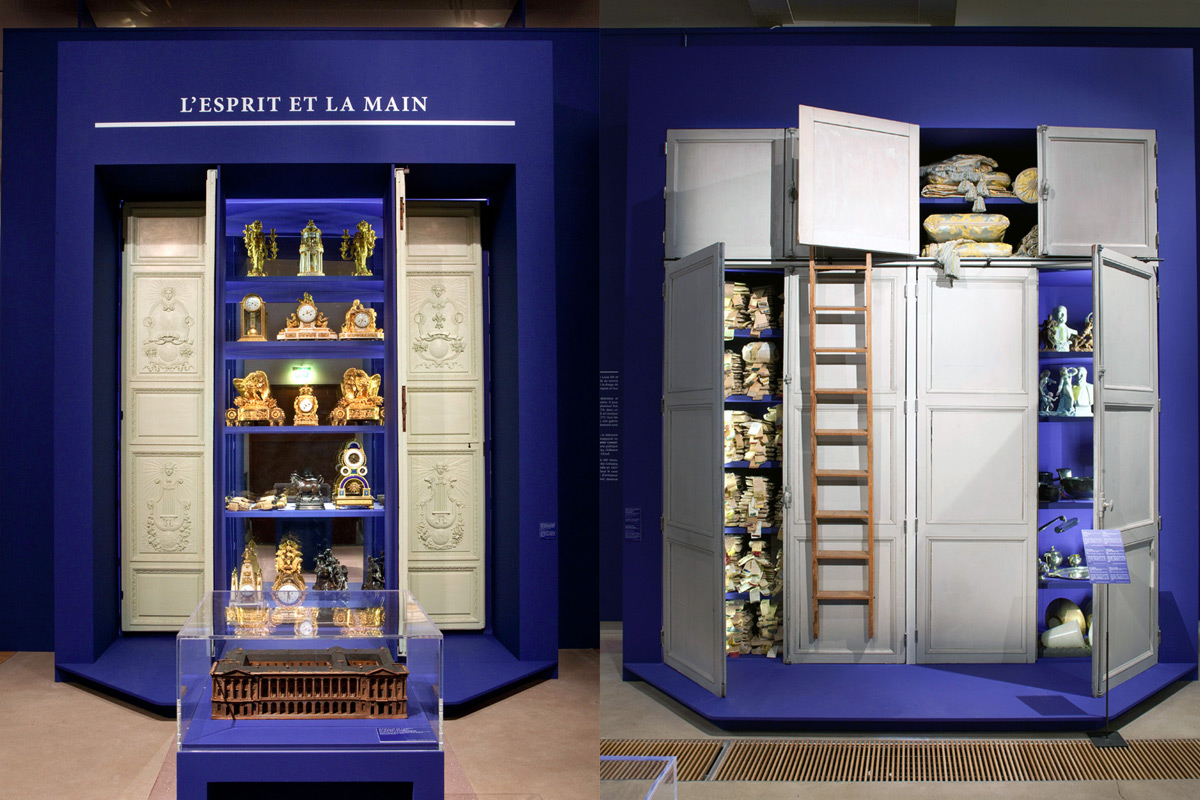
(NB: the call for tenders issued by the Palace of Versailles covered the scenographies of two temporary exhibitions at once, this one and Madame de Maintenon, which you can find among my projects completed in 2019. The Palace of Versailles finally decided to entrust the two scenographies to two different scenographers.)

Design approach:

The Upper Stone Gallery is not usually an exhibition space. The aim is therefore to fill this monumental space with architectural plans and elevations while preserving its architectural, mineral character, organising an educational route that renews the interest of a display of works on paper alone. The “windows” side of the gallery is reserved for large backlit visuals reproducing engravings of the palace at different periods (set alongside the dream projects of the same periods), while the “statues” side is lined by a long display wall in several colours, with alcoves identifying each section (period) of the exhibition. Along this great promenade, where the drawings play with the architecture, inclined lecterns present the plans of these dream architectures, while the elevations and sections are displayed vertically on the walls. Two large models are planned, giving physical form to two of these dream architectures.

Exhibition: Versailles, Dream Architectures, 1660–1815 – image 1
Exhibition: Versailles, Dream Architectures, 1660–1815 – image 2
Exhibition: Versailles, Dream Architectures, 1660–1815 – image 3
Exhibition: Versailles, Dream Architectures, 1660–1815 – image 4
Exhibition: Versailles, Dream Architectures, 1660–1815 – image 5
Exhibition: Versailles, Dream Architectures, 1660–1815 – image 6

Exhibition: Baroque in the Age of Enlightenment: 18th-Century Paintings from the Churches of Paris

Paris-Musées, Petit-Palais, Paris

Le Baroque des Lumières, Peintures du XVIIIe Siècle des Églises de Paris2016Baroque in the Age of Enlightenment: 18th-Century Paintings from the Churches of Paris

Finalist project, not built

Design approach:

Evoking both church space and 18th-century Baroque

The movement of forms characteristic of the Baroque will be given to the route through large curved display walls. They will also serve to draw visitors onward after the pauses of the educational sections punctuating the route. The use of concave and convex forms will evoke the curving façades and pediments of Baroque architecture, as well as the walk around the choir when visiting a church.

Reference will be made to a few simple architectural elements evocative of religious architecture, such as pilasters and arches, and to materials such as stone, marble and wood.

Trompe-l’œil, illusionistic decor, painted decors, theatricality:

À l’image de la peinture monumentale au XVIIIe siècle, l’emploi de grandes surfaces imprimées (opaques ou rétro-éclairées) peut remplir le rôle spectaculaire, théâtral, illusionniste dans une scénographie d’exposition.

The Baroque is thus evoked through its own artifices, creating illusion and theatricality. One also thinks of the painted cloths that made up 18th-century theatre sets.

Exhibition: Baroque in the Age of Enlightenment: 18th-Century Paintings from the Churches of Paris – image 1
Exhibition: Baroque in the Age of Enlightenment: 18th-Century Paintings from the Churches of Paris – image 2
Exhibition: Baroque in the Age of Enlightenment: 18th-Century Paintings from the Churches of Paris – image 3
Exhibition: Baroque in the Age of Enlightenment: 18th-Century Paintings from the Churches of Paris – image 4
Exhibition: Baroque in the Age of Enlightenment: 18th-Century Paintings from the Churches of Paris – image 5
Exhibition: Baroque in the Age of Enlightenment: 18th-Century Paintings from the Churches of Paris – image 6

Exhibition: Oscar Wilde, the Ultimate Impertinent

Paris-Musées, Petit-Palais, Paris

Oscar Wilde, L’Impertinent Absolu2016Oscar Wilde, the Ultimate Impertinent

Finalist project, not built

Design approach:

Literary aestheticism, decadence and symbolism are the guiding threads inspiring a scenography devoted to Oscar Wilde – together with refinement, sensitivity and sensuality.

A great central perspective is created, broken by printed tulles reproducing enlargements of archive material or portraits of Wilde. These tulles separate the sections and offer a lively scenographic play of transparencies, which seems to me to suit the exhibition’s theme, Wilde’s ghostly persona and his sensuality. Tulle can help create an ethereal atmosphere along a route ranging from amusement to tragedy; it can also evoke Salome’s veils.

The scenography is broadly inspired by the Aesthetic Movement, an all-encompassing artistic movement. The colours used, the materials, the design of the furniture, the importance of graphics (Morris wallpapers) and finally the work on light all help to “convey a writer who ‘had managed to create, in front of his real self, an amusing ghost that he played with wit’ (Gide).”

Two more decorative spaces punctuate the route: the evocation of the Grosvenor Gallery with the group of Pre-Raphaelite paintings, and the section devoted to Salome.

Quotations from Wilde are reproduced in projected light and accompany the visit, while listening areas for readings punctuate the route.

Exhibition: Oscar Wilde, the Ultimate Impertinent – image 1
Exhibition: Oscar Wilde, the Ultimate Impertinent – image 2
Exhibition: Oscar Wilde, the Ultimate Impertinent – image 3
Exhibition: Oscar Wilde, the Ultimate Impertinent – image 4
Exhibition: Oscar Wilde, the Ultimate Impertinent – image 5
Exhibition: Oscar Wilde, the Ultimate Impertinent – image 6

Exhibition: The Art of Peace: Secrets and Treasures of Diplomacy

Paris-Musées, Petit-Palais, Paris

L’Art de la Paix, Secrets et Trésors de la Diplomatie2016The Art of Peace: Secrets and Treasures of Diplomacy

Finalist project, not built

Design approach:

The scenographic route will be rhythmic and contrasted, according to the successive spaces devoted to each of the very distinct sections.

It will alternate between restrained, pared-back museum spaces and more decorative spaces evoking classical architecture. The architecture will be ordered and constructed, like peace, which is a difficult construction and a long journey.

War destroys; peace builds.

The reference to classical architecture is a reference to an ideal of order and reason.

The presentation is educational, establishing a link between the works and the Treaties.

The Treaties Room is conceived as a showcase, at once spectacular, intimate and majestic: peace is precious.

Exhibition: The Art of Peace: Secrets and Treasures of Diplomacy – image 1
Exhibition: The Art of Peace: Secrets and Treasures of Diplomacy – image 2
Exhibition: The Art of Peace: Secrets and Treasures of Diplomacy – image 3
Exhibition: The Art of Peace: Secrets and Treasures of Diplomacy – image 4
Exhibition: The Art of Peace: Secrets and Treasures of Diplomacy – image 5
Exhibition: The Art of Peace: Secrets and Treasures of Diplomacy – image 6

Exhibition: Hospices de Beaune: New Scenography for the Salle Saint-Louis

Hospices de Beaune, Beaune

Hospices de Beaune, Renouvellement de la Scénographie de la Salle Saint-Louis2015Hospices de Beaune: New Scenography for the Salle Saint-Louis

Finalist project, not built

Parti pris scénographique : La salle Saint-Louis présente les collections de l’Hôtel-Dieu, elle est la dernière salle de la visite du musée de l’Hôtel-Dieu. Elle doit en être le point d’orgue, à la hauteur du monument que sont les Hospices de Beaune.

In this study, for the sake of a clear narrative, it seemed important to me to establish a chronological route: from the history of the Hôtel-Dieu to the 15th-century altarpiece, the 15th-century statuary, the chests of the 15th and 16th centuries, the tapestries of the 16th to 18th centuries, the 18th-century bust by Pajou, and finally the modern era with the wine estate – not forgetting, near the altar, a group of 17th-century paintings.

Display walls will define the spaces and guide visitors smoothly.

In places, raised platforms will allow works to be displayed and kept at a distance.

In this project, the reconstruction of the patients’ ward faces the space introducing the altarpiece. This arrangement recalls that the altarpiece was placed in view of the sick, bringing them comfort and solace.

The scenography will seek to evoke the spirit of the 15th century and the spirituality that could accompany the sick, while evoking the present day, with the wine estate, at the end of the route.

The aim is to form a coherent whole, in both the narrative and the route.

Exhibition: Hospices de Beaune: New Scenography for the Salle Saint-Louis – image 1
Exhibition: Hospices de Beaune: New Scenography for the Salle Saint-Louis – image 2
Exhibition: Hospices de Beaune: New Scenography for the Salle Saint-Louis – image 3
Exhibition: Hospices de Beaune: New Scenography for the Salle Saint-Louis – image 4
Exhibition: Hospices de Beaune: New Scenography for the Salle Saint-Louis – image 5
Exhibition: Hospices de Beaune: New Scenography for the Salle Saint-Louis – image 6
Exhibition: Émile Bernard: Painting in Anger

Musée d’Orsay, Musée de l’Orangerie, Paris

Émile Bernard, la Peinture en Colère2014Émile Bernard: Painting in Anger

Finalist project, not built

Design approach: a unified, restrained scenography that clearly identifies each of the exhibition’s many sections (stylistic periods) and conveys the monumental, classical character that would be the culmination of Émile Bernard’s work. A scenography conceived as an extension of his thought and his ultimate dream.

Exhibition: Émile Bernard: Painting in Anger – image 1
Exhibition: Émile Bernard: Painting in Anger – image 2
Exhibition: Émile Bernard: Painting in Anger – image 3
Exhibition: Émile Bernard: Painting in Anger – image 4
Exhibition: Émile Bernard: Painting in Anger – image 5
Exhibition: Émile Bernard: Painting in Anger – image 6