Jérôme DumouxScenography • Museography

Permanent Installations

Completed / ongoing projects

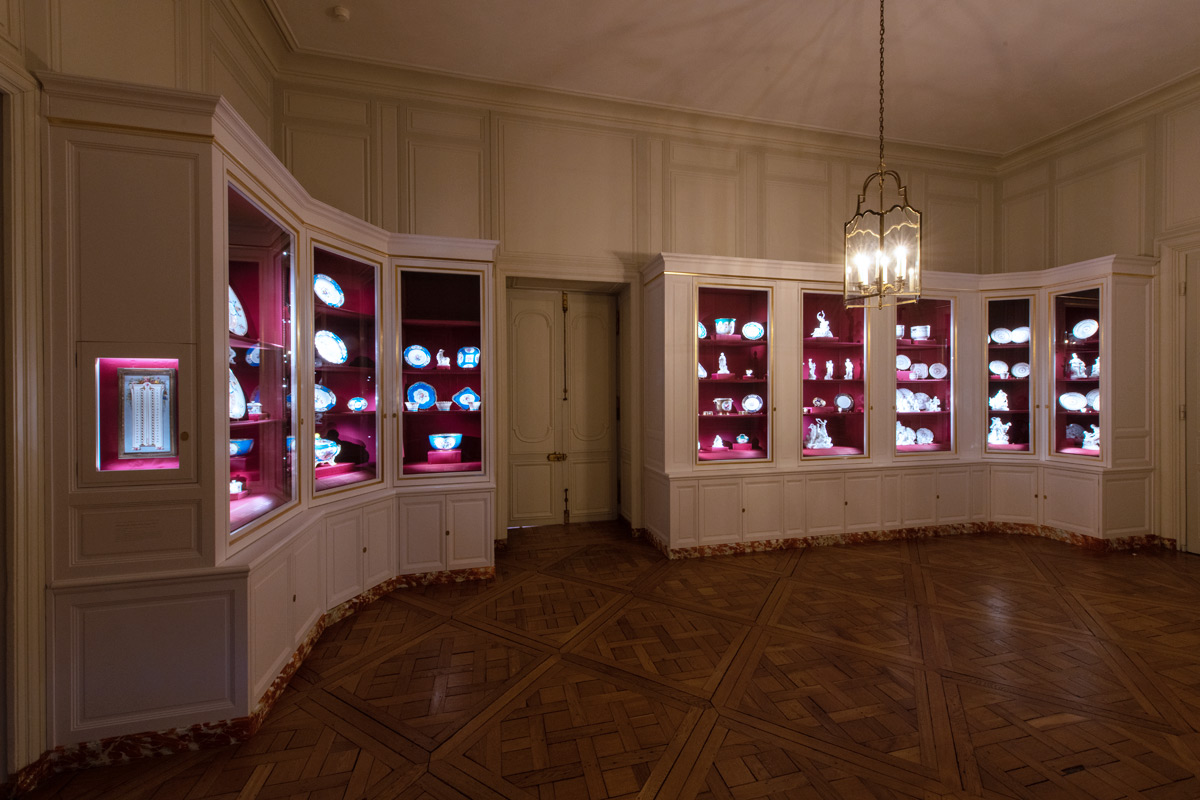
The Porcelain Cabinet

Palace of Versailles, King’s Private Apartment, Billiard Room, Versailles

Le Cabinet des porcelaines2019The Porcelain Cabinet

Permanent installation

Scenography and graphic design
Permanent installation, opened 3 December 2019
Curators
Marie-Laure de Rochebrune, chief curator at the Musée national des châteaux de Versailles et de Trianon
Total area
600 m²
105 works
art objects, porcelain, biscuit porcelain
Works budget
€140,000. Funded by the La Marck Foundation

A historic installation

Le château de Versailles aménage pour la première fois un espace muséographique entièrement dédié à la présentation de ses collections de pièces de service en porcelaine provenant de la manufacture royale de Vincennes-Sèvres, grâce au mécénat de la Fondation La Marck. Situé dans l’Appartement intérieur du Roi, le Cabinet des porcelaines sera accessible en visite guidée.

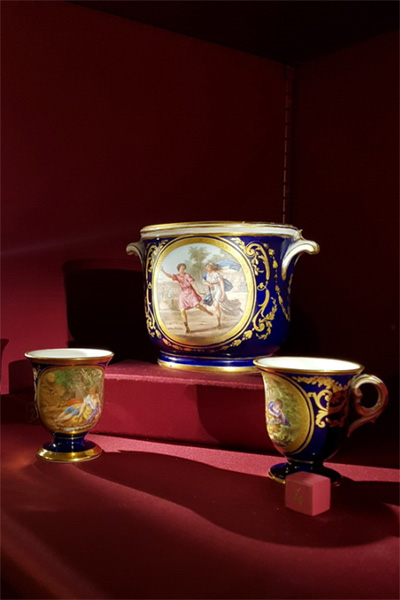
Les productions de la manufacture royale de porcelaine de Vincennes-Sèvres, dans la seconde moitié du XVIIIe siècle, constituent quelques-unes des plus grandes réussites dans le domaine des arts décoratifs français.

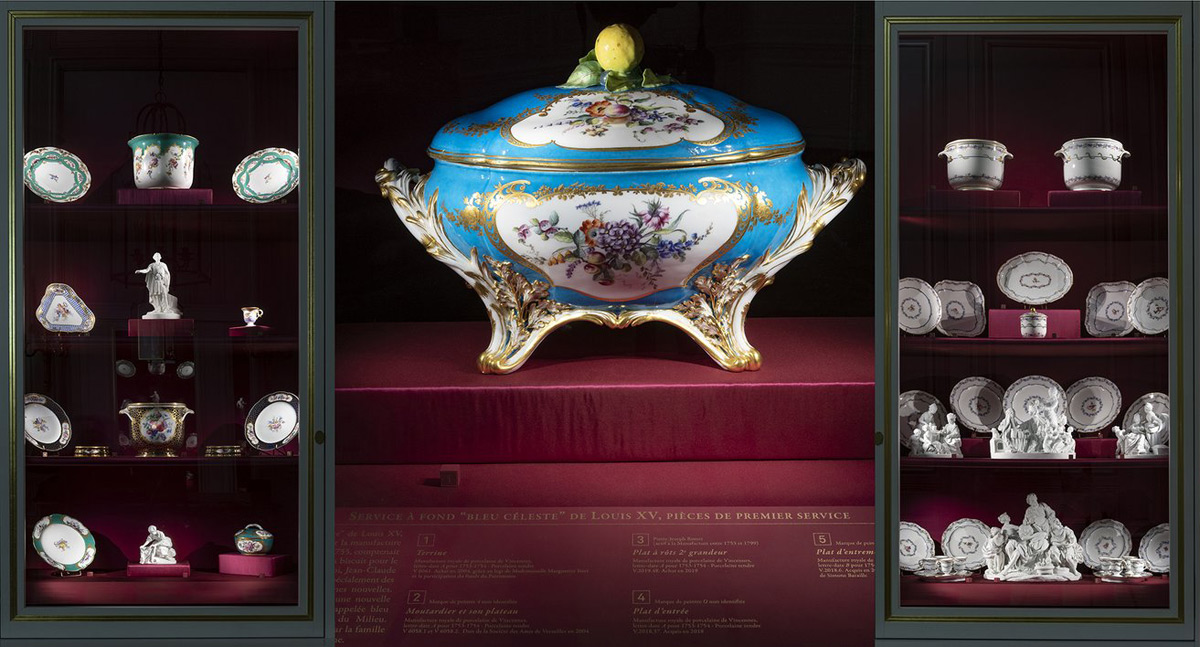
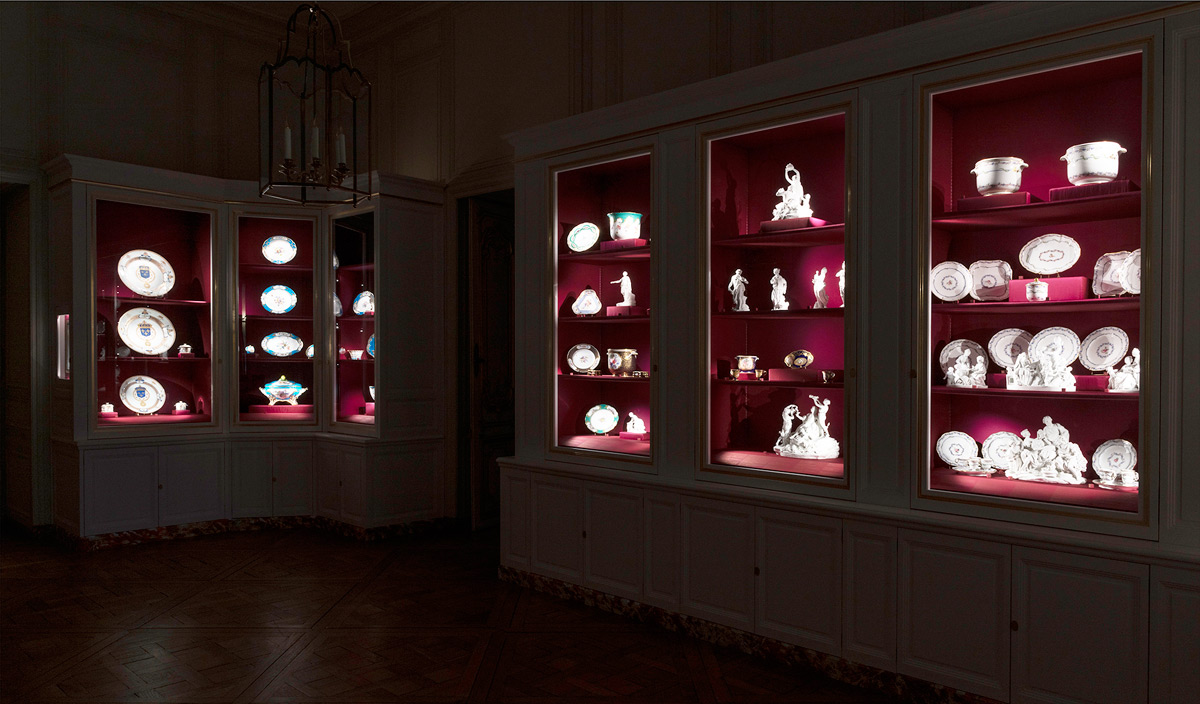
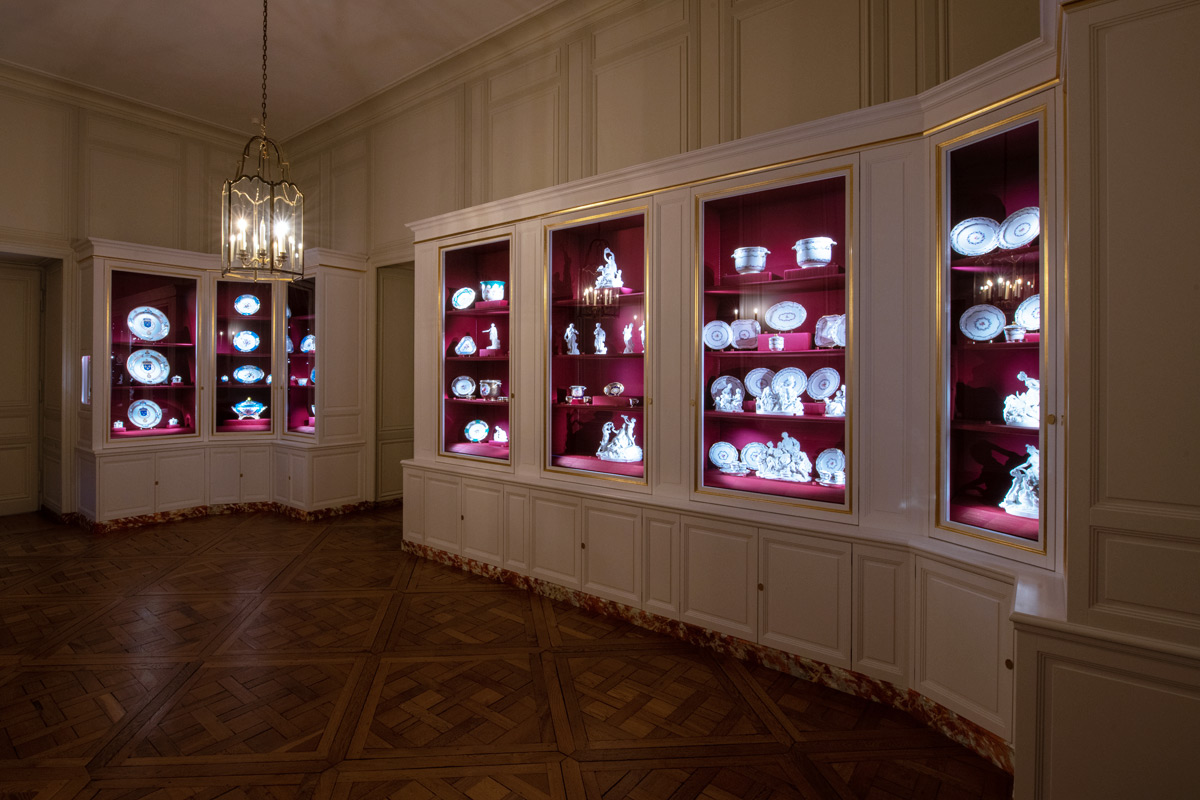
In a pared-back setting inspired by 18th-century decors and furniture, nearly a hundred porcelain service pieces from the collections of Louis XV and Louis XVI now take their place in the former “buffet” room of the King’s Private Apartment.

This new installation makes it possible to show visitors little-known pieces, some of them from the museum’s storerooms, and to highlight the Palace of Versailles’ new acquisitions. Versailles is thus gradually becoming once again the showcase for the finest productions and the great moments of perfection of French art.

Design approach

To design a refined, elegant setting inspired by 18th-century decors and furniture.

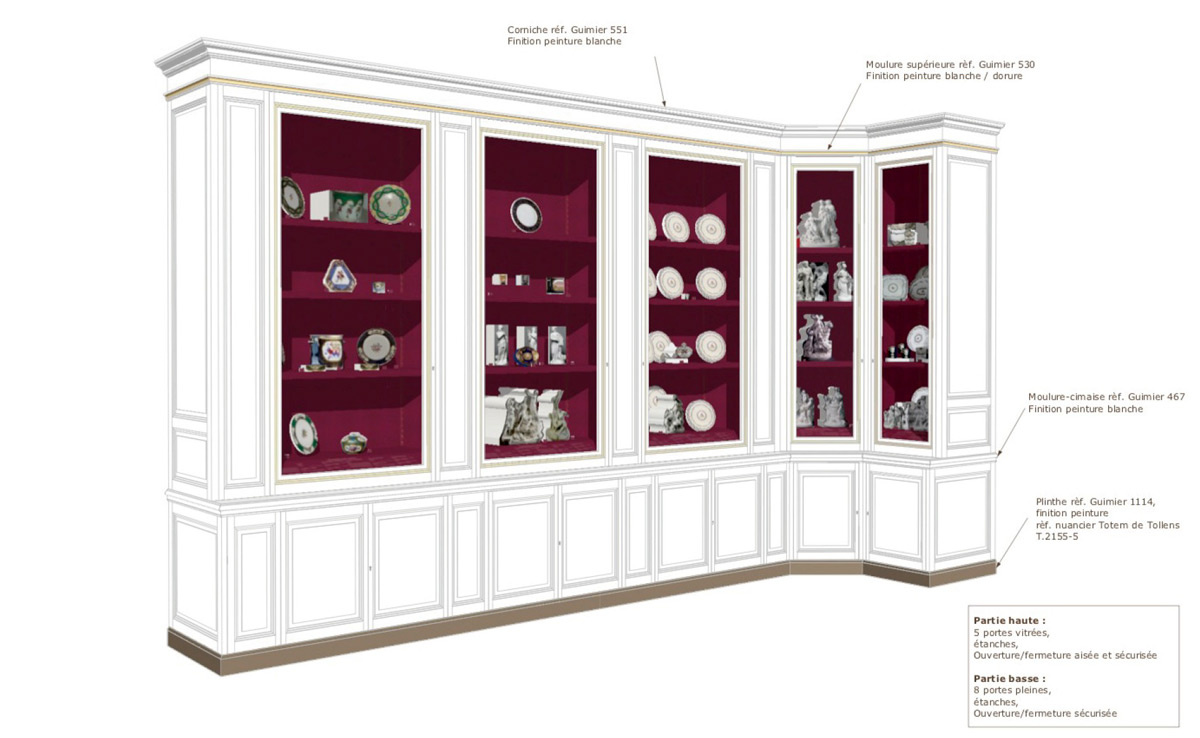
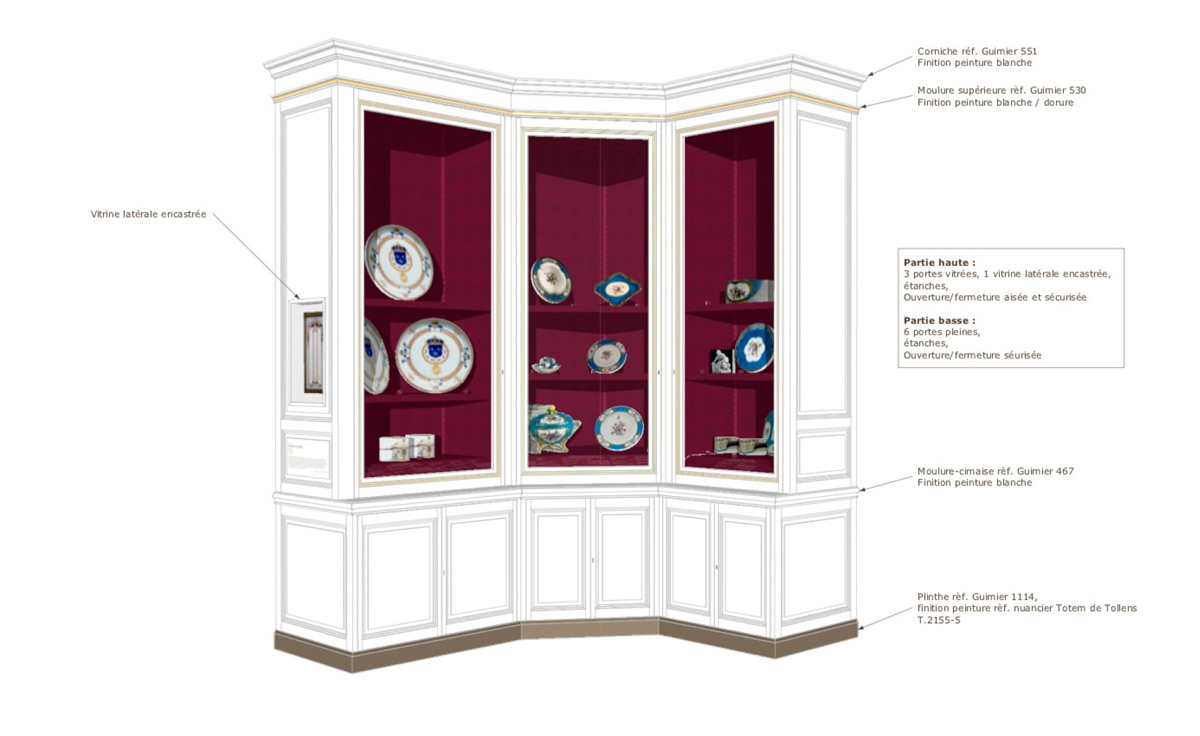
This setting blends harmoniously into the decor of the Billiard Room: the plans and elevations of the furniture take up the architectural registers of the existing wall panelling.

The skirting of the furniture is painted in trompe-l’œil in the same way as that of the room.

Moulding profiles identical to those of the Billiard Room panelling are sourced – or made.

The furniture is joinery work, built according to traditional craft practice (joints), in solid wood (poplar), and painted the same white as the room’s panelling.

Gold leaf is applied around each showcase and along the top of the furniture, easing the transition towards the Games Room on one side and the Dining Room known as the Salles neuves on the other. It gives the furniture a more elegant, refined look and sets it apart from the panelling.

The interior compartments are lined with silk taffeta laid over cotton padding, as are the small mounts.

The labels sit on an interior ogee moulding, printed in gold letters on a background of the same red as the silk.

Polished gilt-brass escutcheons conceal modern locks that meet current security standards. The furniture keeps the works perfectly secure while allowing easy access to the showcases to reach the works or study the collection.

The lighting is very finely designed (and adaptable) using integrated optical fibres.

Finally, the overall design of the ensemble anticipates future additions to the collections.
The Porcelain Cabinet – image 1
The Porcelain Cabinet – image 2
The Porcelain Cabinet – image 3
The Porcelain Cabinet – image 4
The Porcelain Cabinet – image 5
The Porcelain Cabinet – image 6

Terra Sancta Museum - Jerusalem

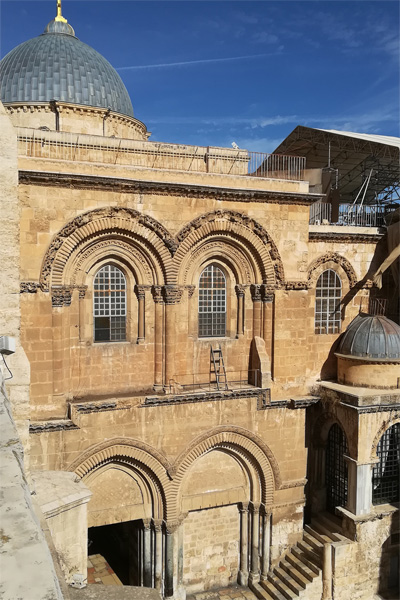
Jerusalem, Custody of the Holy Land, Franciscan Monastery of Saint-Sauveur

Terra Sancta Museum - Jérusalem2018–2023Terra Sancta Museum - Jerusalem

Design of a permanent museum

Feasibility studies and preliminary scenography design
Opening planned for 2030
Curators
International scientific committee of 25 museum specialists and scholars. Committee set up by Béatrix Saule, honorary director of the Palace of Versailles
Total area
1,200 m²
About 1,200 works
art objects, furniture, large goldsmiths’ work, sculptures, paintings, vestments, textiles, works on paper, archive documents, books, multimedia and immersive audiovisual.
Works budget
€1,540,000

A project unique in the world

The exhibition “Le Trésor du Saint-Sépulcre” shown at the Palace of Versailles in 2013 (see Temporary Exhibitions), with scenography by Jérôme Dumoux, was one of the greatest successes among Versailles exhibitions, with more than 300,000 visitors, from the general public as well as art-object specialists.

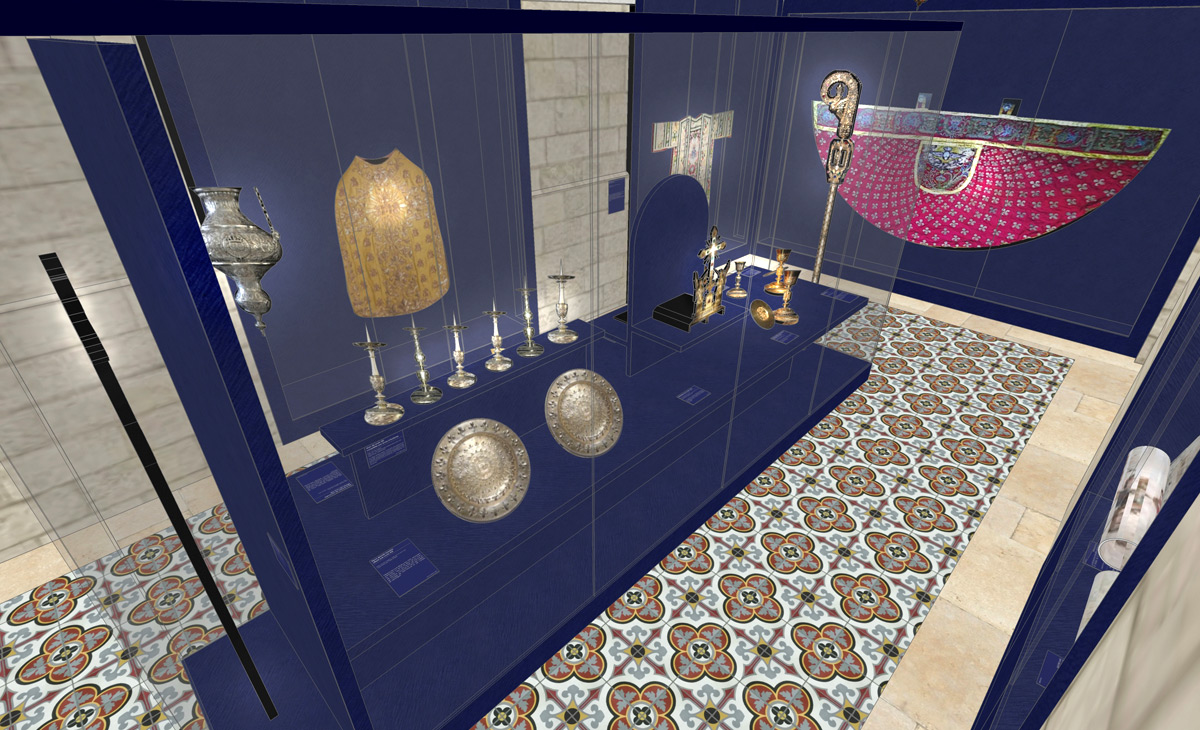
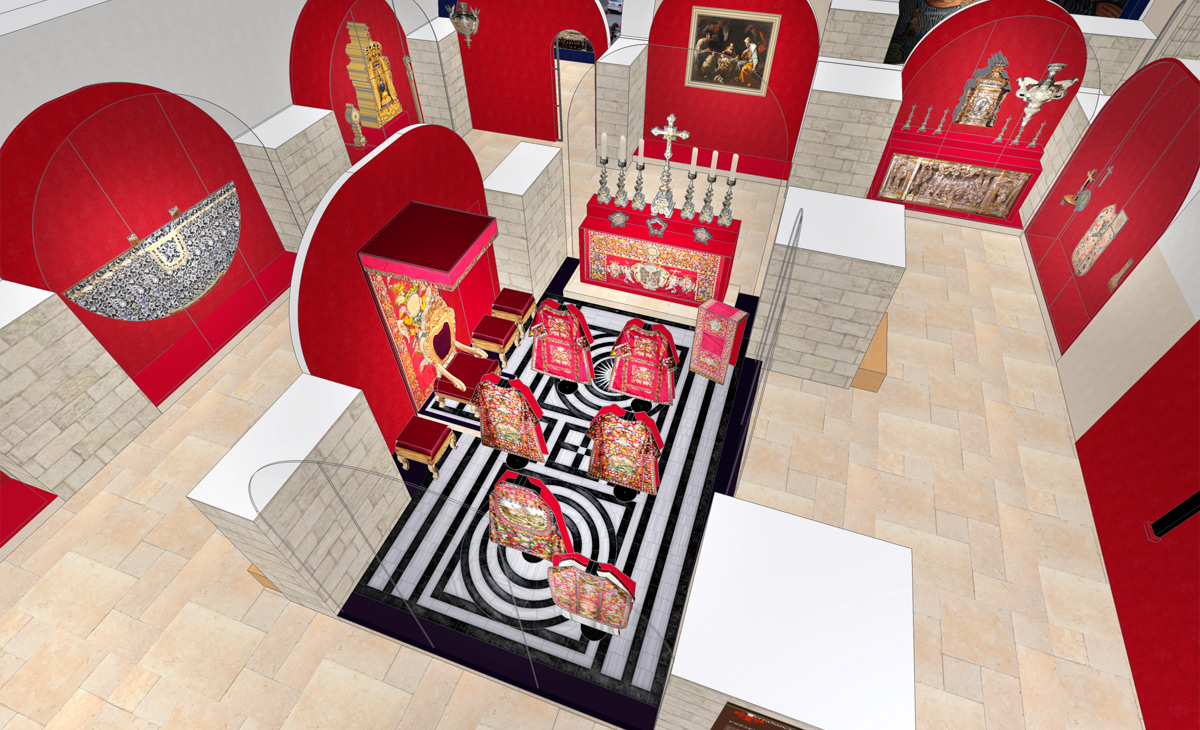
For everyone, it was a true revelation: the discovery of a dazzling collection of the highest historical, heritage and artistic significance, unmatched anywhere in the world and until then little known. The collection is made up of the sumptuous gifts sent to Jerusalem by the royal courts of Europe over the centuries. Unexpectedly rich in its diversity of periods and techniques, it reflects a single purpose: that of sacred art.

Ce Trésor du Saint-Sépulcre est conservé par la Custodie de Terre Sainte, institution franciscaine présente en Terre Sainte depuis 800 ans. La Custodie de Terre Sainte, consciente du patrimoine chrétien exceptionnel dont elle a la garde, a pris la décision de créer un musée, Le Terra Sancta Museum, qui permettra aux innombrables visiteurs de Jérusalem d’accéder à ces chefs-d’œuvre. Le Terra Sancta Museum manquait à la Ville Sainte, qui possède déjà un musée du Judaïsme et un musée d’Art islamique. Ce patrimoine, cet héritage chrétien de Jérusalem permettra aussi de maintenir le dialogue entre les religions et les cultures notamment par le biais d’échanges et de prêts entre musées déjà initiés.

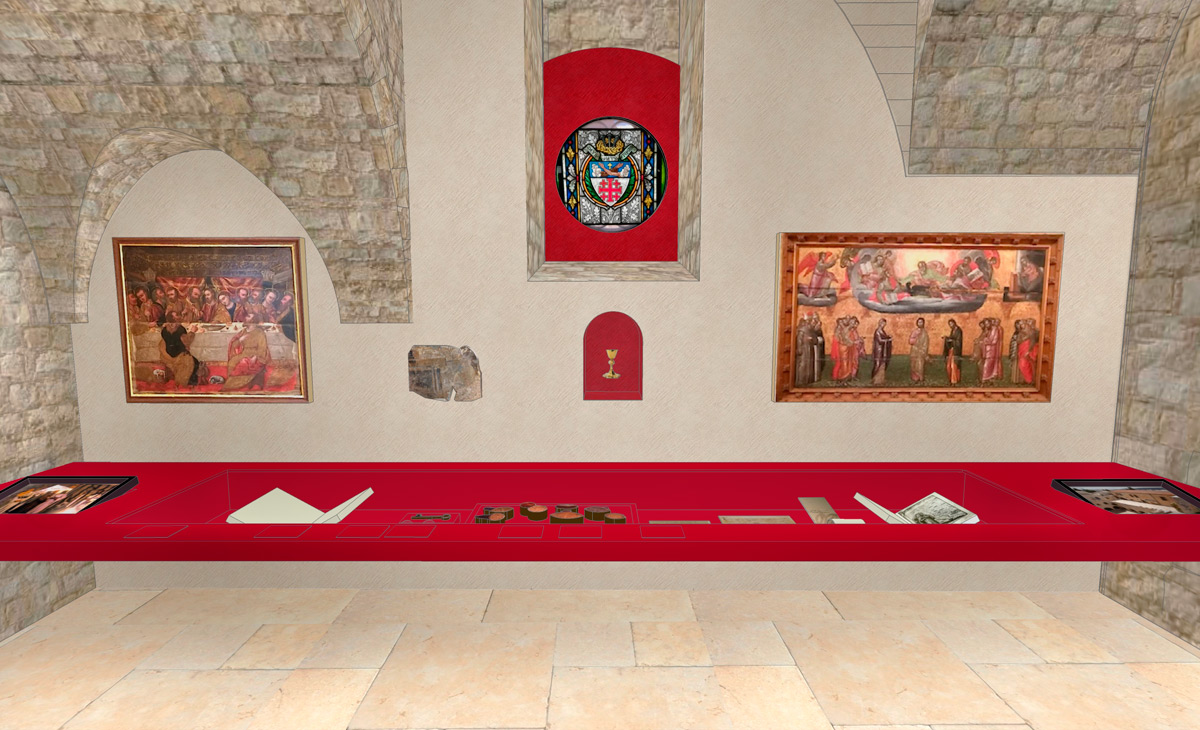
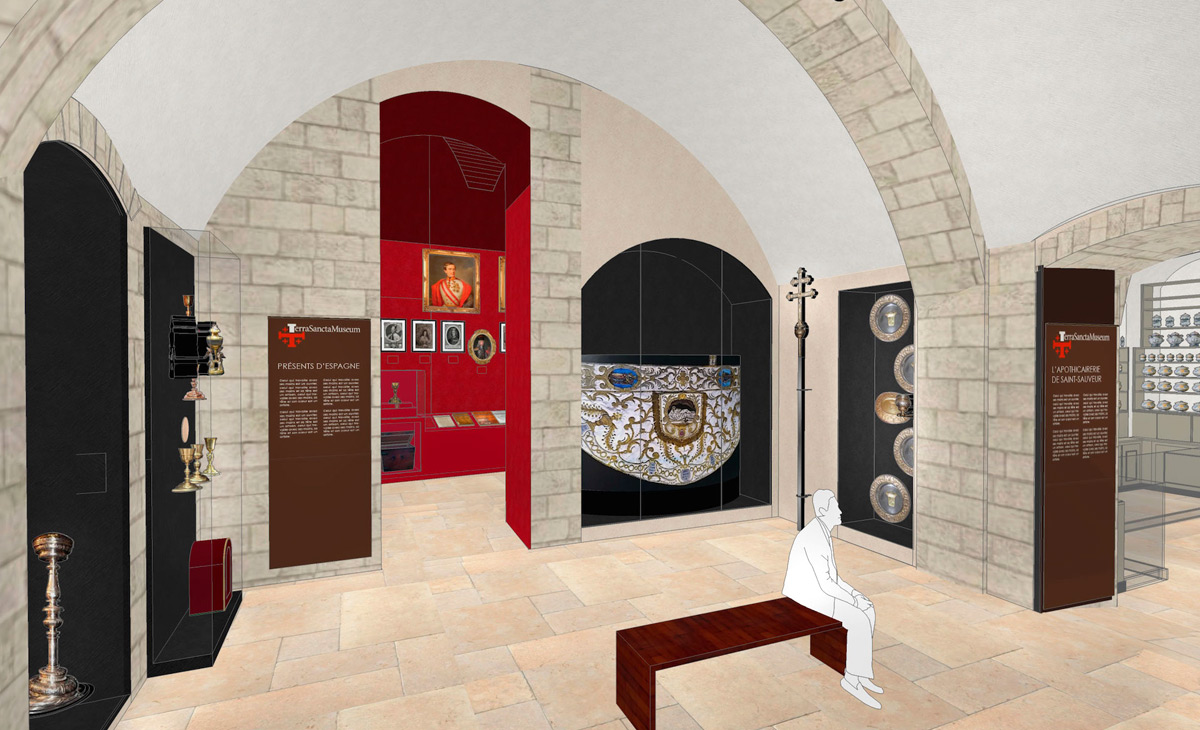
Design approach: a scenography that meets the standards of the greatest international museums. The aim is to create a museum of international renown, through both the exceptional quality of the objects and the scenography.

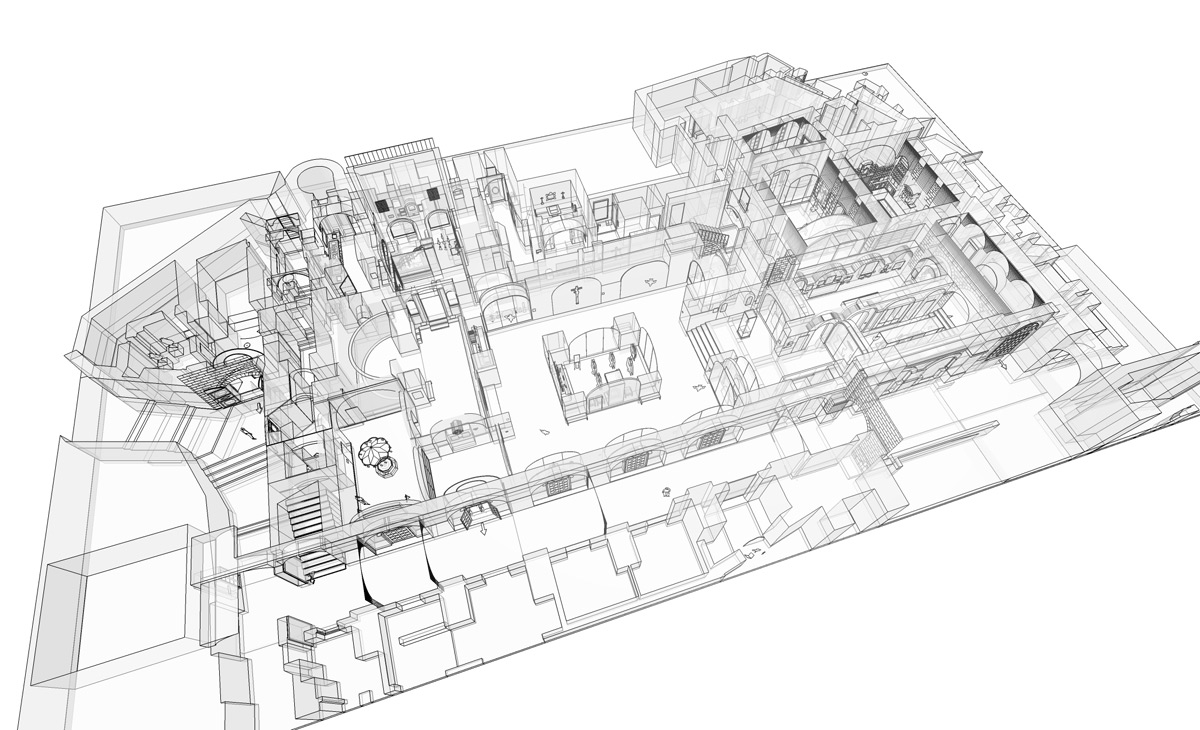
Installing the museum requires considerable work to create new spaces and reinforce existing ones, such as rooms of the former Georgian monastery from the 12th or 13th century (?) occupied by the Franciscans since 1557, which are to be linked to the 19th-century spaces in which the museum will be housed.

The route is divided into two parts, across 20 rooms:

1 – The history of the Franciscan presence and missions in the Holy Land over 800 years

2 – The exceptional Treasure of the Holy Sepulchre, made up of the sumptuous gifts of the royal courts of Europe.

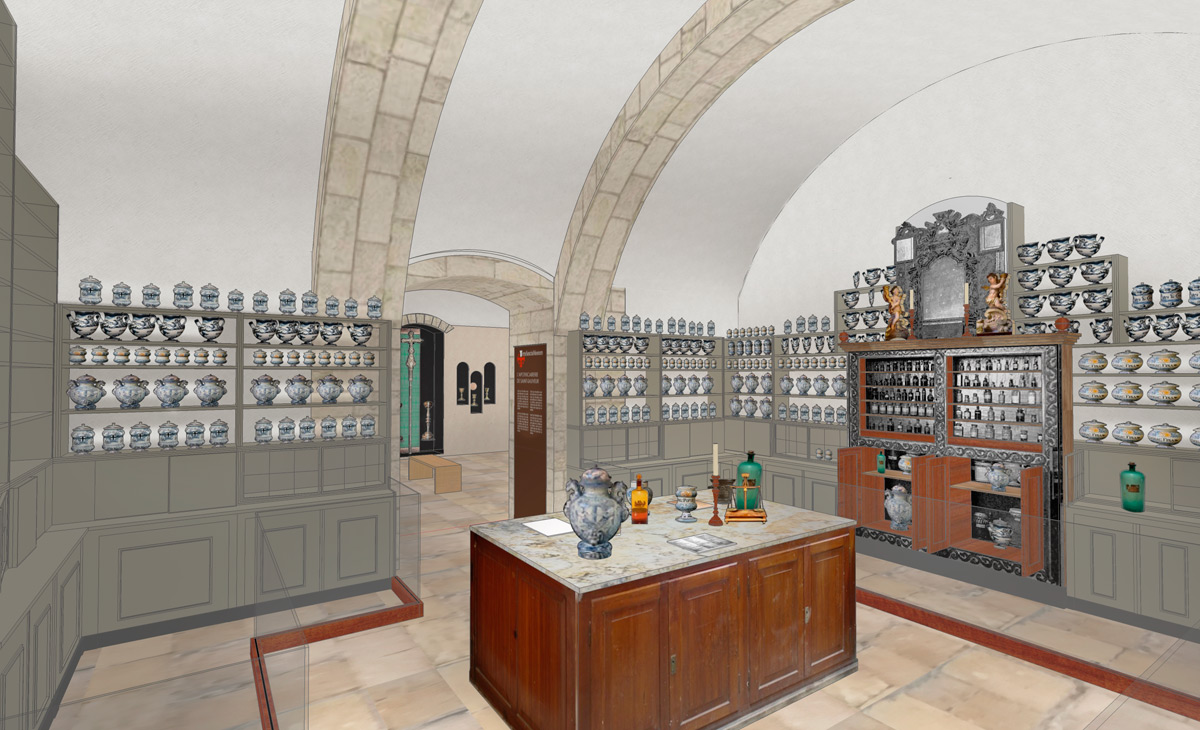
Les œuvres présentées témoigneront de la place centrale et du rayonnement de Jérusalem à travers les siècles. Par exemple une salle sera consacrée à la restitution à l’identique de la pharmacie des franciscains de Terre-Sainte, la plus importante de tout le Moyen-Orient jusqu’à la fin du XVIIIe siècle.

Large multimedia installations, visitor aids and all the planned interpretation devices will also help tell the history and purpose of the objects on display.

One of the major challenges remains the conservation of the works: for example, the rotation of liturgical vestments must be planned from now on. Some of them have been kept away from dust and light for centuries and must continue to be preserved as well as possible. There is thus an imperative to preserve the works, but also an imperative to use certain objects, which must be able to “leave” the museum temporarily to be used during major ceremonies.

All challenges that must coexist with the requirements of an international museum.

Terra Sancta Museum - Jerusalem – image 1
Terra Sancta Museum - Jerusalem – image 2
Terra Sancta Museum - Jerusalem – image 3
Terra Sancta Museum - Jerusalem – image 4
Terra Sancta Museum - Jerusalem – image 5
Terra Sancta Museum - Jerusalem – image 6

Terra Sancta Museum Shop

Jerusalem, Custody of the Holy Land, Franciscan Monastery of Saint-Sauveur

Boutique du Terra Sancta Museum2020–2021Terra Sancta Museum Shop

Permanent installation

Scenography – furniture design
Shop opened in 2021 (museum opening planned for 2030)
Curators
International scientific committee of 25 museum specialists and scholars. Committee set up by Béatrix Saule, honorary director of the Palace of Versailles
Total area
150 m²
Works budget
€134,375

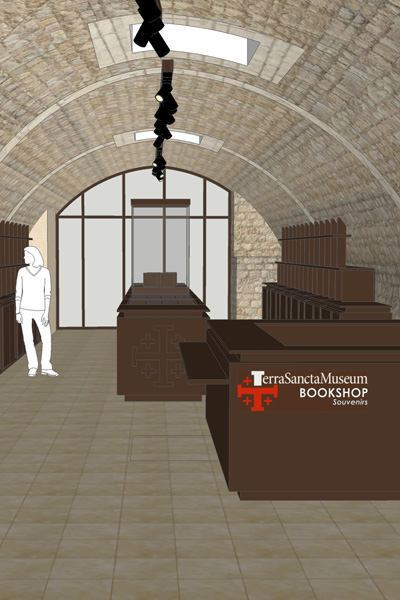
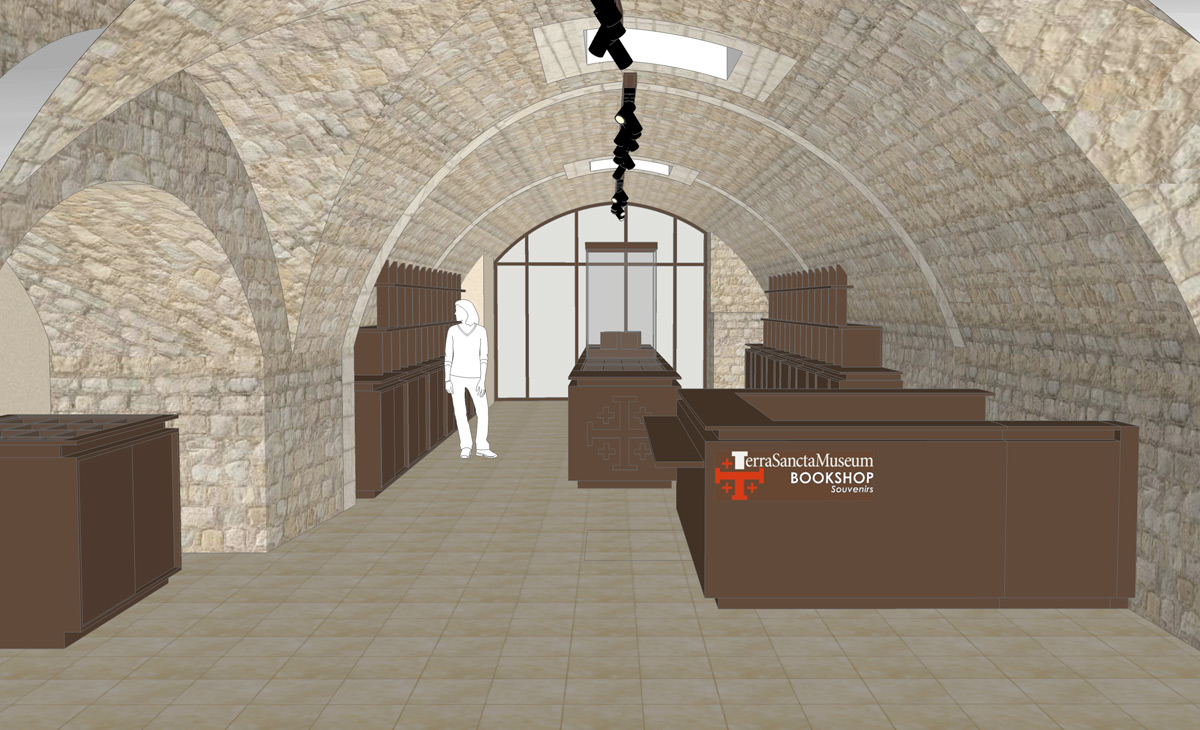
The programme of the future “Terra Sancta Museum” is accompanied by a vast programme of fine art books and international scholarly publications presenting current knowledge and research on the collections. These books will be distributed worldwide in several ways and will also be sold on site in a shop adjoining the future museum. This bookshop and gift shop will also promote high-quality local crafts, which the Custody of the Holy Land supports through vocational training and distribution. The museum shop will open in 2021, while the museum’s opening is currently planned for 2030.
Design approach:

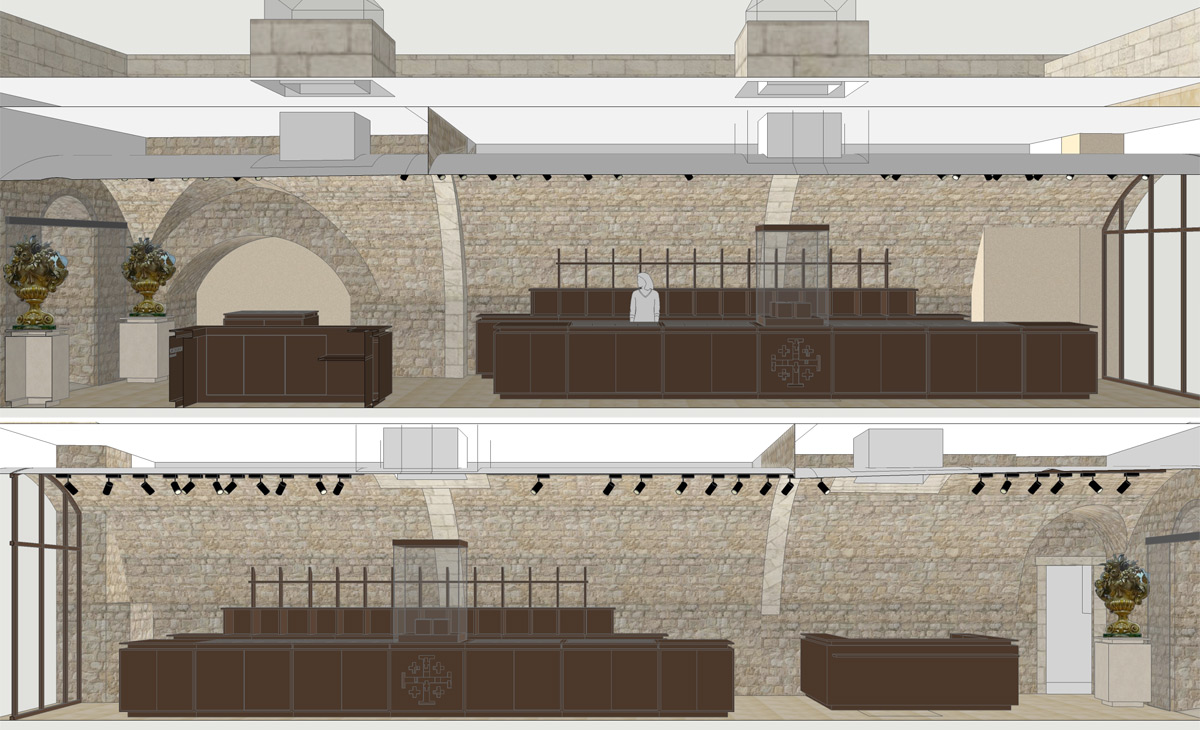
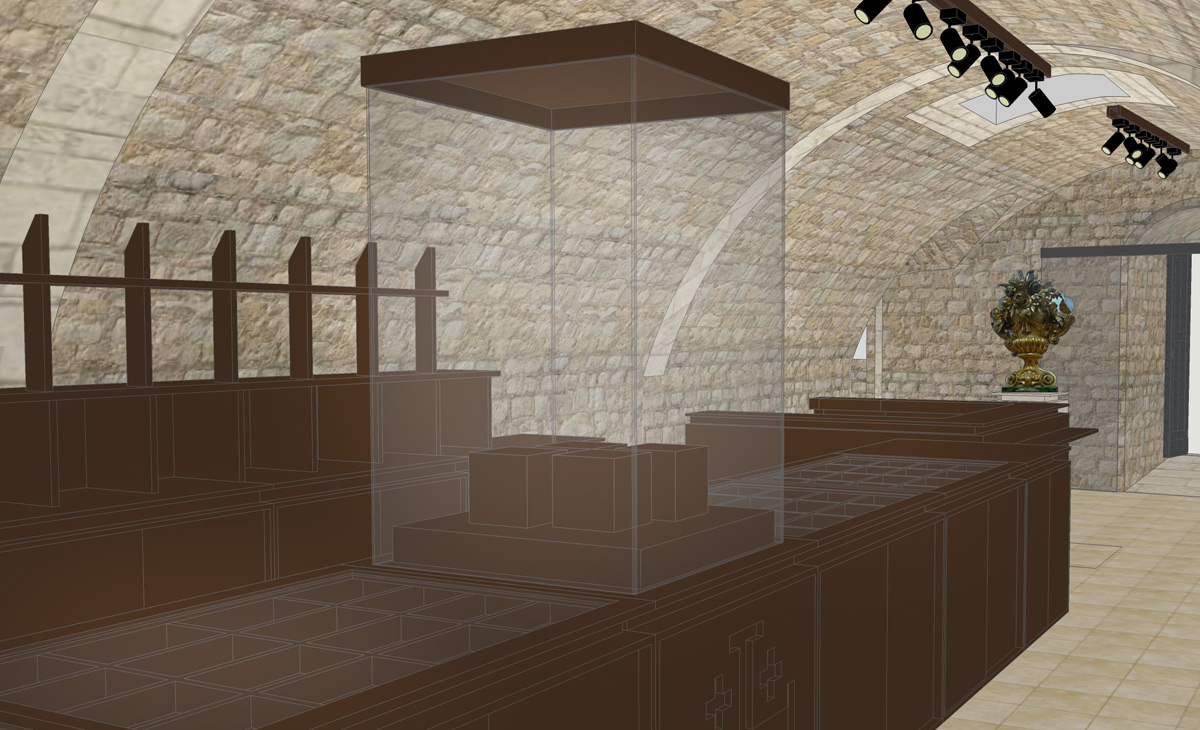
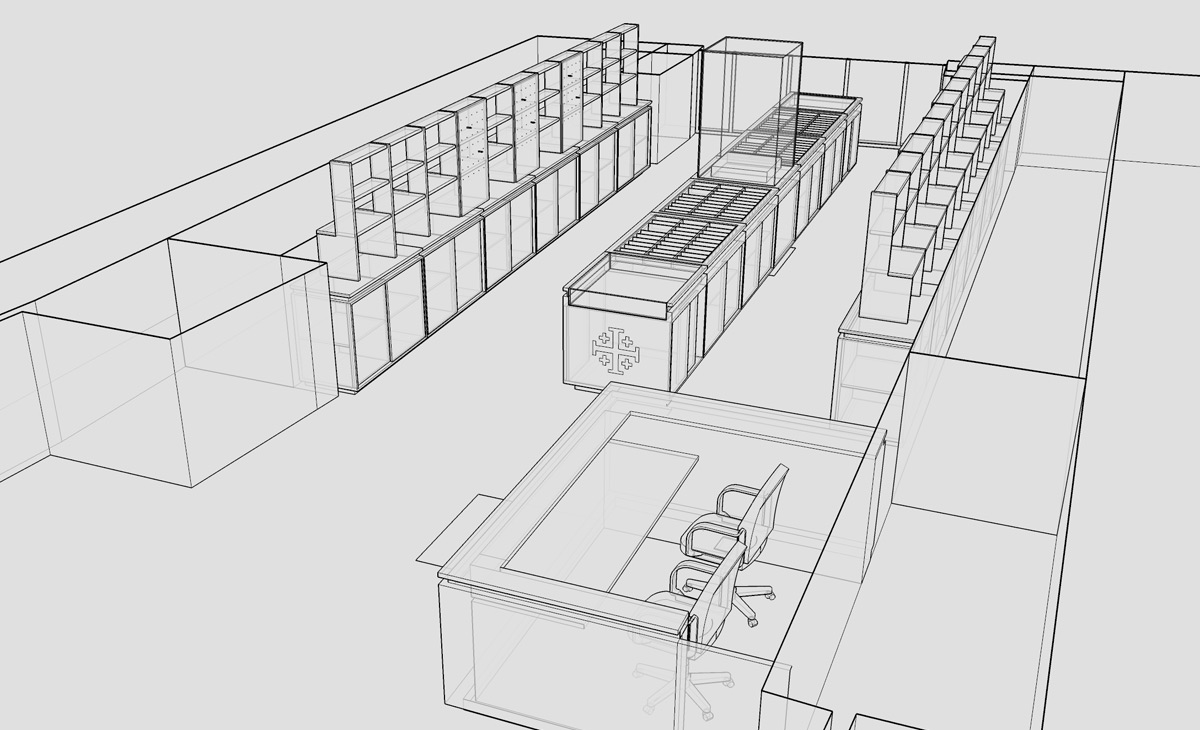
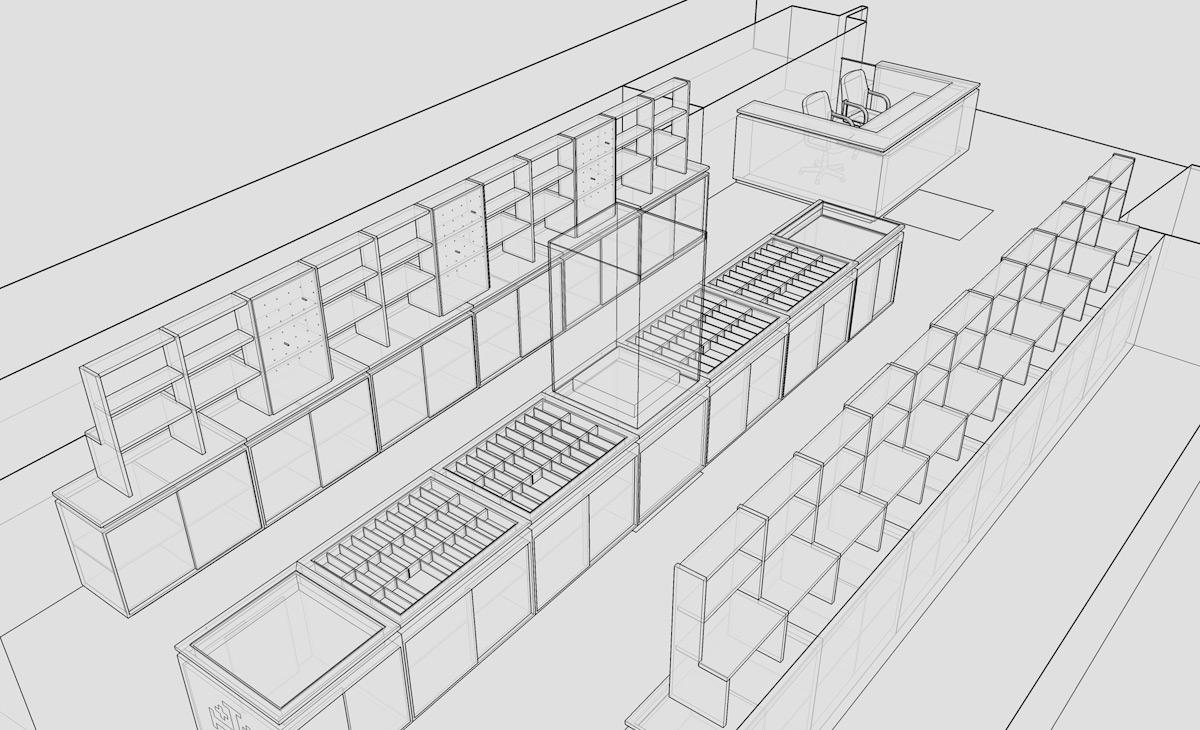
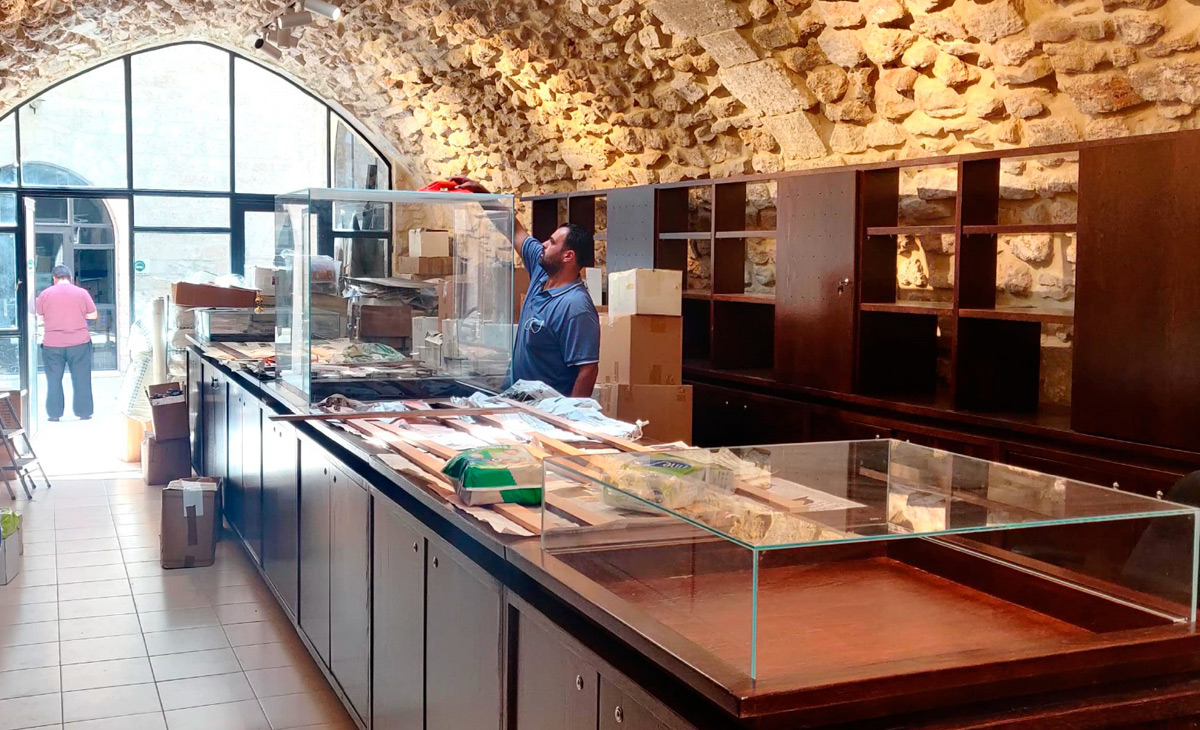
Furniture that meets the varied needs of a shop (display units, storage, reception desk), with restful lighting, designed to follow and enhance the architecture of the shop and bring verticality to this vaulted space.

A sense of visual lightness is favoured in the design (recessed plinths, a shadow gap running along the display units).

The furniture is in brown lacquered wood, matching the brown of the fit-out already completed.

The furniture is designed in modules to optimise its manufacture.

Terra Sancta Museum Shop – image 1
Terra Sancta Museum Shop – image 2
Terra Sancta Museum Shop – image 3
Terra Sancta Museum Shop – image 4
Terra Sancta Museum Shop – image 5
Terra Sancta Museum Shop – image 6

A showcase in the nave of the church of Sainte-Julitte for the permanent display of the reliquary of the Passion

Ville de Saint-Cyr-L’École, Église Sainte Julitte

Aménagement d’une vitrine dans la nef de l’église Sainte Julitte pour la présentation du reliquaire de la Passion2022–2025A showcase in the nave of the church of Sainte-Julitte for the display of the reliquary of the Passion

Permanent installation

Scenography and graphic design, project management
Completed 2025
Curators
Ville de Saint-Cyr-L’École, Paroisse de Saint-Cyr-L’École, Commission d’Art Sacré du diocèse de Versailles, DRAC Île-de-France
Total area
10 m²
1 work
the reliquary of the Passion.
Works budget
€100,000

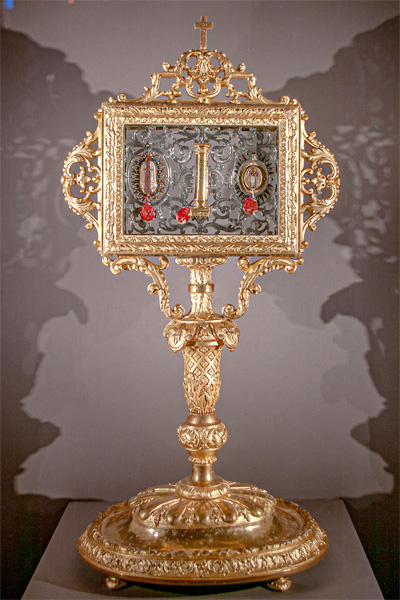
The reliquary of the Passion

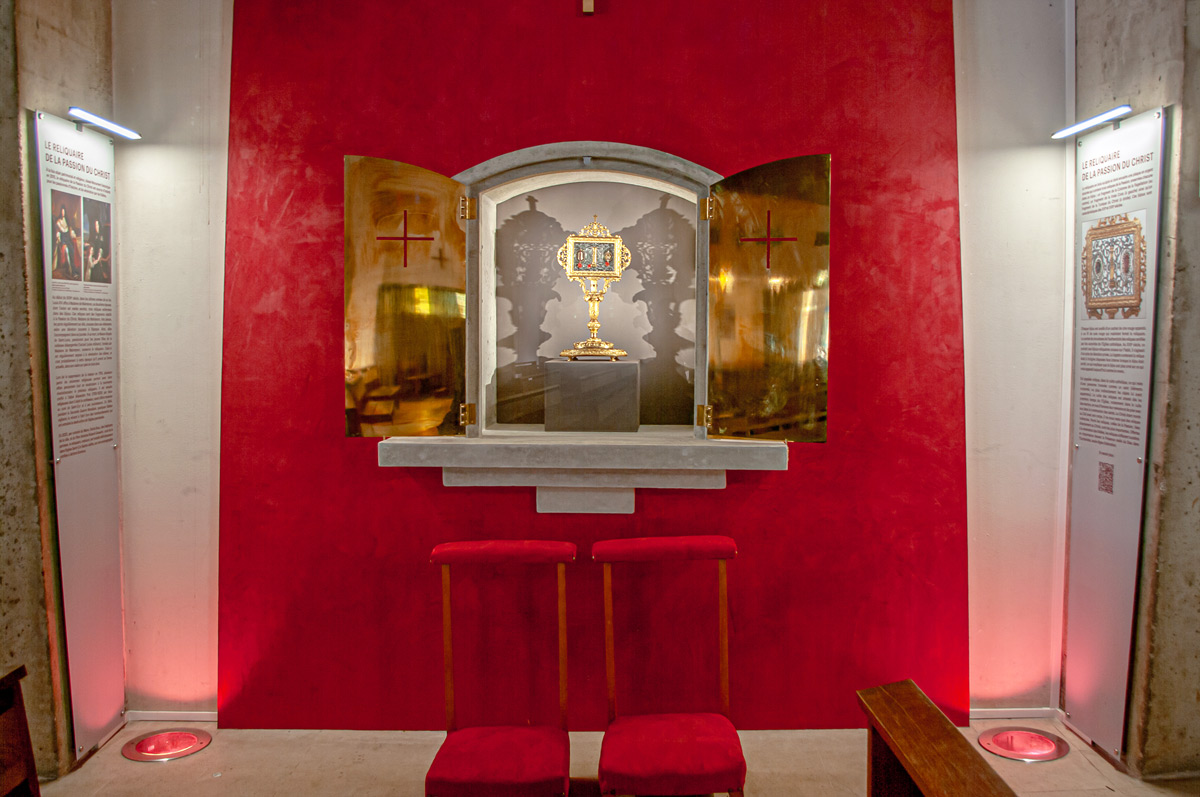
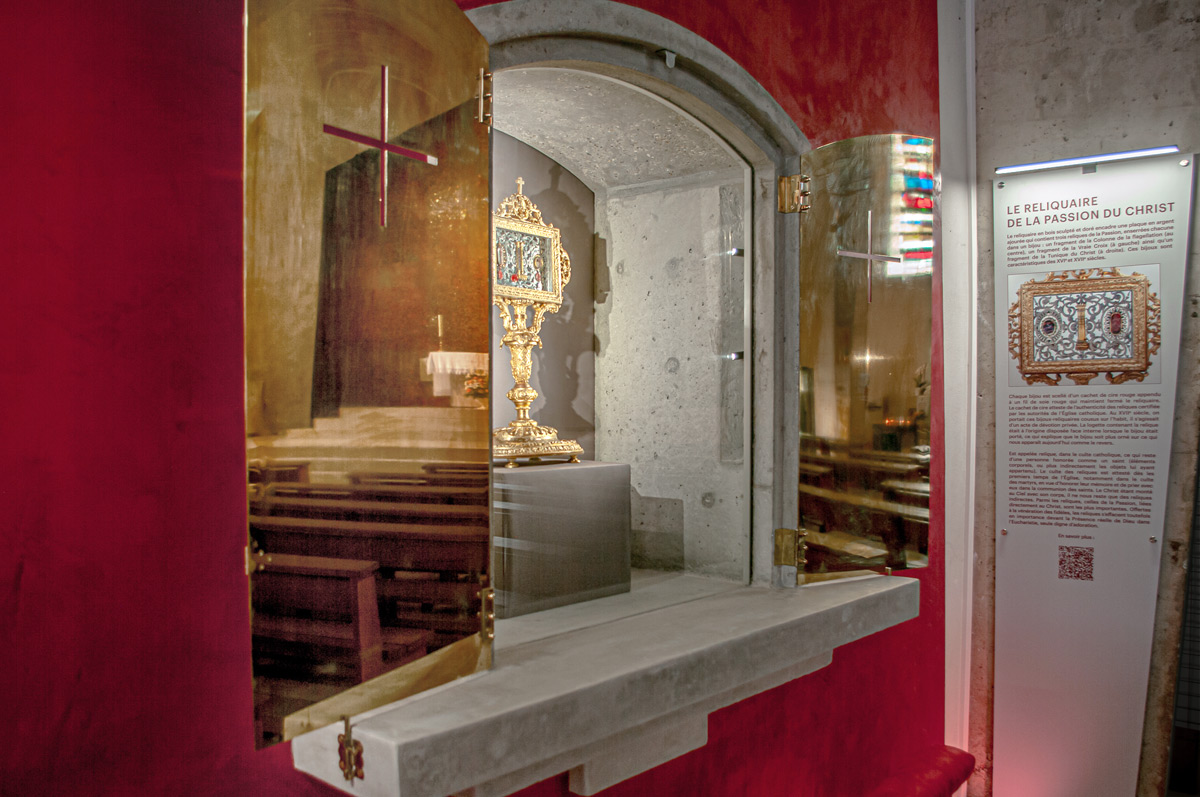
Listed as a Monument historique, the reliquary contains three major relics given by Louis XIV to Madame de Maintenon. It takes the classic form of a rectangular monstrance on a foot, in carved and gilded wood (originally gold leaf). It holds three jewels of different shapes, each containing a relic of the Passion: a fragment of porphyry, a relic of the Column of the Flagellation of Christ; a fragment of the Holy Tunic; and a fragment of the True Cross. The jewels are made of silver, silver gilt, gold, enamelled gold, rock crystal, porphyry, onyx, carnelian, emeralds, diamonds, wax, paper and silk thread. Traditionally presented every Good Friday for the veneration of the faithful of the parish of Sainte-Julitte, the reliquary will be displayed permanently in the nave of the church after cleaning and restoration.

Design approach:

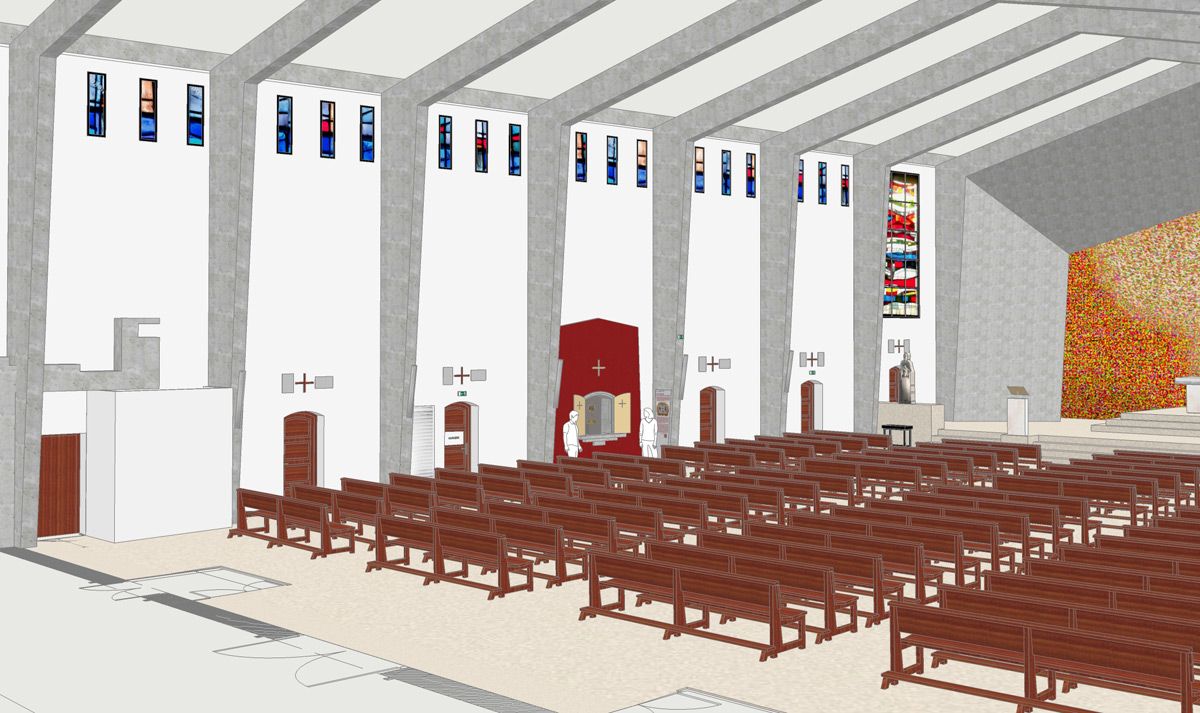
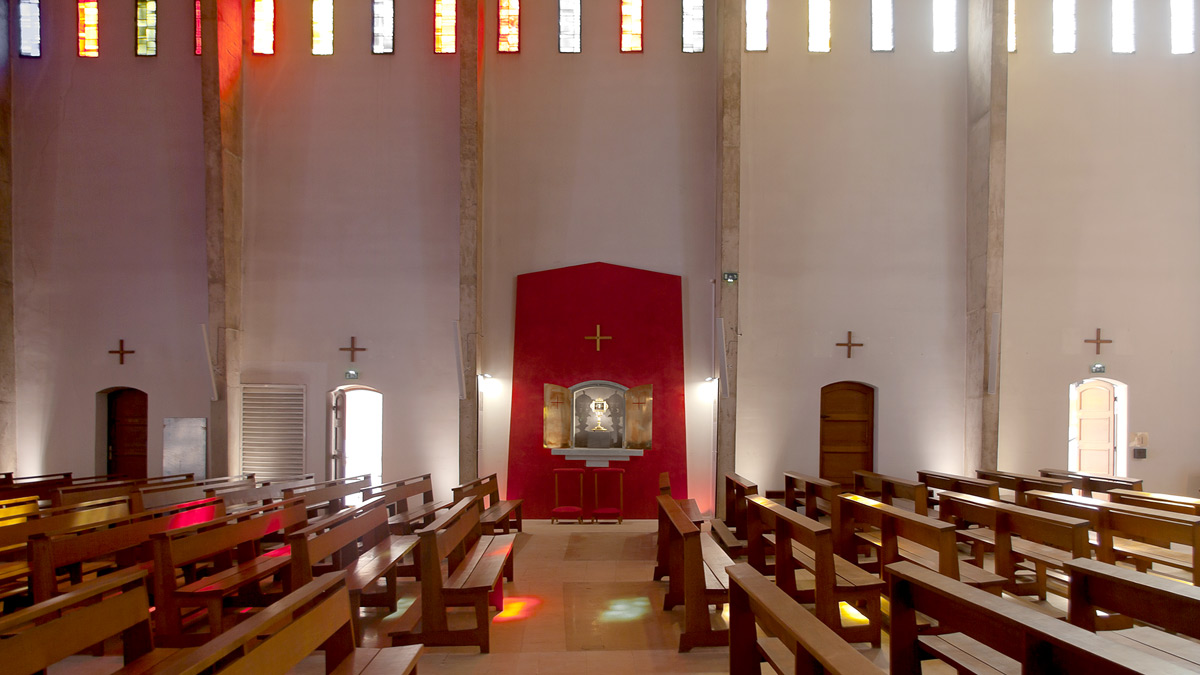
L’église Sainte Julitte est une église moderne construite de 1960 à 1963 par l’architecte Pierre Vago, inaugurée en 1963 par l’évêque de Versailles. Toute en béton, elle se caractérise par un plan trapézoïdal, une nef dont le sol en déclivité monte vers l’autel, et par des meurtrières hautes à vitraux sur ses deux bas-côtés.

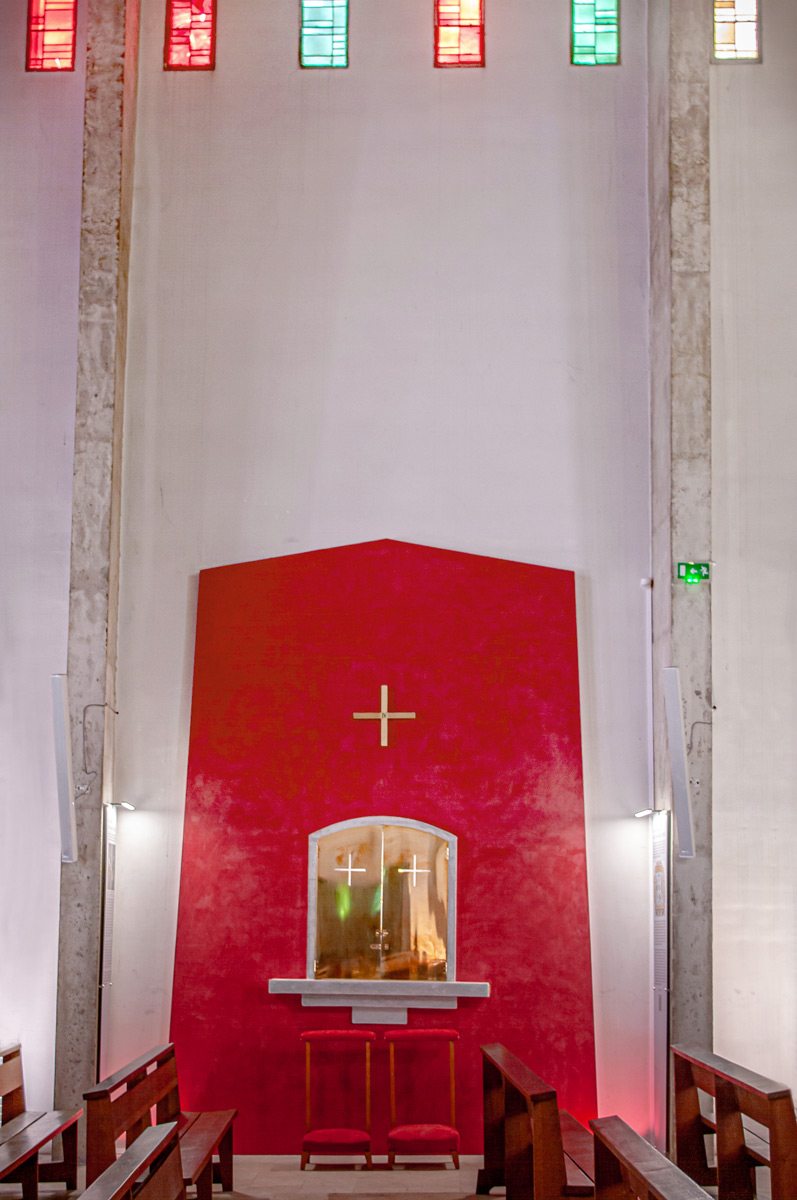
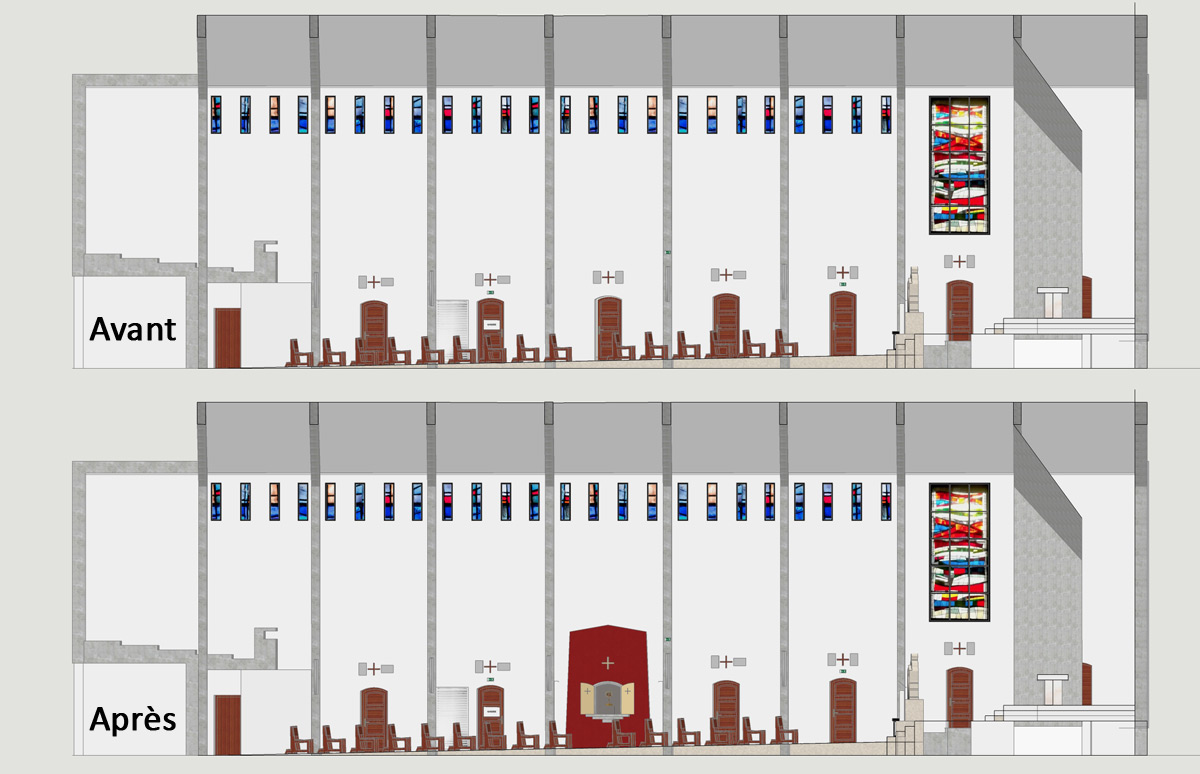
The installation will be built in the south aisle of the church of Sainte-Julitte, in the recess of a blocked doorway. It has been designed to blend harmoniously into the church and to look as if the showcase had been there since the building was first erected. To this end, it takes up the architectural vocabulary of the church – the raw concrete of the structures, the smooth polished concrete of the floors and altar steps, and specific forms, notably the angles formed by the arches – while adapting to the monumental proportions of the church.

A showcase in the nave of the church of Sainte-Julitte for the permanent display of the reliquary of the Passion – image 1
A showcase in the nave of the church of Sainte-Julitte for the permanent display of the reliquary of the Passion – image 2
A showcase in the nave of the church of Sainte-Julitte for the permanent display of the reliquary of the Passion – image 3
A showcase in the nave of the church of Sainte-Julitte for the permanent display of the reliquary of the Passion – image 4
A showcase in the nave of the church of Sainte-Julitte for the permanent display of the reliquary of the Passion – image 5
A showcase in the nave of the church of Sainte-Julitte for the permanent display of the reliquary of the Passion – image 6