Jérôme Dumoux is a scenographer working in the heritage and museum sector, with more than 60 temporary exhibition designs and permanent installations for prestigious institutions in France and abroad.
He is also the founder and director of an art centre in Burgundy.
Education
A graduate in scenography of the École nationale supérieure des Arts décoratifs de Paris, after studying architecture and painting at the École nationale supérieure des Beaux-Arts de Dijon, he also trained in digital design tools at the École de l’Image des Gobelins de Paris (graphic design, desktop publishing, web development, HTML).
Career
Film sets, theatre and opera, marketing events
Jérôme Dumoux débute son activité professionnelle comme peintre-décorateur puis assistant-décorateur sur des réalisations importantes auprès de scénographes renommés (Guy-Claude François, Roberto Platé). Il travaille une dizaine d’années sur des décors de cinéma (James Ivory, Bertrand Tavernier, Coline Serreau), des scénographies de théâtre et d’opéra (Patrick Dupont, Opéra Paris-Bastille, l’ARC scène nationale du Creusot) et des mises en scène d’événements marketing (Peugeot, Cacharel, FNAC).
Interior design and fit-out
From 2003, he designed interior spaces for private clients (interior decoration and furniture design). He builds the furniture he designs himself (bookcases, tables, desks, modular furniture). He designed the “Coup de théâtre” bookshop for Mr Philippe Tesson, on boulevard Raspail in Paris.
Visual communication and graphic design (web and print)
Alongside his work as a scenographer, Jérôme Dumoux designs and builds many websites (sites for artists, local authorities, showcase sites…). From 2007 to 2014, he worked on the visual communication of Notre-Dame Cathedral in Paris, including the redesign of the cathedral’s website. He was also in charge of the visual communication of Musique Sacrée à Notre-Dame de Paris (numerous graphic designs, concert programmes and posters, design of record productions, and photo campaigns of the cathedral).
Temporary exhibition design and permanent museum installations
Since 2012, he has designed temporary exhibitions for museums and heritage institutions, notably for the Palace of Versailles, the Mobilier national, the Château de Grignan (Drôme), the Ministry of Culture in Paris, the cultural institutions of the city of Versailles (Musée Lambinet, Bibliothèque Choiseul, municipal archives), and Notre-Dame Cathedral in Paris (in particular following the fire of 2019).
He also designs permanent museographic installations: for the Palace of Versailles, the creation of the Porcelain Cabinet in the King’s Private Apartment; for the town of Saint-Cyr-L’École, the permanent display of Madame de Maintenon’s reliquary of the Passion in the church of Sainte-Julitte.
From 2018 to 2024, he led all the scenography studies for the historical section of the future international Terra Sancta Museum in Jerusalem: twenty rooms set in spaces from different periods (15th and 19th centuries) for the display of more than 1,000 works of every kind. He has steered this complex long-term project from the first feasibility studies to the preliminary scenography design, working with the architects and the scientific committee formed by Béatrix Saule around this ambitious project, and in coordination with the many technical specialists involved, particularly in preventive conservation and the safety of works and visitors. He also designed the museum shop (opened in 2021).
Notable Projects
For the Palace of Versailles: the designs of the temporary exhibitions “Charles Nicolas Dodin, splendeur de la peinture sur porcelaine” (2012), “Trésor du Saint-Sépulcre” (2013), “La Chine à Versailles, art et diplomatie au XVIIIe siècle” (2014), “Le Grand Trianon, de Louis XIV à Charles de Gaulle” (2015), “Un président chez le Roi, De Gaulle à Trianon” (2016), “Madame de Maintenon, dans les allées du pouvoir” (2019). The Porcelain Cabinet (permanent installation)
For the Mobilier national (Galerie des Gobelins) and the Ministry of Culture in Paris: “Le bivouac de Napoléon : luxe et ingéniosité en campagne” (2015), “L’Esprit et la main” (2015), and “Le Mobilier national au Ministère de la Culture” (2017)
For the Museo Marino Marini in Florence (Italy) “Il Tesoro di Terrasanta al Museo Marino Marini, la bellezza del sacro: l’Altare dei Medici e i doni dei Re” (2024)
For the Terra Sancta Museum in Jerusalem (Israel), mentioned above. (2018 to 2024)
Areas of Expertise
Expertise and advice in the design, programming, long-term management and project management of large, complete museographic projects, temporary or permanent, in all types of spaces, historic or contemporary, and for all kinds of works from every period.
Design of scenographies, stagings and visitor routes that are clear, fluid and legible, for temporary exhibitions and permanent museum projects, from design through to handover.
Showcasing and staging intangible heritage: know-how and craft gestures (for the exhibition “L’esprit et la main” at the Mobilier national, he designed a scenography of simple volumes and free-standing furniture with a flexible layout, along a fluid route recreating the intimate atmosphere of the restoration workshops).
Historical reconstructions and period settings (for example in the design of the exhibition “Madame de Maintenon” at the Palace of Versailles): expertise drawn from film, opera and decorative painting, and from a dual culture combining manual craftsmanship – painting, monumental painted or printed sets – with command of digital computer-aided design tools.
Exhibition and public display of works and art objects of every kind and period. (works on paper, books and archive documents, precious art objects or archaeological objects, paintings, sculptures, fragile textiles…)
Preventive conservation of works and art objects, organisation and management of storage.
Key Skills
Knowledge of the constraints specific to buildings open to the public (visitor flow, safety of works and visitors…).
Knowledge of the constraints specific to old or historic buildings.
Knowledge of the constraints specific to the display and preventive conservation of works and art objects of every kind and period (for example climate control in an old building).
Project design accelerated and enriched by AI, for richer concepts, shorter delivery times, and a contemporary vision of visitor routes and interpretation.
3D design, offering many advantages for visualising and understanding a scenography project at the design stage
Maîtrise de l’ensemble des outils de production graphique pour la signalétique d’une exposition, textes de salles, cartels des œuvres, tous supports pédagogiques, tous visuels imprimés d’une exposition (reproductions monumentales d’images par exemple). Prise de vue numérique, travail de l’image et retouche photo numérique enrichie par l’IA, conception maquettes accélérée par l’IA, exécution pré-press, fichiers HD de production.
Coordination of all the stakeholders in a complex museographic project, and arbitration: client, architects, scientific committee, those in charge of security, visitors, interpretation and multimedia…
Setting up and steering a scientific committee for a museographic project.
Relations with partners and the various contractors.
Knowledge of public procurement procedures, preparation and follow-up of public contracts, needs assessment, organisation and management of teamwork, planning of projects and technical meetings, preparation of materials (agendas, working documents, writing and circulating minutes).
Project management, direction of operations and coordination of the operational teams during implementation, chairing the “works” committee, supervision of the production of all elements, setting and rigorous monitoring of the schedule, organisation of site meetings, ensuring schedules remain consistent, tracking deadlines.
Administrative and financial monitoring of projects, preparation and monitoring of budgets, ensuring budgets remain consistent.
Responsible eco-design: from design to production, every project follows a concrete, sustainable approach (CSR). Priority is given to paperless working documents at the design stage, to limit paper waste and polluting inks, and, at the production stage, to materials from sustainably managed forests, eco-friendly paints and inks meeting environmental standards, and energy-saving LED lighting. Each project pays attention to waste management, the lifespan of the structures, the reuse and recycling of materials, and short supply chains, to reduce environmental impact while supporting the local economy.
Other Activities – Founding and Running an Art Centre
Since 2022, Jérôme Dumoux has been developing the Centre d’art Raymond Dumoux, which he founded around the considerable body of work left by his father, the painter and engraver Raymond Dumoux.
He chairs the Via Pictura association (a French non-profit under the 1901 law), which carries out the activities of common interest of the Art Centre. He organises the conservation (storage management) and the presentation of the painter’s studios and of his entire body of work. He has created a temporary exhibition gallery, for which he handles the cultural programme and the scenography. He is responsible for the art centre’s publications, editions and communication.
Scenographer: Designer and Project Manager
“Throughout my career, I have explored several fields of scenography – theatre, film, marketing events, museums – on productions that were sometimes large, working within or leading sizeable teams.
Research and immersion
Designing a scenography begins with a first phase of research, both literary and iconographic. It means immersing myself in the narrative of the exhibition developed by the curators, in the works themselves and their context, and finally in the spaces that will host the scenography, which I usually draw entirely in 3D – the only way to truly make them my own. Whenever possible, an actual encounter with the works is desirable. For the exhibition “Trésor du Saint Sépulcre” at the Palace of Versailles, for example, I travelled to Jerusalem with the curators to discover the objects, in order to make selections and compose groups of works that could work together in a showcase – works that I photographed, measured and weighed.
Listening and dialogue
The ability to listen and to work in dialogue is important. Constant dialogue with the curators and the institution is necessary; it is also a source of ideas, sometimes from a few simple words exchanged.
While developing the scenography project, my questions focus above all on respecting the integrity of the curators’ narrative while giving it a spatial rhythm, and on the pursuit of overall aesthetic quality in what will be proposed.
The works, the details, the light
Each work is the subject of particular questioning and study, as is the relationship between the works. Moving a single work often means rethinking the organisation and balance of the space in which it is displayed.
Care for the smallest detail is a priority, both at the design stage and during the installation of the museographic fit-out. From exhibition furniture to the various supports, platforms, mounts, heights and frames… and the signage, nothing is left to chance.
The lighting of an exhibition is essential: it brings the exhibition, the route and the objects on display to life, and therefore calls for in-depth work from the design stage onwards.
Serving the works
Every design requires both daring and humility. Scenography must not take the place of the works; it must serve them and give them meaning. Everything is a matter of the right balance between the various spatial, graphic, aesthetic and technical components involved.
I generally try to imagine spaces that do not merely show works but are evocative, and help to reveal the uplifting character of the arts and of a narrative. The visitor then keeps a vivid and precise memory of the experience of an exhibition, of the works on display and of the themes they convey.
From design to delivery
The role of designer, as I have just described it, is followed by that of project manager.
Organisation is crucial, upstream at the design stage as well as during production.
Site, schedules and budgets
The quality of the technical support provided to a cultural institution, and the quality of relations with everyone involved on site, which I know how to foster, are the keys to success.
Schedules and budgets can only be met by being on site almost constantly. I make a point of being present during the installation of each of my projects, to direct all operations, organise site meetings, draw up implementation schedules, coordinate the various trades, and supervise the production of every element: joinery, construction, painting, choice of materials (fabrics, wood, metals…), selection and approval of colours from samples, upholstery, signage, printed visuals, mounts, and the writing of various reports…
Sole Proprietorship
Legal form: sole proprietorship (entreprise individuelle) under the simplified real tax regime, subject to VAT (20%), with results declared exclusive of tax.
Permanent staff: 1
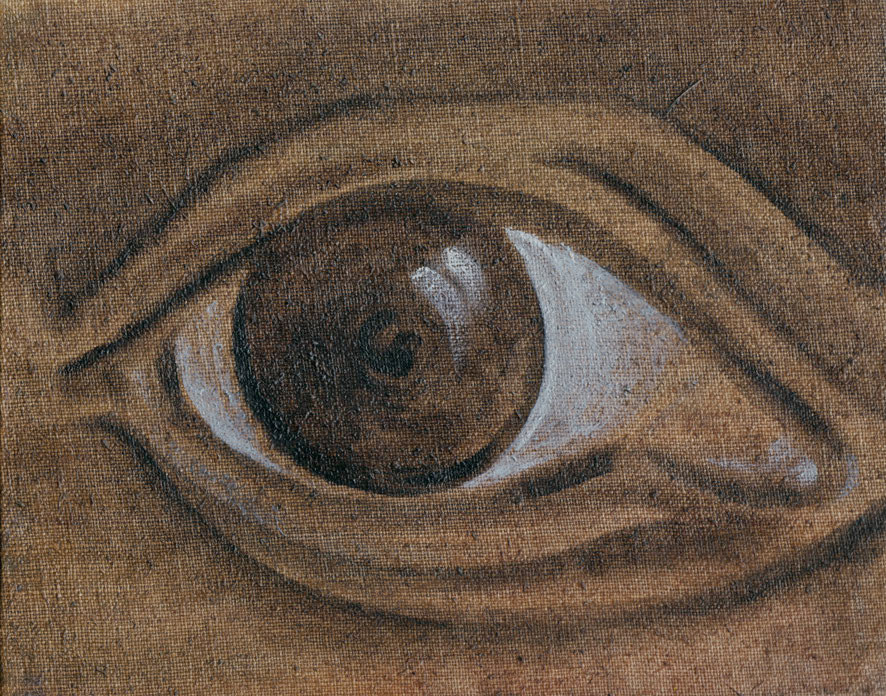
J. Dumoux, 1992